The Artist and The Alchemist: A Guide to High-Trust Creative Collaborations
The Core of Collaboration: From Vision to Execution
Every legendary tour or one-off spectacular begins with an artist's vision. But translating that vision from a napkin sketch into a stadium-sized reality is a complex, high-stakes process. It falls to tour managers, creative directors, and production designers to assemble a team that can not only execute that vision but enhance it. This is where the alchemy begins: the blending of raw artistic impulse with precise, reliable technology.
The most fruitful collaborations are built on a foundation of trust and shared language. When an artist says they want a show to "feel electric," it’s the job of the creative and technical teams to translate that feeling into tangible, programmable effects. This requires more than just technical proficiency; it demands a deep, almost intuitive understanding of the artist’s intent. At Xylobands, we’ve learned that the initial conversations are paramount. We don’t just ask about colors and cues; we ask about the story of the show, the emotional arc of the setlist, and the specific moments intended to unify the audience.
Finding a Partner, Not Just a Provider
For a creative director, bringing a technology partner into the inner circle is an act of trust. The tour is a traveling city with its own culture and rhythm, and any new element must integrate seamlessly. A technology provider who simply ships gear to the venue is a liability. A true partner embeds themselves with the production, learning the nuances of the show and anticipating the needs of the artist and crew.
"The goal is to become an extension of the artist’s own creative team. When Maluma wanted to create a landmark show in his hometown of Medellín, or when Wizkid became the first African artist to sell out three nights at the O2, the technology couldn’t just be 'there'; it had to be an active participant in the storytelling."
This means being present for rehearsals, adapting to last-minute creative changes, and understanding that a lighting cue is not just a data point—it’s an emotional beat. Our work with artists like these has taught us that flexibility, reliability, and a zero-failure mindset are the non-negotiable currency of trust.
Speaking the Language of Light
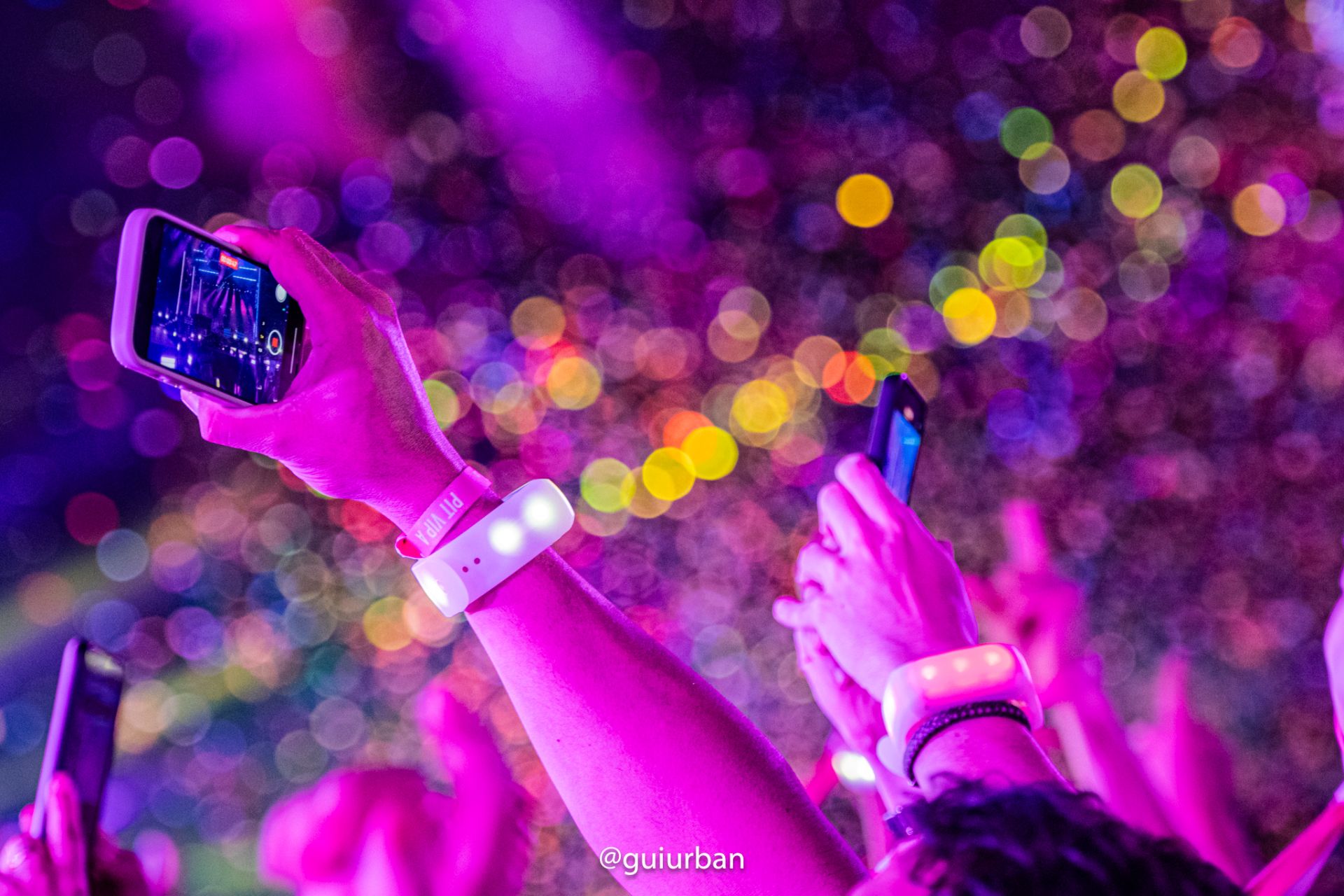
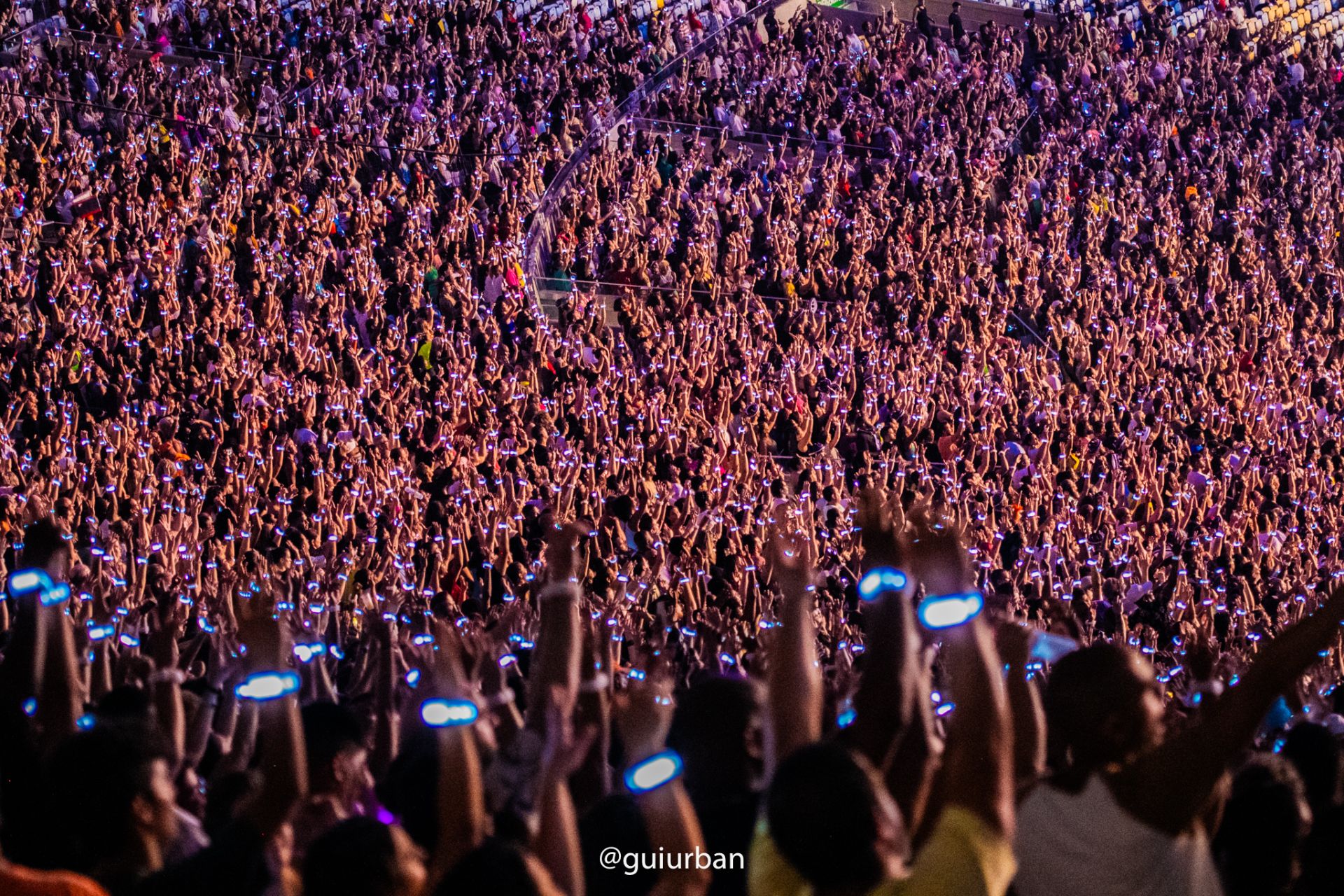
The conversation between an artist and their audience is a dynamic one. Modern immersive event technology gives artists new ways to lead that conversation. By turning the audience into a canvas, an artist can create moments of profound connection, transforming tens of thousands of individuals into a single, cohesive entity.
Consider the creative possibilities:
- Pulsing Rhythms: Matching the beat of a drum solo with flashes of light that ripple through the crowd.
- Color Storytelling: Shifting the entire arena’s color palette to match the emotional tone of a ballad or the high-energy frenzy of an encore.
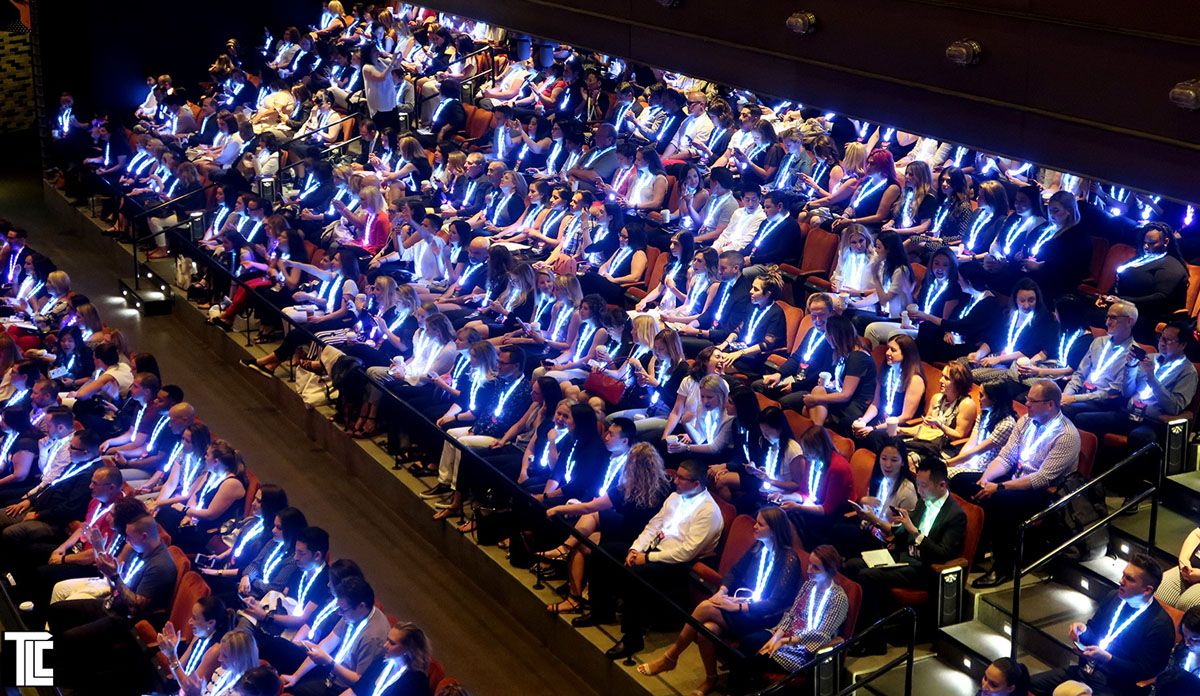
- Audience Segmentation: Creating visual "teams" within the crowd for interactive moments, a technique we’ve used in diverse settings from the Davis Cup to Formula One.
For tour managers and creative directors, the key is to work with a partner who offers a sophisticated, reliable control system. Whether it's RF, DMX, or infrared, the technology must be robust enough to handle the complexities of a modern arena while being intuitive enough for creative operators to use it as an instrument. The ability to program intricate sequences, but also to take over live and trigger effects on the fly, is crucial for a dynamic performance.
Case in Point: The Sync and the Story
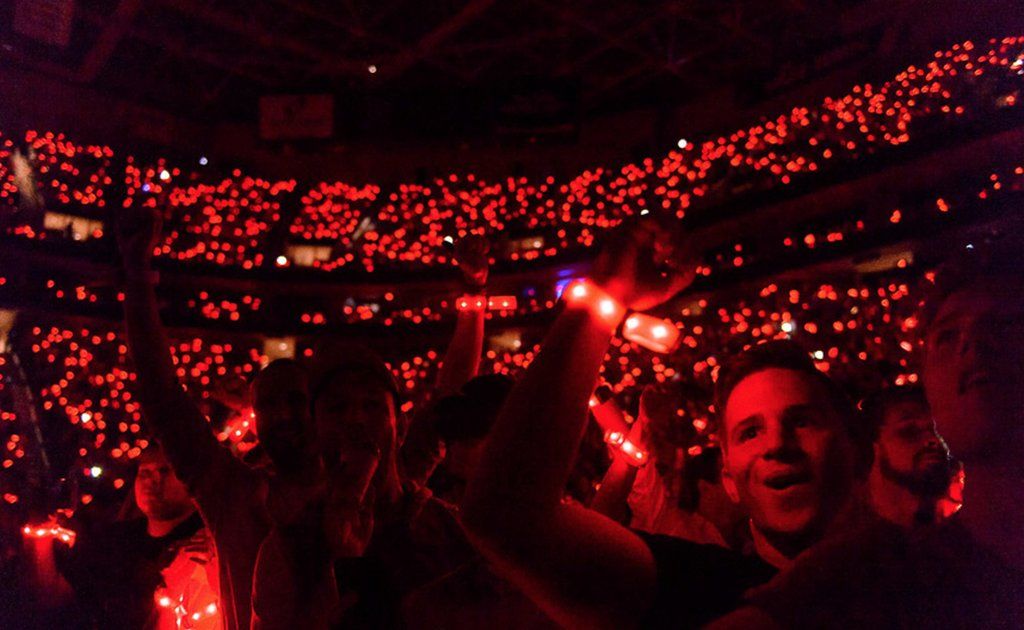
During Coldplay's Mylo Xyloto tour, where Xylobands were first introduced, the song "Fix You" became a pivotal moment. As the lyric "lights will guide you home" filled the stadium, the wristbands illuminated, creating a shared experience of incredible emotional weight. This wasn’t just a tech demo; it was the culmination of a creative partnership designed to serve the song. The technology didn't distract from the performance; it deepened its meaning.
That same principle applies across genres and scales. When we work with festival producers, like those at Greece’s PRIMER Music Festival, the goal is to amplify the energy of international DJs. For a broadcast event like ITV’s "Beat the Chasers," the lighting must serve two audiences simultaneously: the studio crowd and the millions watching at home. Each context requires a different creative approach, but the underlying principle is the same: the technology must serve the story.
The Trust Fall: Zero-Failure Operations
Ultimately, for an artist, tour manager, or creative director, the most important attribute of a technical partner is reliability. When an artist stands on stage, ready for a cue that involves 50,000 people, there is no margin for error. The technology simply has to work. This is the trust fall at the heart of any artist-tech collaboration.
Achieving this level of reliability requires a military-grade approach to logistics, deployment, and operation. It involves meticulous planning, redundant systems, and an on-site team that is prepared for any contingency. From ensuring every one of the 32,000 LED bracelets for Wizkid’s tour was ready, to custom-branding 13,000 LED lanyards for a premier Formula One event, the logistical challenge is as important as the creative one.
The most successful creative collaborations are built on this dual foundation of artistic empathy and operational excellence. By choosing partners who understand both the poetry of the performance and the prose of production, tour managers and creative directors can ensure that the artist’s vision is not just realized, but radiantly amplified.