The Audience as Orchestra: A Technological History of Collective Experience
From Echoes to Electrons: The Unbroken Thread of Audience Connection
The roar of a stadium, the shared gasp in a theatre, the unified chant at a festival — these are the moments that define live events. For as long as humans have gathered, we have sought not just to witness a spectacle, but to be part of it. This innate desire for connection, to move from passive spectator to active participant, has driven a fascinating technological evolution. It’s a story that begins with acoustics and architecture and arrives at a place where every single audience member can become a synchronized pixel in a vast, living canvas of light.
In the ancient Greek amphitheatres, the primary technology was the architecture itself. The tiered seating and hard, reflective surfaces were acoustically engineered to carry a single actor's voice to thousands. The audience’s response — their laughter, their applause — was the first form of mass interactive feedback, a wave of sound that rippled back to the stage. For centuries, this was the paradigm: the performer sends a signal, and the audience responds in a singular, analogue wave.
The Analogue Wave: Lighters, Voices, and The First Glimmers of Light
Fast forward through centuries of theatre, opera, and the birth of popular music. The tools of participation remained simple and intuitive. Audiences sang along, clapped in unison, and, in the 20th century, a new tradition emerged: the sea of lighters held aloft during a concert ballad. This was perhaps the first instance of the audience creating a spontaneous, large-scale light show. It was organic, emotional, and visually powerful, a precursor to the deliberate, controlled LED experiences of today.
This simple act demonstrated a fundamental truth: people want to be part of the light. They want to hold a piece of the spectacle in their hands. The limitation, of course, was the lack of control. The effect was beautiful but chaotic, a thousand points of light telling a thousand individual stories. The technology to unify them into a single, cohesive narrative didn’t yet exist.
The Digital Dawn: RF, Infrared, and the Birth of the Controllable Crowd
The true revolution in audience participation began with the advent of wireless technology. The ability to send a signal not just over the airwaves to a radio, but directly to a device held by each person in a crowd, opened up a new world of creative possibilities. Early experiments toyed with voting systems and simple coloured cards, but the real breakthrough came with the integration of light.
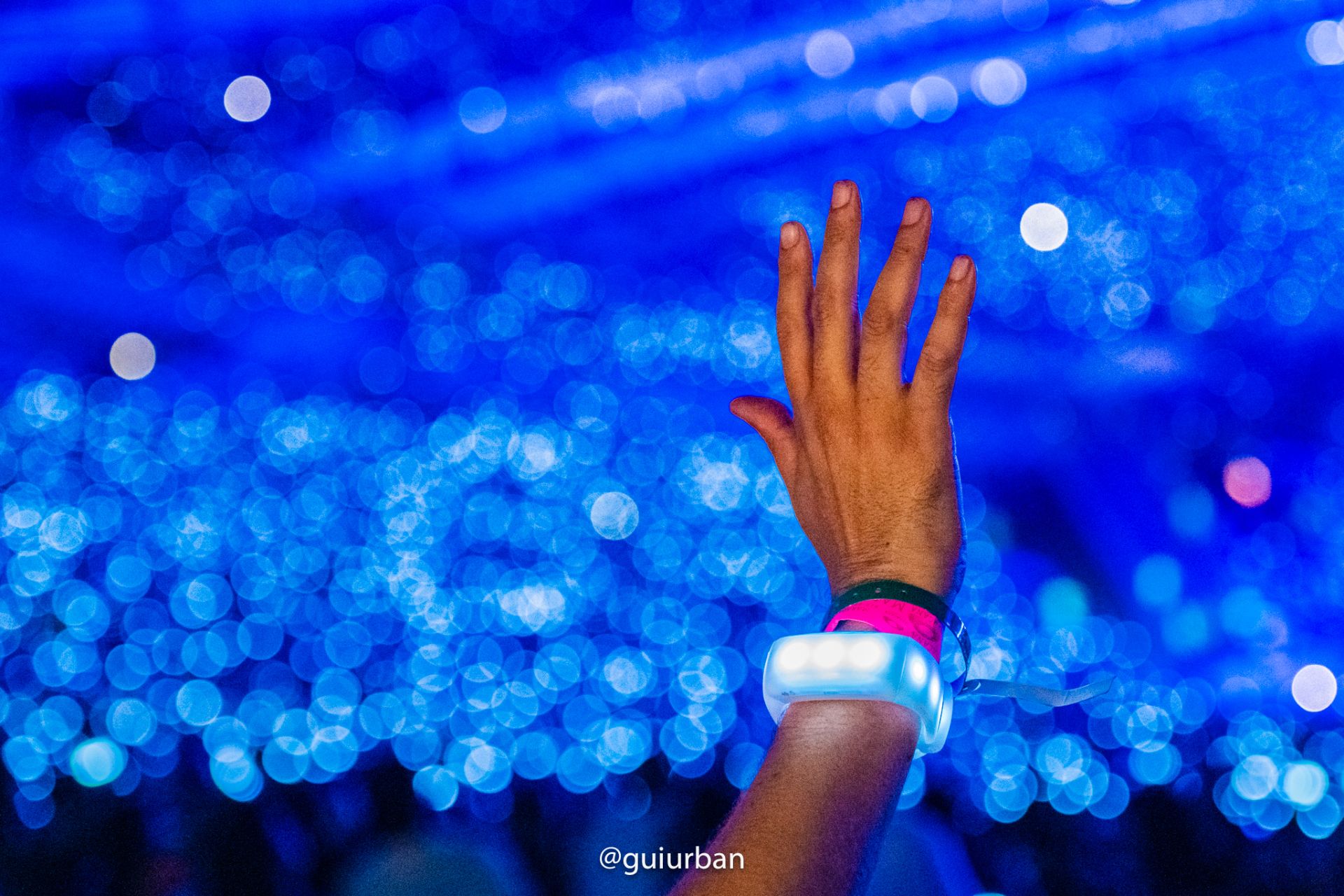
This is where the Xylobands story slots into the timeline. Inspired by watching Coldplay’s performance of “Fix You” at Glastonbury, our founder Jason Regler envisioned a way to transform the spontaneous sea of lighters into a fully controlled, immersive light show. The idea was to give every fan a wristband containing an LED and a radio receiver. This would allow a lighting designer to "play" the audience as if they were an instrument, creating waves of colour, pulsating rhythms, and synchronized flashes that would run through the entire stadium. The Coldplay Xylobands phenomenon was born.
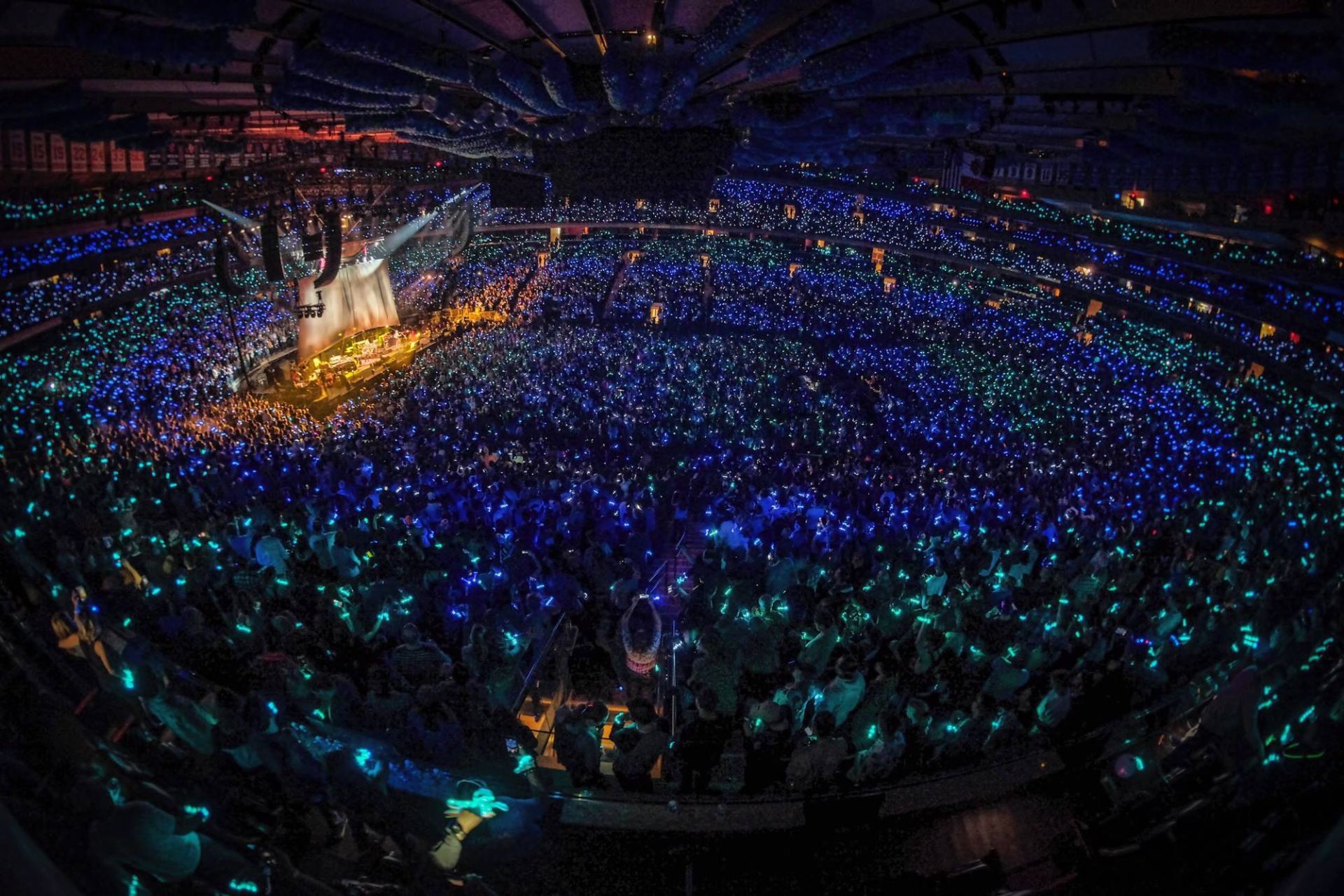
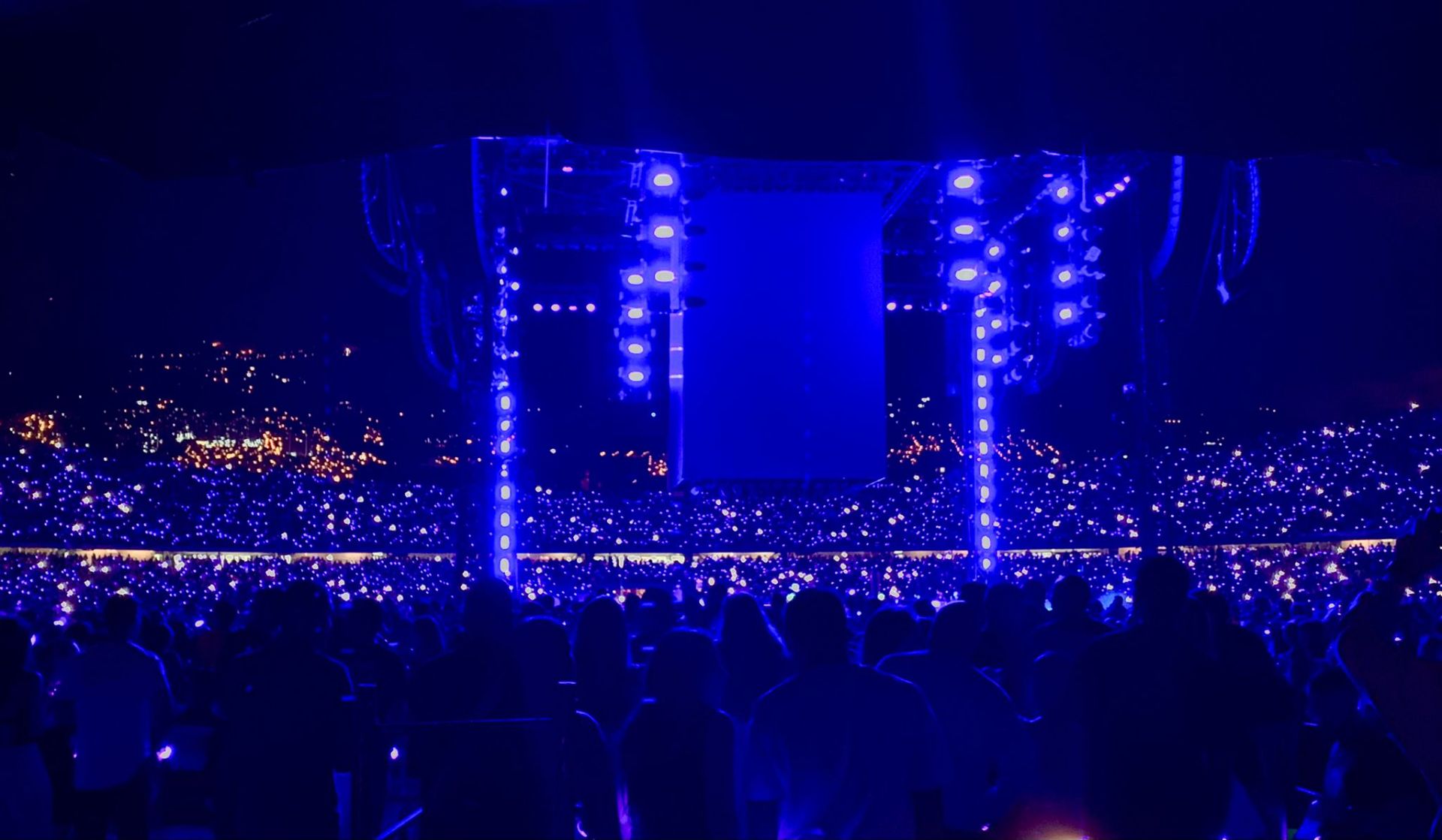
By using radio-frequency (RF) technology, it became possible to group tens of thousands of individual LED bands into zones and control them in real-time. This transformed the crowd from a passive observer into the very heart of the visual experience. The audience wasn’t just watching the show; they were the show. This was a paradigm shift in immersive event technology, moving beyond the stage and turning the entire venue into a canvas.
The Modern Orchestra: From Stadiums to Studios
The development of radio controlled LED wristbands was the tipping point. Today, the technology has evolved, incorporating different systems like DMX and Infrared for different environments, from sprawling festival fields to intimate television studios. Each system offers a unique set of controls, allowing for intricate designs and flawless synchronicity, whether across a field of 80,000 at a festival or a studio audience of 500 on a show like Beat The Chasers UK.
The applications have expanded far beyond music concerts. Major sporting events, from the Davis Cup to Formula One, use wearable LED technology to create stunning opening ceremonies and heighten fan excitement. At the F1 75 anniversary event, for example, custom LED Lanyards were distributed to fans, with different branding and lighting effects for various hospitality levels, creating a complex, multi-layered visual experience. Corporate events and brand activations have also embraced this technology, realizing that turning attendees into a physical part of the brand’s message forges a much deeper connection than a passive presentation ever could.
Suddenly, the audience at a corporate launch or a major sports final wasn’t just watching the brand, they were wearing it, lit in its colours, and moving to its rhythm. This is the essence of modern corporate event activations.
The Future is Fluid and Personalized
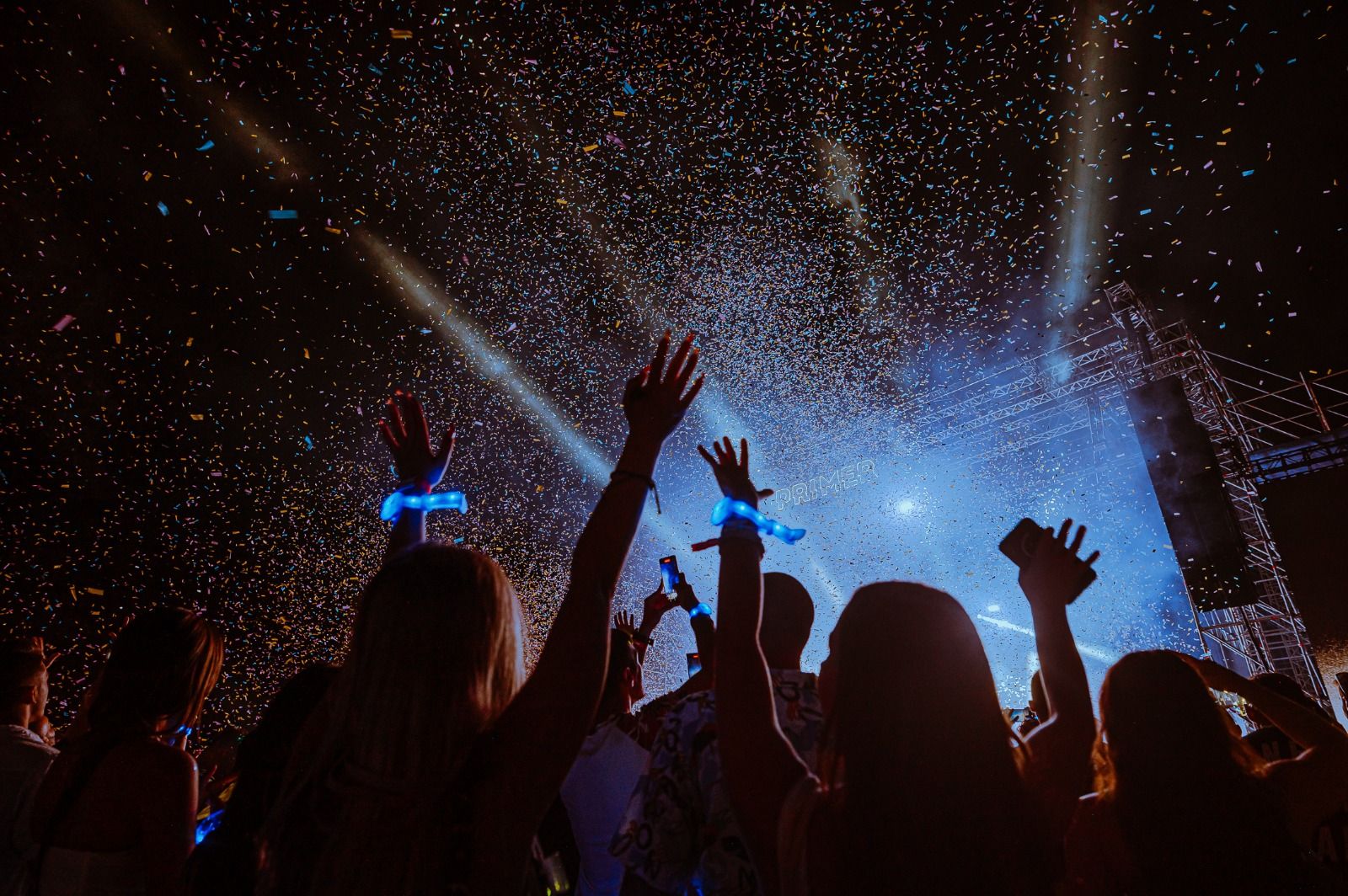
Today, the technology continues to evolve. From festival wristbands that pulse in time with a DJ set at Greece's PRIMER Music Festival, to programmable LED Orbs that can be handed out or arranged in unique installations, the tools for audience interaction are becoming more diverse and sophisticated. We are moving toward a future of even greater personalization and interaction. Imagine custom LED wristbands that not only light up in sync with the show but also react to your own movement, or wristbands that collect data to help event organizers improve crowd flow and safety.
The journey from the architectural acoustics of an ancient amphitheatre to the synchronized, pixelated crowd of a modern stadium is a long one, but it’s connected by a single, unbroken thread: the human desire for shared experience. Technology has not changed that desire; it has simply provided a more powerful and luminous way to express it. The audience is no longer just an audience. They are the orchestra, the canvas, and the light. And the show has never been brighter.