Beyond the Arena: Mastering Light for the Live Broadcast Audience
The Dual Mandate of Modern Event Lighting
In the world of major live events, there are always two audiences. The first is the sea of faces in the venue, a living, breathing entity fueled by kinetic energy and collective emotion. The second is the global audience, numbered in the millions, experiencing the spectacle through the curated frame of a camera lens. For producers and lighting designers, this presents one of the most significant creative and technical challenges of our time: how to light a single event for two vastly different worlds.
The light that feels electric and atmospheric to the human eye in a stadium can appear flat, noisy, or blown-out to the unforgiving sensor of a broadcast camera. The grand, sweeping gestures of arena lighting can be lost in a wide shot, leaving the television audience disconnected from the energy in the room. Mastering the live broadcast means rejecting compromise and adopting a new philosophy—one that designs a unified spectacle from the outset, serving both the fan in the back row and the viewer on their sofa a thousand miles away.
The Unblinking Eye: Lighting for the Camera Sensor
The fundamental challenge lies in the difference between human perception and camera technology. Our eyes are magnificent instruments, capable of processing an immense dynamic range and automatically correcting for color shifts. The camera, for all its technological prowess, is not so forgiving.
Flicker, Frequency, and Frame Rate
To the naked eye, most modern lights appear constant. But to the camera, especially one shooting at a high frame rate for slow-motion replays, many light sources reveal a constant, pulsating flicker. This is a broadcast director’s nightmare, introducing distracting banding and visual noise that instantly shatters the illusion. Professional-grade Immersive Event Technology must be engineered to be "broadcast-safe," operating at frequencies that guarantee a clean, stable image no matter the camera setting. This is a non-negotiable baseline for any event with a broadcast component.
The Science of Color and Contrast
What appears as a rich, saturated blue to the live audience might register as a noisy, crushed purple on screen. A subtle warm tungsten glow can become a jarring orange. Broadcast lighting demands meticulous control over color temperature and intensity. More importantly, it relies on contrast. For the home viewer, the interplay of light and shadow creates depth, drama, and focus. An evenly-lit stage or crowd can look flat and uninteresting on a television. The art lies in creating pockets of darkness and managed gradients that give the camera a rich, textured image to capture.
Painting the Frame: The Crowd as Canvas
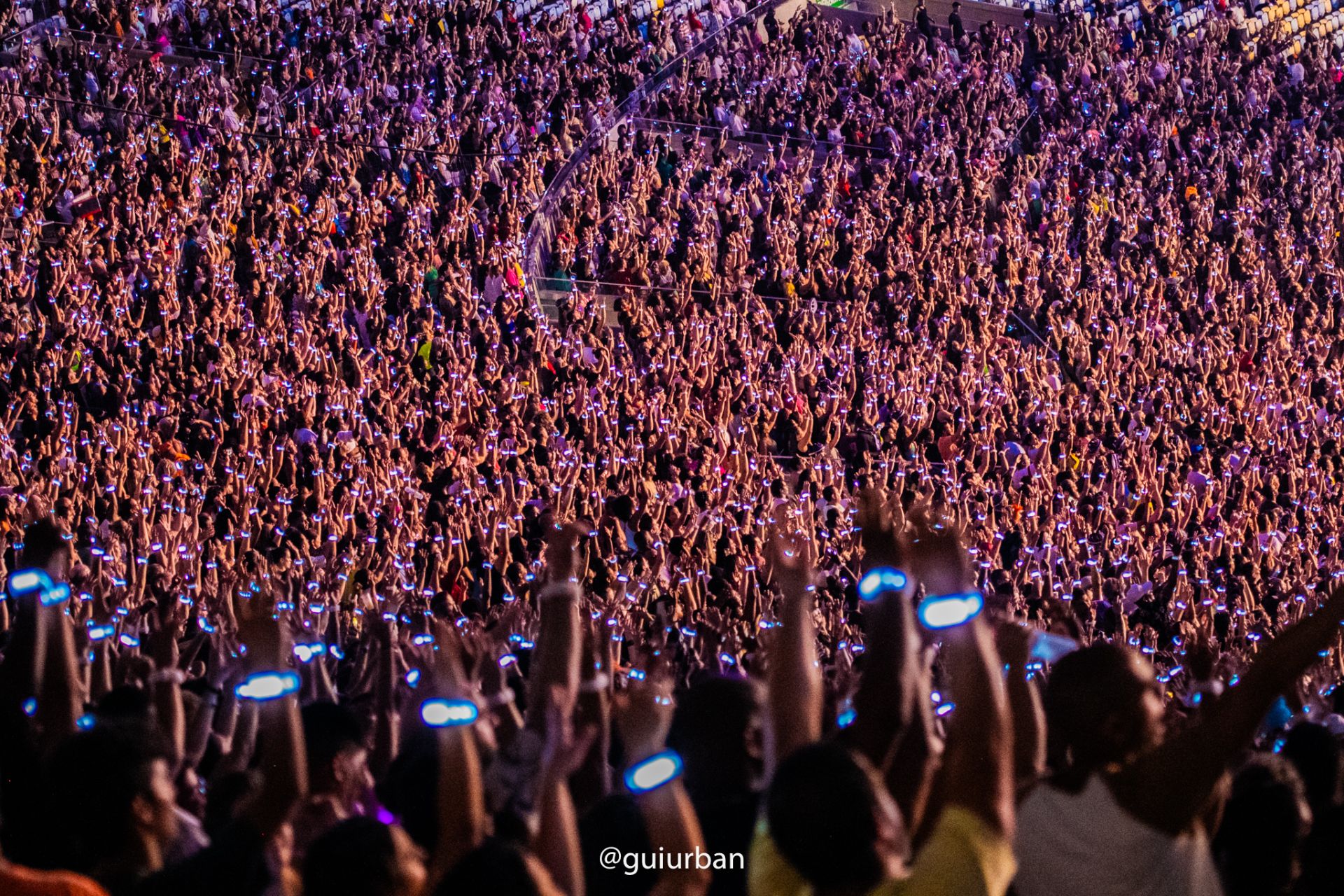
Historically, the crowd was a dark void in the broadcast—a passive observer punctuated by the occasional flash of a phone. This presented a major challenge: how do you convey the scale and energy of the event when the very people creating that energy are invisible? The solution was to stop pointing lights *at* the crowd and start putting light *in* the crowd.
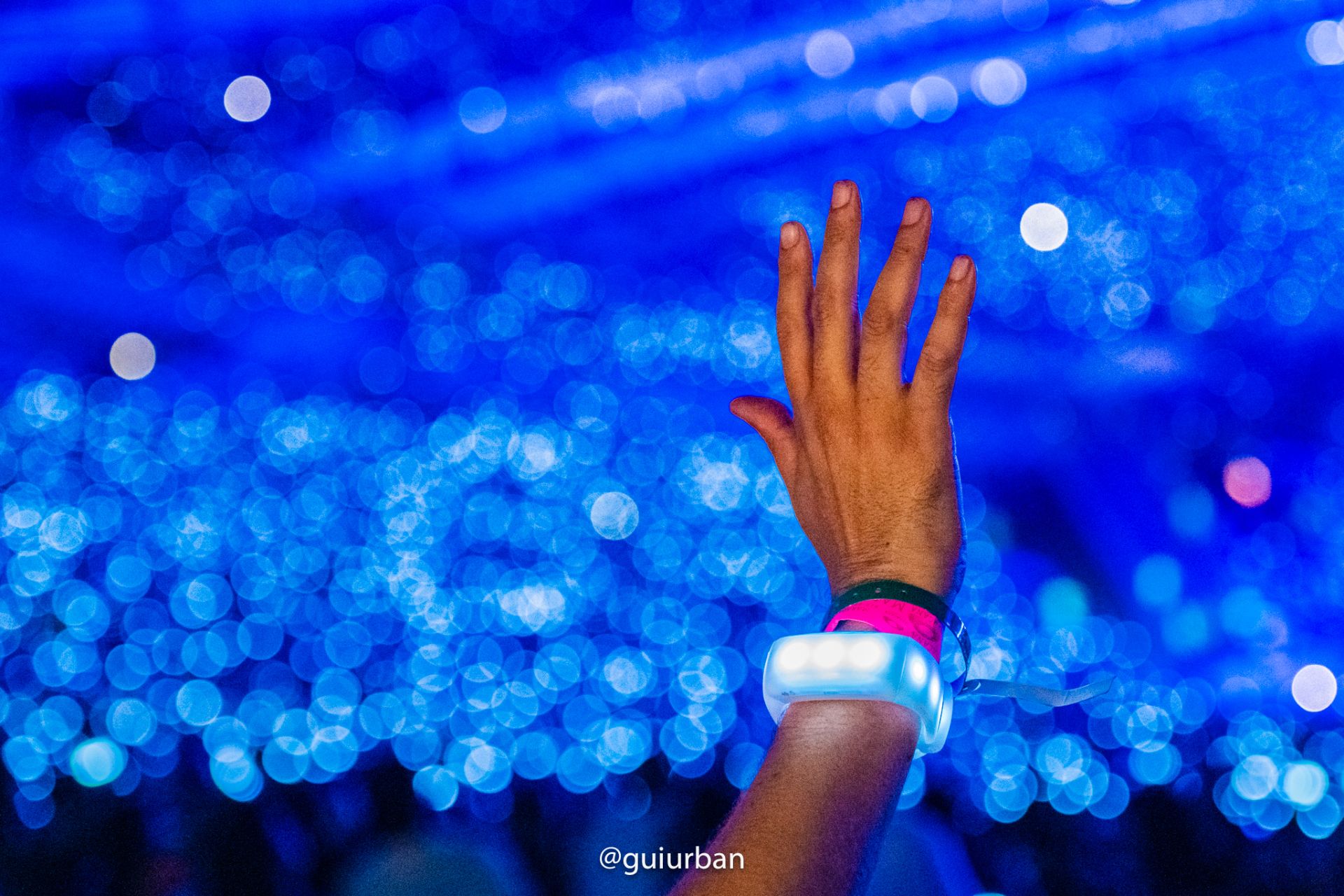
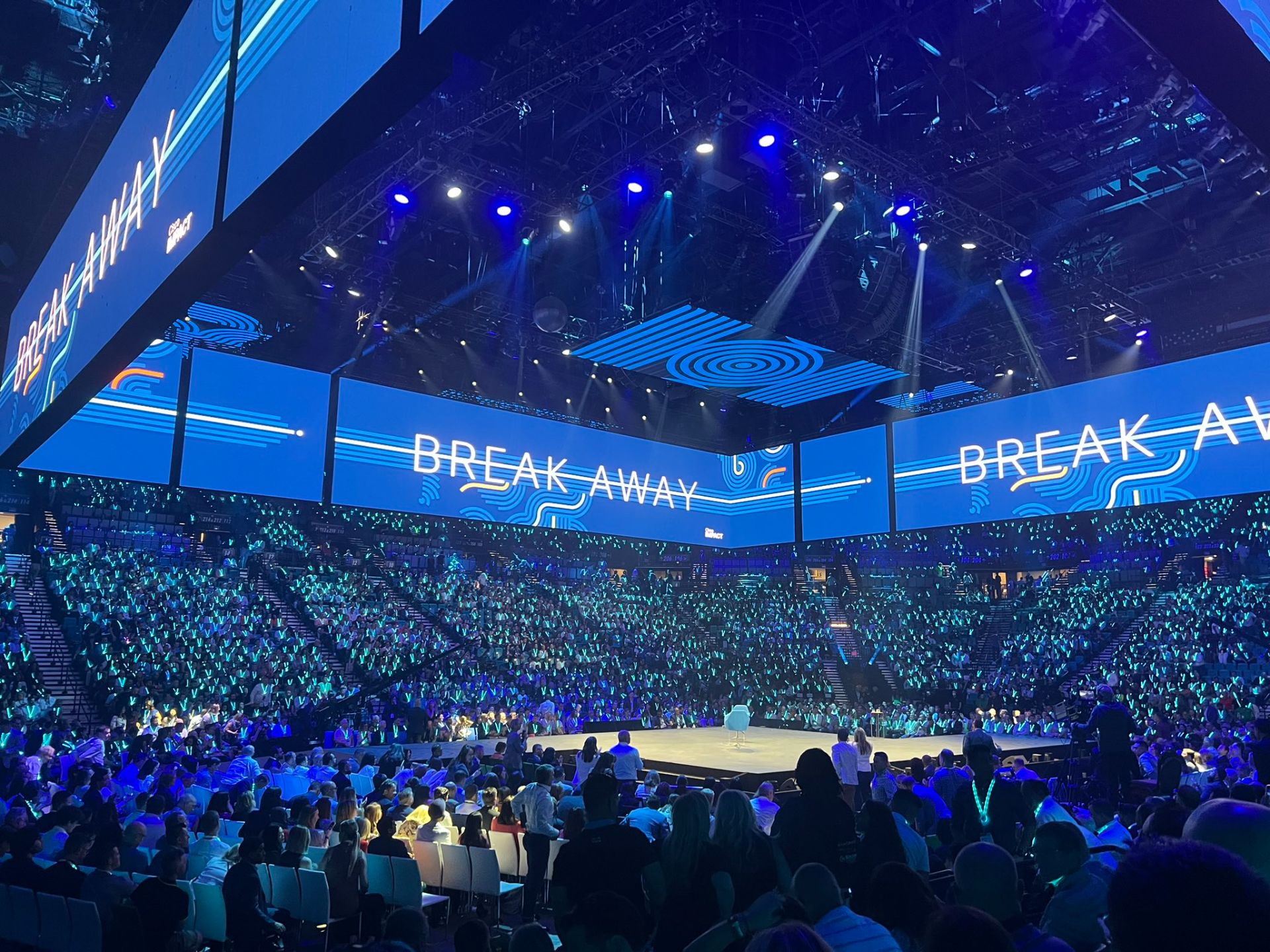
This is where Wearable LED Technology transforms the production. By turning every audience member into a pixel in a vast, moving canvas, we solve multiple broadcast challenges simultaneously. Suddenly, the director’s wide shots are not empty darkness but a vibrant, dynamic tapestry of light. The crowd itself becomes a core visual element, a living, breathing part of the set design.
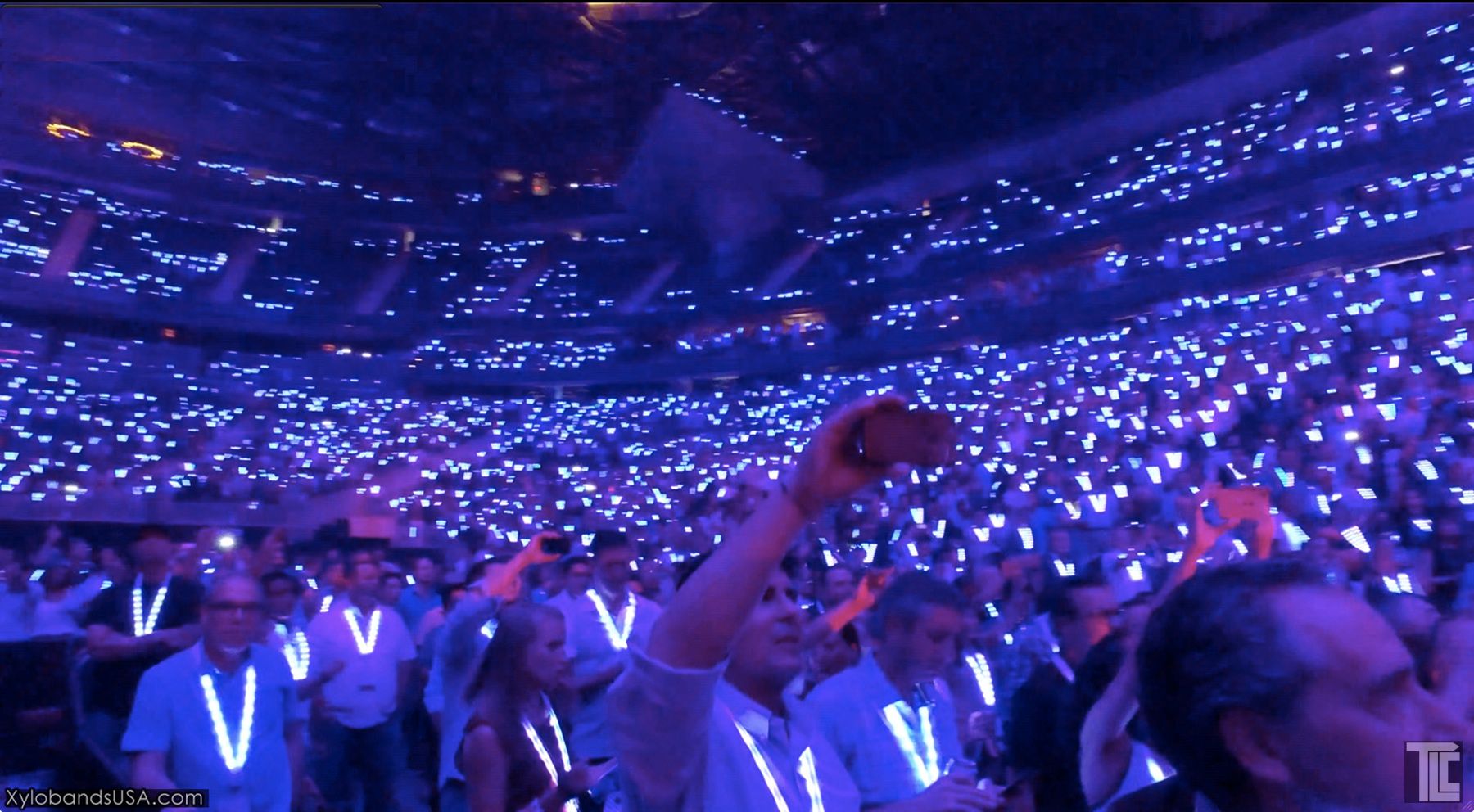
For global events like the Maluma concert in Medellín, streamed to over 240 countries, or the Formula One 75th Anniversary show, this is a game-changer. At the F1 event, we used custom LED Lanyards to create distinct visual zones for each team and hospitality level. This approach doesn't just create stunning LED Crowd Experiences; it provides the broadcast director with a powerful storytelling tool, allowing them to visually represent team rivalries or highlight specific fan sections, adding a layer of narrative depth visible only to the broadcast audience.
Precision in Practice: From Game Shows to Global Tours
This principle extends beyond massive stadiums. In the controlled environment of a television studio, such as for ITV’s hit show "Beat The Chasers," the imperative is the same. The studio audience’s reaction is a critical part of the drama. Using Radio Controlled LED Wristbands, producers can instantly unify the room in a flash of color to celebrate a win or build tension during a high-stakes moment. These effects are designed to look brilliant on camera, reinforcing the on-screen narrative without overpowering the performers.
The key is a system offering granular, reliable control. Whether using RF (radio frequency) for stadium-scale deployments or DMX for perfect integration with a show’s lighting desk, the technology must be flawless. It allows a single operator to paint with light on a massive scale, programming intricate sequences that sync perfectly with music, video, and action. These are not random flashes of light; they are a choreographed element of the show, as meticulously planned as the artist’s performance.
A Unified Spectacle
Ultimately, lighting for two audiences requires a unified vision. The broadcast director, lighting designer, and creative producer must collaborate from day one, storyboarding how crowd-based lighting will integrate into the television feed. This isn't an add-on; it’s a fundamental component of modern event production.
By embracing LED Event Technology that is both visually spectacular for the live audience and technically perfect for the camera, we bridge the gap between two worlds. We create a shared pulse that can be felt in the arena and seen on the screen, ensuring that every viewer, no matter where they are, is part of the same unforgettable spectacle. The distinction between the room and the broadcast dissolves, leaving only the pure, immersive power of a shared experience.