The Broadcast Dilemma: Engineering Light for the Human Eye and the Camera Lens
Two Audiences, One Unforgettable Moment
The house lights dim. A roar erupts from 50,000 fans. On stage, the artist strikes the first chord. In that instant, two entirely different shows begin. The first is for the audience in the arena, a multi-sensory experience of visceral sound and dazzling light. The second is for the millions watching a live stream at home, an experience translated through the unblinking eye of a camera. For producers of today’s biggest live events, from stadium concerts to global sports finals and primetime TV shows, this is the fundamental challenge: how do you create a spectacle that is equally breathtaking for the human eye and the camera lens?
The truth is, cameras don’t see the way we do. They interpret light, colour, and motion according to a rigid set of technical parameters. What feels electric and atmospheric in person can translate on-screen as a chaotic, blown-out mess or a lifeless black hole. Mastering the art of broadcast-friendly lighting means navigating this complex duality, engineering a visual narrative that captivates both audiences without compromising either experience. It requires a philosophy that treats the crowd not as a passive observer, but as a living, breathing canvas for light.
The Human Eye vs. The Camera Sensor
To understand the problem, we must first appreciate the two distinct ways an event is perceived. The human eye is a marvel of biological engineering. It possesses an astonishing dynamic range, allowing us to perceive detail in both the shadows of a stage and the bright flashes from a strobe, all while adapting on the fly. We reconcile colour temperatures automatically, process motion fluidly, and emotionally connect with the atmosphere of a space. We see an experience.
A camera sensor, by contrast, sees data. It has a far more limited dynamic range, meaning the bright points can easily overexpose (“bloom”) into indistinct white patches, while the dark areas can be crushed into noisy, detail-free black. The sensor’s interpretation of colour is dictated by its internal science and the profiles applied by the broadcast engineer. And most critically, it is highly sensitive to the refresh rates of lighting fixtures, which can result in the dreaded on-screen flicker that is completely invisible to the naked eye. Lighting that isn’t specifically designed for the camera can brutally undermine the broadcast, no matter how spectacular it looks in the room.
Turning the Audience into the Set
The most common casualty in the battle between in-room and broadcast lighting is the audience itself. Traditional house lighting, designed to illuminate pathways and faces, often creates a flat, uninteresting picture for the camera. It can wash out the carefully crafted stage lighting and detract from the main performance. The result is that the palpable energy of a thousand cheering fans is lost, reduced to a static, dimly lit backdrop.
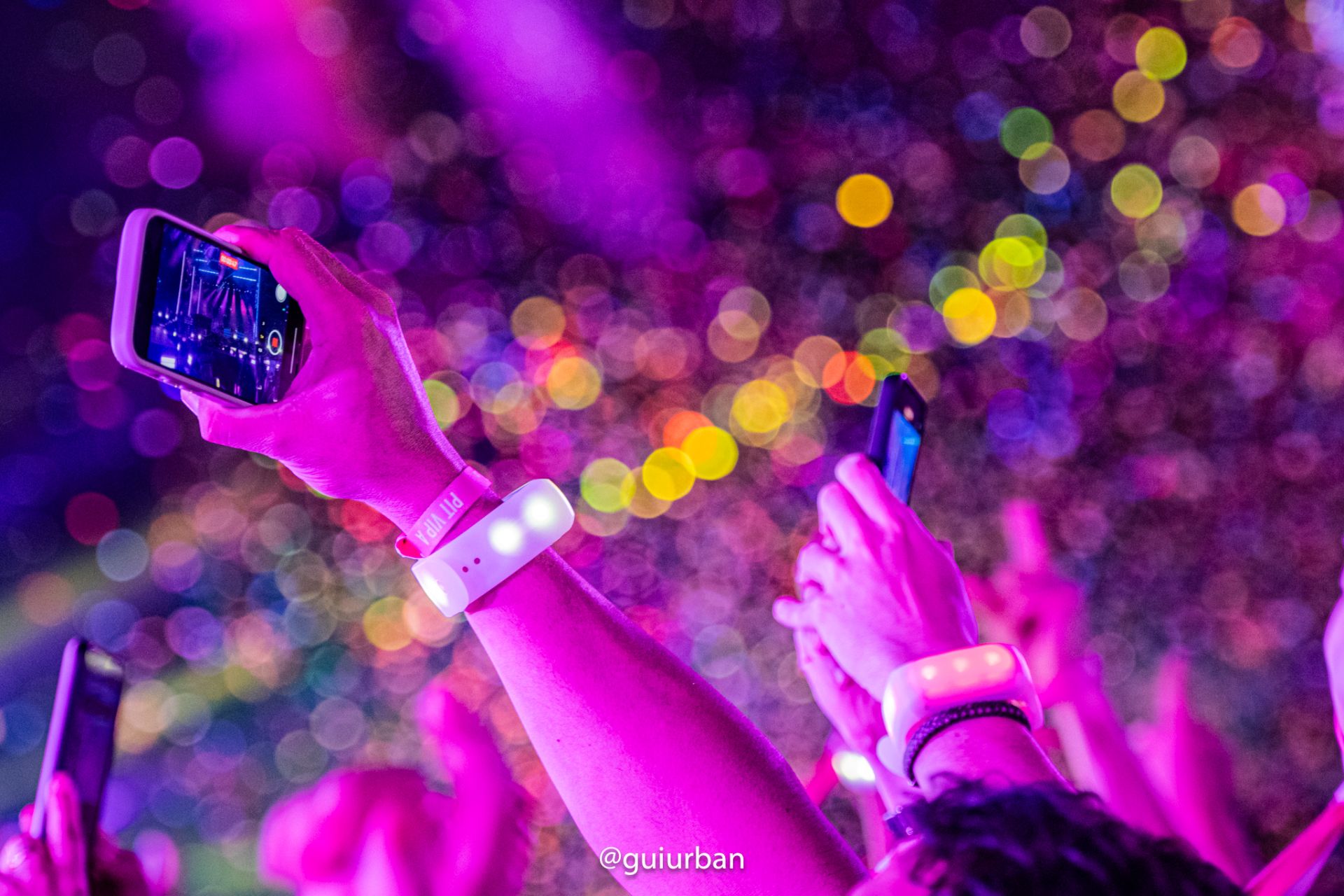
This is where modern Immersive Event Technology offers a transformative solution. At Xylobands, we pioneered the concept of turning the crowd itself into a synchronized, intelligent light show. Our Radio Controlled LED Wristbands and other LED Wearables are engineered from the ground up with the dual audience in mind. This technology allows lighting designers to program the audience as a vast, pixelated screen, creating dynamic visual effects that are perfectly synched to the performance and, crucially, completely camera-friendly.
Our work on major television productions for clients like ITV and shows such as Beat The Chasers provides a perfect example. In the controlled environment of a television studio, every visual element is scrutinized by the camera. By equipping the studio audience with Xylobands, we empower producers to integrate the crowd directly into the show’s lighting design. The audience is no longer just a backdrop; they are a living, responsive part of the set, their wristbands pulsing with colour to heighten tension during a timed challenge or erupting in a unified flash of light to celebrate a win. This creates compelling visual grammar for the viewer at home, making them feel the energy of the studio in a way that simple applause cannot convey.
From the Studio to the Global Stage
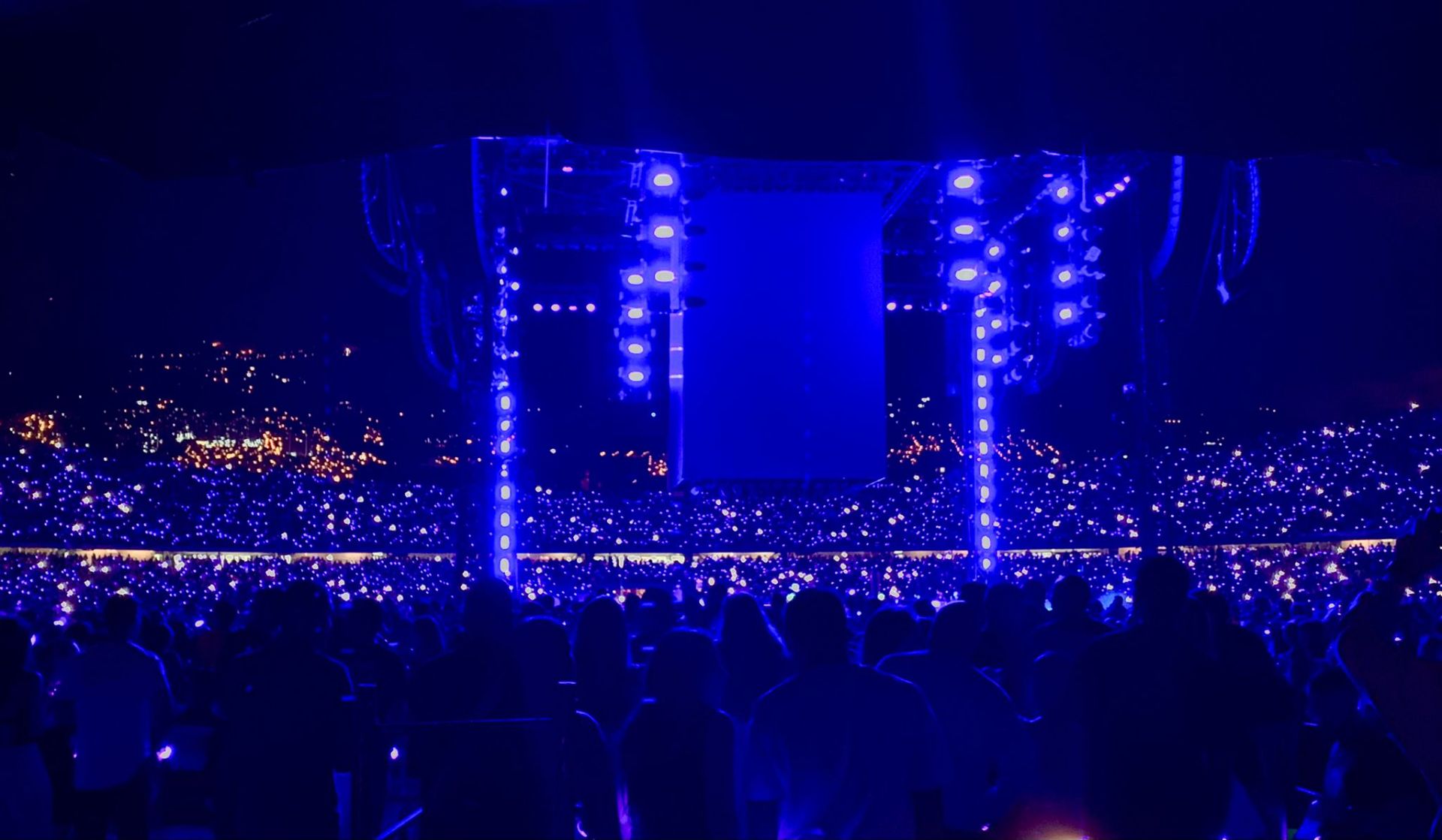
This same principle scales to the world’s largest events, where the broadcast component is just as critical as the live experience. Consider Maluma’s historic 2022 homecoming concert in Medellín. Over 54,000 fans filled the stadium, but the show was also streamed live in over 240 countries. The challenge was immense: how to translate the sheer scale and passion of that massive crowd to the millions watching on screens? By deploying thousands of our Concert Wristbands, the production transformed the entire stadium into a single, cohesive entity. The waves of light moving across the vast audience provided a breathtaking visual signature for the broadcast, showing the global audience a spectacle of unity and energy that defined the event.
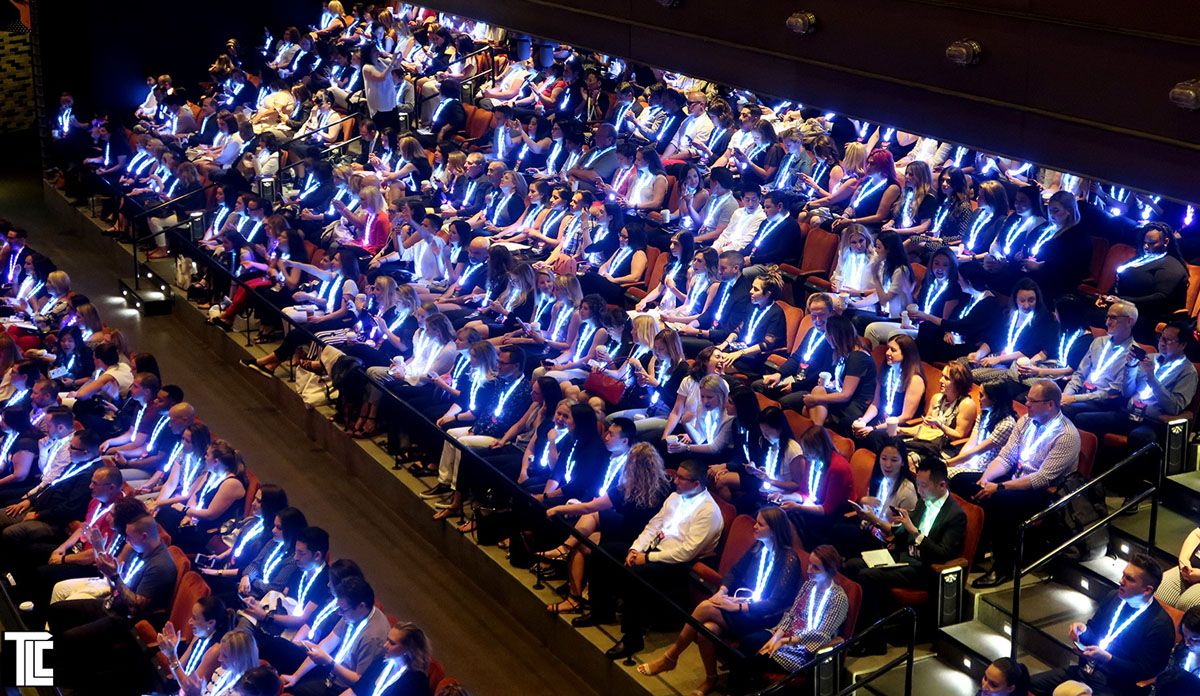
Similarly, for unique broadcast events like the Formula One 75th Anniversary celebration, we deployed thousands of custom LED Lanyards. In a complex viewing environment with multiple teams and hospitality tiers, these wearables allowed the creative team to paint with light across specific sections of the arena, creating targeted effects that registered with stunning clarity on camera. These LED Crowd Experiences ensure that the fan energy is not just felt, but seen, becoming an integral part of the broadcast story.
Engineering Light for Two Worlds
The broadcast dilemma isn’t a compromise; it’s a creative opportunity. It forces a more intentional and intelligent approach to event production. Success lies in deploying technology that offers granular control—the ability to fine-tune brightness, colour, and strobing to levels that are both visually exciting in person and technically perfect for the camera.
The future of live events, from corporate conferences to global music festivals, is inextricably linked to the broadcast. The expectation is no longer just to light the stage, but to create a holistic visual environment that envelops everyone, present and remote. By treating the audience as a canvas and using advanced LED Event Technology, we can resolve the dilemma, ensuring the person in the back row and the person on their couch are united in a single, brilliant spectacle of light.