The Crowd as Sensor: Engineering Safer, Smarter Mass Gatherings
The Unseen Data Layer
For decades, managing mass gatherings has been a reactive science. Event producers and security personnel have relied on a combination of fixed cameras, on-the-ground staff, and historical data to predict crowd flow, identify potential bottlenecks, and respond to incidents. But in an environment with thousands of moving, unpredictable variables—human beings—this approach has inherent limitations. You can only respond to what you can see.
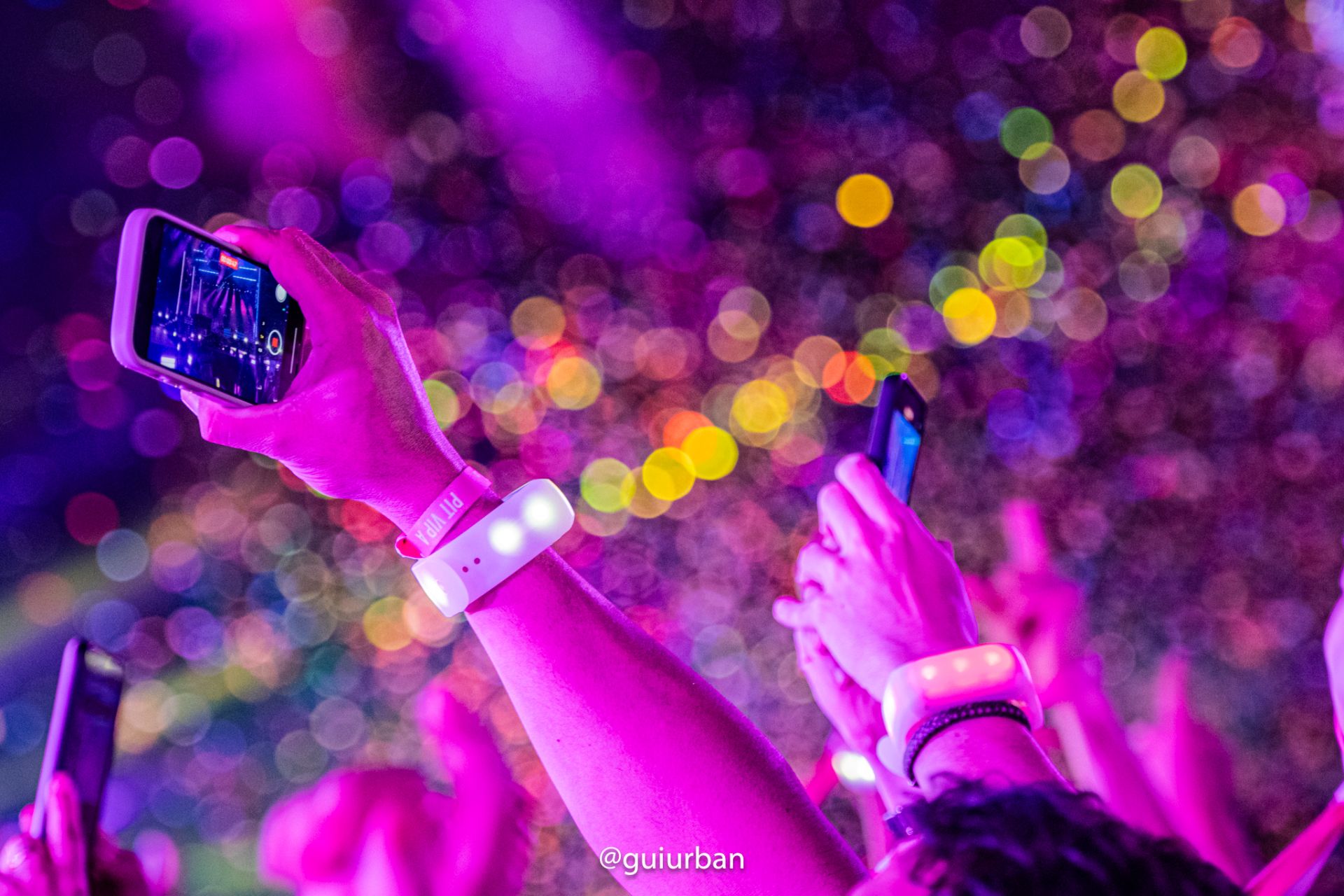
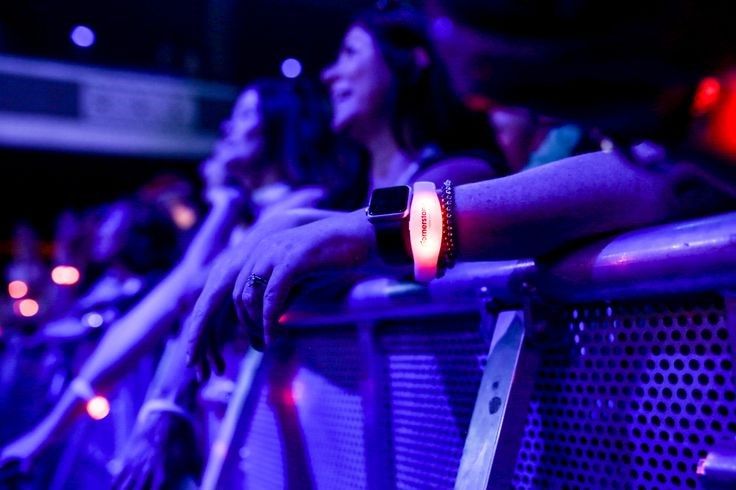
What if the crowd itself could become a dynamic, real-time sensor array? What if every single attendee could, anonymously and safely, contribute a data point that helps create a safer, more efficient environment for everyone? This isn’t a futuristic concept; it’s the reality being enabled by the widespread adoption of wearable LED technology. The same Xylo Bands that create breathtaking visual spectacles for artists like Coldplay and festivals like Primer are pioneering a new frontier in crowd analytics and safety.
From Light Show to Live Analytics
At its core, a network of radio-controlled LED wristbands, like those deployed by Xylobands, is a sophisticated data-delivery system. Each wristband is a node, capable of receiving commands to change color, intensity, and pulse. This is the foundation of immersive crowd experiences. However, the same radio frequency (RF) infrastructure that delivers the ‘light up’ command can be engineered to understand the system itself.
By analyzing signal strength and response times across different zones in a stadium or festival field, operators can begin to map crowd density in real-time. Where is the signal weakest? This could indicate a surge in crowd density, where bodies are literally blocking the radio waves. Where are signals strongest and most evenly distributed? This indicates a well-dispersed, comfortable audience. This isn’t about tracking individuals; it’s about understanding the aggregate behavior of the crowd as a single, living organism.
“We are moving from an era of passive observation to one of active, real-time analysis. The technology used to create a beautiful moment of collective effervescence is the very same that can prevent a dangerous crush.”
The Ethics of the Sentient Crowd
The conversation around data and large-scale events rightly brings up questions of privacy. It’s crucial to draw a hard line between anonymous, aggregated crowd analysis and individual tracking. The Xylobands system, by design, is a one-way command-and-control network. The wristbands receive signals from a central transmitter; they do not send personal data back. The analytics are derived from the behavior of the RF network itself, not from the people wearing the devices.
This ‘low-data’ or ‘no-data’ approach to crowd analytics is the key to ethical implementation. It provides event organizers with invaluable, life-saving insights without infringing on the privacy of a single attendee. We can identify a potential overcrowding issue at a specific exit gate or a dangerously dense area in front of the main stage without ever knowing who is in that crowd. This allows security and medical teams to intervene proactively, rerouting foot traffic or dispatching resources before a situation escalates.
Applications Beyond Illumination
The potential applications of this data layer are transformative for event operations.
- Egress and Evacuation: In an emergency, operators can use the wristbands to create visual cues, lighting up pathways to the safest exits. By monitoring real-time density maps, they can guide people away from congested routes and toward underutilized ones, dramatically improving the speed and safety of an evacuation.
- Resource Deployment: Is a particular concession stand or restroom area becoming overwhelmed? Density mapping can alert operations to deploy additional staff or open temporary facilities long before long queues become a source of frustration or friction.
- Venue Design: Post-event analysis of crowd density data provides architects and event designers with an unprecedented understanding of how people naturally move through a space. This information can inform the design of future venues, eliminating inherent bottlenecks and creating safer, more comfortable environments from the ground up.
The Future of Immersive Event Technology
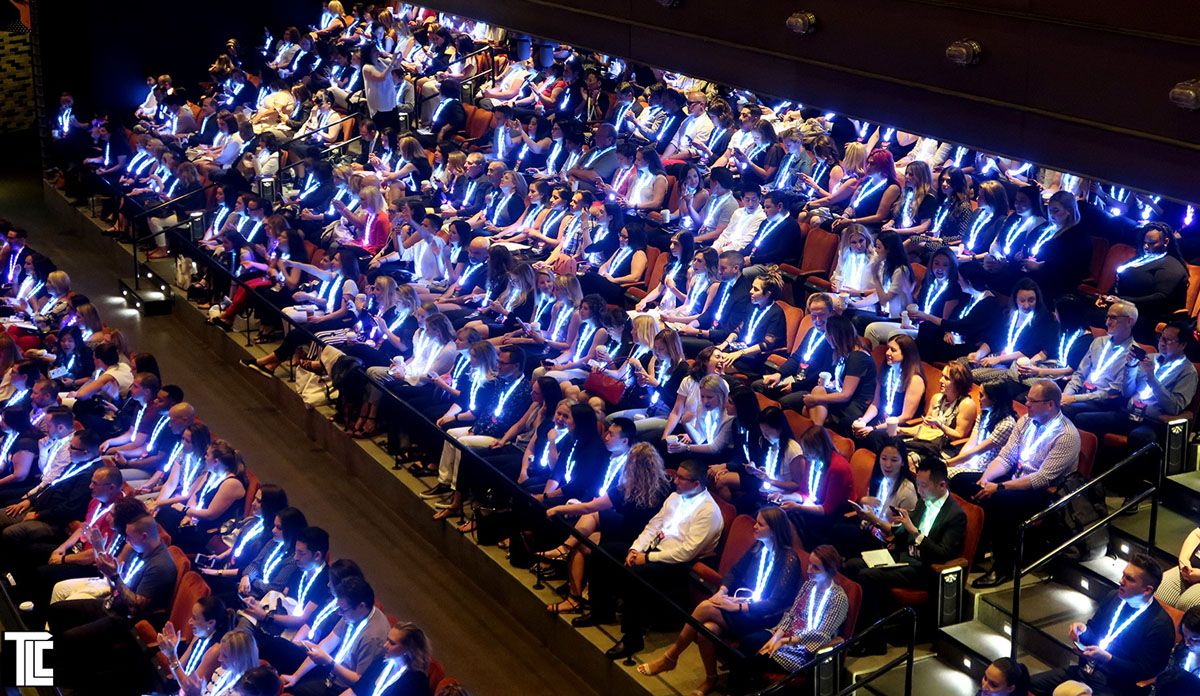
The dazzling light shows created by radio controlled LED wristbands are what captivate the audience, but the unseen layer of data and safety they enable is what will define the future of the industry. For every fan lit up during a chorus, for every wave of color that washes over a stadium, there is an underlying technological framework that is making that experience safer.
As we continue to push the boundaries of immersive events, from massive festivals to high-stakes corporate event activations, the dual role of this technology becomes paramount. It is both the medium for the artist’s vision and the tool for the operator’s duty of care. The crowd, illuminated, becomes the spectacle. And the technology that makes it possible, in the hands of responsible operators, ensures that the spectacle is, above all, safe.