Dual Reality: Lighting the Live Event and the Global Broadcast
The Unseen Challenge: Two Audiences, One View
Imagine the final moments of a championship match or the season finale of a blockbuster talent show. The energy in the studio or stadium is electric. But this event isn’t just for the thousands in their seats; it’s for the millions watching at home. This creates a fundamental challenge for production designers: how do you light an event for two completely different audiences—the human eye and the camera lens—simultaneously? The answer lies in a sophisticated understanding of light, perception, and technology. Creating a spectacle that feels immersive in the room while looking flawless on screen is a modern art form, one that balances technical precision with creative vision.
What looks vibrant and atmospheric to the live audience can translate into a noisy, blown-out, or flat image for the broadcast. The human eye is a marvel of biological engineering, capable of processing an immense dynamic range of light and shadow. A camera sensor, for all its technological advancement, is far more limited. This duality is the central problem that event producers and lighting directors must solve for any live broadcast.
The Duality of Sight: The Human Eye vs. The Camera Sensor
At the heart of the broadcast lighting challenge are the physical differences between how our eyes perceive the world and how a camera captures it. Failing to account for these differences can lead to a broadcast feed that feels disconnected from the energy of the live event.
Dynamic Range and Contrast
Your eyes can discern detail in the bright face of a performer and, in the same instant, see the texture of the dark stage floor. A camera struggles with this. Faced with high-contrast scenes, a camera is forced to choose: expose for the highlights and crush the blacks into a muddy void, or expose for the shadows and blow the brights into glaring white patches. Traditional methods of lighting the crowd—often involving powerful, broad-spectrum floodlights—are a blunt instrument, creating a flat, washed-out look on camera that sacrifices dimension for simple visibility.
Color Temperature and Rendition
Our brains automatically correct for varying colors of light. A white t-shirt looks white to us under the warm light of sunset or the cool light of a fluorescent lamp. A camera has no such auto-correct. Its sensor must be told what "white" is via a process called white balancing. In a live show with dynamic lighting, colors can shift constantly. This is a nightmare for broadcast engineers trying to ensure brand logos, team jerseys, and skin tones are rendered accurately for the viewer at home.
Flicker and Frame Rates
Many modern light sources, especially certain types of LEDs, flicker at a high frequency. While typically invisible to the naked eye, this flicker can be captured by a camera, resulting in distracting bands rolling through the image. This is particularly problematic for slow-motion replays in sports, where flicker can ruin a critical shot. Broadcast-ready lighting must be verifiably flicker-free at a variety of frame rates and shutter speeds.
The Audience as the Medium
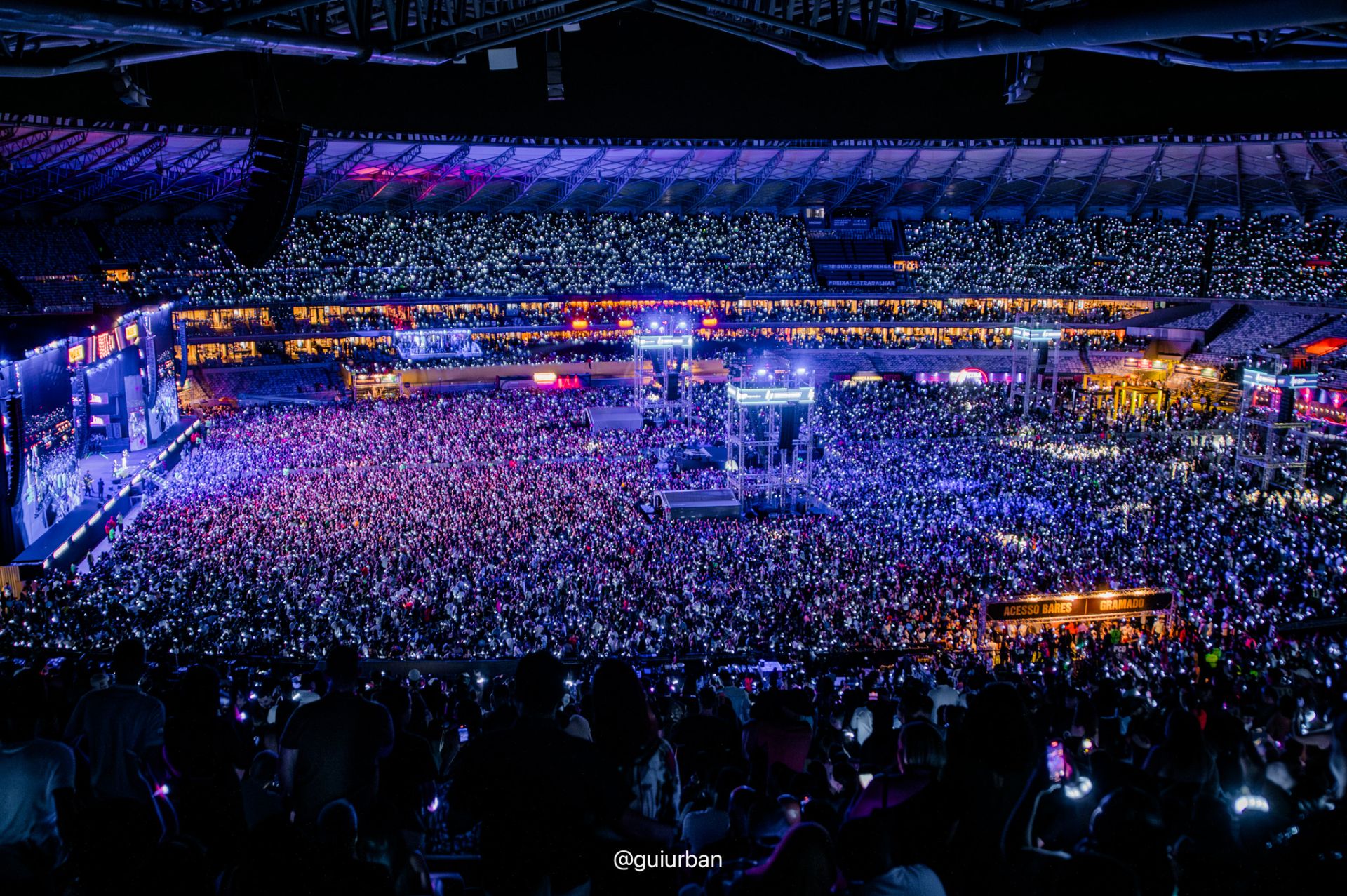
So, how do you create broadcast-friendly crowd lighting that feels immersive, not clinical? The most elegant solution is to stop blasting the audience with light and instead have the light emanate *from* them. This transforms the crowd from a passive subject to an active part of the lighting design—a living, breathing canvas of light.
By turning thousands of attendees into individual, controllable pixels, you create a spectacle that is both visually stunning for the camera and deeply engaging for the person in the seat.
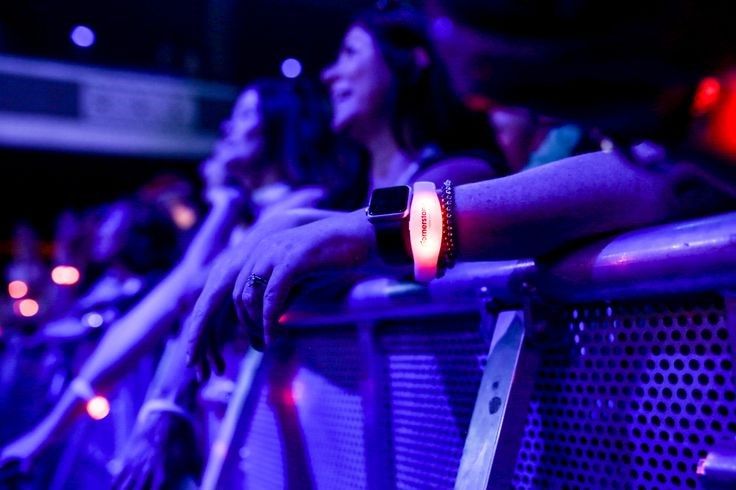
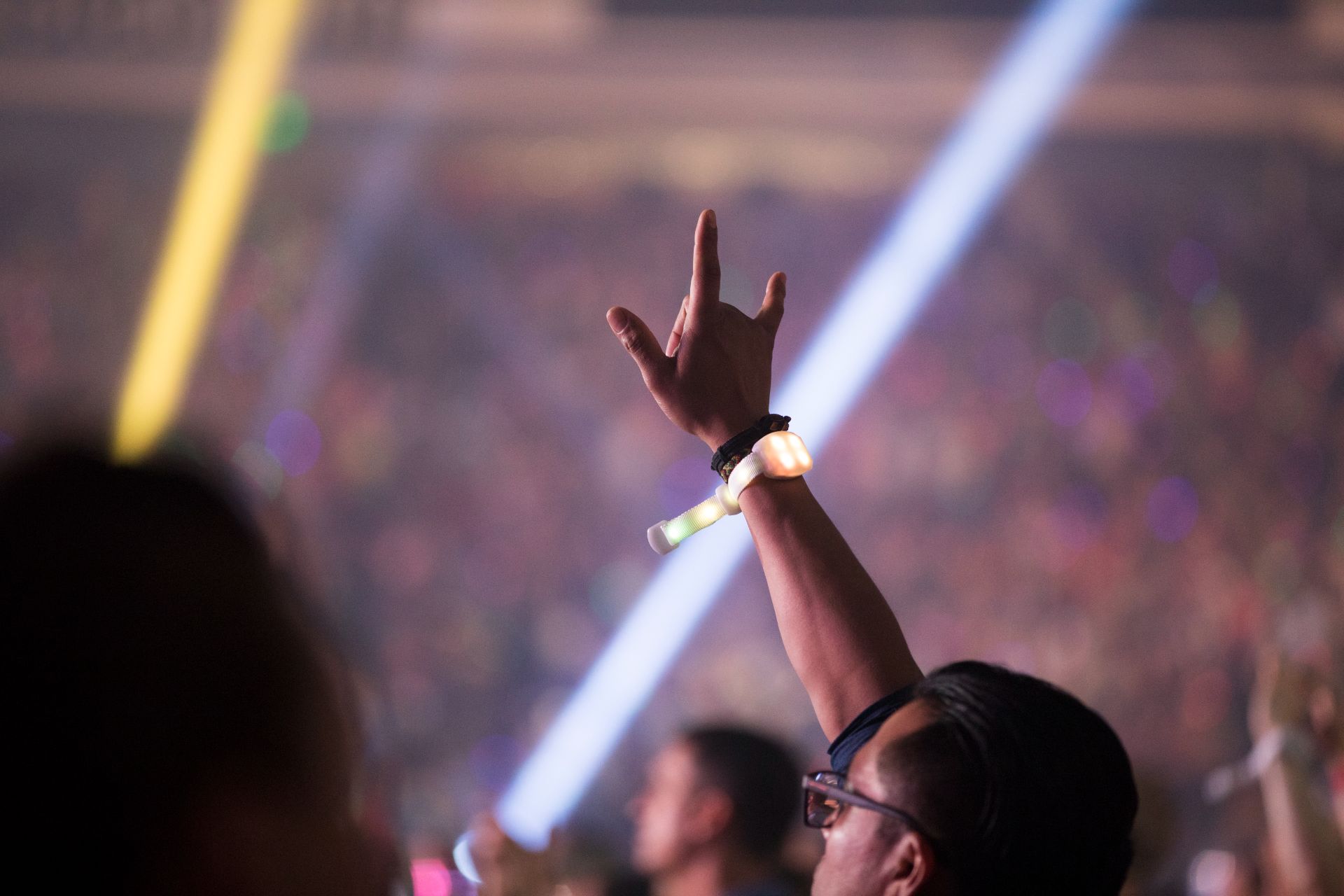
This is the philosophy behind Xylobands’ Immersive Event Technology. Our Radio Controlled LED Wristbands and other LED Wearables allow a lighting designer to paint with the crowd itself. We’ve seen this principle deployed with stunning effect across numerous televised events. For major broadcasters like ITV, our systems have become a key tool for lighting the studio audience on shows like Beat The Chasers, turning the crowd into a dynamic, pulsating backdrop that enhances the on-screen drama without compromising image quality.
This approach scales from the intimate TV studio to the grandest stages. When Maluma’s historic hometown concert in Medellín was streamed to over 240 countries, Xylobands helped translate the palpable energy of 54,000 fans into a mesmerizing visual spectacle for the global broadcast audience. Similarly, at the Formula One 75th anniversary event—a live broadcast featuring all 20 drivers—our custom LED Lanyards turned the arena audience into a dynamic component of the show, creating camera-friendly effects that traditional lighting simply couldn’t replicate.
Precision, Control, and a Flawless Picture
This new paradigm of LED Crowd Experiences is made possible by robust control technology. Using powerful RF or DMX transmitters, a show operator can program and cue mesmerizing effects in perfect sync with the music, action, and broadcast cues. This gives a broadcast director an incredible creative tool. Instead of just "lighting the crowd," they can now call for specific colors to sweep across sections, pulse the entire arena to a beat, or create intricate patterns that provide a rich, textured background for wide shots.
Because the light originates from low-power LED Bands distributed throughout the audience, the effect avoids the harsh, top-down glare of floodlights. The result is a more nuanced and visually interesting picture, rich with depth and dimension. This a core element of modern Corporate Event Activations and large-scale Immersive Events designed for a broadcast component.
A Unified Spectacle
Ultimately, mastering lighting for a live broadcast is about closing the gap between the in-room experience and the on-screen one. It’s about creating a single, unified spectacle that resonates equally with the cheering fan in the grandstand and the captivated viewer on their couch. By transforming the audience into an illuminated canvas, Wearable LED Technology does more than just solve a technical problem for cameras; it forges a deeper connection between the event and everyone watching, no matter where they are.