The Pattern-Seekers: How Dyslexic Thinking Shapes Immersive Event Technology
The Misunderstood Algorithm: Reframing Dyslexia as a Strategic Advantage
Dyslexia is often framed as a learning disability, a disadvantage to be overcome. In the linear, text-based structures of traditional business and education, this neurological difference can present significant friction. But in the high-stakes world of live events and immersive event technology, where success is measured in moments of collective awe, dyslexic thinking can be a formidable creative and strategic advantage.
The dyslexic brain doesn’t process information linearly. Instead, it operates like a powerful parallel processor, constantly seeking patterns, making connections, and visualising complex systems in three dimensions. While others see a spreadsheet, the dyslexic mind sees a dynamic, interconnected network. This is not a handicap; it’s a different cognitive algorithm, one uniquely suited to the multi-sensory, non-linear environment of a modern live spectacle.
A Spark at Glastonbury: The Genesis of Xylobands
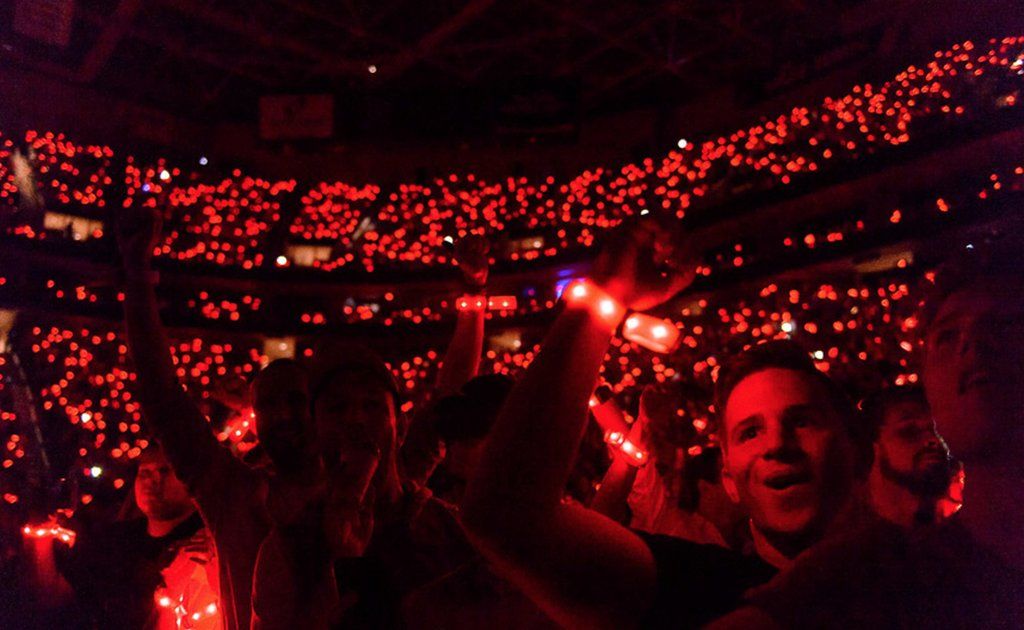
The story of Xylobands is, at its core, a story about the power of dyslexic thinking. In 2011, our founder, Jason Regler, was at Glastonbury Festival, watching Coldplay perform. As the iconic lyrics of "Fix You" — "Lights will guide you home" — washed over the crowd, he didn’t just hear the music. He saw a pattern. He envisioned a system. He imagined the entire audience not as passive observers, but as a single, living canvas of light, unified by a shared, synchronised experience.
This wasn’t a linear thought. It was a holistic, sensory leap — a moment of profound systems-thinking. Where others saw thousands of disconnected individuals, Jason saw the potential for a network. This ability to perceive the whole, to see the interconnectedness of the crowd, the music, and the environment, is a hallmark of the dyslexic cognitive style. The idea for radio controlled LED wristbands wasn’t born from a business plan; it was born from a moment of intense, intuitive pattern recognition.
"The vision was simple yet revolutionary. Instead of thousands of people holding up lighters or mobile phones, the entire audience could become one living light show, perfectly synchronised with the music."
From Big-Picture Vision to Technical Execution
Translating a big-picture, holistic vision into a tangible, scalable technology is where the dyslexic advantage truly comes into focus. Dyslexic thinkers often excel at seeing the "big picture" but can struggle with granular, sequential tasks. This necessitates a different approach to problem-solving: one built on delegation, collaboration, and a relentless focus on the core concept.
Bringing the first Coldplay Xylobands to life for the Mylo Xyloto tour required building a team of specialists who could execute on the granular details, freeing the visionary to continue refining the overall system. This is a powerful model for innovation in any field. The pattern-seeker identifies the destination and sketches the map; the specialists navigate the terrain. This collaborative synergy is essential for creating groundbreaking products, whether it’s pioneering wearable LED technology or designing complex corporate event activations.
The Architecture of Immersive Events
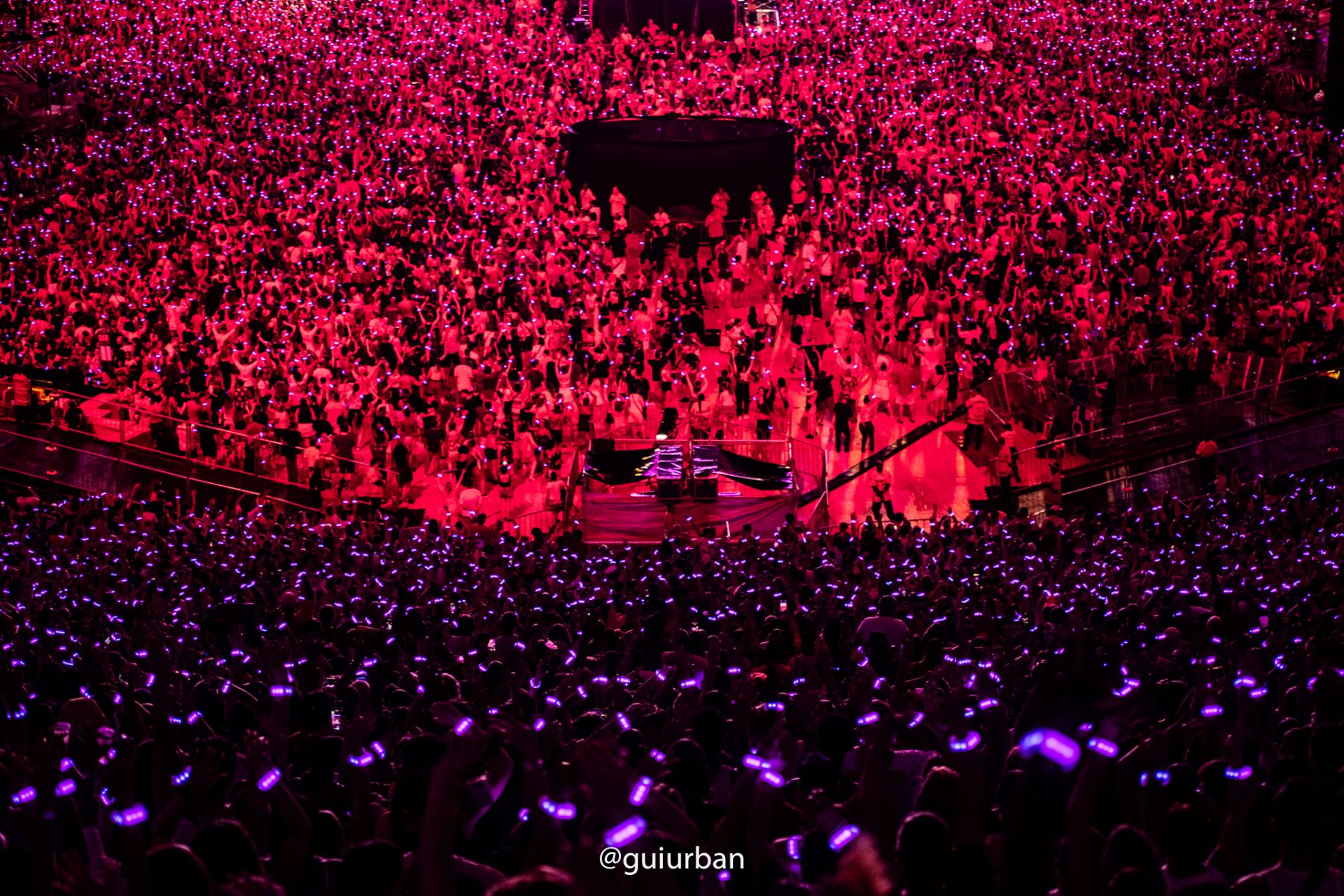
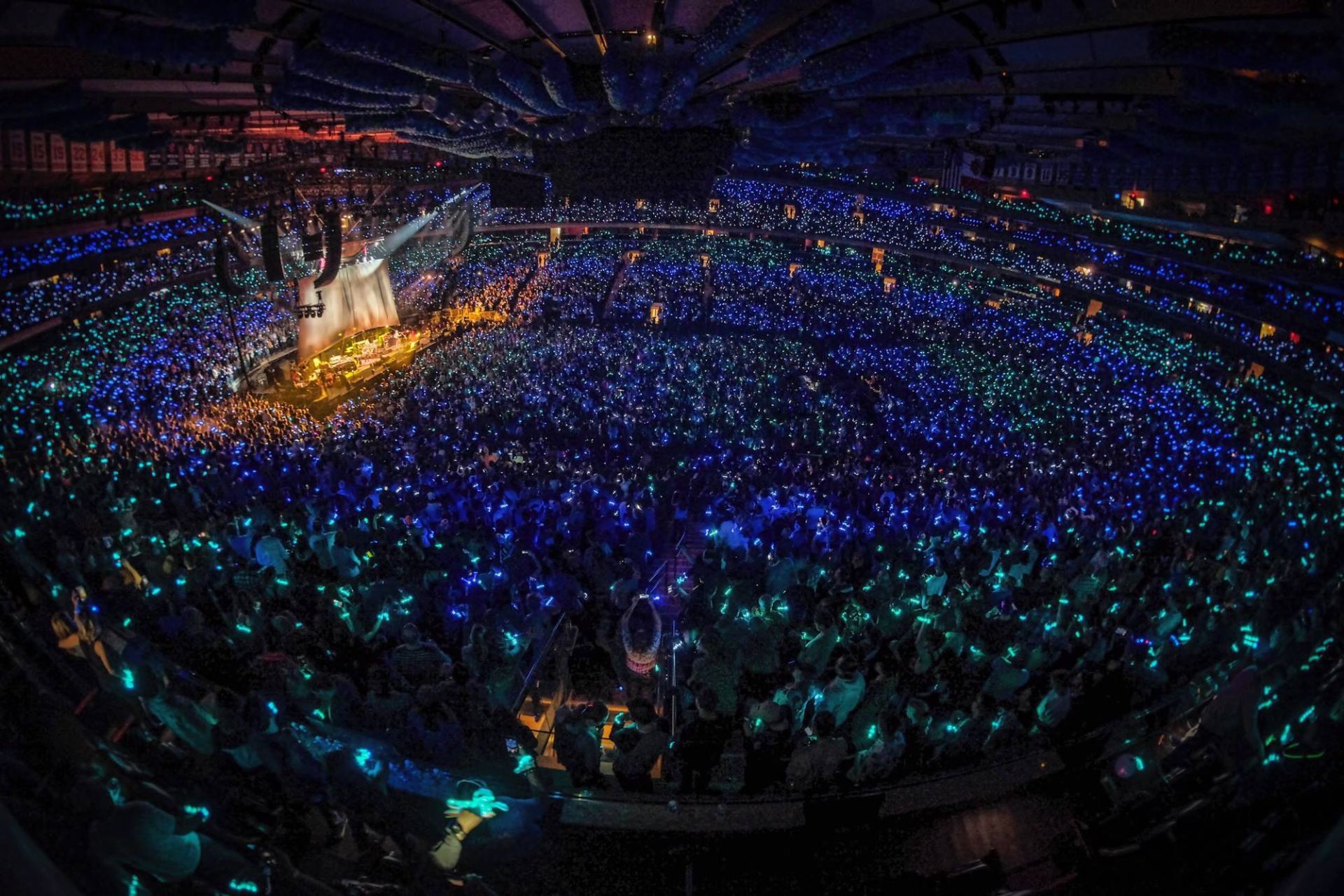
Today, the principles of that initial vision are embedded in every large-scale event we power. Designing LED crowd experiences is an exercise in systems thinking. It’s not just about providing concert wristbands; it’s about architecting a temporary, dynamic network that connects every single person in the venue.
Consider the logistical and creative complexity of an event like the Formula 1 75th Anniversary. We didn’t just supply 13,000 custom pendants; we mapped their distribution around The O2 Arena based on the specific, dynamic lighting effects the creative team wanted to achieve. This required visualising the entire stadium as a 3D grid, anticipating crowd flow, and understanding how thousands of individual lights would coalesce into a single, cohesive visual for both the live audience and the global broadcast. This is spatial, systems-level thinking in its purest form.
Key Attributes of Dyslexic Thinking in Event Tech:
- Holistic Visualisation: Seeing the entire venue, crowd, and stage as a single, interconnected system rather than disparate parts.
- Pattern Recognition: Identifying opportunities for connection and synchronicity in music, lighting, and audience emotion.
- Complex Problem-Solving: Mentally simulating how a complex system (like thousands of LED bands) will behave in a live environment.
- Strong Narrative Sense: Structuring an event’s emotional arc and understanding how technology like Xylobands can be used to amplify key moments.
Conclusion: The Neurodiverse Edge
The live events industry is in the business of manufacturing "wow" moments. It’s about creating shared experiences that are felt as much as they are seen. This requires a departure from linear, conventional thinking. It demands the ability to imagine and construct entire sensory worlds from scratch.
Embracing neurodiversity is not just a matter of social responsibility; it is a competitive necessity. The minds that see the world differently are the ones that are best equipped to reshape it. The dyslexic ability to connect disparate ideas, to see the hidden patterns, and to visualise complex systems is not a bug — it’s a feature. It is the cognitive engine that drives the creation of truly immersive events, turning a crowd of thousands into a unified, pulsating canvas of light.