The Camera Never Blinks: Engineering Light for the Global Broadcast
The Second Audience: Why On-Camera Lighting is a Discipline in Itself
For decades, the objective of event lighting was simple: to illuminate the performers and create an atmosphere for the people in the room. The metrics for success were the gasps and cheers of the live audience. Today, that room has expanded to encompass the entire globe. A sold-out arena of 20,000 is now dwarfed by a broadcast audience of millions, watching live on screens from their homes, in bars, and on the move. This shift has fundamentally altered the priorities of lighting design. The camera is now the most important audience member.
Lighting for a global broadcast is a discipline distinct from traditional stage lighting. What appears spectacular to the naked eye can translate poorly on screen, appearing blown-out, flat, or riddled with the dreaded flicker. Modern live productions, from primetime game shows like ITV’s Beat The Chasers to major sporting events like the Davis Cup, are engineered with a “camera-first” philosophy. The goal is to create a spectacle that feels just as vibrant and dynamic through a lens as it does from the front row.
This requires a deep understanding of sensor technology, colour science, and broadcast engineering. It’s an art form where the lighting director must serve two masters: the visceral experience of the live crowd and the unforgiving, technical eye of the broadcast camera.
The Physics of Flicker: Mastering Frequency for the Modern Lens
One of the greatest technical challenges in broadcast lighting is managing flicker. The human eye can perceive continuous light from sources that are, in reality, turning on and off at high speed. A camera’s sensor, however, captures the world in a series of distinct frames. If the refresh rate (or pulse-width modulation, PWM) of an LED light source is not perfectly synchronised with the camera’s frame rate, the result is a distracting, visible flicker or banding on screen—a death sentence for any professional broadcast.
High-end LED event technology is engineered to solve this problem. At Xylobands, our systems are designed with high-frequency PWM that is imperceptible to even the most sensitive high-speed broadcast cameras. This ensures that every pulse of light, whether from a wristband in a stadium or a lanyard at a corporate event, is rendered as a clean, stable, and cinematic source of illumination. It’s a technical detail that makes all the difference, allowing camera directors to shoot with confidence, knowing the audience’s light will be as reliable as the key lights on stage.
Designing for Depth and Dimension on Screen
A live audience perceives depth and space intuitively. A broadcast audience sees only what the camera shows them—a flattened, two-dimensional image. Effective broadcast lighting must therefore create a sense of depth and dimension on screen. This is achieved not just by lighting the performers, but by turning the entire environment into a dynamic visual landscape.
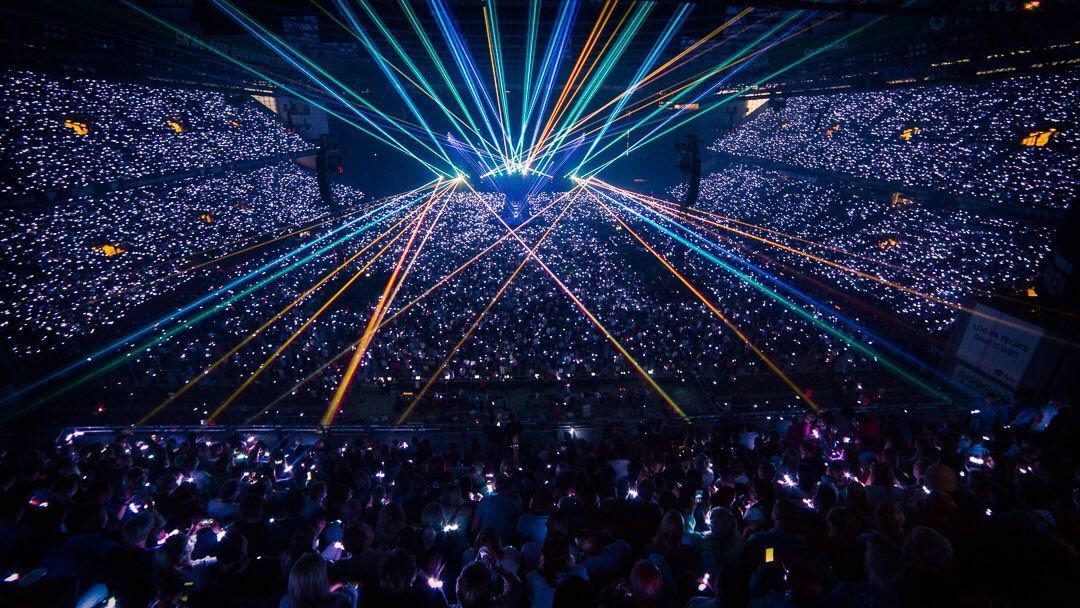
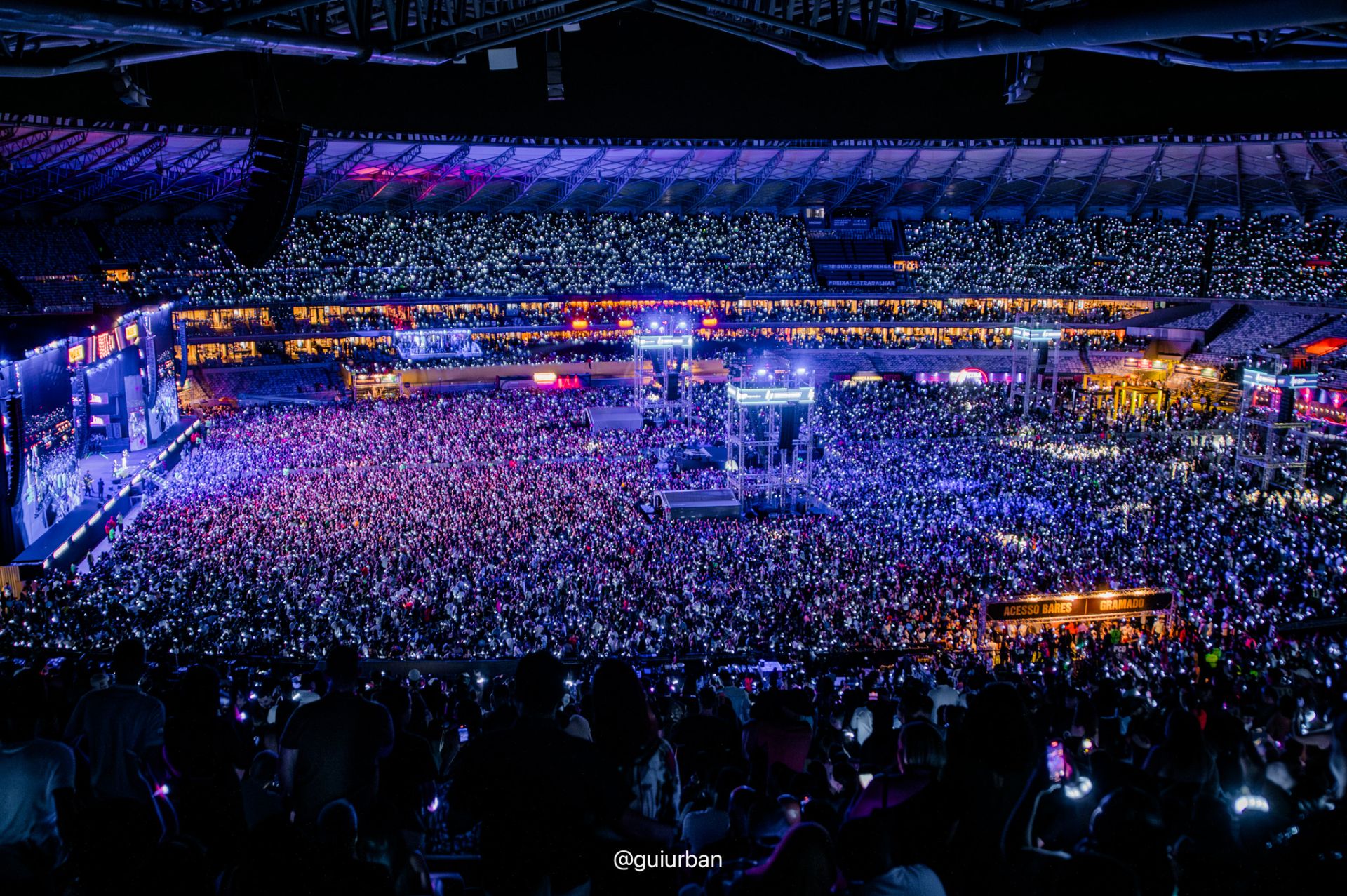
This is where LED crowd experiences become a powerful tool. By distributing thousands of points of light throughout the audience, we give camera operators a rich, textured background to frame their shots against. Instead of a dark, anonymous void, the crowd becomes a living, breathing canvas.
- Creating Layers: For a show like Maluma’s historic Medellín concert, which was streamed live to over 240 countries, turning the 54,000-strong crowd into a light show added immense visual depth to wide shots, transforming the stadium into a multi-layered spectacle.
- Defining Space: For the 75th-anniversary celebration of Formula One, custom LED Lanyards helped define different sections of the arena, allowing broadcast directors to create distinct visual zones and guide the viewer’s eye through the massive space of The O2 Arena.
- Dynamic Backdrops: When the crowd becomes part of the lighting design, it provides a constantly moving, organic backdrop that is far more engaging than a static set. It allows for sweeping wide shots that capture the scale and energy of the event, making the at-home viewer feel like they are part of something truly massive.
Colour, Contrast, and the Science of Storytelling
Colour is a primary storytelling tool in lighting design, but its translation to the screen is not always straightforward. A shade that looks rich and saturated in person might appear muted or cause colour-spill on camera. Broadcast-friendly lighting design requires a meticulous approach to colour and contrast.
“The challenge is to create a world that feels both spectacular for the live audience and technically perfect for the millions watching at home. You can’t sacrifice one for the other. The technology must be robust enough to serve both experiences simultaneously.”
Our palette is calibrated to align with the colour spaces used in professional broadcasting, ensuring that the hues designed by the creative team are the same ones the audience sees at home. This is particularly crucial for events where specific brand colours are paramount. When we work with clients like Formula One or the NFL, we ensure their iconic colours are rendered with perfect accuracy on screen, reinforcing brand identity throughout the broadcast.
Contrast is equally important. By placing bright, synchronised Xylobands within the deep blacks of an arena, we create powerful visual contrast that adds drama and excitement. These moments are engineered to be visually arresting, whether you are in the last row of the stadium or watching on a smartphone screen. It’s about creating pockets of light that draw the eye and punctuate the key moments of a performance or event.
The Future is a Shared Experience
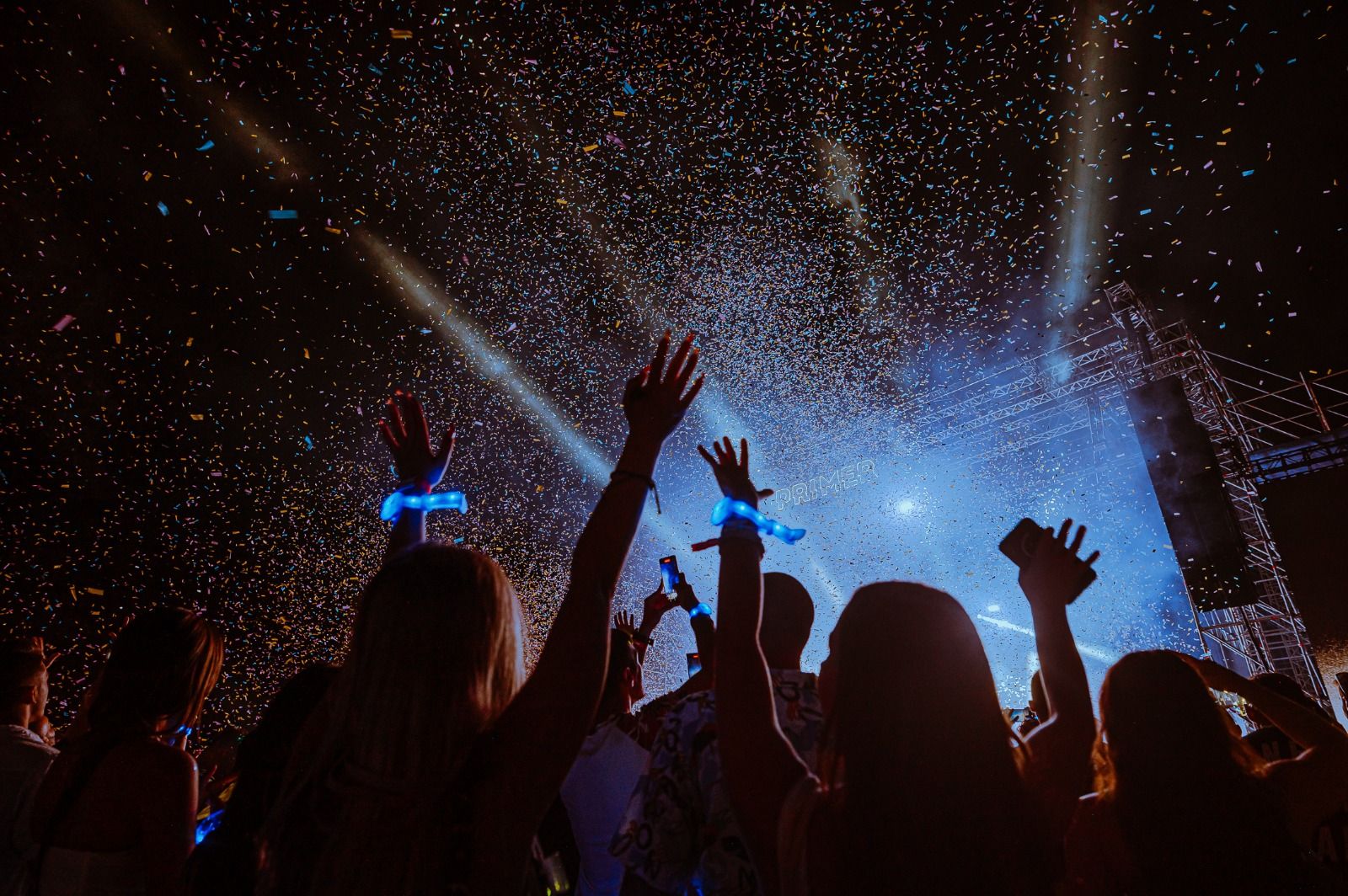
The line between a live event and a broadcast production has dissolved. Today, they are one and the same. From music festivals like Primer in Greece to global sporting spectacles, the ambition is to create a unified, shared experience. The technology we create is a bridge between these two worlds, ensuring that the energy, the colour, and the emotion of the live moment are transmitted with maximum impact to the millions watching around the globe.
By engineering our wearable LED technology to be flawlessly camera-friendly, we empower producers and directors to push creative boundaries. They can treat the audience not as a passive observer, but as a key visual component of the show. It’s a new era of immersive events, where every single person, whether in the venue or at home, is part of the same breathtaking spectacle.