The Festival as Canvas: A New Era of Crowd Co-Creation
From Passive Observers to Active Participants
For decades, the festival experience was largely a one-way transmission. Artists performed on a distant stage, and the crowd’s role was to receive, to applaud, to sing along. The most advanced audience interaction technology was the humble Bic lighter, held aloft during a ballad. While powerful in its own right, this form of participation was analogue, individual, and uncoordinated.
The arrival of mobile phones created a sea of digital lighters, but the principle remained the same. It was a gesture of appreciation, a collection of individual lights rather than a unified canvas. The modern festival, however, is undergoing a profound transformation. Production trends are moving away from this passive model, leveraging immersive event technology to turn the audience itself into a core component of the show’s design. The crowd is no longer just watching the spectacle; it is becoming the spectacle.
The Dawn of Collective Light
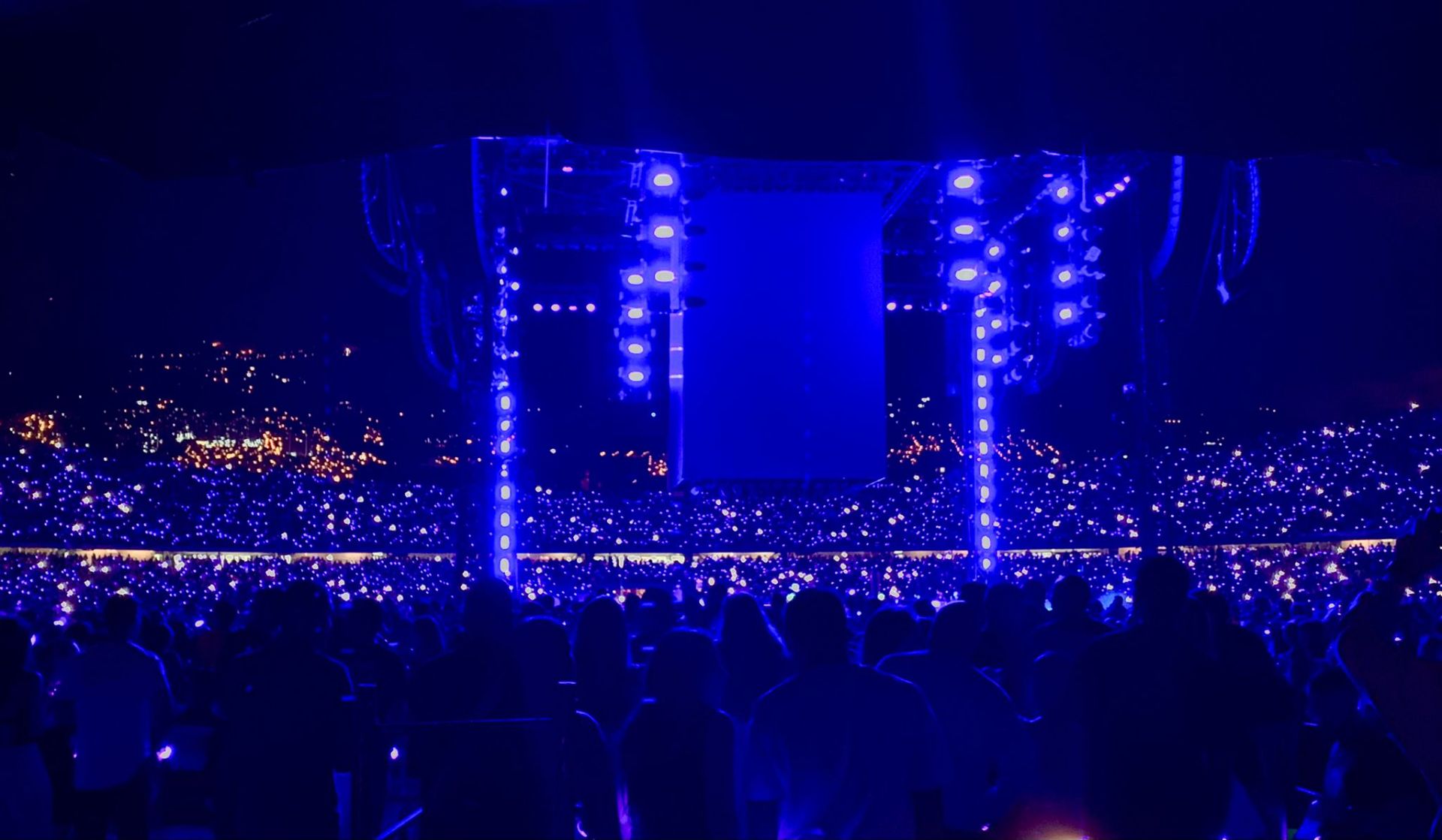
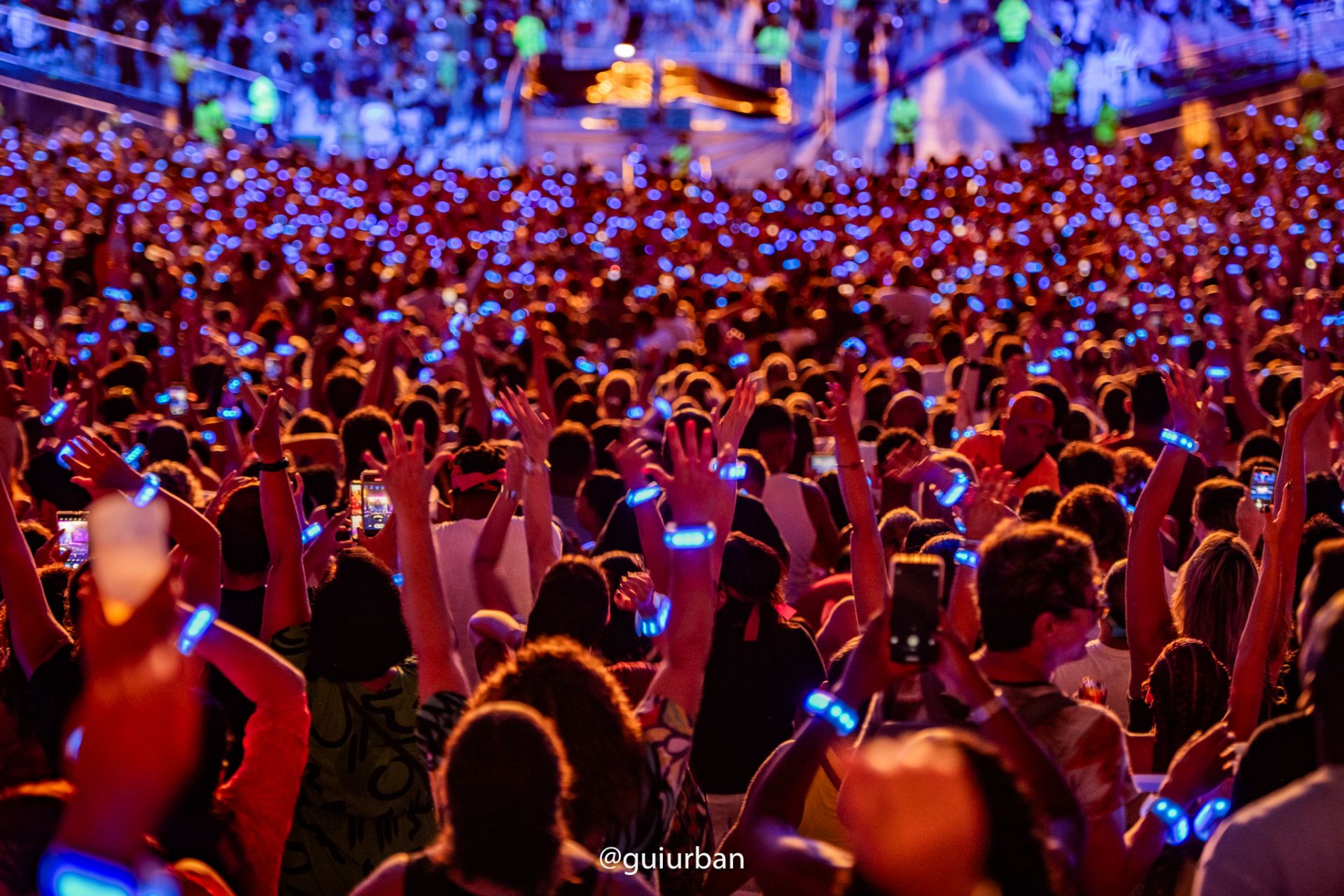
The true paradigm shift began with the introduction of radio-controlled LED wristbands. What Xylobands pioneered with Coldplay’s Mylo Xyloto tour was the idea that every single audience member could become a pixel in a vast, moving light show. This wasn’t just about giving people a glowing bracelet; it was about networking the entire audience into a single, cohesive entity, controlled in perfect sync with the music, lighting, and video.
This technology fundamentally alters the relationship between the artist, the environment, and the fan. When tens of thousands of LED wristbands flash in unison, chasing colors across a stadium or pulsing to the beat of a drop, the emotional impact is magnified. It creates a powerful visual representation of collective energy, a sense of unity that passive observation cannot replicate. The individual is no longer anonymous in the dark but an essential part of a breathtaking visual tapestry. It’s a principle we’ve seen ignite audiences at events like Greece’s PRIMER Music Festival, where our technology helped unify thousands of electronic music fans into one pulsating organism of light and sound.
Beyond the Wrist: Expanding the Immersive Toolkit
While festival wristbands were the catalyst, the trend toward crowd co-creation now incorporates a wider array of wearable LED technology. The creative palette available to event producers has expanded dramatically, allowing for more nuanced and sophisticated forms of interaction.
Consider the possibilities:
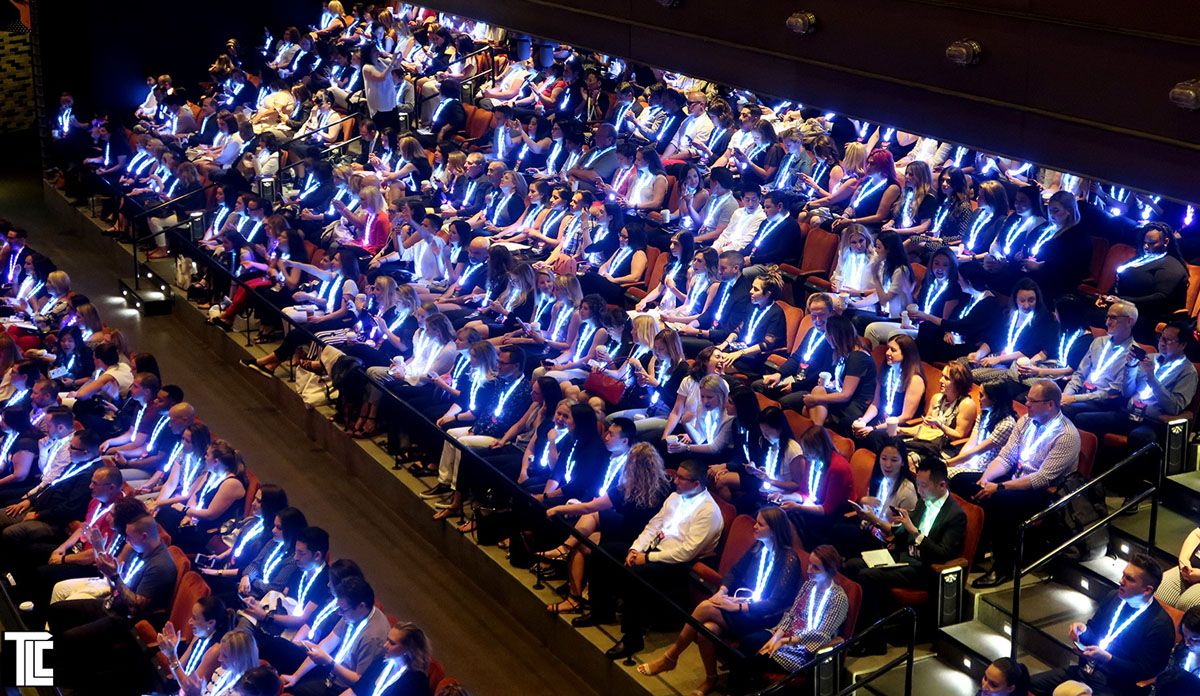
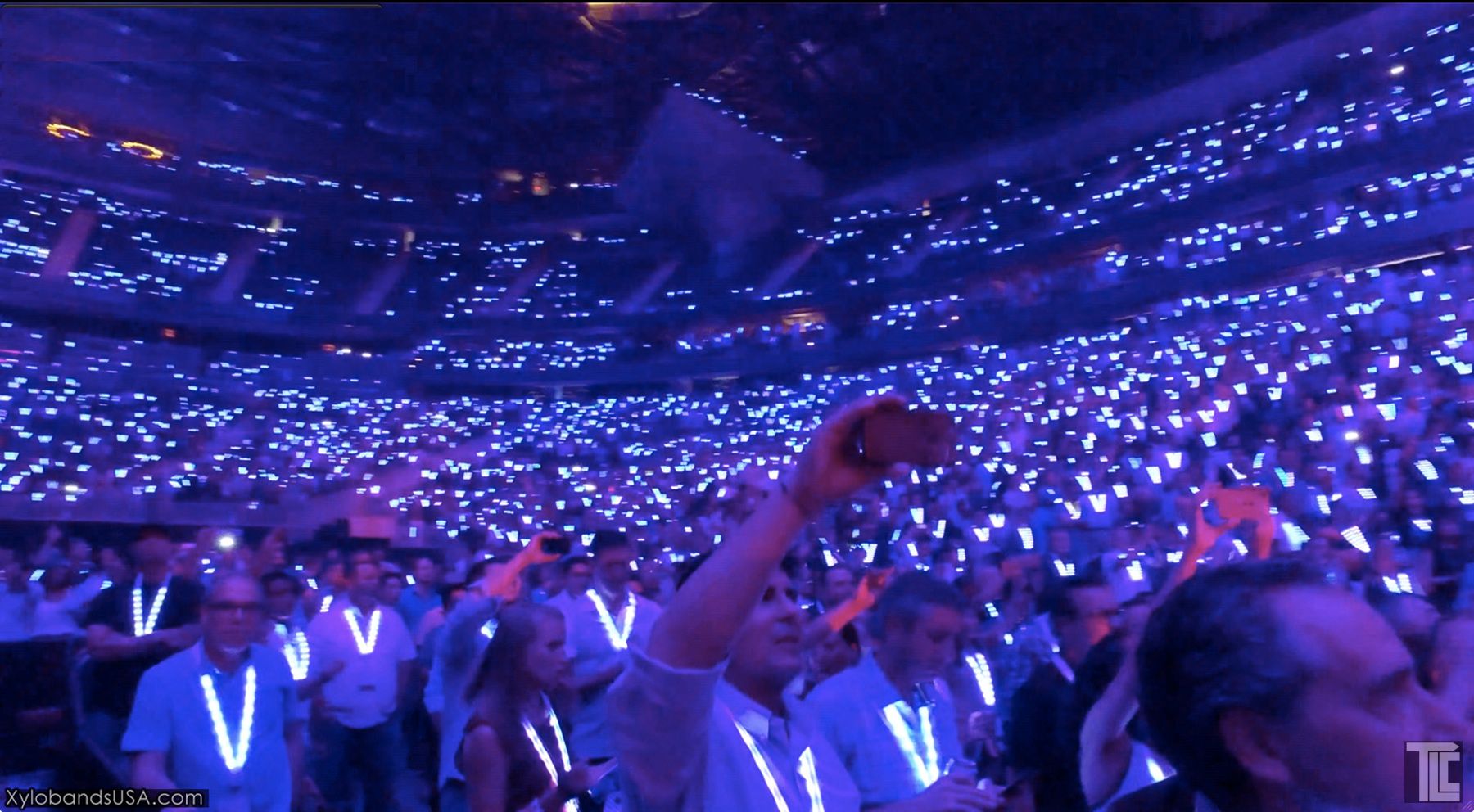
- LED Lanyards: Particularly effective for corporate event activations within a festival setting or for VIP areas, lanyards offer a larger surface area for branding and light. They can be programmed to identify different zones, groups, or access levels, creating layered visual effects across the crowd.
- LED Orbs: Larger, handheld orbs distributed among the audience can be thrown, passed, and bounced, creating dynamic, unpredictable light trails that flow through the space. They transform the audience space into a three-dimensional playground of light.
- Custom LED Wristbands: The technology is no longer one-size-fits-all. Custom shapes, branding, and functionalities allow the wearables to become integrated with the festival’s identity, turning a piece of tech into a coveted piece of merchandise and a lasting memento.
This expansion of the toolkit allows for a more granular and narrative-driven approach to show design. At the Formula One 75th Anniversary event, for example, custom Xylo Pendants were used to segment the audience by team and hospitality level, enabling dynamic effects that told a story, highlighting different groups at key moments in the broadcast. This is the future of immersive events: using light to guide attention and build narrative directly within the crowd.
The Psychology of Co-Creation
This evolution is not just about dazzling visuals; it’s rooted in the psychology of shared experience. When attendees are given a tool that makes them a visible, active part of the performance, their sense of agency and belonging skyrockets. They are contributing, not just consuming.
This shift taps into a fundamental human desire for community and participation. In a world saturated with digital and often isolating experiences, the modern festival offers a powerful antidote: a moment of tangible, physical unity, amplified by technology.
The data from these systems also opens new frontiers. Knowing where the light is—and by extension, where the people are—can have applications beyond the purely artistic. It informs crowd management, safety protocols, and even venue design. A sentient crowd, mapped by light, is a safer, more responsive crowd.
The Road Ahead: A Fully Integrated Experience
The trajectory is clear. The future of festival production lies in deeper integration, where the line between stage and audience dissolves almost completely. We are moving toward a reality where every attendee is a node in an interactive network, their movements, their energy, and their location all potential inputs into the creative engine of the show.
From the first lighters held aloft at Glastonbury to the synchronized Glastonbury wristbands of the modern era, the desire for participation has always been there. Today, LED event technology has finally caught up to that desire. The festival is no longer just a stage and a field; it’s a living, breathing canvas. And the audience, now equipped with light, holds the brush.