From Lighters to LEDs: A Brief History of Audience Participation Tech
The Analogue Spark: A Sea of Flames
For decades, the rawest form of audience participation was beautifully simple: the lighter encore. It was a spontaneous, analogue signal from the crowd to the artist—a collective plea for one more song. Thousands of tiny flames flickering in the dark, creating a shared, primal experience. This wasn’t just about illumination; it was a physical manifestation of emotion, a direct line of communication from the heart of the audience to the stage. In its time, it was the peak of immersive events, turning a crowd of individuals into a single, unified entity.
Then came the mobile phone. The sea of flames was replaced by a galaxy of screens, each held aloft, capturing and rebroadcasting the moment. While this new form of participation connected the event to the wider digital world, it also introduced a layer of separation. The focus shifted from being fully present in the shared experience to documenting it. The collective gave way to the individual, and the raw, unfiltered connection of the lighter era began to fade.
The Digital Dawn: The Birth of Controlled Immersion
The desire for that collective feeling never went away. In fact, it grew stronger. Event producers and artists sought new ways to unify their audiences and deepen the connection between the stage and the crowd. This quest for a modern, controllable form of mass participation led to a pivotal moment in live event history.
The inspiration struck our founder, Jason Regler, during a Coldplay performance at Glastonbury. As the iconic line “Lights will guide you home” rang out, he envisioned a new kind of light—one that wasn’t held by the audience but worn by them. He imagined the entire crowd transformed into a single, pulsating canvas of light, perfectly synchronised to the music. This wasn’t just about replacing the lighter; it was about elevating the very concept of audience participation. It was the birth of Xylobands.
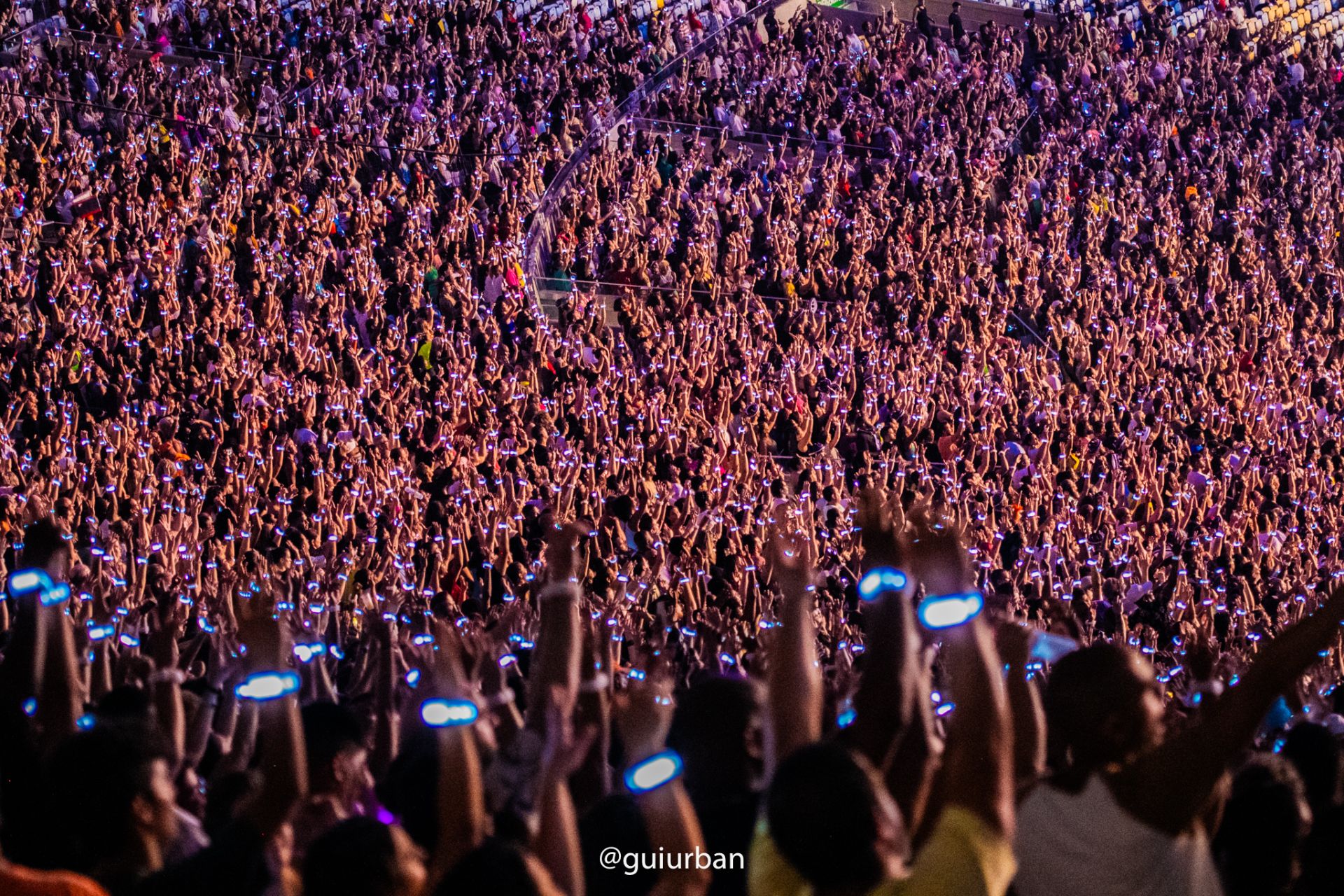
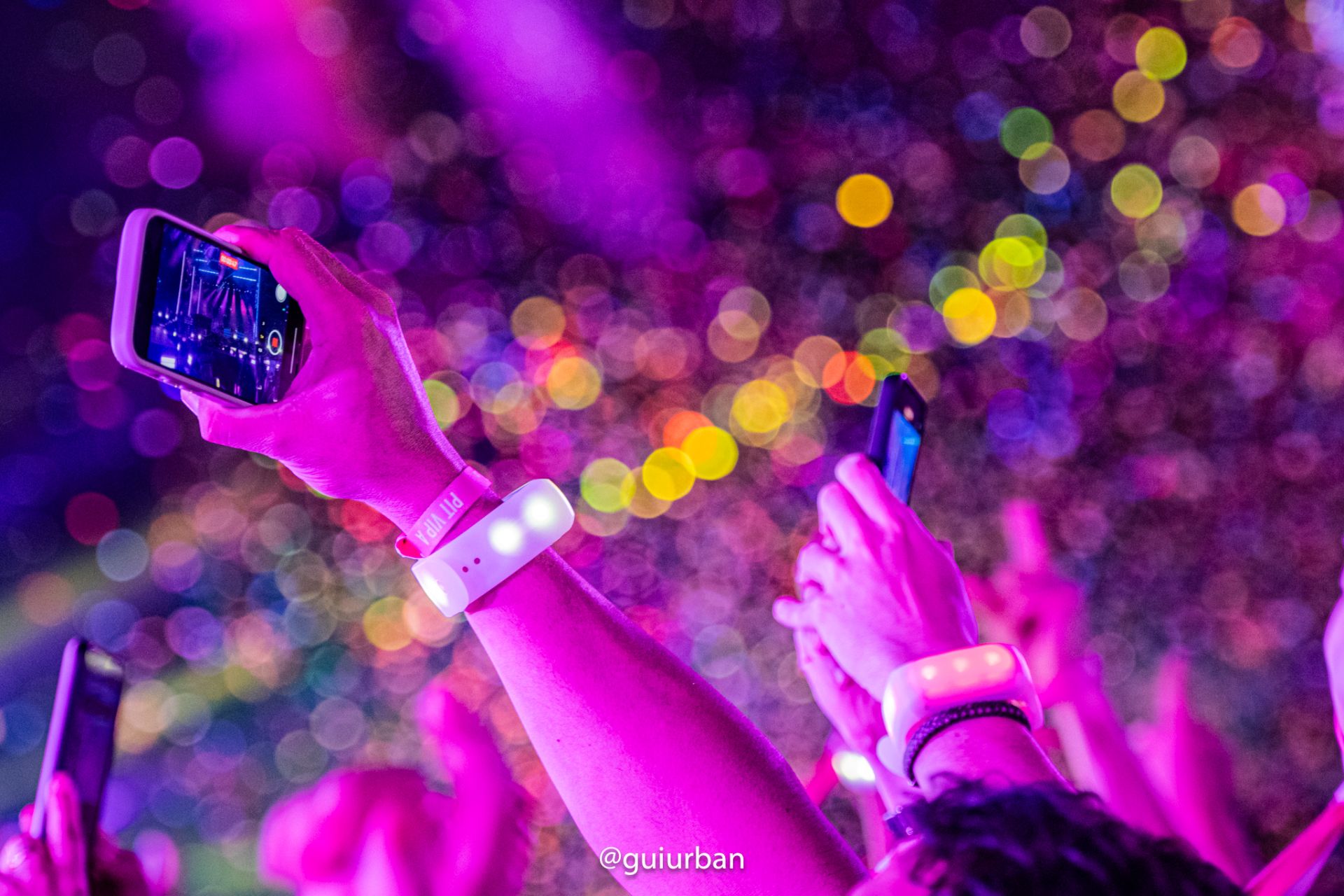
Debuting on Coldplay’s Mylo Xyloto tour in 2012, these radio controlled LED wristbands turned Jason’s vision into a global phenomenon. Suddenly, the light show wasn’t just happening on stage; it was the audience itself. The Coldplay Xylo Band became a new visual signature for the band, a tool for creating breathtaking moments of unity on a massive scale.
The Modern Canvas: Weaving Light, Sound, and Story
The invention of the LED wristband opened a new frontier in immersive event technology. What began as a tool for music concerts quickly demonstrated its power across a vast landscape of live experiences. From the electric atmosphere of music festivals like Greece’s PRIMER to the high-stakes drama of the Davis Cup, wearable LED technology has become a core component of modern event production.
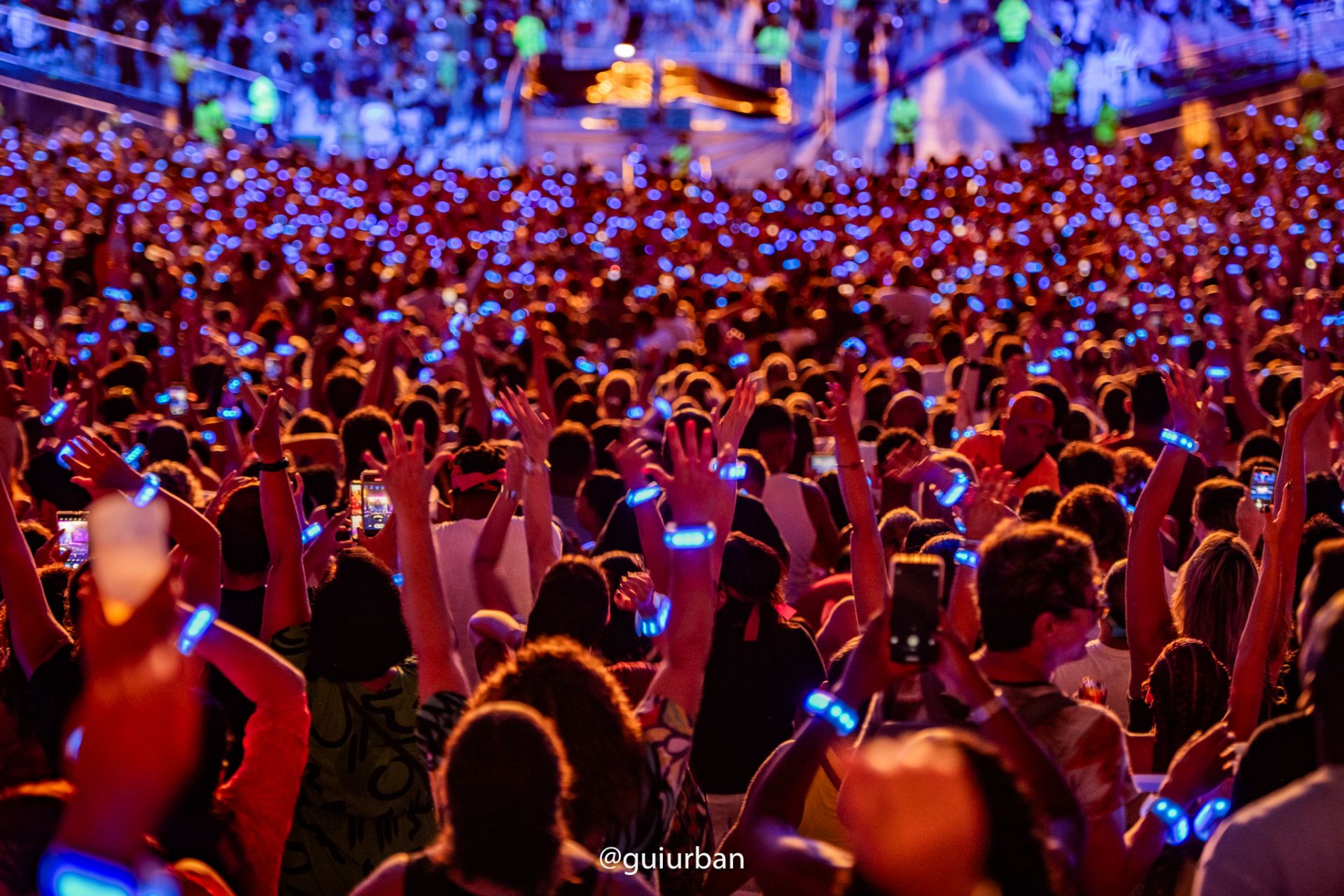
Today, the technology has evolved far beyond a simple on/off flash. Using a sophisticated mix of RF, DMX, and sometimes Infrared, a single lighting designer can choreograph a crowd of thousands, painting with light across an entire stadium. It’s a powerful tool for storytelling, capable of:
- Creating Visual Narratives: Isolating sections of the crowd, creating waves of colour, or pulsing in time with a dramatic moment.
- Enhancing Brand Activations: Transforming corporate events from passive presentations into dynamic corporate event activations. Brands like Formula One have used custom pendants to segment the audience, creating a tailored visual experience for different fan groups and hospitality tiers within the same event.
- Boosting Broadcast Value: For televised events like those produced by ITV or the globally streamed Maluma concert, the visual spectacle of a fully illuminated crowd adds immense production value, making the at-home viewing experience more dynamic and engaging.
Beyond the Wristband: The Expanding Ecosystem of Light
The evolution continues. The core technology that powers LED bands has been adapted into a wider ecosystem of interactive tools. LED Lanyards offer new branding opportunities for corporate clients, while LED Orbs—large, illuminated spheres that can be thrown into the crowd—add a playful, kinetic element to the experience. Each innovation is another step towards a more deeply interactive and multi-sensory environment.
This is more than just technology; it’s a new language of connection. It’s about building a bridge between the artist and the audience, the brand and the consumer, the team and the fan. It turns spectators into active participants, making them an essential part of the performance. We’ve seen it with artists from Wizkid to Aiko, and in global sporting events for brands like the UFC and FIFA. The technology allows for the creation of singular moments of shared experience, where tens of thousands of people feel like they are part of something bigger than themselves.
From the first analogue spark of a flickering lighter to the intricate, digitally controlled LED crowd experiences of today, the goal has remained the same: to feel connected. As we continue to push the boundaries of what’s possible, we’re not just creating light shows; we’re building frameworks for shared human experience, one pulse of light at a time.