The Human Canvas: Festival Production and the Evolution of Crowd Participation
From Spectators to Spectrum: The New Festival Paradigm
There was a time when the festival experience was defined by a simple contract: artists performed, and the audience watched. The energy exchange was real but largely one-directional. The crowd was a sea of passive observers, their participation limited to applause, singalongs, and the occasional Zippo lighter held aloft. Today, that contract has been fundamentally rewritten. The roaring sea of faces is now an active participant, a living, breathing part of the show itself. This is the new festival paradigm, an era where the line between spectator and spectacle has not just blurred but dissolved entirely.
The modern festival producer understands a critical truth: in the experience economy, passive consumption is dead. Audiences, weaned on interactivity and personalisation, crave deeper forms of engagement. They don’t just want to see the show; they want to be the show. This shift has catalysed a revolution in live production, forcing creators to think beyond the stage and into the very heart of the crowd. The audience is no longer just a target for sound and light; they are a canvas, a dynamic medium for artistic expression.
The Evolution of Engagement: A Brief History
The journey from passive audience to active participant has been a gradual, technology-fuelled evolution. It began with simple tools of mass participation. The "Mexican wave" was perhaps the first analogue instance of a crowd becoming a single, coordinated entity. Then came the lighters during the ballad, a spontaneous gesture of collective emotion that transformed seas of darkness into constellations of tiny flames.
Mobile phones were the next leap, their screens and flashlights offering a digital, if chaotic, version of the same impulse. But these were all user-driven, unpredictable, and ultimately disconnected from the core production. The true paradigm shift arrived with the advent of centralised, programmable technology capable of unifying every single audience member into a single, cohesive light show.
"The moment you hand someone a piece of wearable technology, you change their relationship with the environment. You’re giving them a role, an invitation to be part of something bigger."
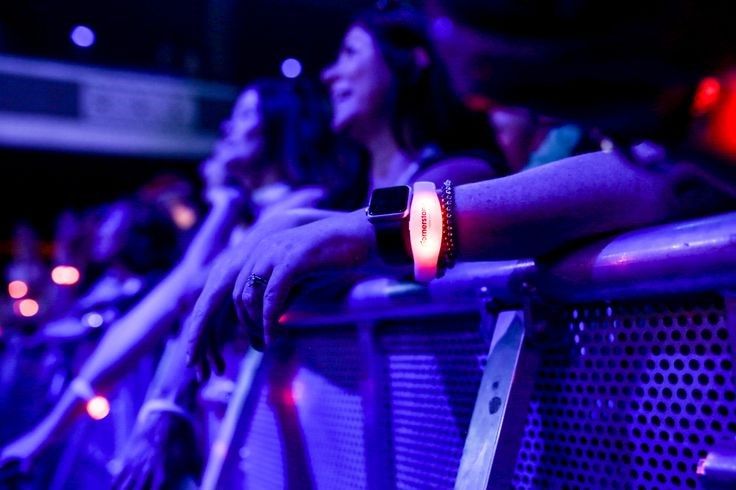
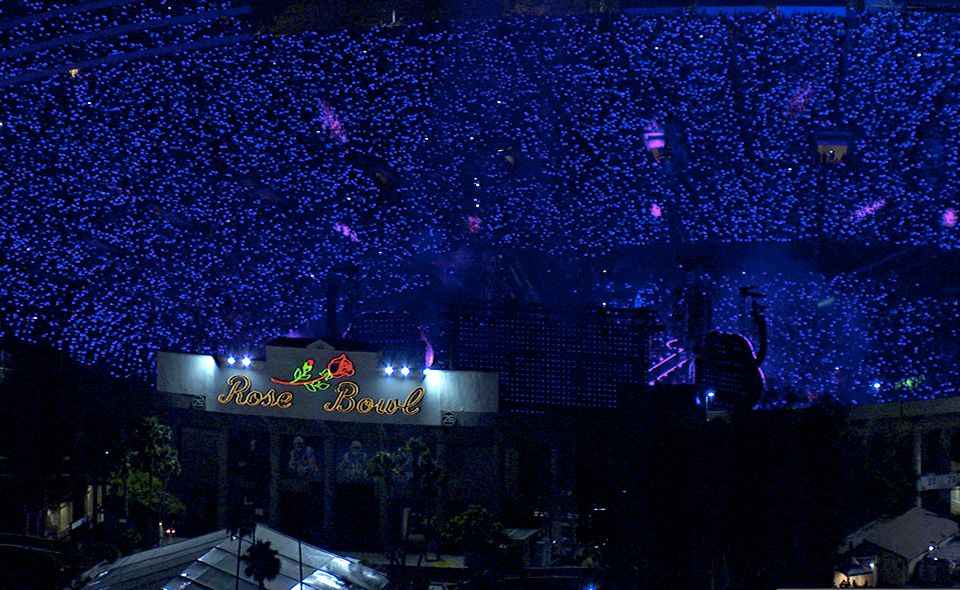
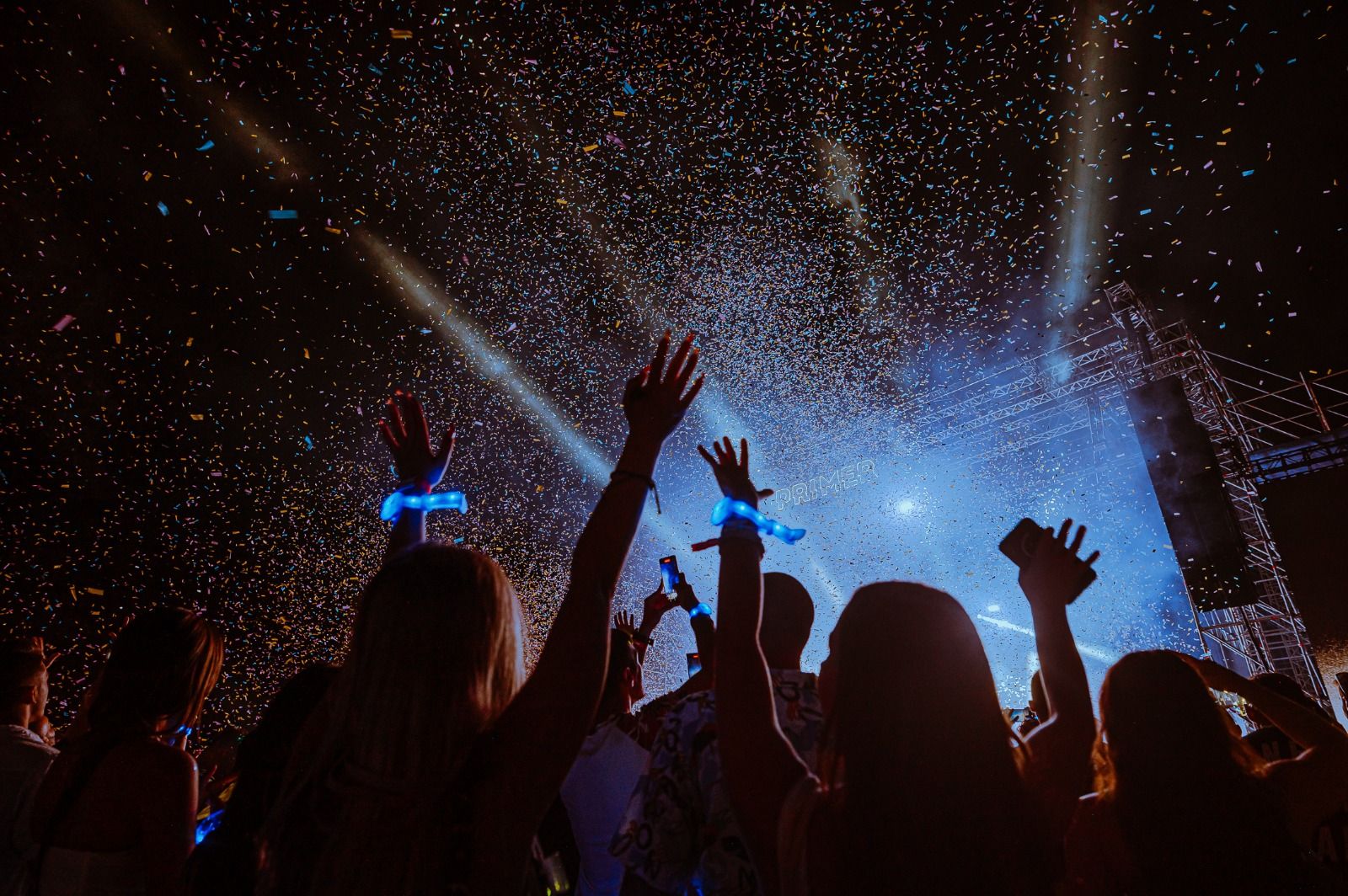
This is where Xylobands entered the narrative. Born from an idea at Glastonbury, the concept of radio controlled LED wristbands turned every individual into a pixel in a grand, moving image. Suddenly, lighting designers had a new canvas—one that was three-dimensional, mobile, and deeply human. This wasn’t just about lighting the crowd; it was about the crowd becoming light itself. This technology allows for the precise choreography of colour and movement, painting waves of light across tens of thousands of people in perfect sync with the music, as seen at major events like the PRIMER Music Festival in Greece. It’s a powerful tool that transforms a collection of individuals into a unified, pulsating organism of light.
The Producer’s New Toolbox: Immersive Event Technology
For the modern festival producer, the toolbox has expanded dramatically. It’s no longer just about sound systems, staging, and video walls. The new frontier is immersive event technology that directly integrates the audience into the creative vision.
- Wearable LED Technology: Beyond wristbands, the ecosystem of LED wearables is growing. LED Lanyards, pendants, and even illuminated clothing are providing more avenues for customisation and audience segmentation. Imagine the VIP section glowing gold while the general audience pulses in blue, or creating complex, team-based visual games across a stadium, as demonstrated at Formula One’s 75th-anniversary event. These devices, like the Custom LED Wristbands used by artists from Coldplay to Wizkid, are essential tools for creating stunning LED crowd experiences.
- Data-Driven Choreography: The next evolution is reactive technology. We are moving towards a future where the crowd’s own energy—their movement, their sound, their collective heart rate—can be used to modulate the lighting and visuals in real-time. The crowd doesn’t just respond to the show; the show responds to the crowd. This creates a biofeedback loop, a true dialogue between the artist and the audience.
- Augmented Reality Overlays: While still nascent in the large-scale festival environment, AR offers the potential to add another layer of visual information, visible through smartphones or future smart glasses. This allows producers to overlay digital art, information, or interactive elements onto the physical world, creating a uniquely personal yet collective experience.
Beyond the ‘Wow’ Factor: The Psychology of Participation
The success of these technologies lies in their understanding of human psychology. When thousands of festival wristbands light up in unison, the effect is more than just visually spectacular. It triggers a profound sense of belonging and collective effervescence—the sociological term for the shared, transcendent energy experienced by a unified group.
By participating in the spectacle, each individual feels seen and valued. They are no longer just a face in the crowd but an essential component of the artistic vision. This elevated sense of purpose deepens their emotional connection to the artist, the music, and the moment. It’s the difference between watching a fireworks display and being given a firework to set off yourself. The latter is a far more empowering and memorable experience. It transforms a concert from a commodity to a memory, a story that each person had a hand in writing.
Crafting the Human Canvas
The art of festival production is no longer confined to the stage. It has expanded to encompass every single person in the field. The greatest challenge and opportunity for producers today is learning how to paint on this vast and dynamic human canvas. It requires a new way of thinking, a holistic approach that sees the artist, the stage, and the audience as a single, interconnected system.
Those who master this new art form will be the ones who define the future of live events. They will create not just concerts or festivals, but true immersive events—powerful moments of collective joy and connection that resonate long after the last light fades. The audience is ready. They are no longer content to just watch the show. They want to be the light in the darkness, the pulse in the crowd, the living, breathing heart of the spectacle. It’s our job to give them the power to shine.