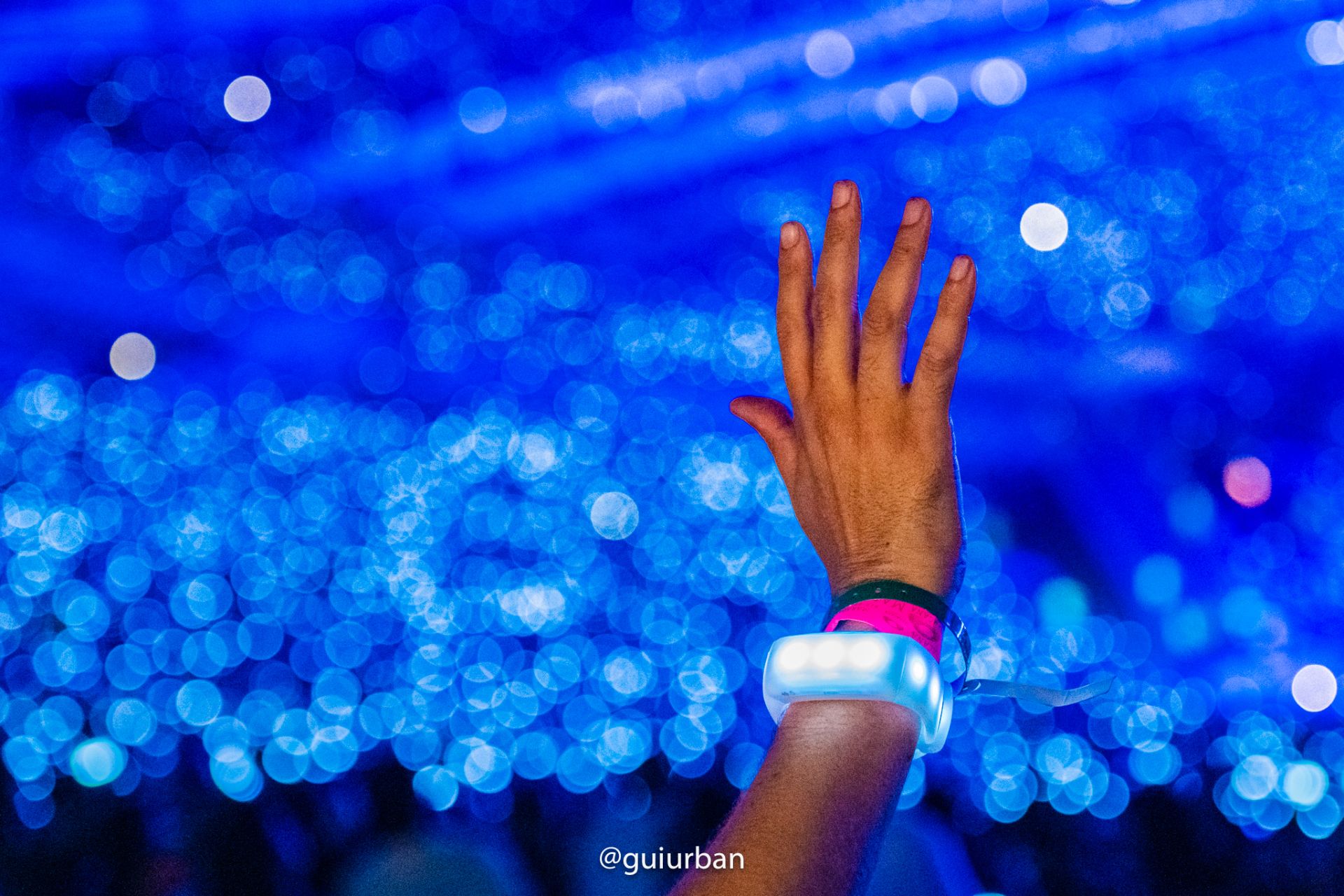
The Invisible Network: An Introduction to LED Wristband Technology
The Anatomy of a Light Show: Deconstructing the Tech
At the heart of every spectacular, crowd-wide light show is a simple yet powerful exchange: a signal sent and a signal received. When tens of thousands of LED wristbands flash in perfect unison, it’s not magic—it’s a masterpiece of wireless communication. This technology, which turns a passive audience into a dynamic, pulsating canvas of light, primarily relies on a few core methods of control: Radio Frequency (RF), DMX, and Infrared (IR).
Each of these technologies serves as an invisible conductor, instructing each wristband to light up, change colour, or pulse to the beat. The choice of technology depends on the environment, the desired scale of the effect, and the specific creative goals of the production. Understanding how they work reveals the sophisticated engineering required to create those breathtaking moments of collective illumination that define modern immersive events.
Radio Frequency (RF): The Power of Distance and Scale
Radio Frequency is the most common technology used for large-scale LED crowd experiences, from stadium concerts to music festivals. The system consists of two main components: a transmitter and the receivers located inside each Xyloband.
A central operator, using a dedicated controller, sends out command signals via a powerful RF transmitter. This transmitter can cover a vast area—often up to a kilometre in radius—making it ideal for arenas, stadiums like Wembley, and even sprawling festival grounds like those at Glastonbury. The radio waves carry data packets containing instructions for the wristbands: which colour to display, when to flash, and how to fade.
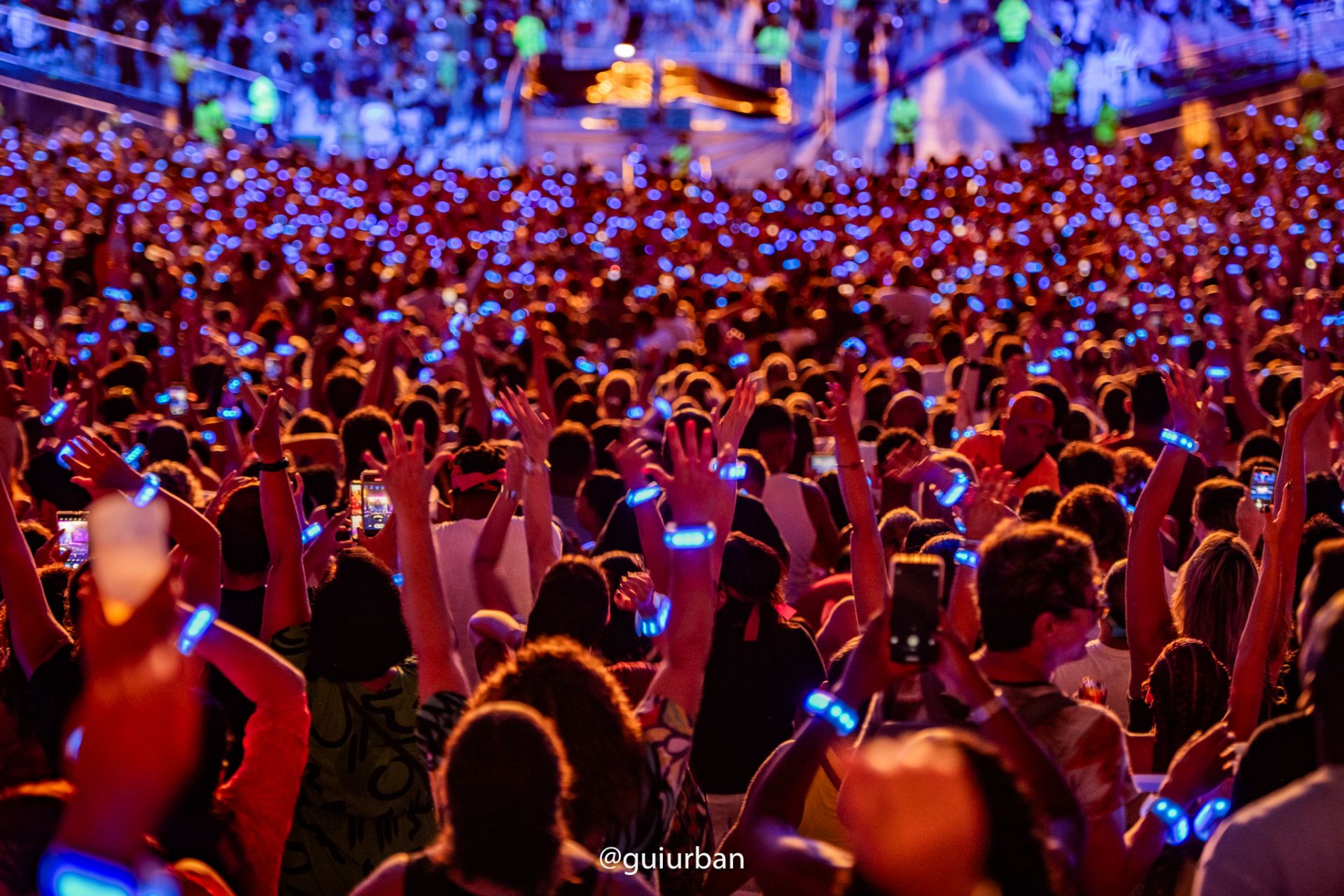
One of the key advantages of RF technology is its ability to penetrate objects like clothing, staging, and even people, ensuring a reliable connection across a massive and densely packed audience. This is the technology that allows an entire stadium to light up simultaneously, creating the iconic visuals seen on world tours for artists like Coldplay or Maluma. Furthermore, operators can divide the audience into zones, sending different signals to different sections of the crowd. This allows for complex visual choreography, such as waves of light rolling across the venue or team colours illuminating opposing fan sections at a sporting event like the Davis Cup.
DMX Control: The Language of Theatrical Lighting
While RF is excellent for broad, large-scale control, DMX (Digital Multiplex) offers a more granular and integrated solution, especially for broadcast events and complex theatrical productions. DMX is the industry-standard protocol for controlling professional stage lighting, and its application to wearable LED technology bridges the gap between audience and stage.
In a DMX-controlled setup, the LED wristbands are integrated directly into the show’s main lighting board. This means the lighting designer can program the wristbands with the same precision and complexity as any other fixture on stage. Every strobe, colour change, and fade is perfectly synchronised with the on-stage lights, video content, and sound cues. This level of integration is crucial for television productions, such as ITV’s Beat The Chasers or the Eurovision Song Contest, where the audience’s light becomes a seamless extension of the set design, creating a visually cohesive experience for the millions watching at home.
By patching Xylobands into the DMX universe, production teams can "paint" with the crowd, treating thousands of attendees as individual pixels in a much larger picture. This unlocks a new level of creative potential for corporate event activations and broadcast spectacles, turning the audience from spectators into a living, breathing part of the show’s design.
Infrared (IR): Precision in Proximity
Infrared offers a third method of control, one defined by precision over short distances. Unlike the wide broadcast of RF, IR uses focused beams of light (invisible to the human eye) to transmit signals. This is the same technology found in a typical television remote control.
In an event context, IR transmitters can be strategically placed in specific locations to trigger wristbands as people pass through a certain area. For example, an IR transmitter at the entrance to a VIP lounge could activate LED Lanyards to glow a specific colour, or a unit in a sponsor’s activation zone could trigger a unique light pattern. This creates highly localized and interactive experiences within a larger event.
This targeted approach is perfect for exhibitions, trade shows, and multi-zone activations where you want to create distinct experiences in different areas. By using IR triggers, event designers can guide attendees, highlight points of interest, or deliver sponsor messaging in a novel and engaging way, making the LED event technology responsive to an individual’s journey through the space.
The Fusion of Technologies for Flawless Execution
In many of the most ambitious live events, these technologies are not used in isolation. The true art of creating seamless LED experiences lies in the masterful fusion of RF, DMX, and IR. A world tour might use a primary RF system for show-wide effects, while integrating DMX control for key moments that require perfect sync with stage production. Simultaneously, IR triggers could be deployed around the venue for localized sponsor activations.
From the sweeping spectacle of a stadium tour to the nuanced lighting of a broadcast studio, it is this invisible network of signals that powers the modern live experience. By harnessing these technologies, we can transform any gathering into a shared, interactive moment, making every single person an essential part of the show. The result is more than just a light show; it’s a powerful expression of unity, connection, and collective energy.