The Two-Audience Problem: Lighting for Stage and Screen
The Two-Audience Problem: Lighting for Stage and Screen
A live event with a broadcast component is no longer a single-audience affair. It’s two distinct experiences, happening simultaneously. In one reality, tens of thousands of fans are immersed in the raw, visceral energy of an arena, stadium, or festival field. In the other, millions of viewers are watching a minutely-curated version of that reality on screens across the globe. For event producers and lighting designers, this creates what we call the “Two-Audience Problem.” The challenge is clear: how do you create a visual experience that feels authentic and electrifying for the people in the room, while also translating with technical precision and emotional power through the camera lens?
This is a high-stakes balancing act. Lighting that looks spectacular to the naked eye can appear blown-out, noisy, or flat on camera. Conversely, lighting designed purely for broadcast can feel sterile or underwhelming for the live audience, robbing them of the immersive experience they paid for. The solution lies in a unified approach, where every photon is engineered to serve both masters: the human eye and the camera sensor.
The Lens is Not Human: Understanding the Technical Divide
The core of the issue is a fundamental difference in perception. The human eye has an incredible dynamic range, capable of processing immense contrast between the brightest highlights and the deepest shadows. Modern broadcast cameras, while technologically advanced, are still a world away from the human optical system. They struggle with extreme contrast, can be susceptible to flicker from certain light sources, and render color with a literal, unforgiving accuracy.
This technical gap has critical implications for show design:
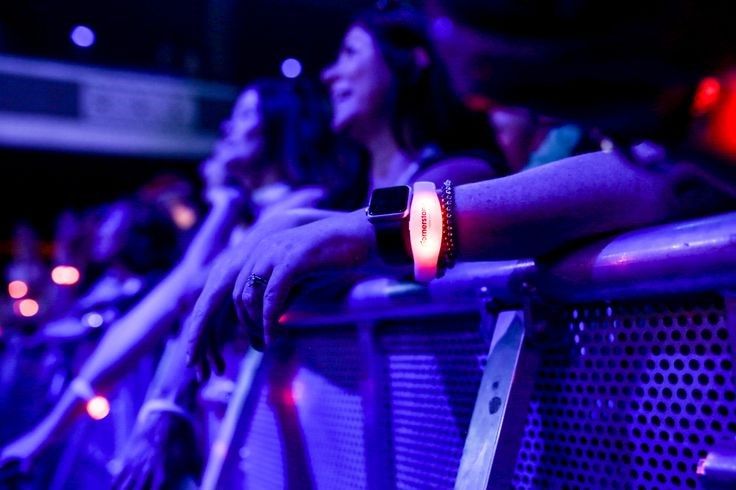
- Flicker and Refresh Rates: A light source that appears continuous to the eye might be strobing at a frequency that creates ugly banding or flicker on camera. All lighting elements, from stage fixtures to crowd-based technology like LED Wristbands, must be meticulously vetted for camera compatibility. This involves synchronizing the refresh rates of the lights with the camera's shutter speed—a non-negotiable for any professional broadcast.
- Color Temperature and Rendering: What appears as a vibrant, fiery red to the live audience might saturate into a pixelated, detail-less blob on screen. Broadcast lighting demands a deep understanding of color science, ensuring that chosen hues not only look good in person but also fall within the camera’s gamut (the range of colors it can accurately reproduce). This is why collaborations with broadcasters like ITV are so critical, ensuring our systems, whether on Beat The Chasers or a massive stadium show, meet their exacting standards.
- Dynamic Range and Contrast Ratios: The most dramatic, high-contrast moment in an arena can translate into a mess of crushed blacks and blown-out highlights on television. The lighting director must compose a picture that has depth and punch without exceeding the sensor's capabilities, often “painting with light” in a more controlled, deliberate manner than in a non-broadcast environment.
“When your audience is both live and at home, you have to architect layers of light. The first layer is for the energy in the room. The second is for the story you’re telling the camera. They can’t be in conflict; they have to be in concert.”
Painting on a Human Canvas: The Role of Crowd Lighting
In a broadcast event, the audience is not just a collection of spectators; they are a living, breathing part of the set. They are the backdrop, the scale, and the emotional barometer for the viewers at home. A dark, unlit crowd creates a visual void, a dead space that sucks energy out of the broadcast. Illuminating them is essential, but it must be done with purpose and precision.
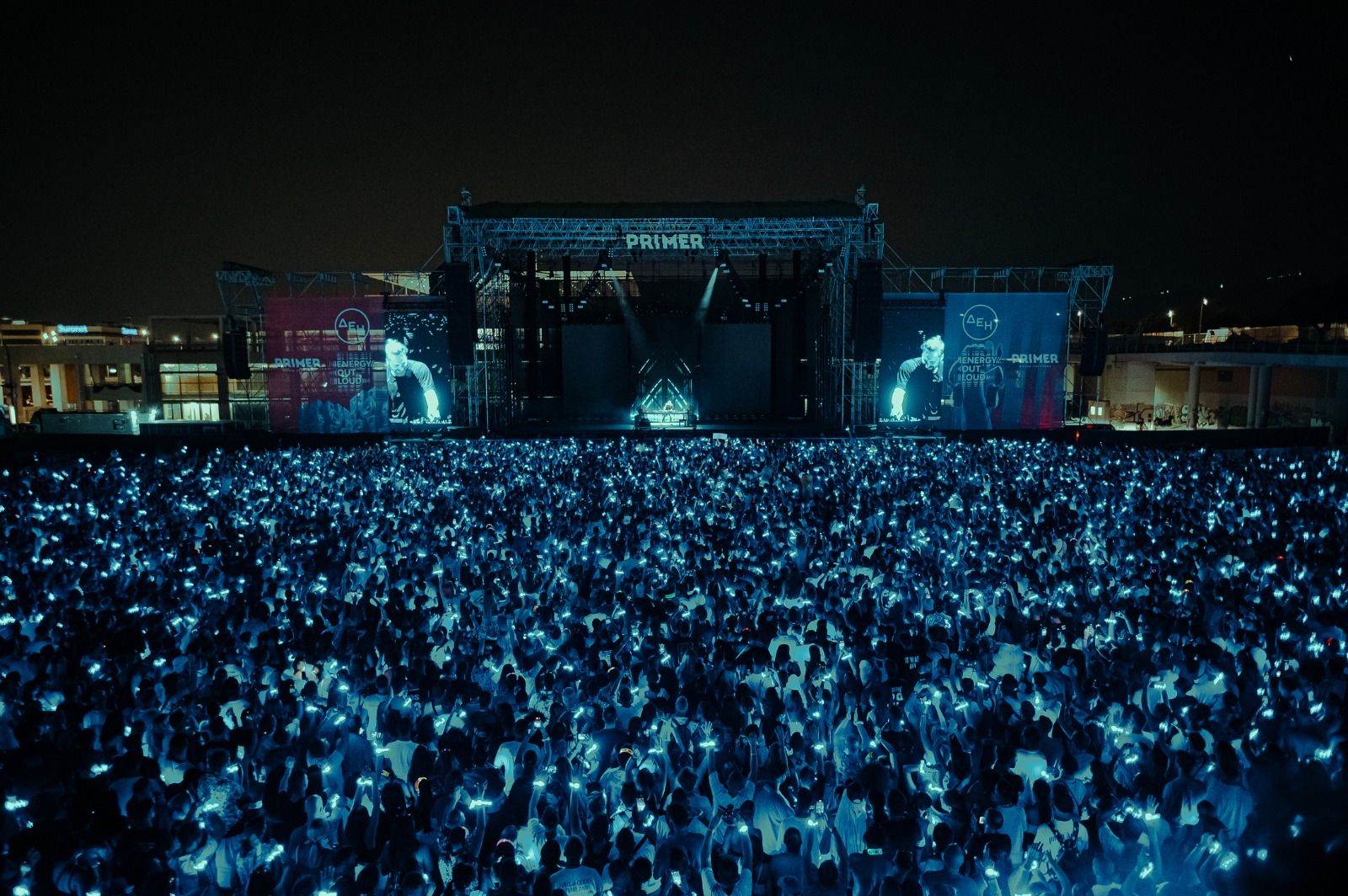
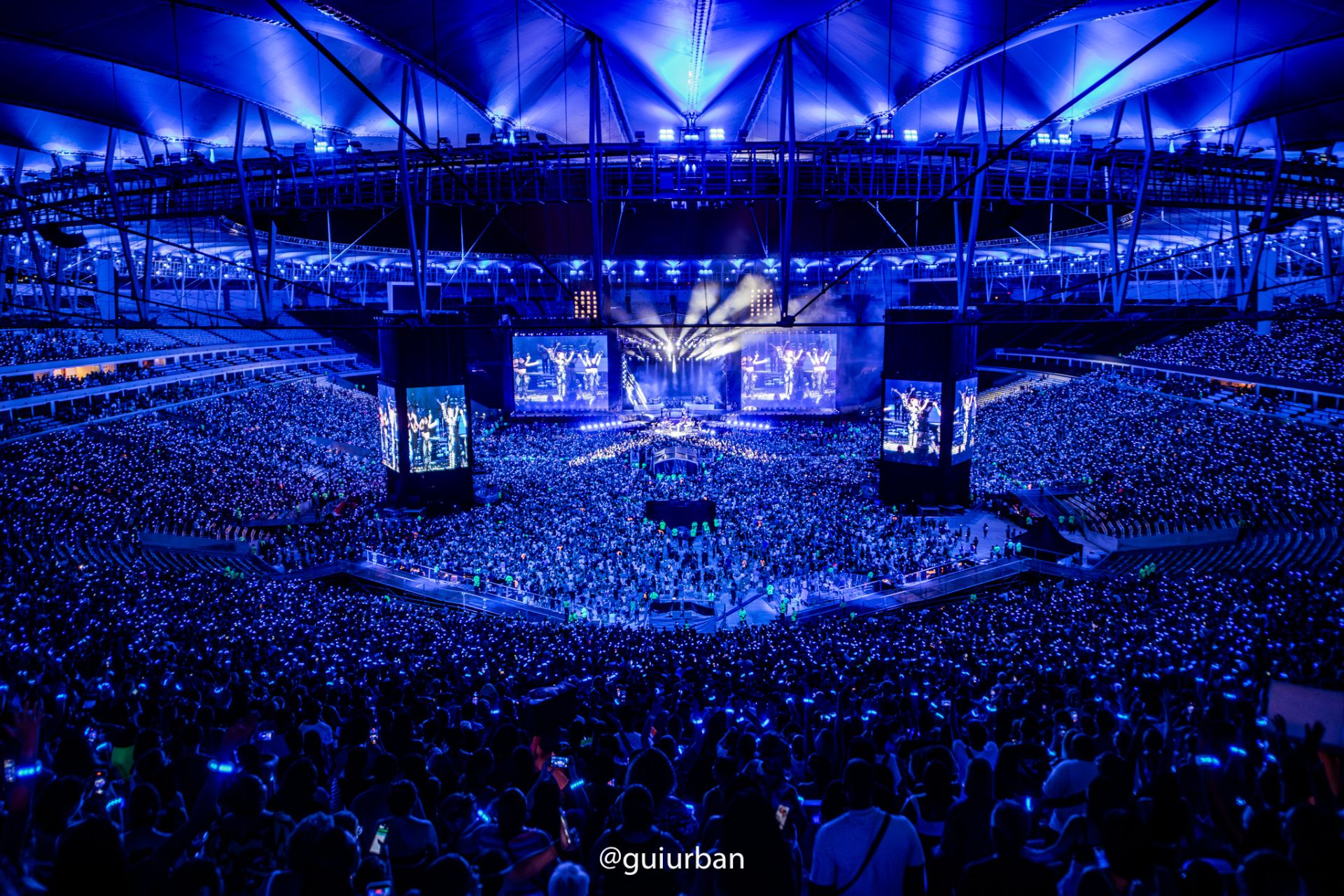
This is where wearable LED technology becomes a game-changer. By distributing points of light across the entire audience, you transform a passive crowd into a dynamic, programmable video surface. This is a technique we’ve honed over thousands of events, from global tours to major sporting spectacles like the Davis Cup and Formula One celebrations. Instead of simply washing the crowd with generic floodlights, you can create intricate patterns, color-matched effects, and pulses of light that flow in sync with the performance.
For the camera, this provides an unparalleled sense of scale and energy. Sweeping aerial shots, once just capturing a sea of darkness, now reveal a vibrant tapestry of light that ebbs and flows with the show’s biggest moments. We’ve seen this translate powerfully in global broadcasts, such as Maluma’s historic hometown concert in Medellín, streamed to over 240 countries. The thousands of synchronized Xylobands in the crowd didn’t just light up the stadium for those present; they telegraphed the event’s massive scale and emotional electricity to millions of viewers at home.
A Unified Vision: Technology and Collaboration
Solving the Two-Audience Problem is not just a technical challenge; it’s a collaborative one. It requires a unified command structure where the show’s creative director, lighting designer, broadcast director, and technology partners like Xylobands are all working from the same visual blueprint. Decisions cannot be made in silos.
The technology itself must be flexible and controllable. Our systems are built on robust radio-controlled protocols, allowing for real-time, instantaneous command of every single light point. This means the lighting director can make a global change for a huge live moment, and the broadcast director can simultaneously call for a specific, nuanced effect in one section of the crowd to perfect a camera shot.
Ultimately, lighting for both stage and screen is about creating two powerful, parallel experiences from a single, unified source of light. It’s about respecting the physics of the camera without sacrificing the soul of the live show. By engineering every element for this dual reality—from the color temperature of a stage light to the refresh rate of an LED wristband—we can ensure that the magic of a live moment is felt just as powerfully by the fan in the back row as it is by the viewer on their sofa, thousands of miles away.