Lighting for the Lens: The Art and Science of the Live Broadcast
The Two-Audience Problem
In modern event production, we often talk about the audience. But for a growing number of large-scale events, from awards shows and game shows to music festivals and global sporting spectacles, there isn’t just one audience—there are two. There is the live, in-person crowd, feeling the energy and bass in their chests. And there is the broadcast audience, potentially millions of viewers strong, experiencing the event through the lens of a camera.
These two audiences, though watching the same event, have fundamentally different needs and perspectives. Lighting for the in-venue experience is about creating atmosphere, mood, and dramatic effect. It’s visceral and architectural. Lighting for the camera, however, is about clarity, colour accuracy, and controlling the dynamic range. It’s a technical discipline, governed by the physics of sensors and broadcast standards.
The challenge for production teams is to serve both masters simultaneously. How do you craft a visually stunning experience for the live crowd that doesn’t compromise the quality of the broadcast feed? How do you ensure the living, breathing energy of the room is perfectly captured for those watching at home? This is the art and science of lighting for the lens.
The Camera Sees All (But Not Like You Do)
A human eye is a marvel of biological engineering, capable of processing an enormous dynamic range of light and shadow. A camera sensor, for all its technological advancement, is not. Point a camera at a typical stage show, and you’ll quickly find its limitations. Bright spotlights blow out to pure white, while shadowed areas collapse into muddy black. Colours that look vibrant in person can appear washed out or oversaturated on screen.
This is where the science of broadcast lighting comes in. It requires a deep understanding of:
- Colour Temperature: Ensuring all light sources—from stage fixtures to LED wearables—are balanced to a consistent colour temperature (e.g., 5600K for daylight) is critical for a clean, professional broadcast look.
- Flicker-Free Operation: Many LED sources, especially lower-quality ones, can produce a flicker that’s invisible to the naked eye but creates distracting banding on camera. Professional-grade equipment with high refresh rates is non-negotiable for any televised event.
- Exposure Control: The lighting director must work hand-in-glove with the broadcast director to manage the overall light levels, ensuring that key subjects are properly exposed without crushing the blacks or clipping the highlights.
For years, Xylobands has worked with major broadcasters like ITV on shows such as Beat The Chasers, mastering the technical requirements needed to make audience lighting camera-friendly and ready for millions of viewers.
Making the Crowd Part of the Picture
In a live broadcast, the audience is more than just a collection of spectators; they are a vital part of the set, a living backdrop that provides scale, energy, and reaction. For decades, the best a lighting designer could do was bathe the crowd in a generic wash of colour. Today, technology allows us to do so much more.
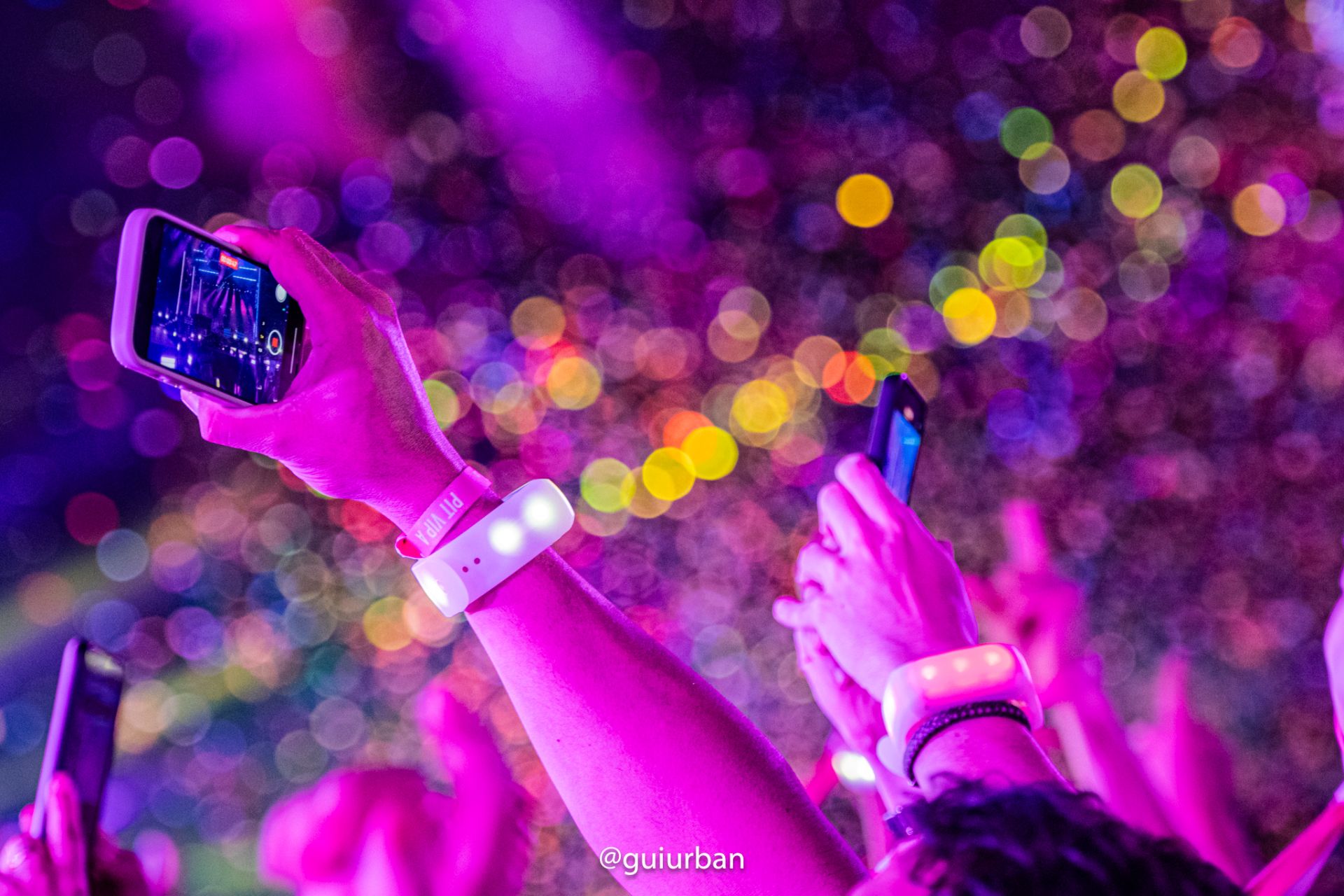
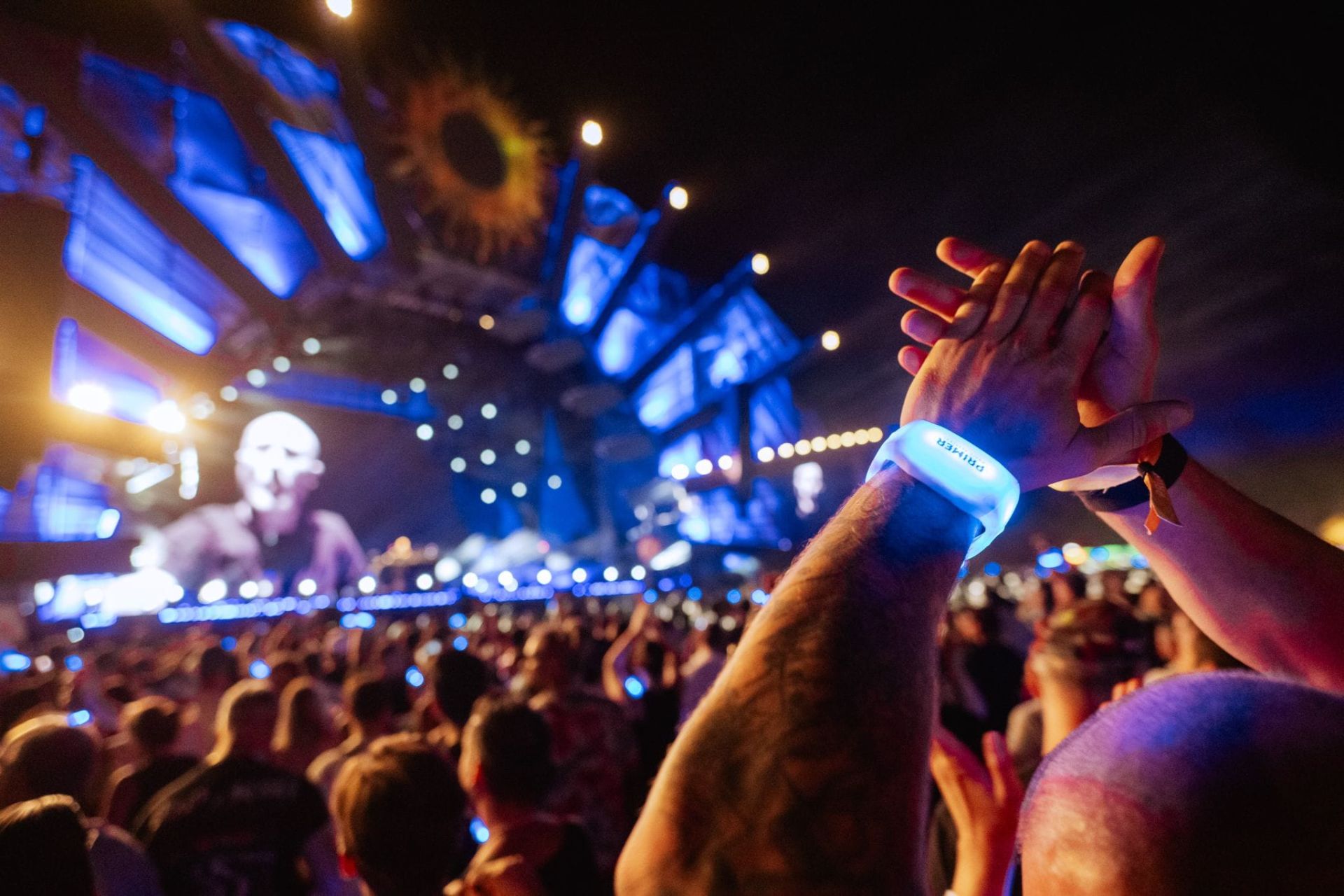
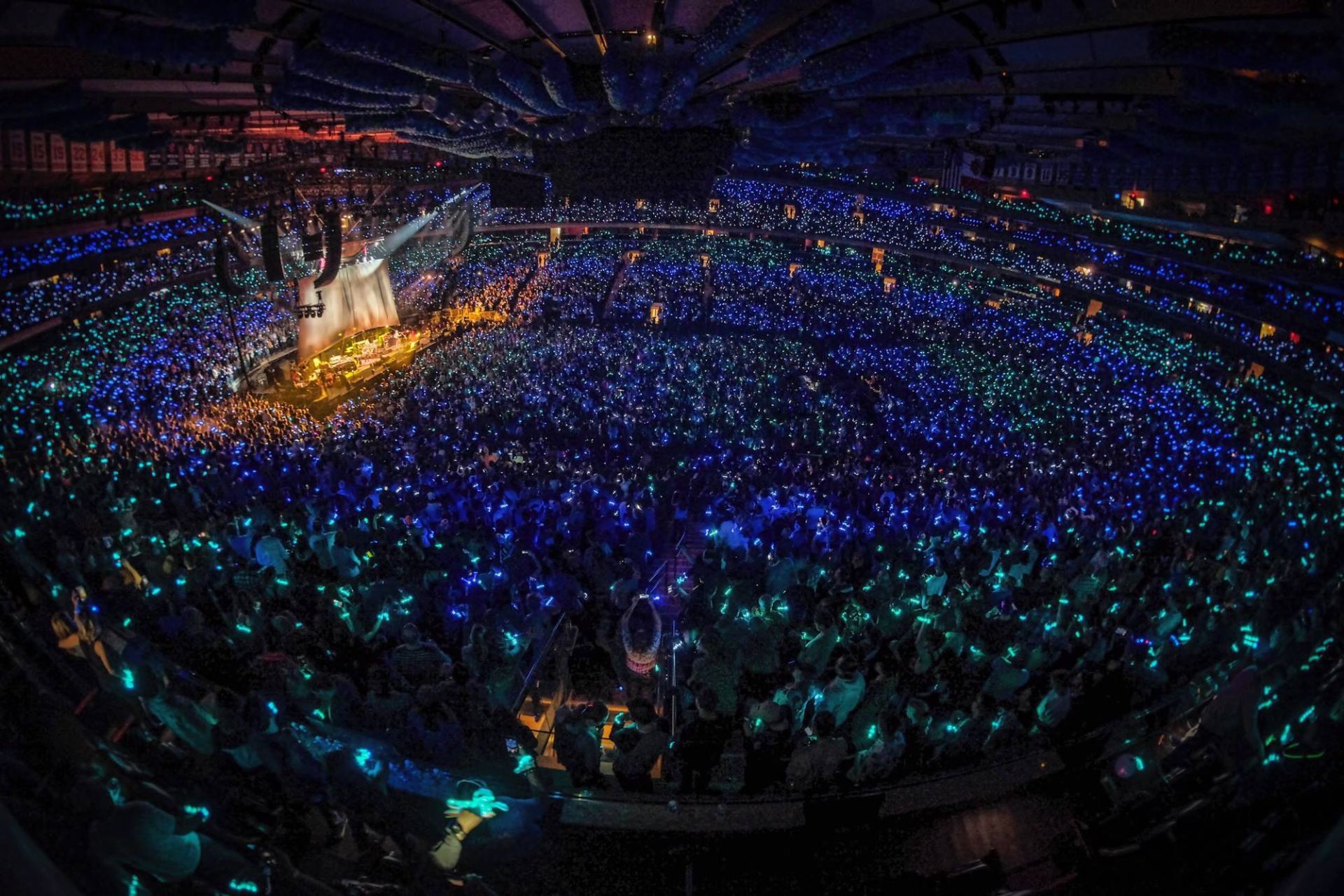
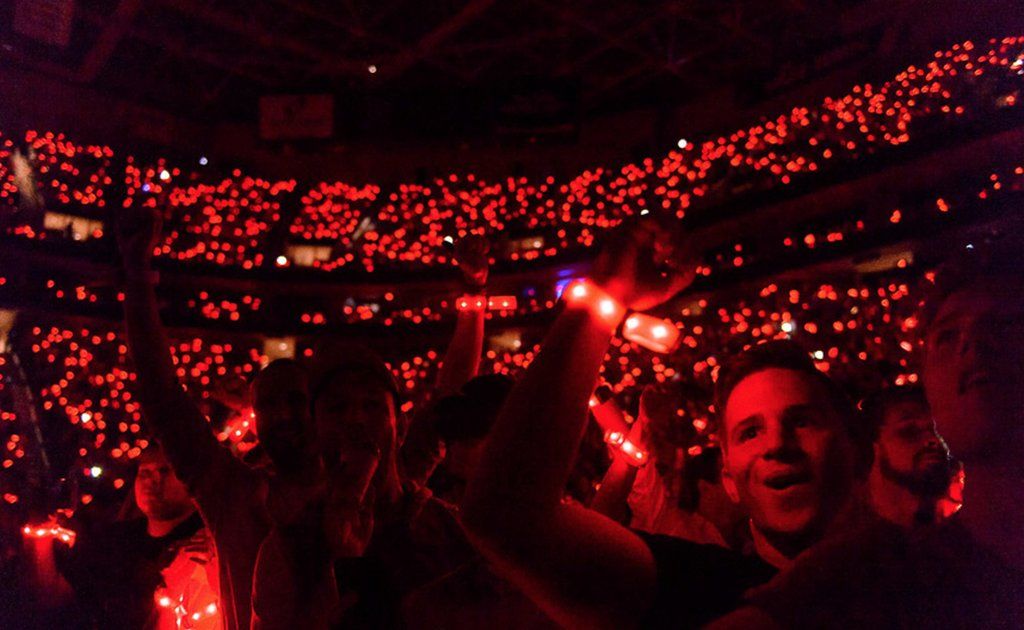
This is where immersive event technology like radio-controlled LED wristbands becomes a game-changer for broadcast. By giving every audience member a programmable pixel of light, the crowd itself becomes a canvas. This transforms the audience from a passive element to an active participant in the visual storytelling. Imagine a game show where the audience’s wristbands flash green for a right answer and red for a wrong one, or a live music broadcast where the light pulses in perfect sync with the beat across tens of thousands of people.
This was powerfully demonstrated at Maluma’s 2022 hometown concert in Medellín. Streamed live to over 240 countries, the show integrated Xylobands into the production, uniting the 54,000 in-person fans with the global viewing audience through synchronised, dynamic light, turning the stadium into a single, cohesive spectacle for the cameras.
Engineered for the Lens
Successfully integrating wearable LED technology into a broadcast requires more than just a great creative idea. The technology itself must be engineered for the specific demands of the camera.
At Xylobands, this means ensuring our products are not just visually spectacular, but technically sound. Our LED wristbands, lanyards, and other wearables are designed to be inherently camera-friendly. We use high-quality, flicker-free LEDs and offer precise control over colour and intensity, allowing lighting directors to seamlessly integrate our effects into their overall broadcast-grade design. Whether it's a massive stadium show for Formula One or an intimate studio audience for Dancing With The Stars, the technology has to be reliable, controllable, and visually pristine through the lens.
The ultimate goal is to bridge the gap between the in-room experience and the at-home one. When the lighting in the venue is designed with the broadcast in mind—when the crowd becomes a dynamic, interactive element of the show—you erase the screen. The viewer at home feels the same rush, the same unity, the same spectacle as the person in the front row. You’re no longer just showing them the event; you’re placing them right in the middle of it. You’ve solved the two-audience problem.