The Moving Canvas: A New Framework for Tour Lighting Design
From Stage to Spectator: Redefining the Boundaries of Light
For decades, the principles of large-scale tour lighting were relatively fixed. Beams, washes, and strobes—all meticulously programmed and focused on the performers. The stage was the canvas; the audience, observers. But a seismic shift is underway, driven by artists and designers who see the untapped potential of the entire venue. In this new framework, the arena isn’t just a container for the show; it is the show.
This approach treats every surface, from the highest seating tier to the floor, as a potential point of illumination. It’s a philosophy that moves beyond simply lighting the artist and instead aims to envelop the entire audience in a shared, multi-sensory world. The goal is no longer just to direct attention, but to create a fully immersive event technology ecosystem where light, sound, and scenography are one. The line between performer and audience blurs, and the collective energy becomes a visible, tangible force.
The Three Horizons of Arena Lighting
To execute this vision, designers must think in terms of layered horizons of light, each with a distinct purpose but all working in concert.
1. The Primary Horizon: The Stage
This remains the anchor of the visual experience. It’s the focal point, the narrative centre from which all other elements radiate. Here, the lighting must be precise, powerful, and deeply connected to the artist’s performance. It carves out the performers, shapes the scenic elements, and drives the emotional arc of the show. It’s the source code of the entire visual story, establishing the colour palettes, tempo, and intensity that will ripple outwards.
2. The Secondary Horizon: The Architecture
The second horizon encompasses the physical structure of the arena or stadium itself. The trusses, the delay towers, the catwalks, the facias of the seating bowls. In the traditional model, this architecture is an obstacle to be worked around. In the new framework, it’s a canvas. By strategically placing fixtures to graze these surfaces, designers can redefine the geometry of the space. A cavernous stadium can be made to feel intimate, or a standard arena can be transformed into an otherworldly cathedral of light. It’s about painting the container, making the venue an active participant in the visual narrative.
3. The Tertiary Horizon: The Audience
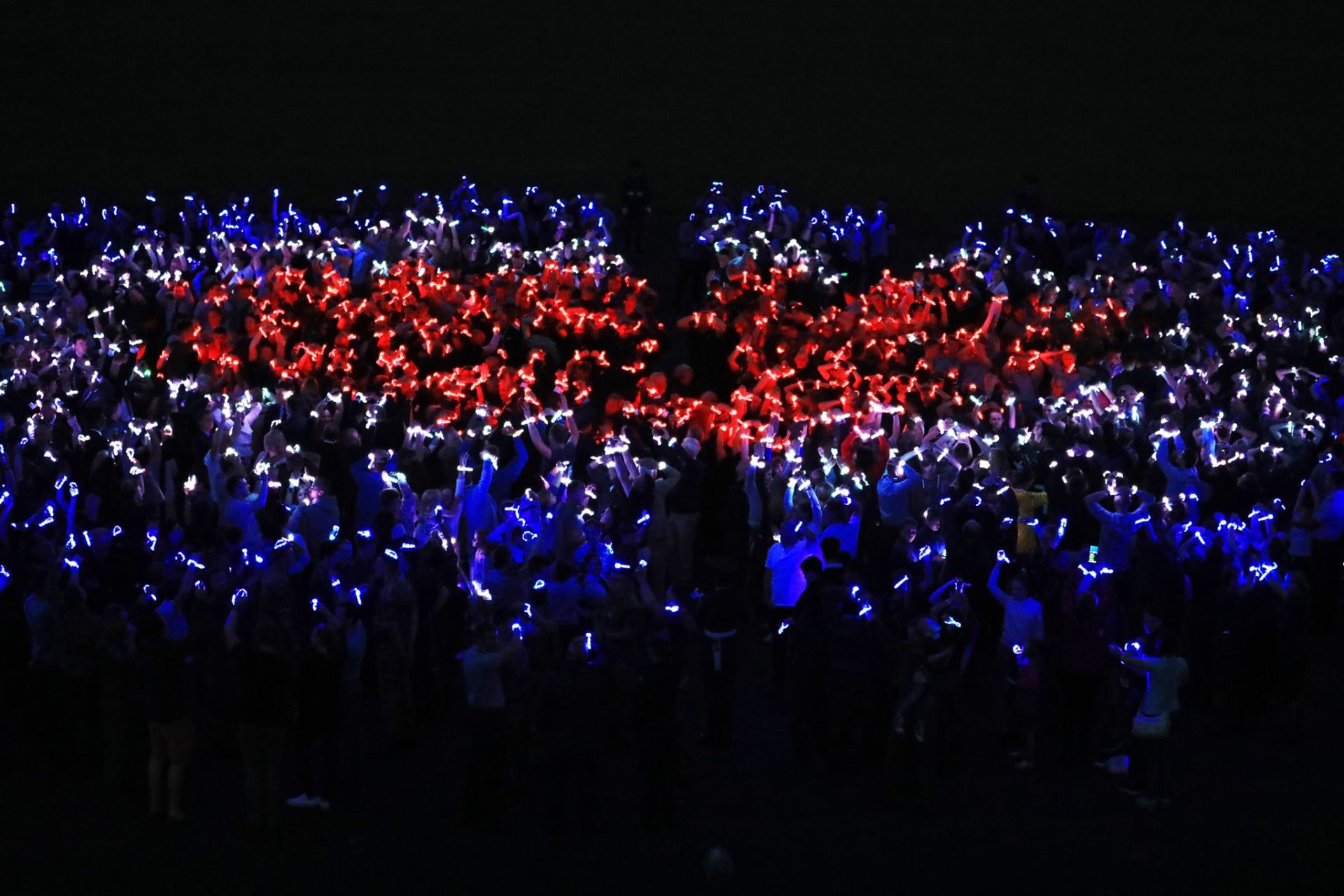
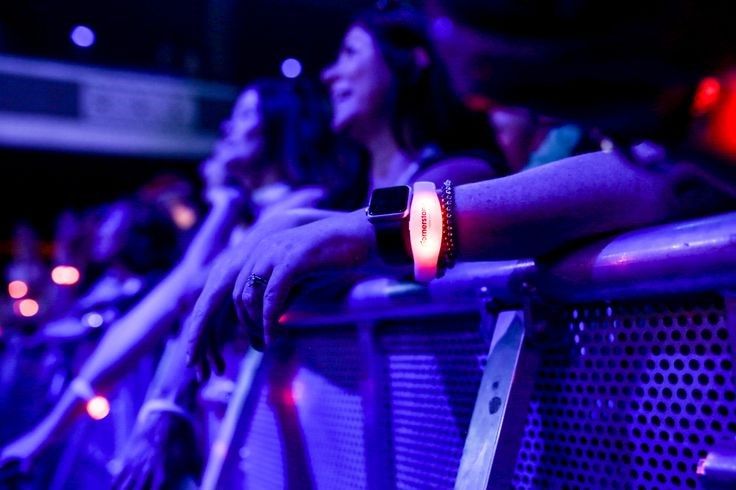
This is the most dynamic and revolutionary canvas: the audience itself. By extending the lighting design into the crowd, we transform tens of thousands of individuals into a single, sentient sea of light. This is the domain of wearable LED technology, where devices like LED bands and lanyards become pixels in a massive, living display.
This is where Xylobands pioneered a new language of audience interaction. When Coldplay first took our radio controlled LED wristbands on their Mylo Xyloto tour, they weren’t just adding a novelty. They were testing a hypothesis: that the audience could be more than passive recipients of light. They could become the light. From Maluma’s historic hometown show in Medellín to Wizkid’s sold-out run at The O2, we’ve seen how this principle transforms a concert into a communion. The crowd becomes a real-time reflection of the music’s pulse, their collective movement and energy rendered visible for everyone to see.
Choreographing the Canvas: Principles in Practice
Integrating these three horizons requires a delicate and deliberate choreography.
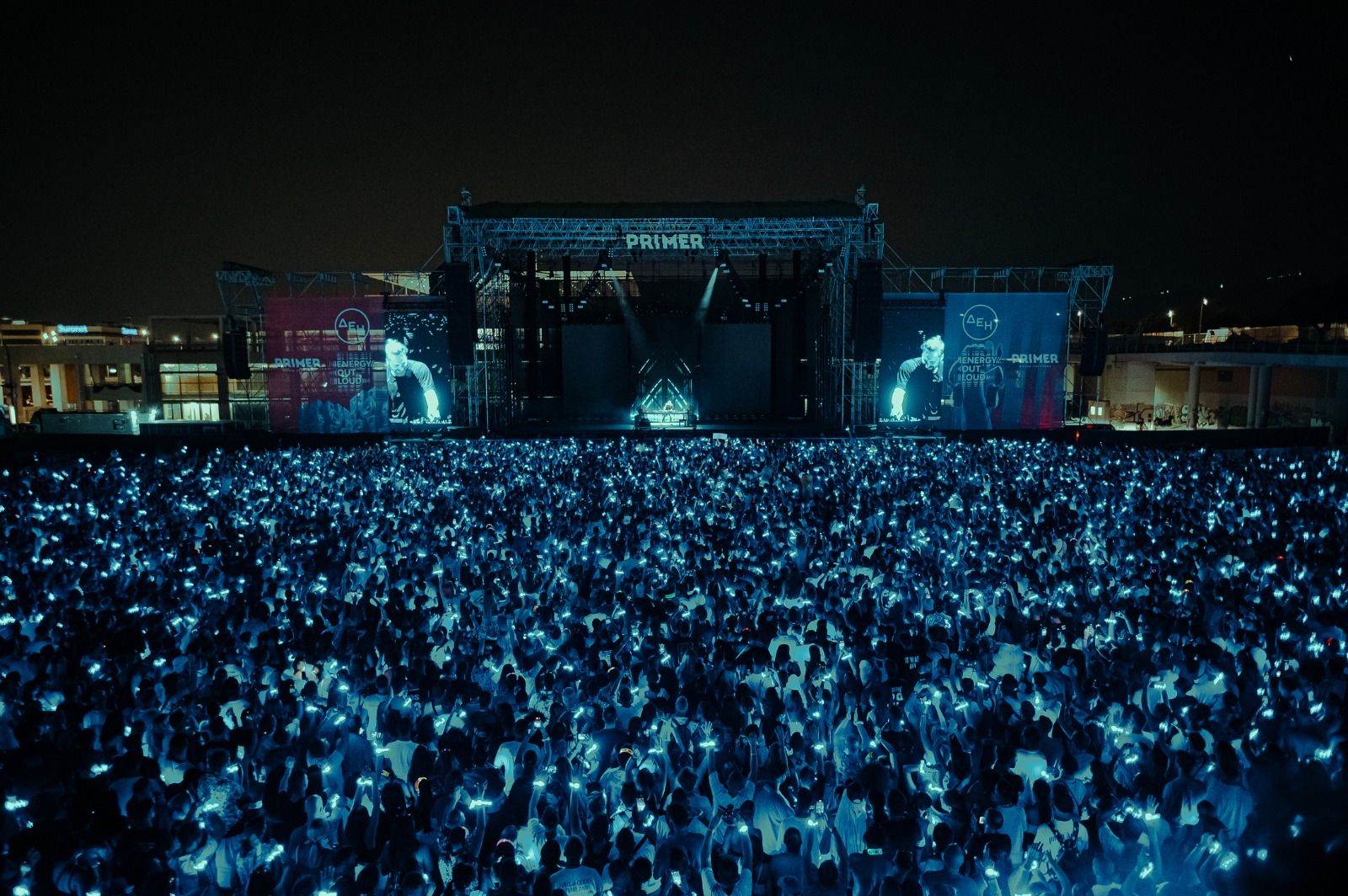
- Scale and Contrast: In a space as vast as a stadium, small gestures are lost. The design must operate on a macro scale, using bold, sweeping strokes of light. Contrast is key—plunging the entire venue into darkness before igniting 50,000 concert wristbands creates a moment of pure astonishment that a simple stage effect could never replicate.
- Rhythm and Pulse: The movement of light across the three horizons must be musical. It should feel like a natural extension of the sound, pulsing in time with the kick drum, swelling with the strings, and erupting with the chorus. The entire arena should breathe with the music.
- The Audience as a Mirror: The most powerful effects often mirror the energy on stage. If the artist is bathed in blue, immersing the audience in the same colour creates a profound sense of unity. When the stage goes dark and the audience itself becomes the sole source of light, it creates a powerful role reversal, a moment of shared ownership over the experience. This turns a simple concert into one of those truly immersive events.
Beyond the Arena: The Future of the Moving Canvas
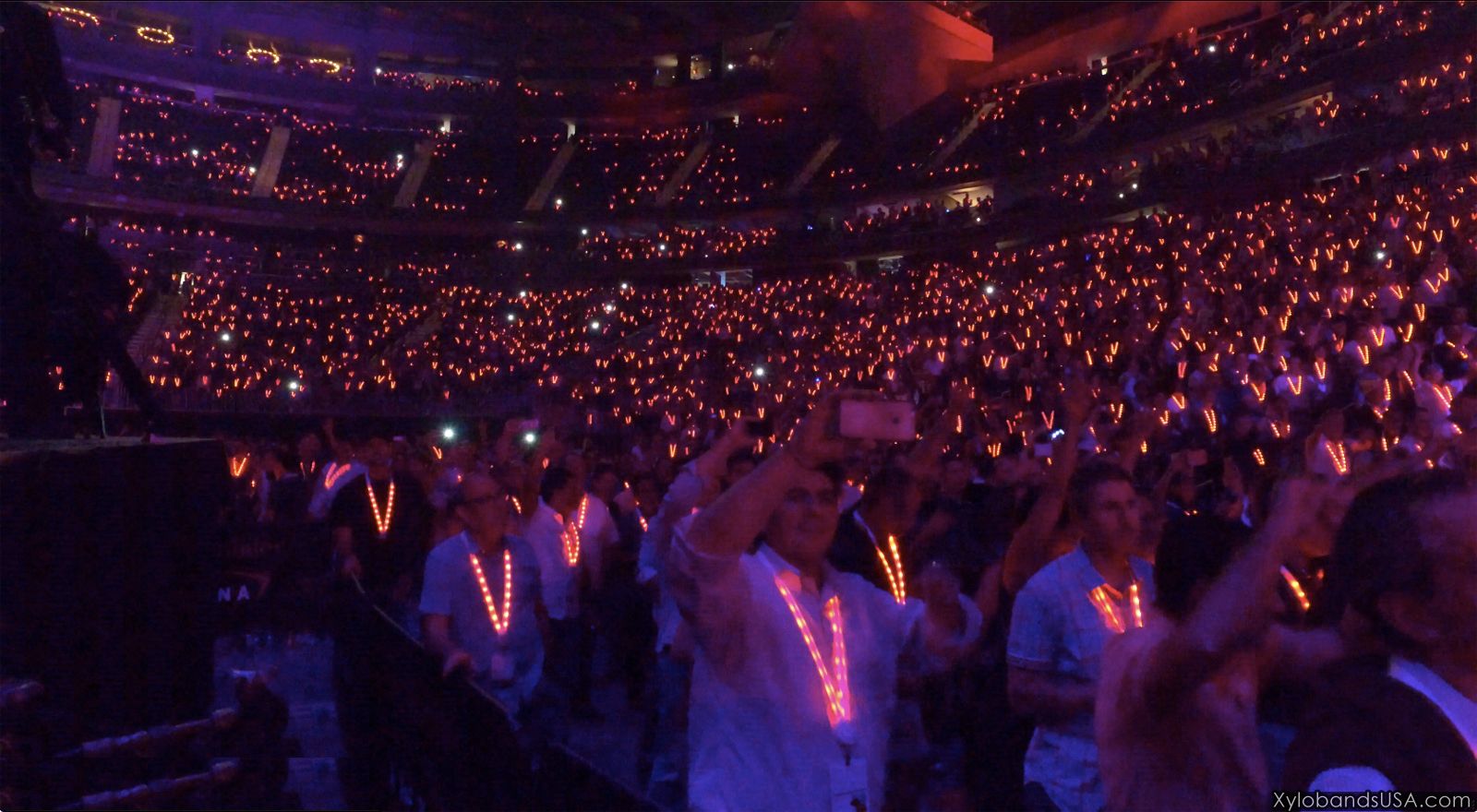
This framework is not limited to music tours. We’ve seen its power in transforming corporate event activations and major sporting spectacles. At a 75th-anniversary event for Formula One, we deployed custom LED Lanyards—or Xylo Pendants—that turned the entire O2 Arena into a dynamic, branded environment, with sections of the crowd lighting up to represent different teams. The principle is the same: the audience is not just watching the event; they are a core part of its visual identity.
As technology evolves, so will the sophistication of these moving canvases. The future lies in creating ever more granular control, allowing designers to paint with a finer brush across the audience. But the foundational principle will remain: the most breathtaking live experiences are the ones that dissolve the barriers, that unite everyone in a shared sensory world, and that turn every seat in the house into the best seat in the house. It’s not just about lighting a show; it’s about illuminating a community.