The Moving Canvas: A New Framework for Tour Lighting Design
The Challenge of Scale and Motion
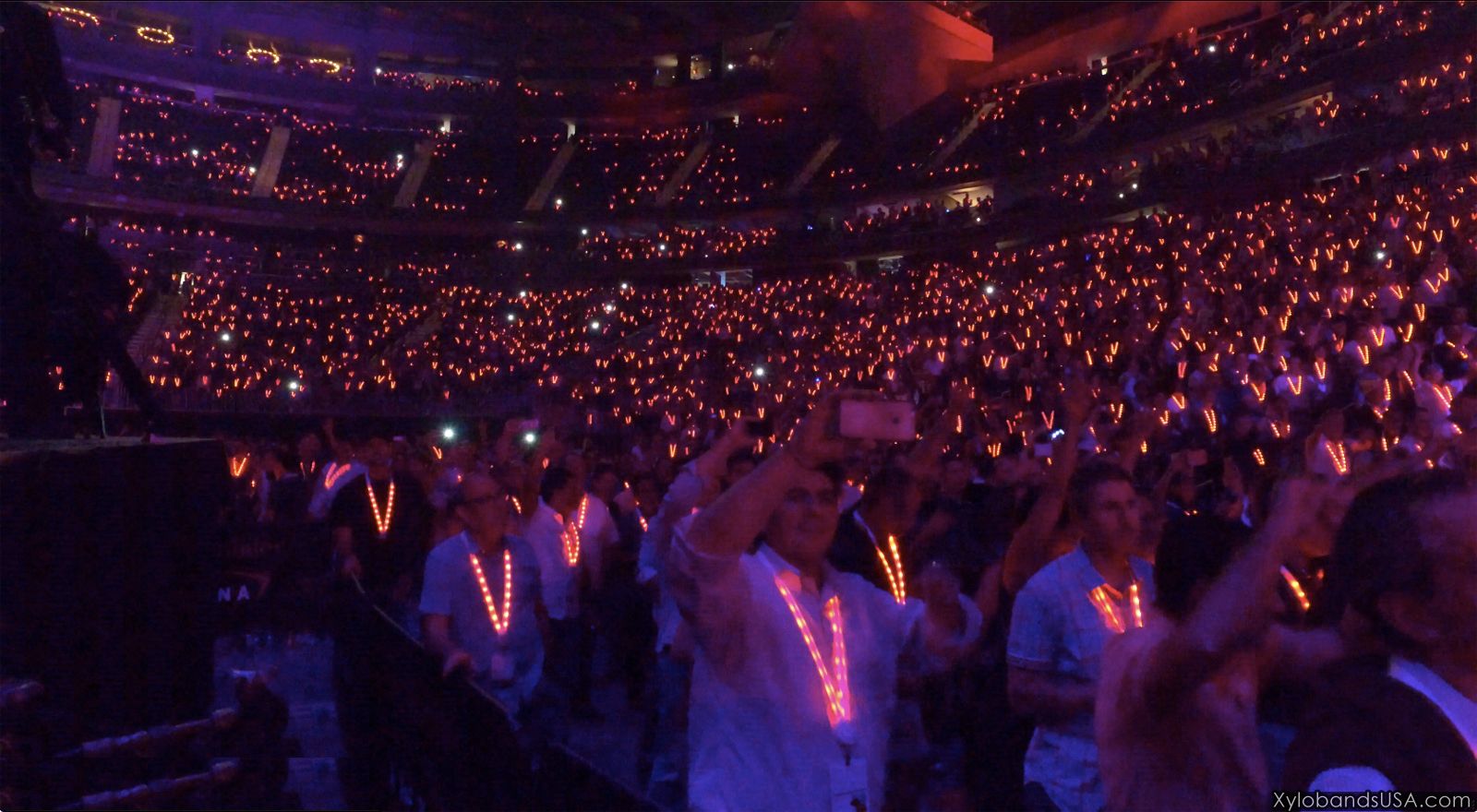
Designing a lighting experience for an arena or stadium tour is fundamentally different from any other form of lighting design. The canvas isn’t a static stage or a building facade; it’s a dynamic, three-dimensional space occupied by tens of thousands of moving people. It’s an architectural space, a television studio, and a deeply personal experience all at once. The core challenge is to create a cohesive visual narrative that works on the macro level of a global broadcast and the micro-level of a single fan’s memory.
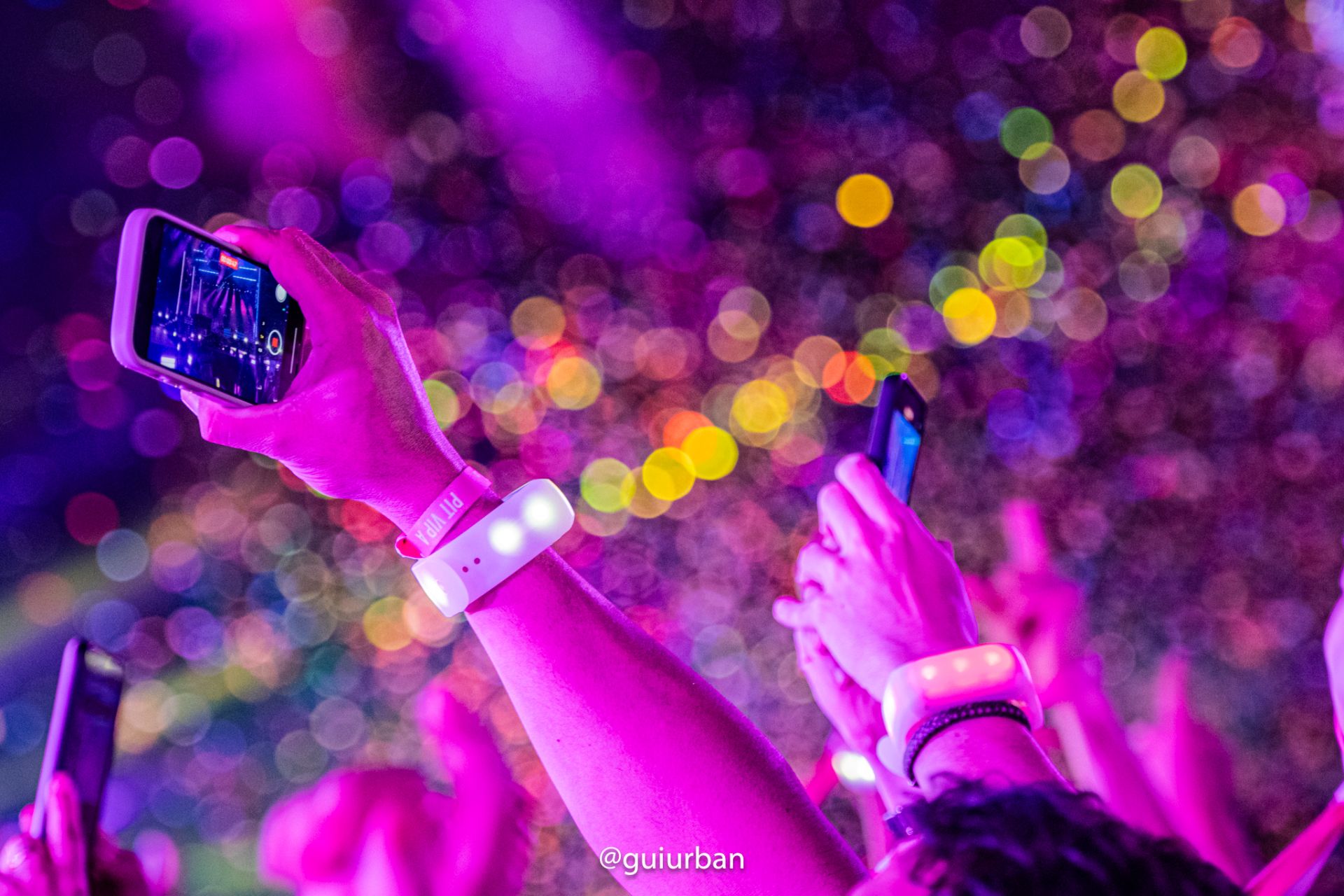
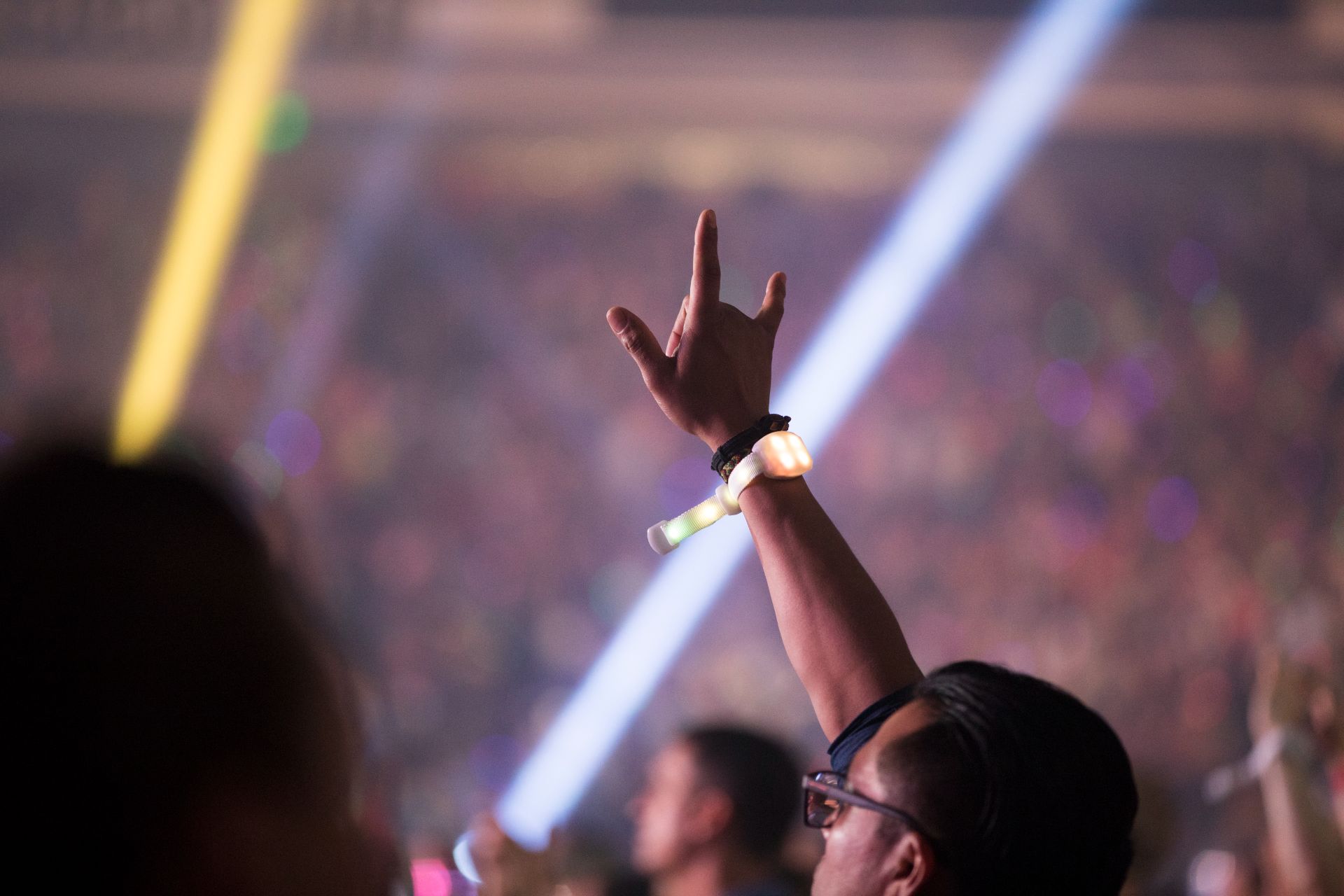
Traditional tour lighting focused almost exclusively on the artist and the stage. The audience was a passive observer, shrouded in darkness. Today, that model has been inverted. The audience is the medium. Thanks to the advent of wearable LED technology like our Xylobands, the crowd is now a living, breathing extension of the show’s design—a moving canvas of light.
Principle 1: Audience as the Primary Surface
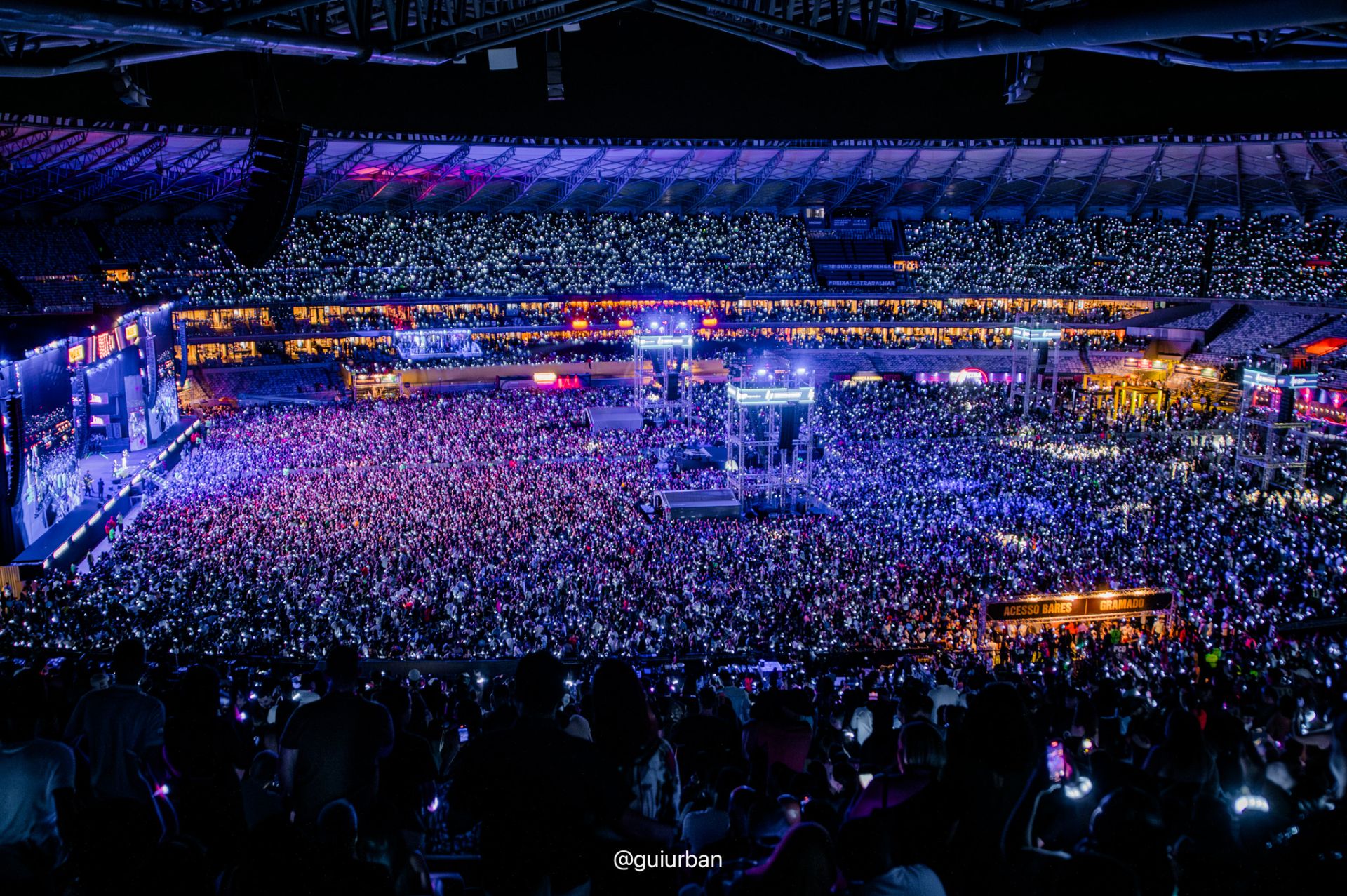
The first principle of modern stadium lighting is to treat the audience as the primary illuminated surface. While stage lighting remains crucial for focusing attention on the performer, the most expansive and dynamic visual opportunities are found within the crowd itself. This approach transforms thousands of individual spectators into a single, unified entity.
Think of it as the difference between painting on a small easel and painting an entire landscape. By distributing points of light—whether LED wristbands, LED lanyards, or other LED wearables—across the entire venue, designers can create sweeping, immersive effects that are impossible to achieve with stage-and-truss-mounted fixtures alone. This was powerfully demonstrated during Maluma's historic Medellín concert, where a sold-out stadium became a pulsating backdrop of light, visible not just to those in the venue but to a global audience streaming the event live.
"The moment you stop lighting the audience and start lighting *with* the audience, you unlock an entirely new dimension of creative possibility."
Principle 2: Designing for the Camera and the Eye
Stadium shows are rarely just for the people in the room. They are broadcast events, captured by dozens of cameras and streamed to millions. This duality demands a design that is legible to both the human eye in the back row and the camera lens on a crane. What looks spectacular in person can appear as a chaotic mess on screen if not carefully considered.
Key Considerations for Broadcast:
- Color Temperature and Saturation: Cameras are less forgiving than the human eye. Lighting designers must work closely with broadcast directors to ensure that colors render accurately and that the dynamic range doesn’t clip to pure white or black.
- Flicker Rate: The refresh rate of LEDs must be synchronized with the camera’s frame rate to avoid unsightly flicker or banding on screen, a technical detail that is paramount in creating professional LED experiences.
- Creating Depth: Layering light is key. Using the audience as a mid-ground layer, between the close-ups on the artist and the wide architectural shots of the venue, adds incredible depth and scale to the broadcast. This technique turns a flat screen into a window onto a vast, energetic world.
Our work on events like the Formula One 75th anniversary show, a live broadcast event featuring multiple artists, required meticulous planning to ensure our custom LED pendants delivered spectacular effects for both the 13,000 fans in The O2 Arena and the viewers at home.
Principle 3: The Architecture of Light Itself
In a stadium environment, light doesn't just illuminate; it defines space. It can make a vast arena feel intimate or explode its perceived boundaries. The most effective designs use light architecturally, choreographing patterns and movements that complement the music and the physical space.
This involves thinking beyond simple color changes. It’s about creating motion. A wave of light rolling from the front of the house to the back during a crescendo. Pulsing grids that turn the audience into a giant graphic equalizer. Segmenting the venue into team colors for a sporting event like the Davis Cup. These are acts of architectural storytelling. This is the essence of creating true immersive events. With modern radio controlled LED wristbands, designers have granular control, allowing them to "paint" with precision across different sections of the crowd, as if they were individual zones on a massive lighting desk.
Principle 4: Choreographing Emotion with Light
Ultimately, the goal of any lighting design is to amplify the emotional arc of the performance. Light is a powerful, non-verbal tool for storytelling. A slow, warm glow during an acoustic ballad, a frantic, high-energy strobe sequence during an anthem—these are the brushstrokes.
When the audience themselves are the source of this light, the emotional connection is magnified. As we saw with the debut of our technology on Coldplay’s Mylo Xyloto tour, giving each fan a wristband doesn’t just make them part of the show; it makes them a participant in the emotion. The moment their wristband lights up in sync with thousands of others, and in sync with the artist, a profound sense of unity is created. It’s the transition from a passive concertgoer to an active part of a collective experience—a core principle behind the Coldplay Xylobands phenomenon.
From festival fields like PRIMER Music Festival to massive arena tours for artists like Wizkid, this principle holds true. By placing the tools of immersion directly in the hands of the audience, we give designers the ability to choreograph not just light, but human connection itself. The moving canvas of the crowd becomes a testament to the shared energy of the live experience, creating memories that last long after the final note has faded.