Orchestrating Light: The Core Technologies That Power Immersive Crowd Experiences
The Silent Language of Light
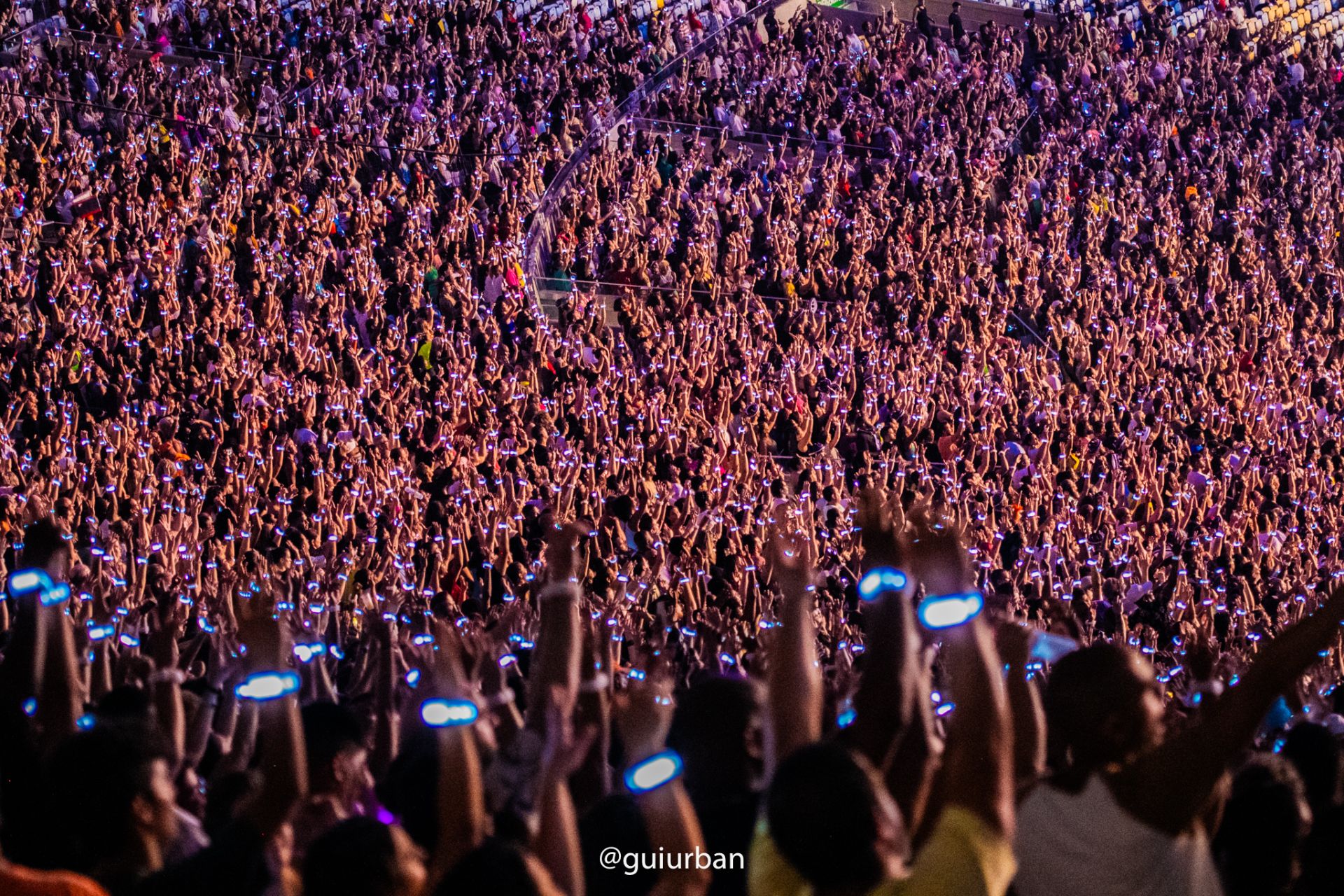
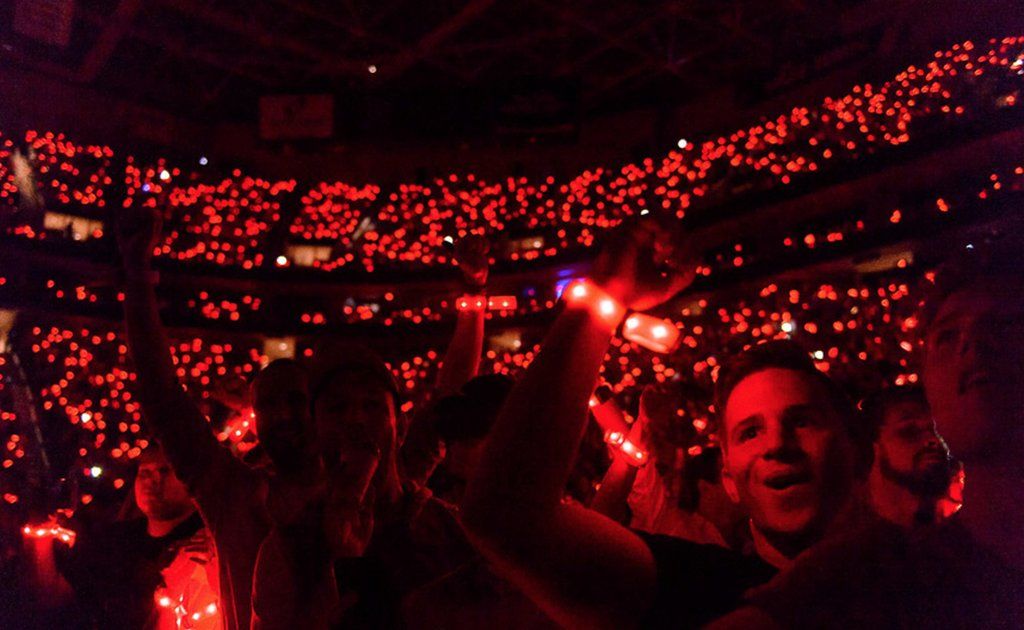
Picture a stadium, humming with the energy of 50,000 people. The house lights drop, and a collective breath is held in the sudden darkness. Then, in an instant, the entire bowl erupts—not with stage lights, but from the wrists of every single person in attendance. A sea of bodies becomes a living, breathing, perfectly synchronized canvas of light. It’s a moment of pure magic, a signature of modern Immersive Events. But it isn’t magic. It’s a precisely engineered ballet of invisible signals, a conversation conducted in the silent language of light.
At the heart of these spectacular LED Crowd Experiences is a sophisticated trio of technologies: Radio Frequency (RF), DMX, and Infrared (IR). As the inventors of this technology, ignited by a moment at a Coldplay show at Glastonbury, we at Xylobands have spent over a decade mastering and advancing these systems. Understanding how they work is to understand the very mechanics of modern audience connection. This is the unseen engine that powers the spectacle, transforming passive spectators into an integral part of the show itself.
The Foundation: Radio Frequency (RF) for Mass Synchronization
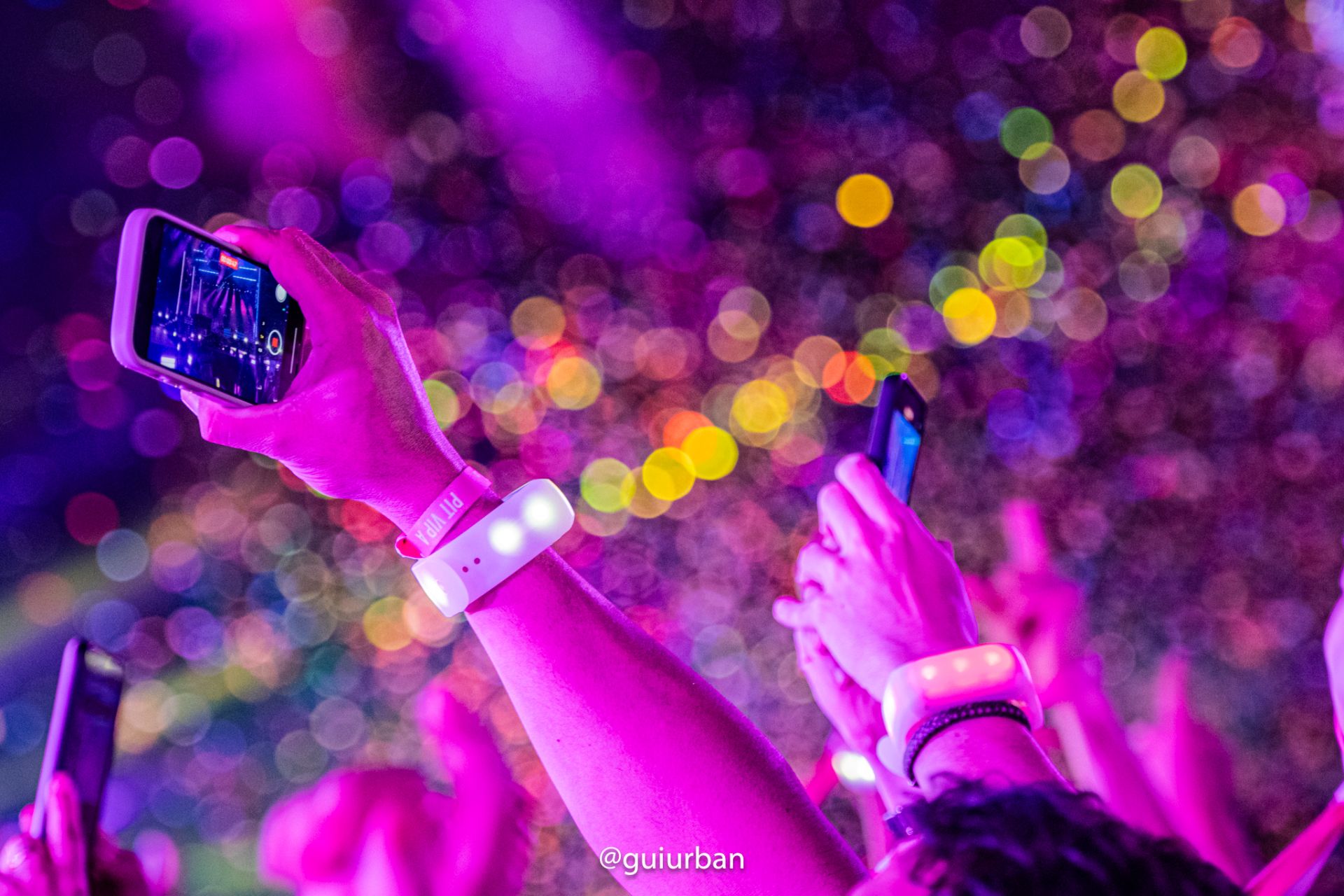
The bedrock of any large-scale wristband experience is Radio Frequency control. In the simplest terms, a central transmitter, managed by our on-site technicians, broadcasts signals across a designated area. Every one of our LED Bands or other LED Wearables contains a tiny receiver, waiting for that command. Think of it as a dedicated radio station, broadcasting not music, but instructions for color, intensity, and effect.
The power of RF lies in its reach and reliability. It can cover an entire stadium, an expansive festival field, or a sprawling corporate campus with a single, stable signal. This is the technology that makes it possible to unify tens of thousands of individuals in a single moment of light, as we’ve done for artists like Maluma in his 54,000-capacity hometown concert or for Wizkid’s historic sell-out run at The O2 Arena.
With RF, an audience is no longer just a collection of individuals; it’s a single, controllable entity—a vast canvas waiting for the first brushstroke of light.
But it’s more nuanced than a simple on/off switch. Our proprietary software allows us to map a venue and segment the audience into dozens of unique zones. The transmitter can then send different instructions to each zone, creating complex patterns, chases, and waves of light that sweep across the crowd. For Corporate Event Activations, this means lighting up specific teams, departments, or delegate tiers. For a sporting event like the Davis Cup, it means instantly dividing the arena into the colors of competing nations. These Radio Controlled LED Wristbands are the key to unlocking large-scale, dynamic visual design.
The Artist’s Brush: DMX Integration for Granular Control
While RF provides the broad strokes, DMX provides the fine detail. DMX is the universal language of professional stage and screen production. It’s the protocol that lighting designers use to control everything from moving-head fixtures and strobes to fog machines and video walls. By integrating our system with a show’s DMX network, we hand the lighting designer an entirely new instrument: the audience itself.
Where RF commands an entire zone, DMX integration allows for control over smaller groups of wristbands, and in some configurations, even individual units. This enables a level of precision that is essential for broadcast events and tightly choreographed productions. Imagine a beat-perfect pulse of light synched to a DJ’s drop at PRIMER Music Festival, or a shimmer that flows from the stage, across the audience, and back, perfectly in time with on-screen graphics during a live TV show like Beat The Chasers.
This is where Immersive Event Technology transcends gimmickry and becomes a true artistic tool. It allows the lighting designer to blur the lines between the stage and the seats, painting with a palette that includes every single attendee. The crowd is no longer just illuminated by the show; they are the show.
The Hyper-Local Trigger: Infrared (IR) for Zone-Specific Activation
If RF is the wide-angle lens and DMX is the zoom, Infrared (IR) is the macro. IR technology is based on line-of-sight and is used for short-range, highly specific activations. It operates much like a television remote, sending a focused beam of data to a receiver. At an event, we can deploy small, discreet IR transmitters at key locations to trigger unique behaviors in our Custom LED Wristbands as guests pass by.
The applications for crafting interactive guest journeys are limitless:
- Interactive Entrances: A guest’s wristband flashes a brilliant welcome as they walk through the main gate.
- Sponsor Booths: Attendees who visit a specific brand activation see their wristband pulse with the sponsor’s colors, perhaps signaling a special offer.
- Audience Segmentation: At the Formula One 75th Anniversary event, where we created custom XyloPendants for different teams and hospitality tiers, IR could be used to create specific light-up zones within a larger seating area, triggering unique effects for VIP guests or fan club members as they enter their section.
This layer of technology adds a powerful element of discovery and personalization to an event, creating moments of individual surprise and delight within the larger collective experience.
A Symphony of Signals
The true artistry of LED Event Technology lies not in using one of these technologies, but in conducting them as a symphony. For a global broadcast like the Eurovision Song Contest, we might use RF to create a massive, flag-colored backdrop across the entire arena audience. Simultaneously, DMX integration allows the broadcast lighting director to trigger intricate, camera-facing effects that are perfectly synchronized with the artist’s performance and broadcast graphics. Meanwhile, IR transmitters placed in the green room could make an artist’s LED Lanyards flash as they are about to take the stage.
This multi-layered approach—marrying the scale of RF, the precision of DMX, and the targeted engagement of IR—is what allows us to create deeply compelling and unforgettable LED Experiences. It’s a technical and creative process that turns tens of thousands of individual points of light into a single, cohesive, and emotionally resonant spectacle.
From the initial spark of an idea at a concert to powering over 10,000 events globally, our journey has been driven by a simple question: what if the audience could be more than an audience? By mastering the invisible signals that command the light, we’ve found the answer. The future of live events is a connected canvas, and we are all part of the masterpiece.