From 'Me' to 'We': The Psychology of Collective Effervescence in Live Events
The Primal Pull of the Crowd
It’s a feeling that transcends language and culture: the electric hum of a stadium before the headliner appears, the shared intake of breath in a darkened theatre, the communal roar as a goal is scored. It’s the sensation of being part of something larger than oneself, a temporary dissolution of the individual into the collective. Sociologist Émile Durkheim termed this powerful phenomenon "collective effervescence"—a perceived energy formed when a community of people communicates the same thought and participates in the same action. It’s the transition from ‘me’ to ‘we’.
For centuries, this was an organic, almost accidental byproduct of mass gatherings. But in the modern era of live entertainment, it has become an intentional act of psychological and technical architecture. Event producers and artists are no longer just putting on a show for an audience; they are designing frameworks for shared experience, using sophisticated tools to intentionally cultivate this profound sense of unity. The question is no longer *if* it will happen, but *how* it will be engineered.
Engineering Empathy: The Sensory Blueprint of Unity
At its core, collective effervescence is a function of sensory synchronization. When thousands of people see, hear, and feel the same thing at the same time, their physiological responses begin to align. Mirror neurons fire, fostering a mass sense of empathy and shared emotion. The barrier between the self and the other becomes porous. This is the foundational principle behind today’s most powerful Immersive Events.
The goal is to create a single, unified sensory canvas. Historically, this was achieved through raw acoustics and stage lighting. Today, we have a far more intimate and powerful toolkit. The canvas is no longer just the stage; it’s the entire volume of the arena, extending to every single person in the crowd. By making each individual a pixel in a larger picture, technology can transform a collection of spectators into a single, living, breathing entity of light and sound.
From Spectator to Spectacle: Redefining the Audience Role
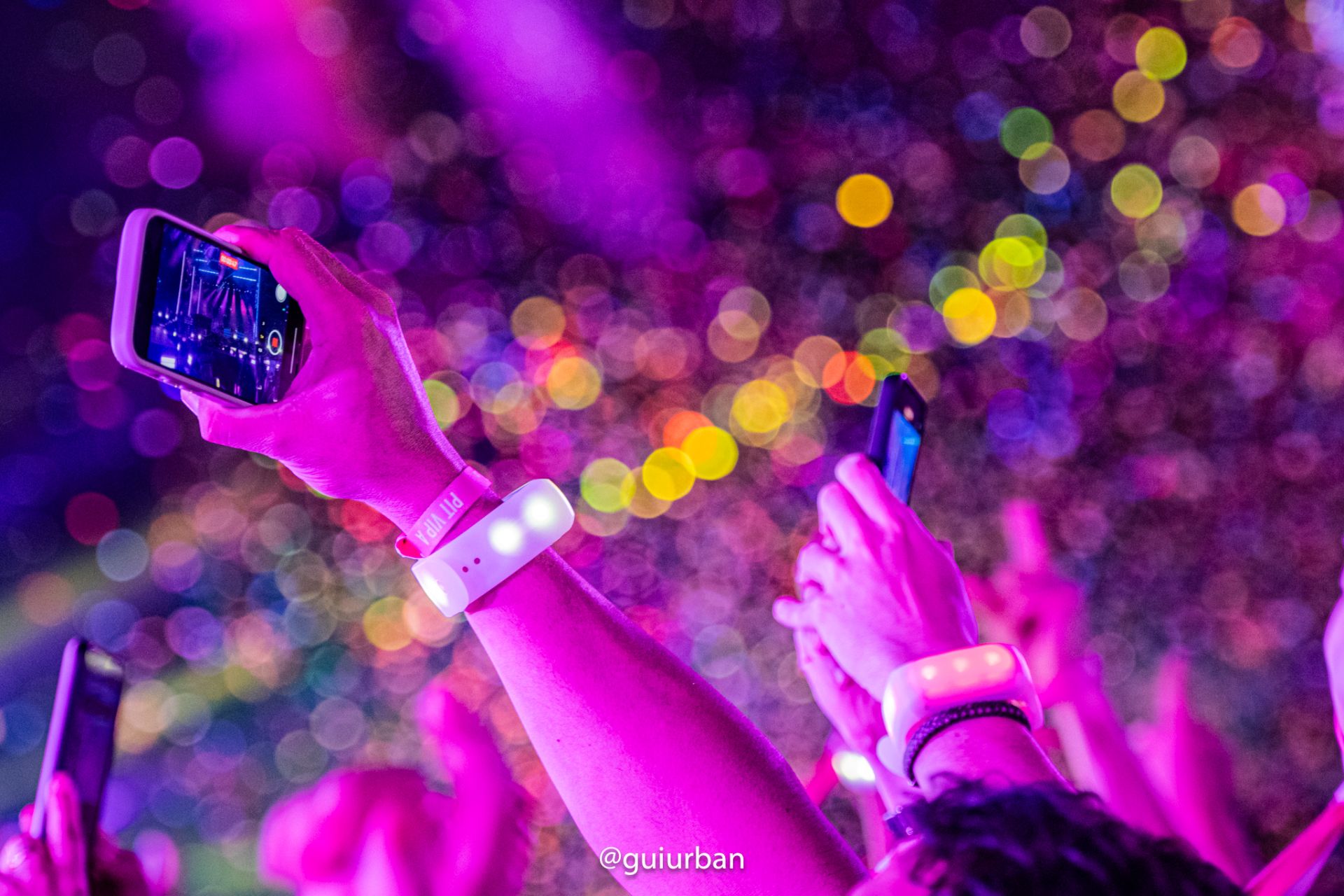
This transformation represents a fundamental shift in the relationship between the artist and the audience. The passive observer has become an active participant—an essential component of the show itself. Perhaps the most iconic example of this shift is the story of Xylobands. The idea, born during a Coldplay performance at Glastonbury, was to turn the crowd into the light show. The concept was simple but revolutionary: what if the lights didn’t just point *at* the crowd, but emanated *from* them?
When the Coldplay Xylobands first lit up on the Mylo Xyloto tour, they fundamentally altered the dynamic of the arena show. The audience wasn’t just watching the spectacle; they *were* the spectacle. This principle has since become a cornerstone of modern LED Crowd Experiences, creating a visual metaphor for the collective energy of the room. It’s a powerful feedback loop: the artist’s music controls the lights on the wristbands, and the sight of 60,000 people lighting up in perfect sync amplifies the emotional energy, which in turn fuels the performance. It’s a symphony of light, sound, and human emotion.
The Tools of Collective Consciousness
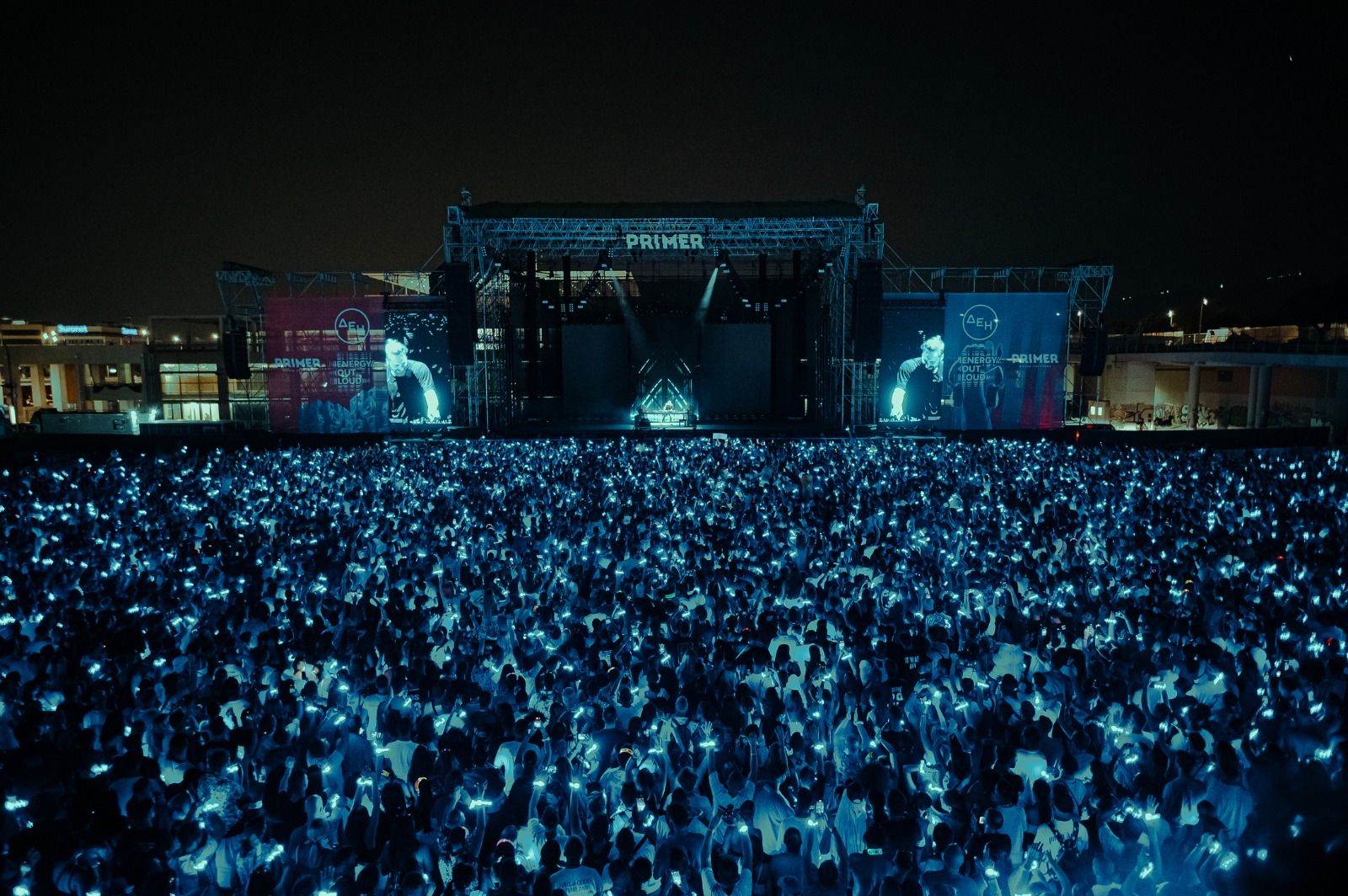
Creating this unified state requires robust and precise technology. Radio Controlled LED Wristbands are the conductor’s baton, allowing a single lighting designer to orchestrate a vast human canvas. By centralizing control, the technology fosters a state of managed spontaneity. Each individual’s wristband, whether at a massive electronic music festival like Primer or a high-stakes corporate launch, contributes to a cohesive, pre-designed visual narrative.
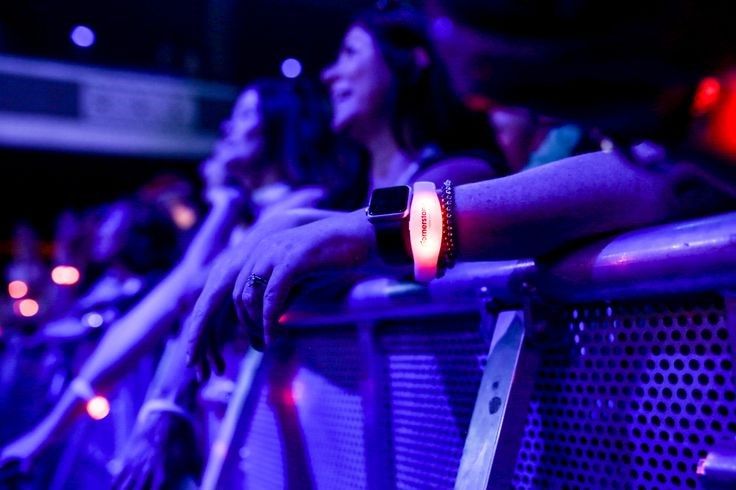
This Wearable LED Technology extends beyond the wrist. At a recent Formula One anniversary event, for example, custom-branded LED Lanyards were distributed to different sections of the arena, allowing for complex, tessellated light effects that distinguished teams and hospitality tiers. For other activations, glowing LED Orbs can turn a field or venue floor into a galaxy of interactive light points. Whether using Concert Wristbands, pendants, or lanyards, the psychological effect is the same: it elegantly strips away individual distraction and focuses the collective attention on a single, shared visual experience. These are no longer just souvenirs; they are tools for building temporary, high-energy communities.
The Deep-Seated Need for Belonging
Why is this so effective? Because it taps into a primal human need: the desire to belong. When your LED Bracelet lights up in unison with the 50,000 people around you, it serves as an undeniable, real-time confirmation that you are part of the group. You are sharing an identical experience, at an identical moment, with everyone in the venue. The visual boundary of the self, represented by the light on your arm, merges into a sea of synchronized light.
In that moment, the crowd ceases to be a collection of individuals and becomes a single entity, bound by a shared sensory experience. This is the alchemy of the modern live event.
This deepens the emotional impact and dramatically enhances memory encoding. The moments of peak sensory alignment—the chorus where every wristband flashes in time, the beat drop that sends a wave of color across the stadium—are the moments that lodge themselves in our long-term memory. They are the stories we tell, the feelings we chase, and the reason we return. It transforms a concert from something you merely watched into something you were a part of.
The Architecture of ‘We’
From a Durkheimian ideal to a technically executed reality, the engineering of collective effervescence is now a central pillar of live production. It is a deliberate act of psychological design, using Immersive Event Technology to foster unity, participation, and profound emotional connection on a mass scale. By providing a framework for thousands of people to share a single, synchronized sensory moment, we are not just creating entertainment; we are fulfilling a deep-seated human need for community. We are building the architecture of ‘we’, one pulse of light at a time.