Beyond the Rig: A Systems-Thinking Approach to Stadium & Arena Lighting
The Canvas is Not the Stage. It’s the Entire Room.
For decades, the core principles of large-scale tour lighting were relatively fixed: illuminate the artist, create a dynamic backdrop, and project energy out into the dark, anonymous expanse of the audience. The stage was the canvas, and the lighting rig was the brush. But a fundamental shift is underway, driven not just by new technology, but by a new philosophy of what a live show can be. In today’s stadium and arena tours, the canvas is no longer the stage. It’s the entire room.
This isn’t just a matter of scale. It’s a complete re-contextualisation of the relationship between artist, environment, and audience. The modern lighting designer is no longer just painting a picture; they are architecting a temporary, immersive universe. This requires a shift from fixture-level thinking to a holistic, systems-level approach where every element—from the key light on the vocalist to the last seat in the upper bowl—is a potential pixel in a much larger image.
Principle 1: From Illumination to Environmental Control
The first principle of modern stadium design is to stop thinking about lighting as mere illumination. Instead, think of it as environmental control. Your primary job is not just to make things visible, but to define and redefine the emotional and physical space of the venue itself.
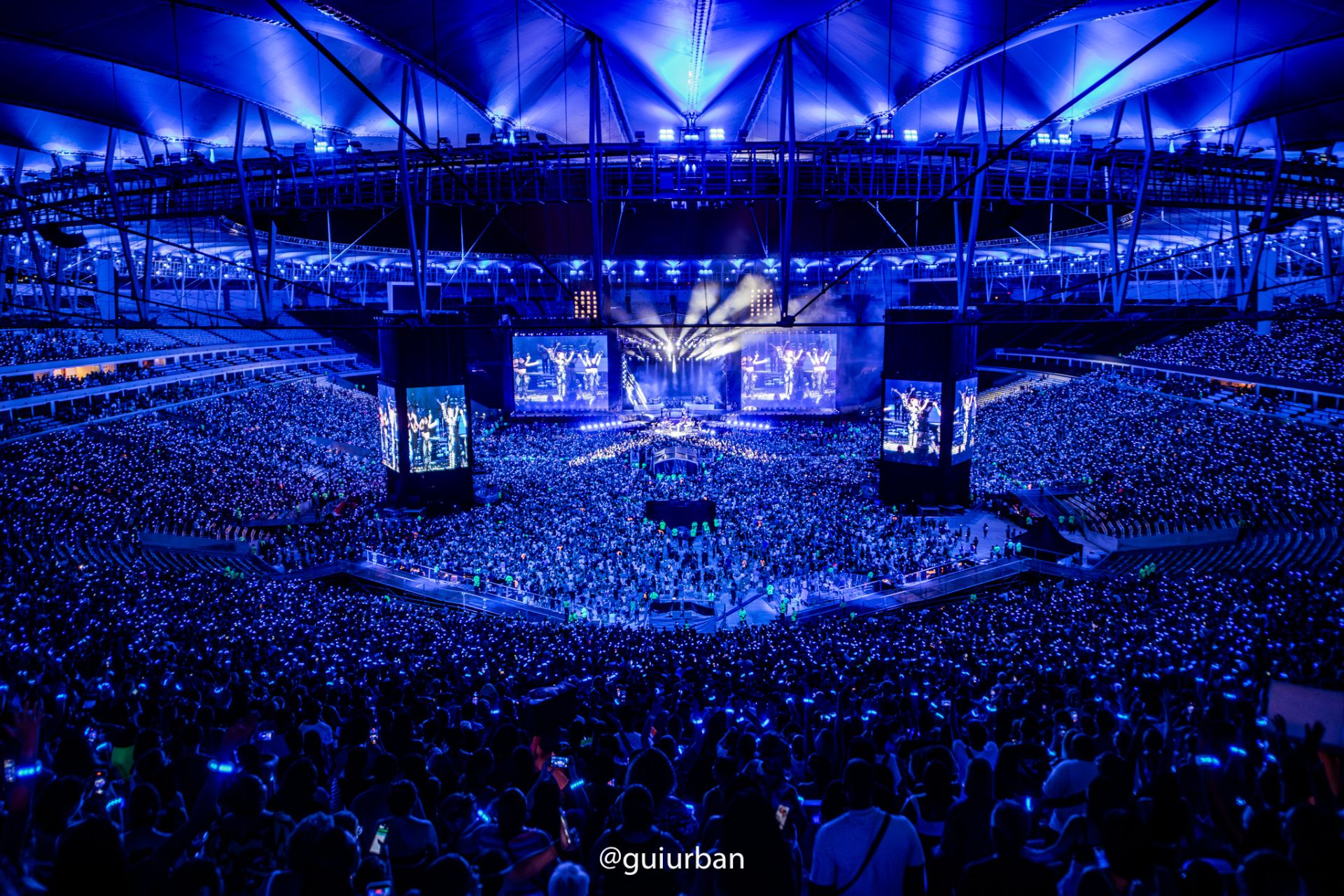
An arena is an architecturally cold and impersonal space. It’s a concrete bowl designed for sporting events, not intimate artistic moments. Your lighting is the single most powerful tool to transform it. Through deliberate use of colour, shadow, and intensity, you can make a 50,000-seat stadium feel like a small club for a single acoustic song, and then, moments later, blast it open to feel like an infinite cosmos. This is achieved by thinking in layers:
- Architectural Layer: Using light to trace the contours of the venue itself—the trusses, the speaker hangs, the seating tiers—giving the audience a sense of the scale and shape of the space they inhabit.
- Atmospheric Layer: The use of haze and fog to give light a physical volume, turning beams into tangible, sculptural objects that slice through the air and create a sense of depth.
- Audience Layer: This is the most profound shift. The audience is no longer a passive recipient of light but an active part of its fabric.
Principle 2: The Audience as a Living Canvas
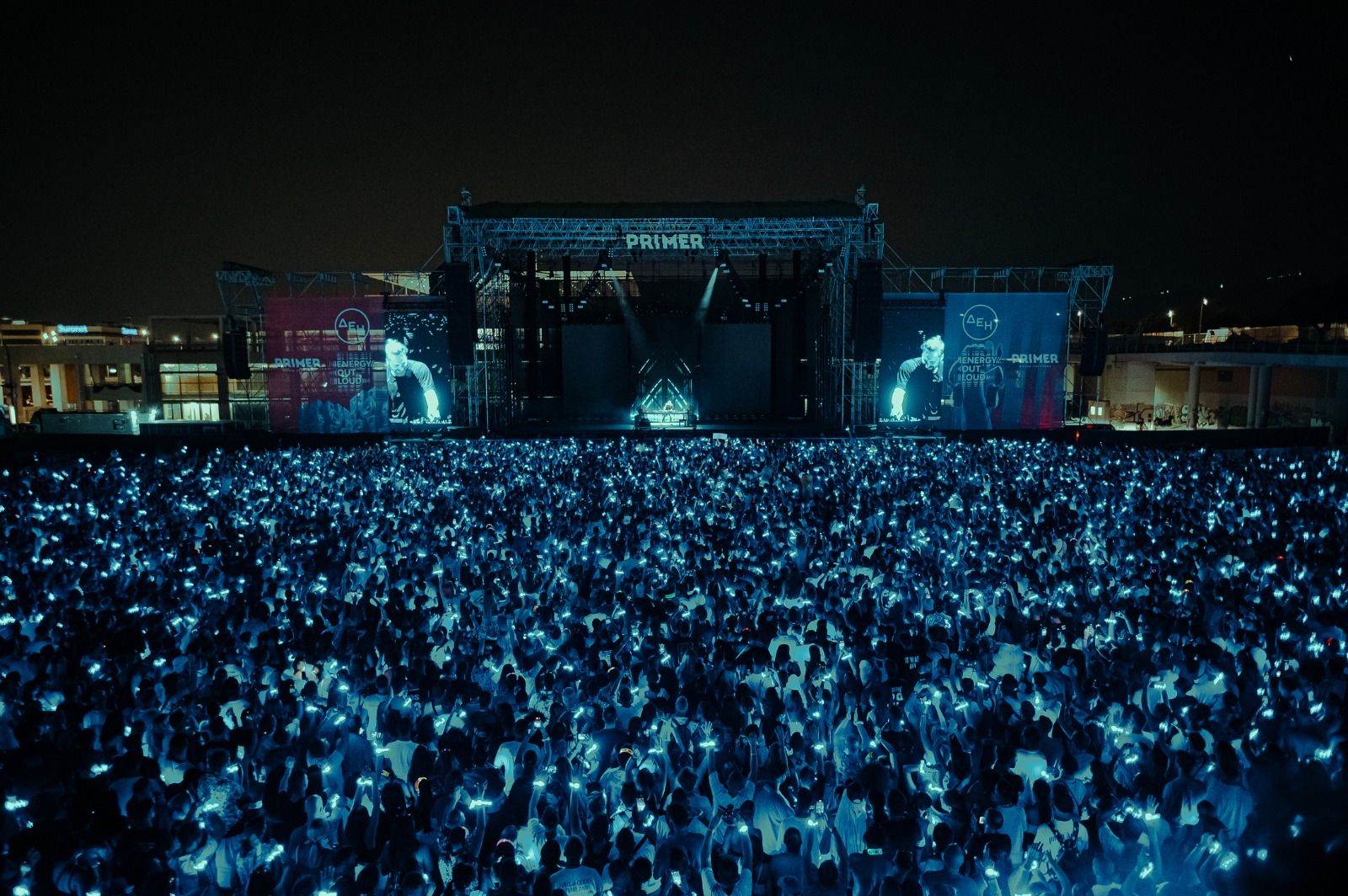
The single greatest evolution in stadium lighting is the ability to integrate the crowd into the design itself. Technologies like radio-controlled LED wristbands have transformed 50,000 individuals into a single, cohesive, and controllable lighting fixture. This isn’t a gimmick; it’s a foundational creative tool.
When you give every audience member a point of light, you unlock a new dimension of creative possibility. This is where Xylobands have become instrumental on a global scale, from colossal tours for artists like Coldplay and Maluma to major broadcast events. The design process expands to include:
- Zoning and Mapping: Treating the audience seating chart like a video raster. We can create complex, pixel-mapped effects that sweep across the arena, chase the beat of a drum, or create vast, breathing gradients of colour. The crowd becomes a living, 360-degree video wall.
- Emotional Synchronicity: Uniting the entire crowd in a single colour or pulse creates moments of profound collective energy. It’s a powerful psychological tool that transforms a shared experience into a unified one. For a moment, everyone is part of the same tribe, breathing the same light.
- Interactive Storytelling: The lights on their wrists can react to their movement, to the music, or to specific cues in the show, making them participants, not just spectators. This is the heart of creating truly immersive events.
These LED crowd experiences are no longer just for concerts. We’ve seen them create incredible moments of fan engagement at sporting events for brands like Formula One and the Davis Cup, turning the stands into a dynamic part of the spectacle.
Principle 3: Designing for the Camera’s Eye
In the modern touring landscape, there are two audiences: the one in the room, and the millions watching on screens. A show that looks spectacular in person can look flat, over-exposed, or chaotic on a live stream or in a concert film. As we saw with Maluma’s landmark Medellín concert, which was streamed to over 240 countries, the broadcast audience is a primary consideration.
This "two-audience problem" requires a delicate balance:
- Dynamic Range: Cameras have a far more limited dynamic range than the human eye. What appears as a subtle, moody look in the arena can be crushed into digital noise on screen. Lighting designs must be built with camera-friendly contrast ratios in mind.
- Colour Science: Certain shades of red or blue that look vibrant in person can saturate unattractively on camera sensors. A deep understanding of colour science and how different fixtures render their spectrum is crucial for broadcast-ready productions.
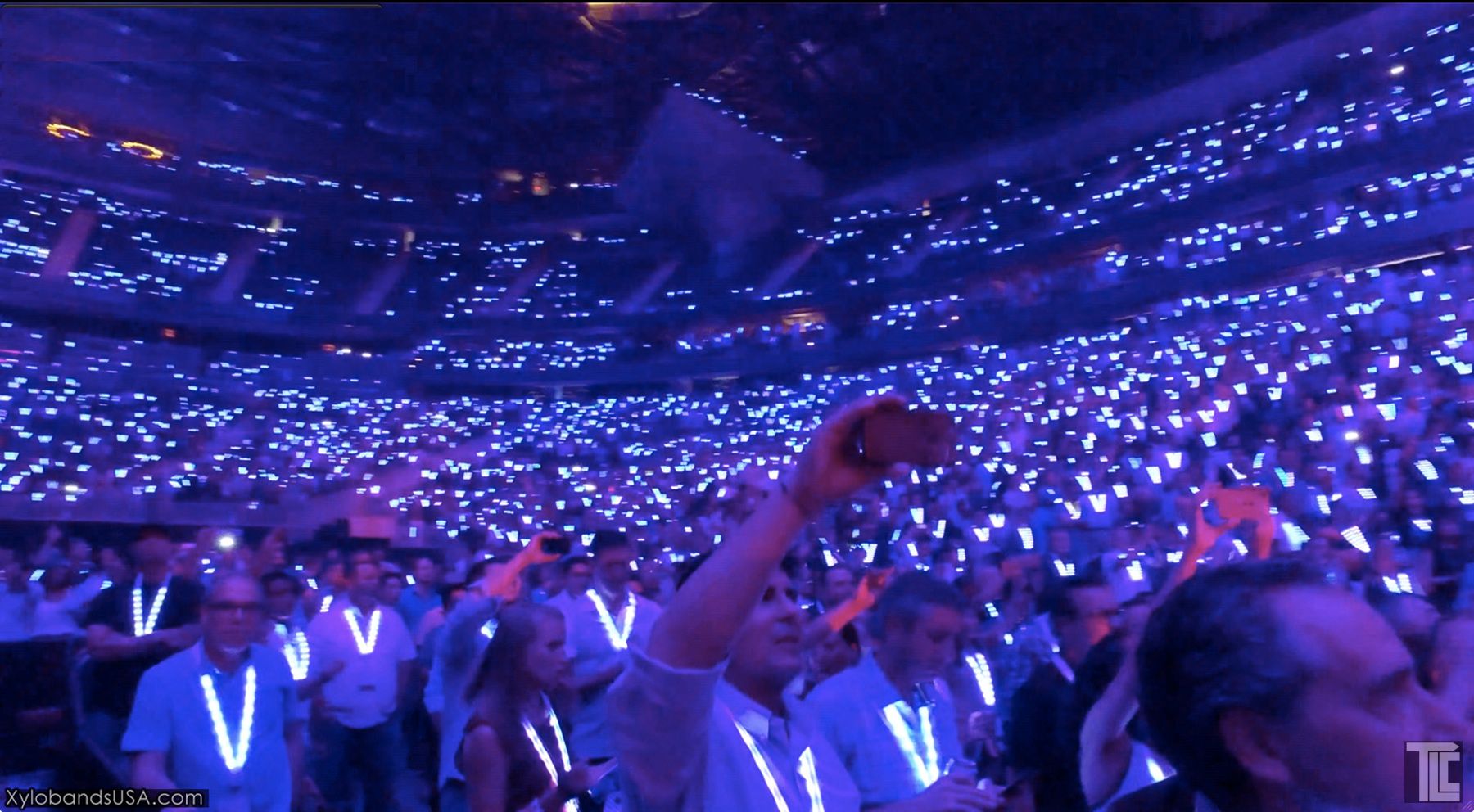
- Audience as Backdrop: When the crowd is lit with wearable LED technology, they cease to be a black hole in wide shots. Instead, they become a sparkling, dynamic backdrop that adds immense production value and a sense of scale to any camera shot, from wide-angle sweeps to tight shots on the artist.
Principle 4: Scalability, Reliability, and the Zero-Failure Mandate
An arena tour is a logistical behemoth. A lighting design is only as good as its ability to be deployed, operated, and struck reliably, night after night, in different cities and countries. The system must be robust, modular, and tour-proof.
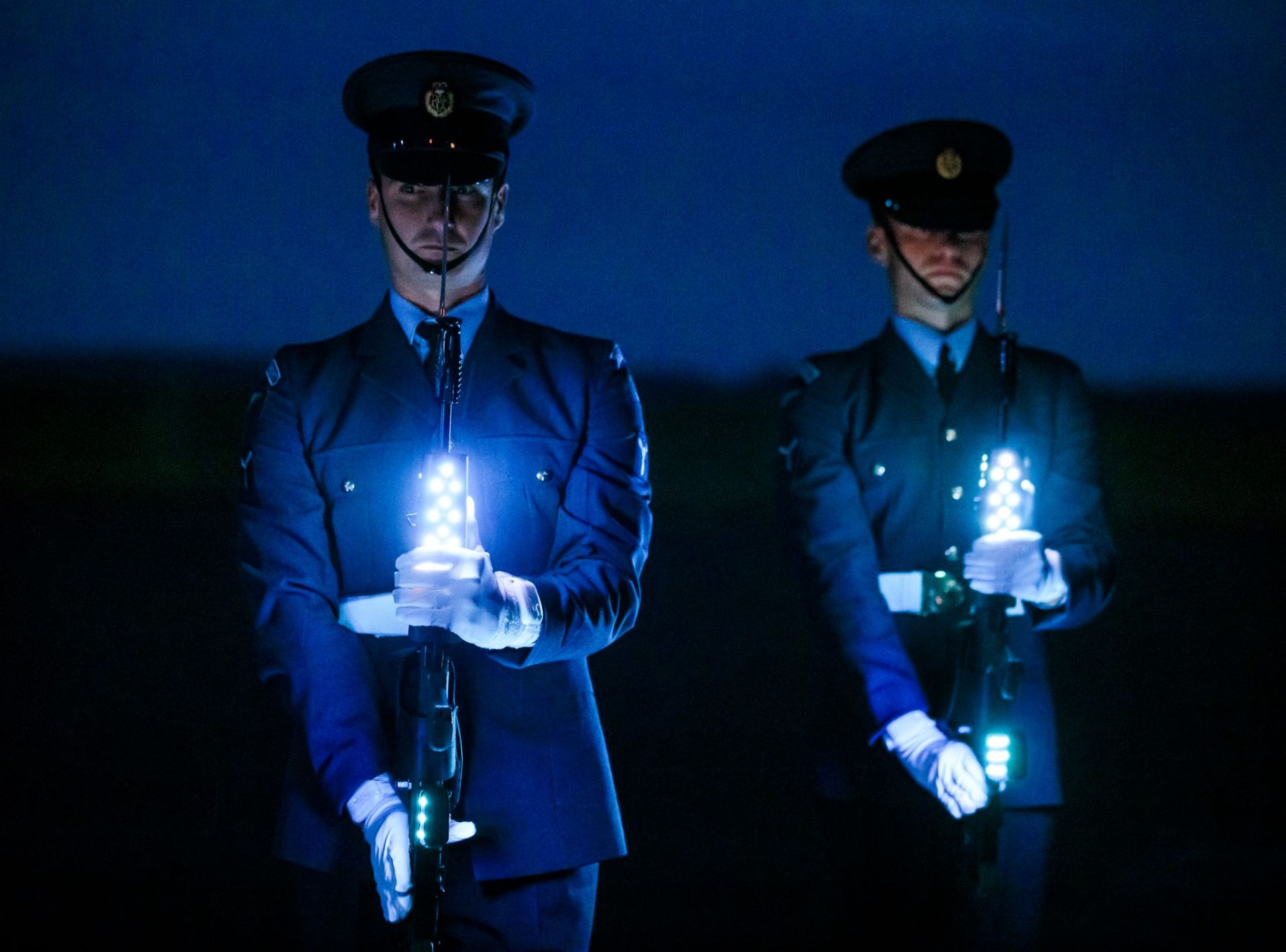
When incorporating crowd-based LED experiences, this principle extends to the audience. The deployment of tens of thousands of devices—whether custom LED wristbands or LED lanyards—is a massive logistical undertaking. It requires a system built for zero-point-of-failure, from battery life and signal strength to the distribution and collection process itself. The RF technology controlling the devices must be powerful and stable enough to cut through the incredible amount of signal noise present in a modern stadium environment.
"The core challenge is no longer just ‘how many lights can we hang?’ It’s ‘how many systems—stage, video, audio, and audience—can we get to speak the same language, seamlessly and in perfect time?’ The future of tour lighting is in the integration."
Ultimately, the art of modern stadium and arena lighting is the art of systems integration. It’s about seeing the entire venue and everyone in it as a single, unified canvas. By weaving together the architectural space, the atmospheric potential, the camera’s perspective, and the audience itself, designers can move beyond mere spectacle. They can architect moments of connection, crafting truly immersive event technology that audiences don’t just watch, but feel and become part of.