The Art of Scale: Modern Lighting Design for Arenas and Stadiums
The Challenge of Scale
Designing a lighting rig for a club or theatre is a task of intimacy. The tools are close, the audience is contained, and the energy is focused. Scale that up to a 20,000-capacity arena or a 70,000-seat stadium, and the physics of light, perception, and emotion are fundamentally altered. This is the unique challenge of the modern touring production designer: not just to illuminate, but to command vast spaces and transform them into unified, emotional canvases.
In these colossal spaces, light is no longer just a spotlight on a performer; it's an architectural element. It has the power to shrink a stadium to the size of a private room or expand it to feel like an infinite galaxy. The core task is to ensure every single attendee, from the front row to the furthest seat in the upper deck, feels a direct connection to the performance. The person in seat 401 of tier 3 must have a visual experience as powerful and engaging as the person in the golden circle. This is where the principles of scale, layering, and audience integration become paramount.
Principle 1: Painting with a Broader Brush
In an arena, the "canvas" isn't just the stage—it's the entire volume of the building. Lighting designers must think in three dimensions, considering sightlines from every conceivable angle. Traditional stage lighting—trusses, moving heads, PAR cans—forms the foundational layer, sculpting the performers and the immediate stage environment. But to fill the arena, the design must extend outwards and upwards.
Key considerations include:
- Volumetric Effects: Using haze and atmospheric effects is critical. Beams of light become tangible, sculptural objects, carving through the air and creating dramatic, architectural shapes that are visible from every seat.
- Audience Blinding and Washes: Turning lights onto the audience is a classic technique, but in a stadium, it takes on new meaning. A full-crowd wash doesn't just reveal faces; it creates a momentary sense of unity, a shared intake of breath as tens of thousands of people are illuminated as one.
- Symmetry and Asymmetry: Grand, symmetrical looks can create powerful, god-like moments of awe. In contrast, asymmetrical designs can generate tension, excitement, and visual interest, guiding the audience's eye and breaking the monolithic nature of the space.
Principle 2: The Audience as a Medium
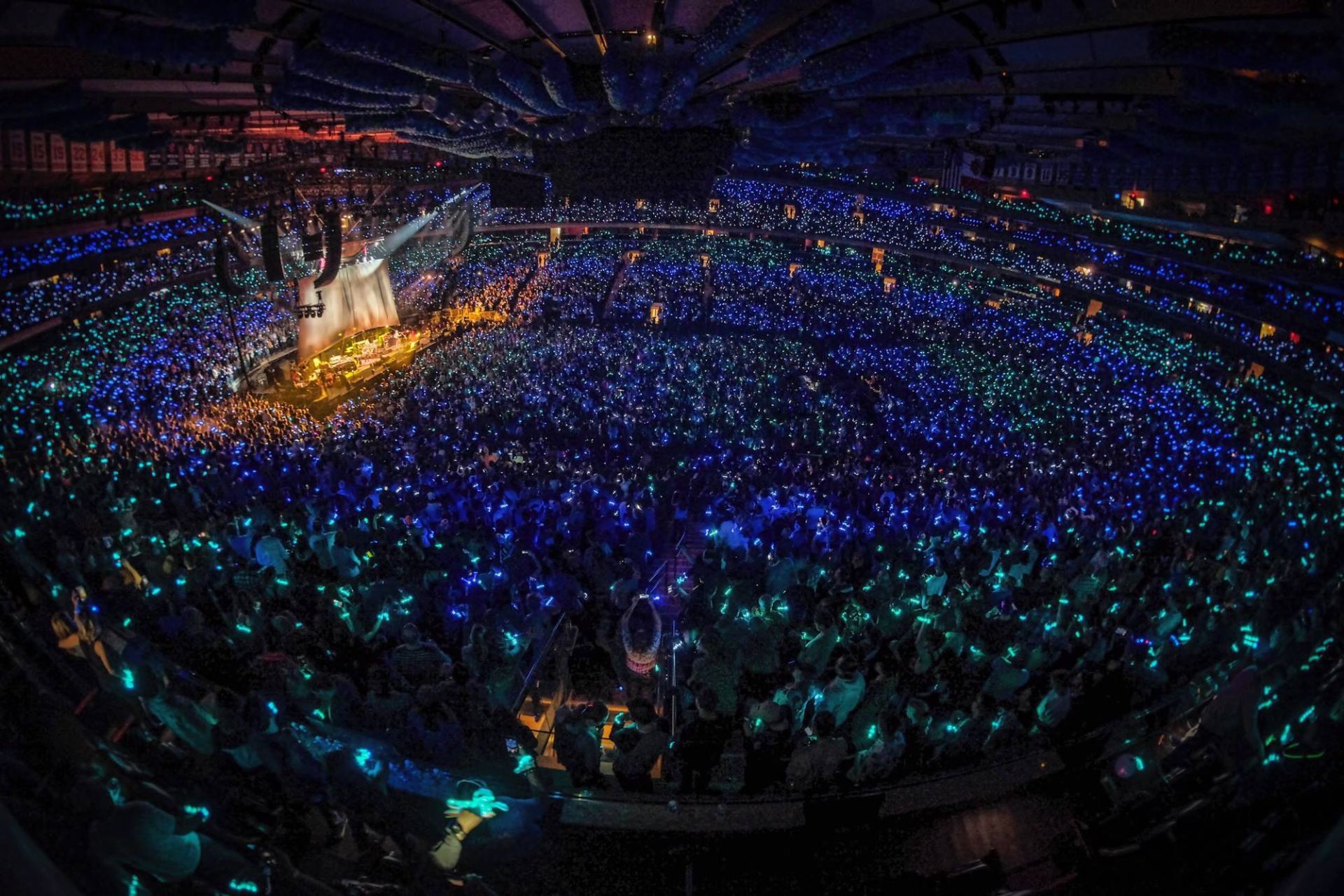
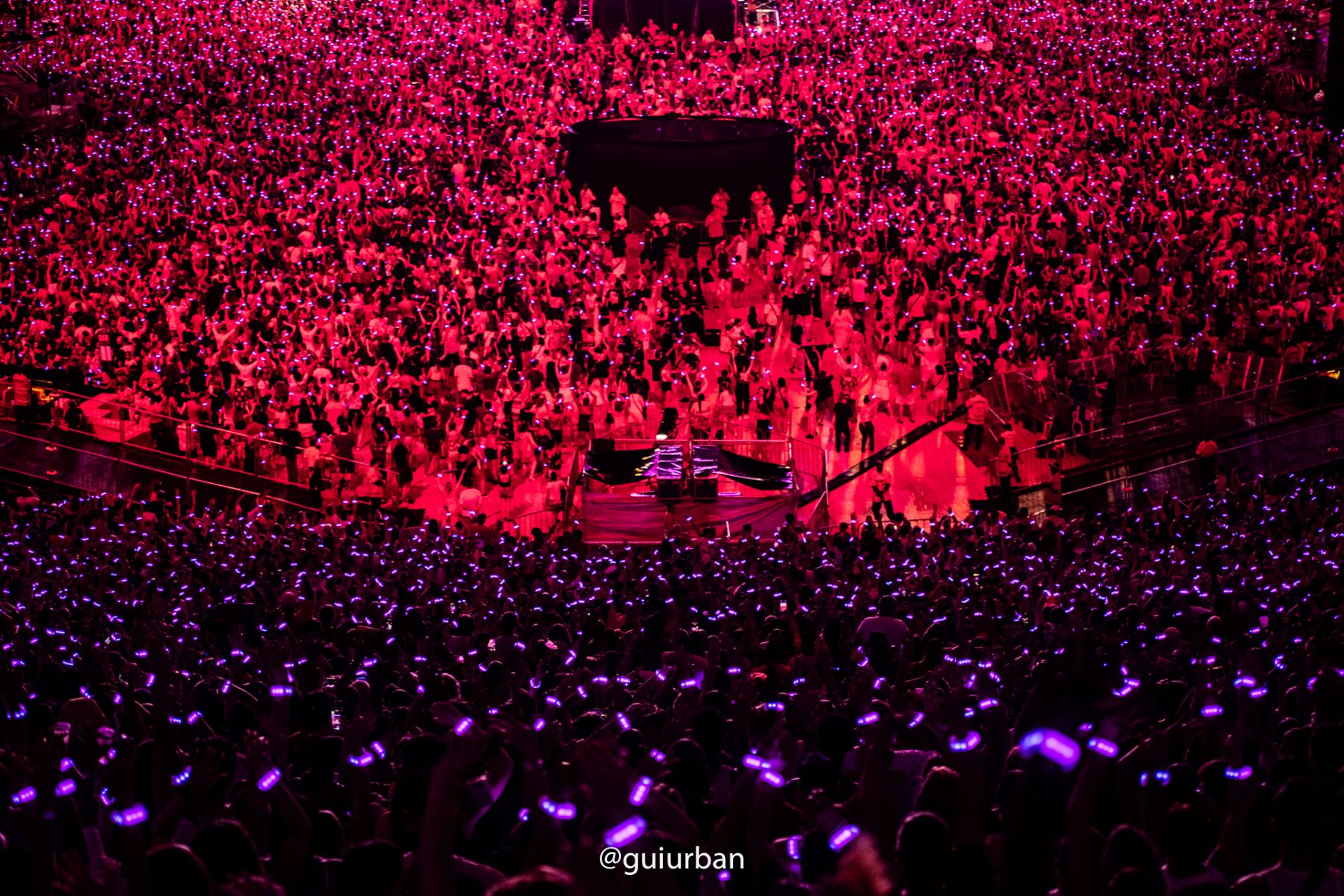
The most significant shift in large-scale lighting design over the past decade has been the move to integrate the audience directly into the spectacle. The crowd is no longer a passive observer but an active, illuminated part of the show itself. This is the philosophy that drove the invention of Xylobands and has since redefined what's possible in immersive events.
By making each audience member a pixel in a vast display, we decentralize the visual focus from the stage and create a 360-degree environment. A wave of light can now ripple from the front row to the back, a pulse of colour can erupt from the centre of the arena, or the entire stadium can flash in perfect synchronicity with a beat drop. This transforms the audience into a living, breathing entity, a direct extension of the artist's creative vision.
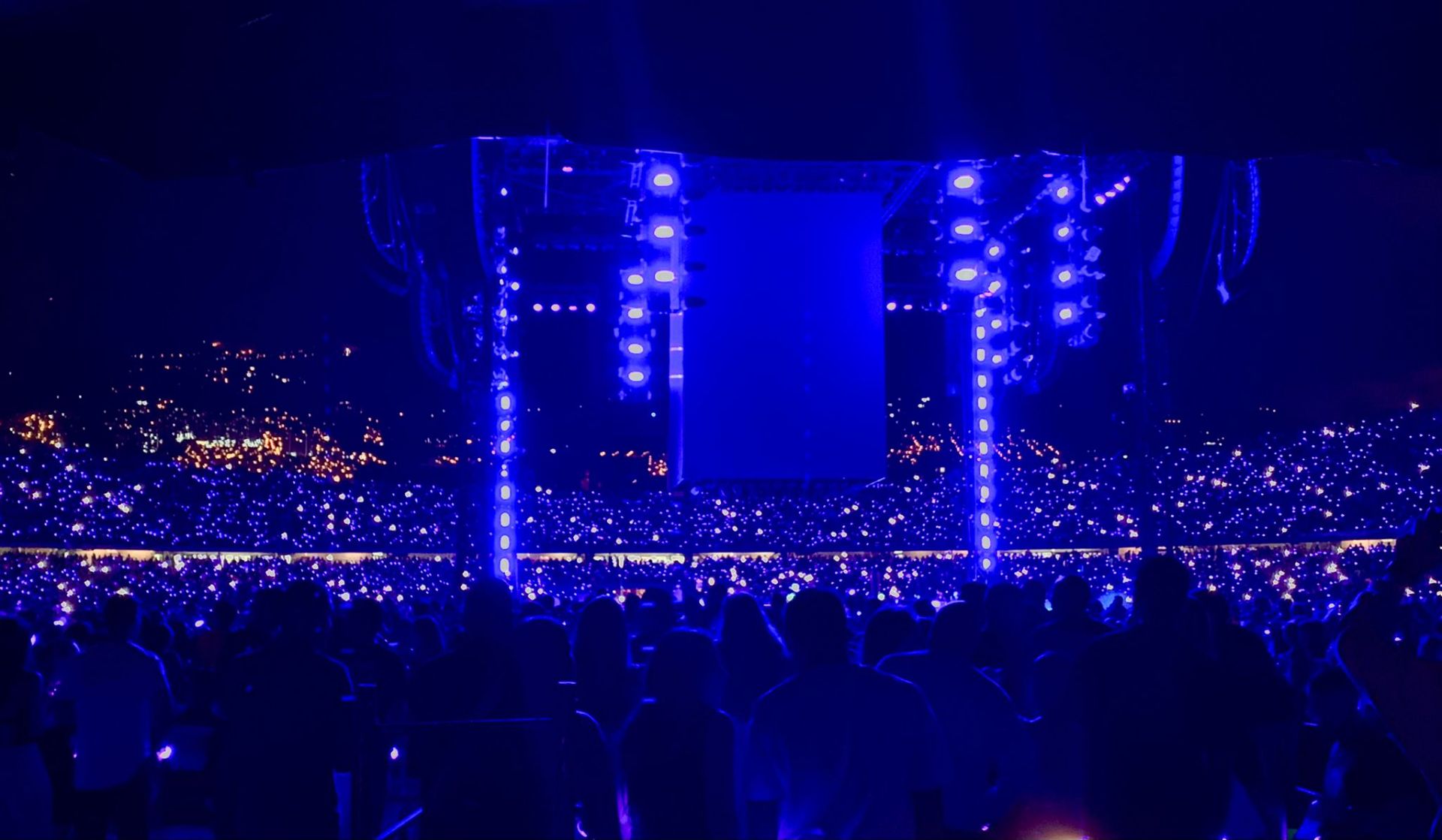
When 54,000 people at Maluma’s “Medellín En El Mapa” concert become a unified field of light, the emotional impact is staggering. It creates a powerful sense of belonging and shared experience that a traditional lighting rig alone cannot replicate. This is the essence of creating truly immersive LED experiences.
Principle 3: Designing for the Lens
Modern concerts are twofold experiences: one for the live audience and one for the millions watching through a screen. A stadium show is a broadcast, a livestream, a sea of smartphone cameras capturing content for social media. A lighting design that looks spectacular in person can look flat or blown-out on camera if not carefully considered.
This "two-audience problem" requires a delicate balance:
- Colour Temperature and CRI: Lighting must be calibrated to work with professional camera sensors, ensuring that colours are rendered accurately and skin tones look natural.
- Dynamic Range: The human eye can handle a much wider range of brightness than a camera. Designers must manage the contrast between the brightest and darkest parts of the show to avoid clipping highlights or losing detail in the shadows on screen.
- Controlled Immersion: Wearable LED technology like LED Wristbands is inherently camera-friendly. The distributed, point-source nature of the light creates a visually stunning, textured background that looks incredible on camera without overwhelming the sensors. It provides a rich visual tapestry that translates beautifully to broadcast, as seen in global events from the Eurovision Song Contest to Formula One celebrations.
The Unifying Power of Light
Ultimately, the goal of stadium and arena lighting design is to conquer distance. It’s about using light to build a bridge between the artist on stage and the person in the last row. It’s about creating moments of collective effervescence where thousands of individuals feel like part of a single, unified body.
Whether it's through the epic sweep of a moving light, the architectural power of volumetric beams, or the intimate, personal connection of a wristband glowing on your arm, modern lighting design is an art of human connection at an inhuman scale. By layering traditional stagecraft with groundbreaking immersive event technology, we can transform vast, impersonal spaces into arenas of shared emotion and unforgettable spectacle.