The Atlas of Atmosphere: A New Playbook for Unforgettable Sports Spectacles
The Challenge of Scale
An arena is not just a bigger theatre. A stadium is not just a bigger arena. As venues swell in size, the physics of light and the psychology of the audience transform completely. A tightly focused beam that feels dramatic in a 2,000-seat venue can get lost in the vastness of a 20,000-seat arena, let alone an 80,000-seat stadium. The challenge for any lighting designer on a major tour is not simply to scale up the rig, but to fundamentally rethink the canvas.
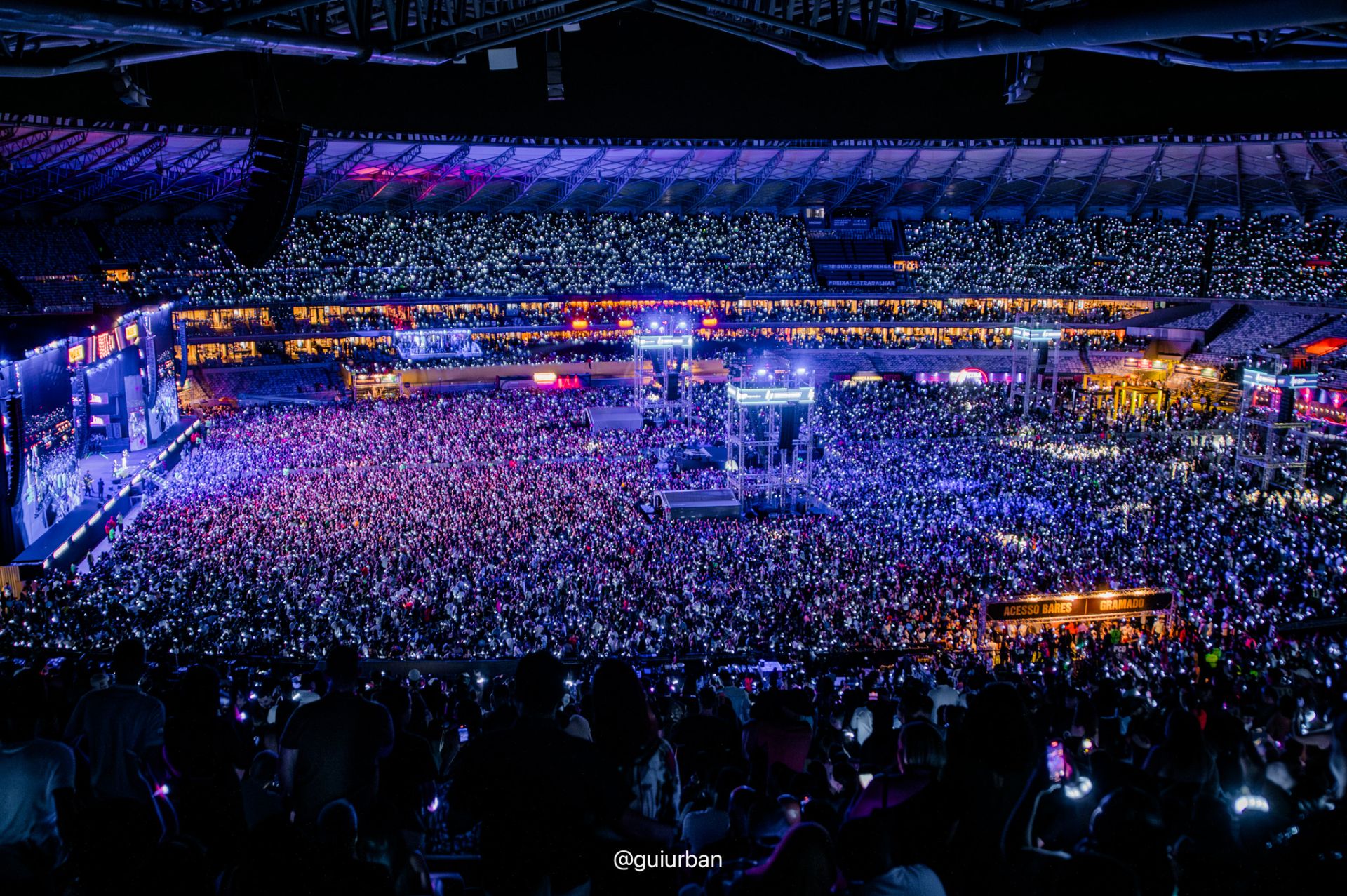
In a stadium, the "room" is the sky. Your surfaces are not intimate brick walls but tiers of seating that can be hundreds of metres away. The audience themselves are no longer a uniform gathering but a series of distinct communities, each with a different sightline and a unique sensory experience. Your design must cater to the fan in the front row, the guest in the hospitality suite, and the viewer in the furthest, highest seat. More than that, it must serve the millions watching a live broadcast feed from continents away. It is a four-dimensional puzzle with light, space, time, and emotion as its core components.
Principle 1: Painting with a Broader Brush
In the expansive geography of a stadium, nuance is lost to distance. Intricate gobos and subtle colour shifts that read beautifully in a theatre become muddy and indistinct. The key is to think in bold, powerful strokes. This is the realm of mass texture, of grand architectural gestures, and of large-scale colour fields.
Instead of thinking about lighting individual performers, you must think about lighting entire zones. The stage, the field of play, the lower bowl, the upper tiers, the roof structure—each becomes a canvas in its own right. The goal is to create huge, legible, and often slow-moving pictures that can be understood from half a kilometre away. This is where high-power fixtures, large-format video surfaces, and mass-audience lighting systems become essential tools. You aren't just lighting a show; you are sculpting the entire volume of the building.
Principle 2: The Crowd as the Canvas
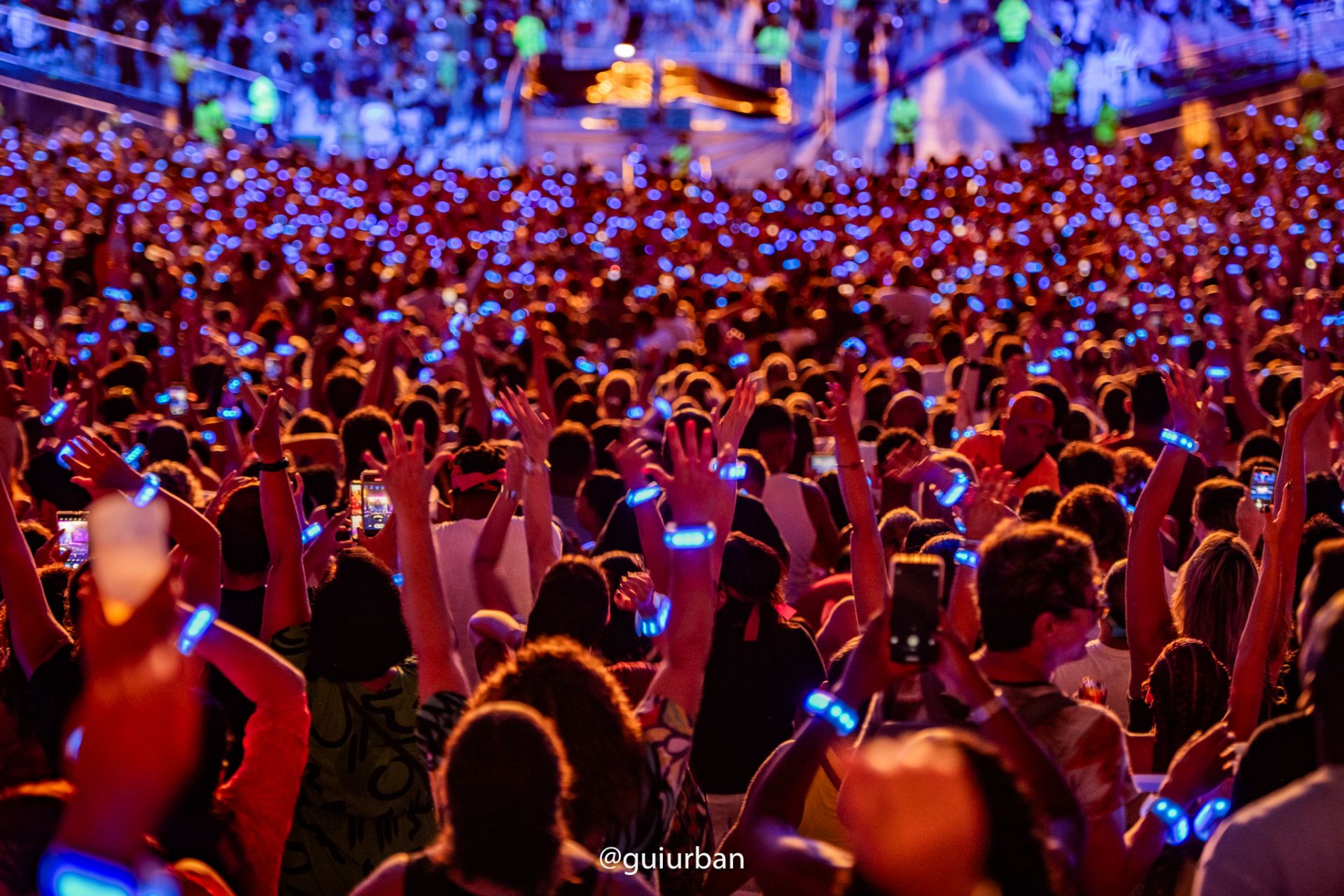
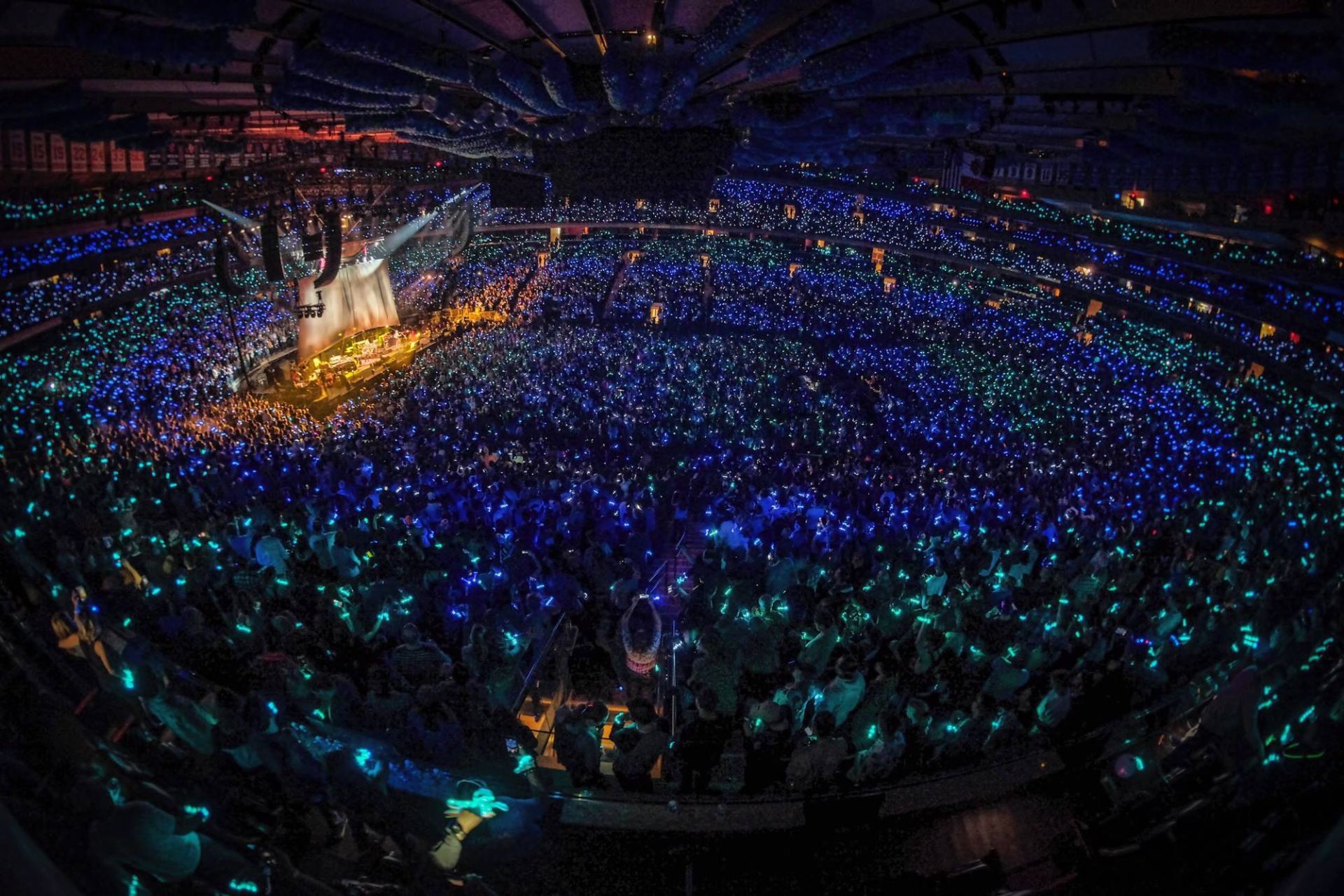
The single most significant shift in large-scale tour lighting over the past decade has been the transformation of the audience from passive observers into an active, illuminated part of the spectacle. The crowd is no longer just a target to be lit; they are the medium. This is the principle that gave birth to Xylobands and has since revolutionized what is possible in stadium environments.
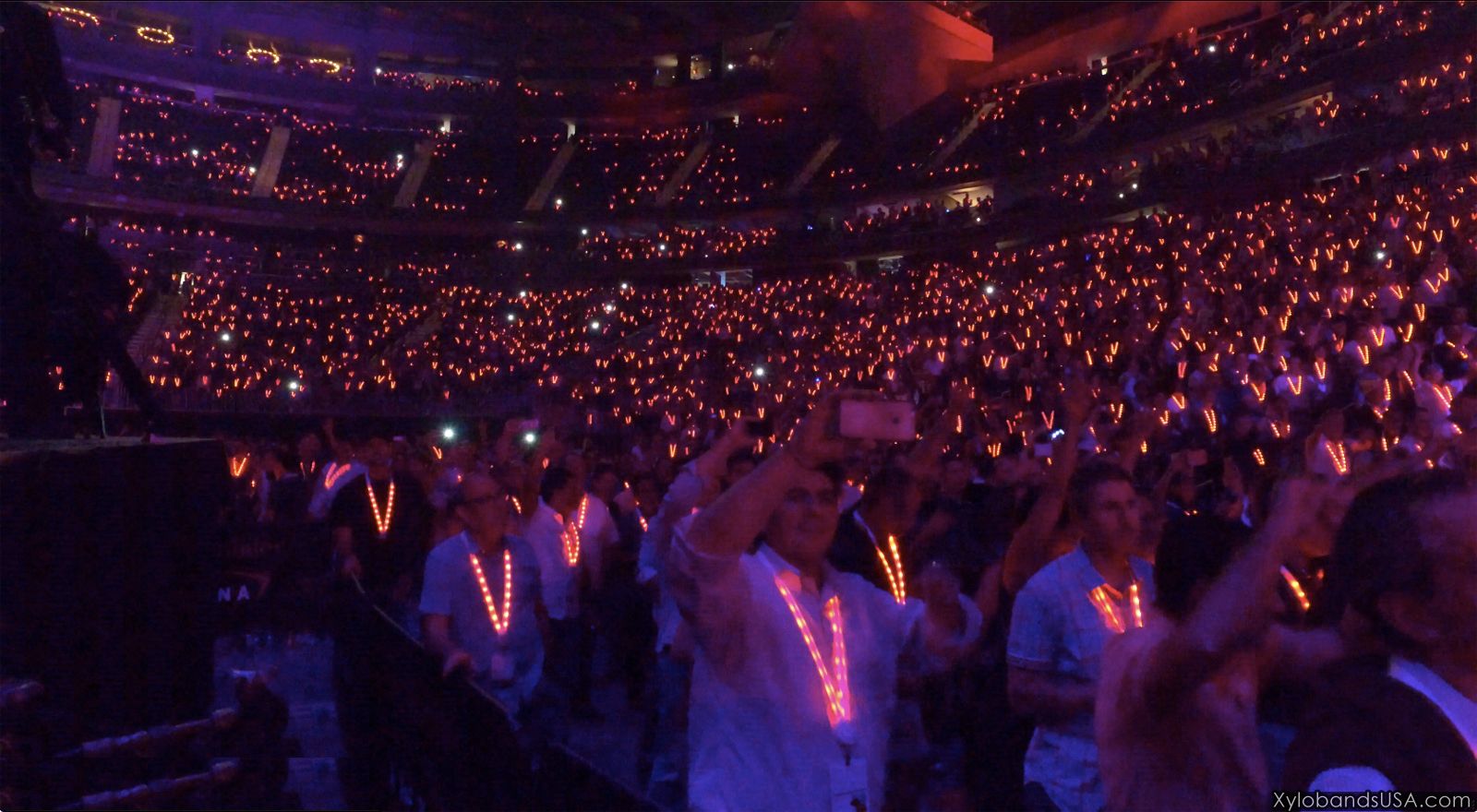
By making each attendee a pixel in a venue-wide display, you can extend the performance off the stage and into the stands. Suddenly, a wave of light can crash from the back of the arena to the front. A chorus can be punctuated by a burst of colour that erupts from 50,000 points of light simultaneously. This technology allows a designer to create truly immersive events. It unifies the entire space, breaking down the barrier between artist and fan. When tens of thousands of individuals are connected by a single, synchronized pulse of light—as seen on tours for global artists like Coldplay and Maluma—the sense of shared experience becomes profound and unforgettable.
This is where wearable LED technology, such as custom LED wristbands and LED lanyards, comes into its own. These devices allow for precise, dynamic control, turning the audience into a living, breathing light show and a core component of the creative design.
Principle 3: Designing for the Dual Audience
Every major stadium show is now a broadcast event. The audience is no longer just the ticket-holders in the building; it includes millions watching on screens around the globe. This creates a dual reality for the lighting designer. You must create an electrifying, visceral experience for the people in the room, while also crafting a perfectly balanced, telegenic image for the cameras.
These two goals can often be in conflict. The high-contrast, atmospheric looks that feel epic in a stadium can look like a murky mess on a television screen. The clean, high-key lighting that a broadcast director loves can feel sterile and flat to the live audience. The art lies in finding the balance. This involves meticulous camera tests, close collaboration with the broadcast team, and a deep understanding of how different fixtures, colours, and angles translate to the digital sensor.
Events like the 75th Anniversary of Formula 1 or the Davis Cup finals are masters of this, creating stunning spectacles for both the live attendees and the global broadcast. It often means creating two shows in one: the visceral, emotional show for the arena, and the technically perfect, beautifully framed show for the world.
The Unifying Power of Light
Ultimately, lighting design at the stadium scale is an act of unification. It is about taking a disparate collection of thousands of individuals and forging them into a single, collective body. It’s about creating moments of shared awe that transcend the physical distance between the stage and the last row.
Whether it’s a championship sports final, a major music festival like Primer, or a global artist’s stadium tour, the principles remain the same. Use bold strokes. Treat the crowd as your canvas. Design for the camera as well as the room. By mastering these concepts, you move beyond mere illumination and begin to practice the true alchemy of atmosphere: turning vast, impersonal spaces into sites of profound human connection, all orchestrated by the universal language of light. The result is a powerful form of LED crowd experiences, creating a memory that lasts long after the final light fades to black.