The Crowd as Canvas: The New Era of Festival Production
From Passive Spectators to Active Participants
The modern festival is a far cry from its early origins. What began as a simple gathering of fans to watch a series of performers has morphed into a multi-sensory, interactive universe. The line between the artist on stage and the audience in the field is blurring, and in some cases, disappearing altogether. This evolution hasn’t happened by accident; it’s the result of a deliberate shift in production philosophy, driven by new creative ambitions and enabled by groundbreaking immersive event technology.
Today’s festival-goer doesn’t just want to see a show; they want to be in the show. They crave participation, connection, and a sense of being part of a unique, unrepeatable moment. For event producers and tour managers, this presents both a challenge and an incredible opportunity: how do you transform a crowd of thousands into a unified, dynamic, and integral part of the performance? The answer lies in treating the audience not as a collection of individuals, but as a living, breathing canvas.
The Rise of Interactive Light
For decades, the primary tools for audience lighting were rudimentary. The sea of lighters during a ballad, later replaced by the glow of mobile phones, were the first instances of the crowd generating its own light. While iconic, these moments were spontaneous and uncontrolled. The true paradigm shift came with the advent of wearable LED technology.
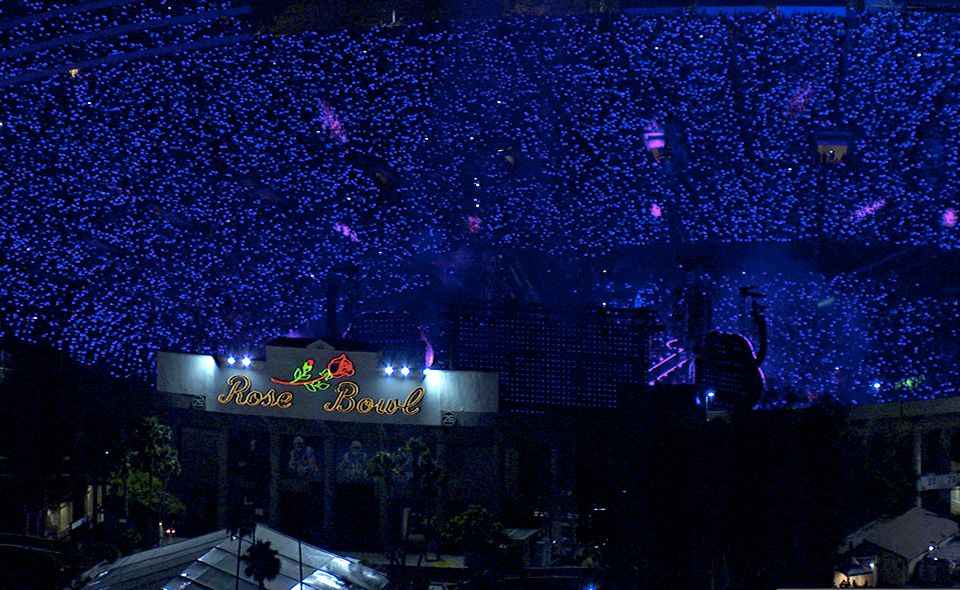
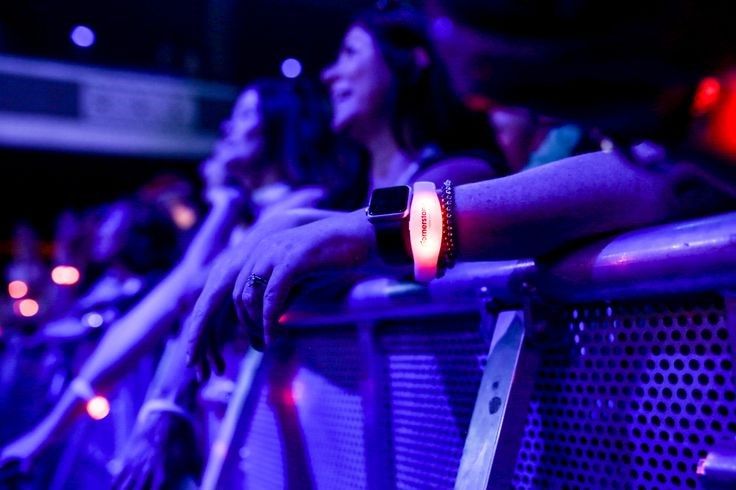
When Xylobands first illuminated the audience on Coldplay’s Mylo Xyloto tour, it marked a turning point. Suddenly, every single person in the crowd became a pixel in a vast, moving picture. This wasn’t just about giving people a glowing wristband; it was about centralizing creative control and giving lighting designers the ability to choreograph the crowd itself. Through radio controlled LED wristbands, designers can now paint with light in three dimensions, sweeping colours across a stadium, creating pulsating rhythms, or isolating specific sections to build dramatic tension and release.
This technology fundamentally changes the relationship between the fan and the performance. When your wristband lights up in perfect sync with a drop or a crescendo, you feel an undeniable connection to the music and to everyone around you. It transforms a passive viewing experience into an active, somatic one. This is the core of modern LED crowd experiences—making tens of thousands of people feel like one.
Beyond the Wristband: Expanding the Interactive Ecosystem
While festival wristbands remain a powerful tool, the palette for crowd interaction continues to expand. We’ve seen this firsthand in projects that push the boundaries of what’s possible. At large-scale events, the principle of synchronized light can be applied to other form factors, creating a richer, more layered visual experience.
Consider the potential of integrating different types of wearables. For instance, at a recent major sporting event, custom LED Lanyards—or as we called them for the occasion, Xylo Pendants—were distributed, allowing for branding and segmentation while still being part of the synchronized light show. Imagine a scenario where different sections of a festival field are given different devices—some with wristbands, others with lanyards or LED Orbs—each programmed to respond in unique ways, creating complex, overlapping patterns of light and colour.
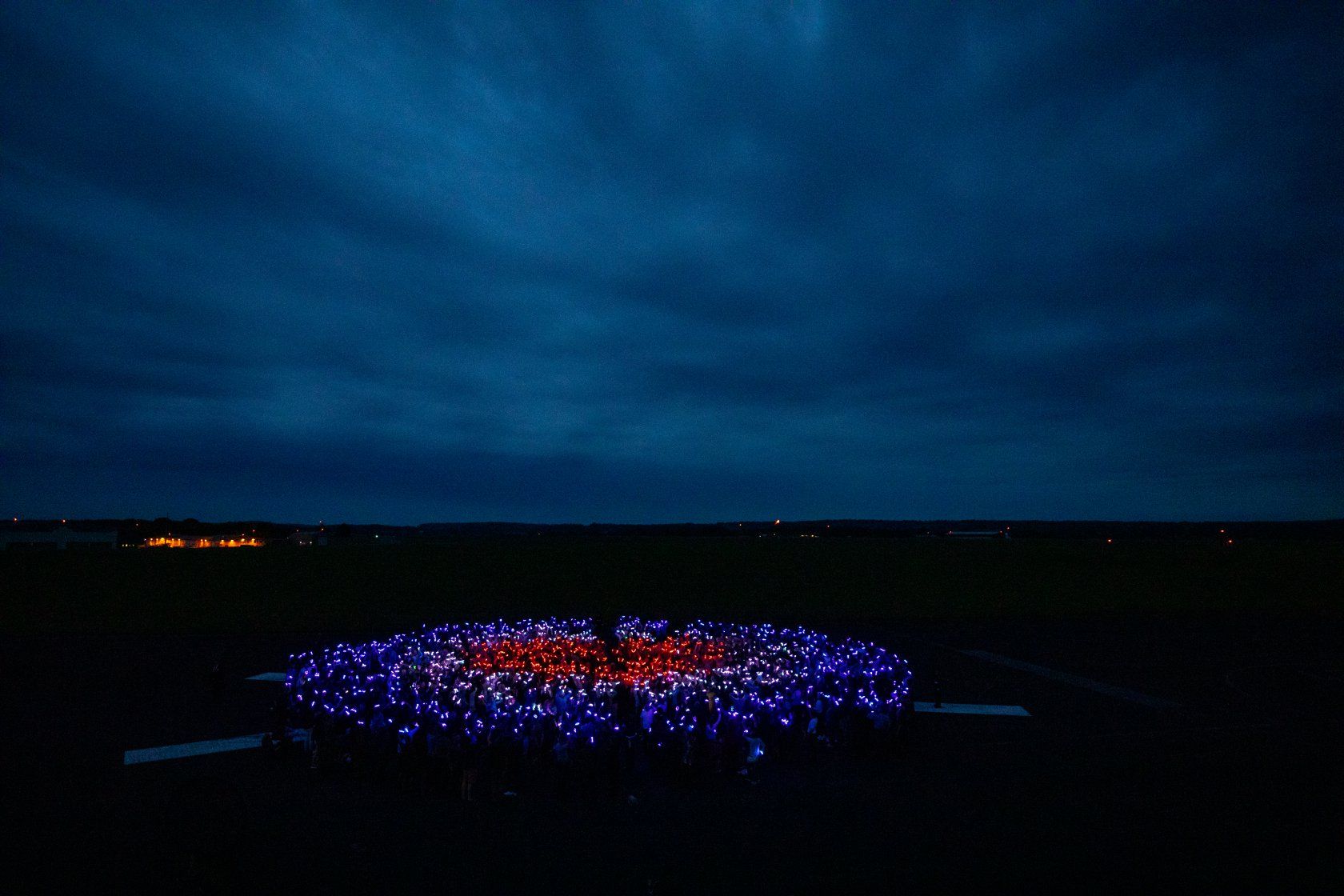
This approach allows for a more granular level of storytelling. It’s a technique we’ve seen used to great effect in everything from global music tours for artists like Wizkid and Maluma to major brand events like the Formula One 75th anniversary celebration. The goal is always the same: to create immersive events that feel personal and collective at the same time.
The Psychology of Shared Experience
Why is this shift toward interactive participation so effective? It taps into a fundamental human need for belonging and shared experience. A great festival moment is one where the boundary between self and other seems to dissolve. By unifying the audience through light, you create a powerful visual metaphor for this collective consciousness.
When everyone in your field of vision becomes part of the spectacle, it fosters a profound sense of community. This is no longer just a concert; it’s a tribal gathering. The shared visual cues—the sudden flash of white light across 50,000 people, the slow fade to blue that blankets a field—act as a non-verbal language that everyone understands instinctively. It’s a powerful tool for emotional engineering, capable of amplifying the energy of a high-tempo track or deepening the intimacy of a quiet moment.
The Future is Co-Created
As we look to the future of festival production, this trend of audience co-creation is only set to accelerate. The next frontier may involve even greater levels of personalization and interactivity. Imagine a festival where the crowd’s movement and energy, measured by their wearables, directly influence the lighting and visuals in real-time. The audience wouldn't just be a canvas; they would be the paintbrush.
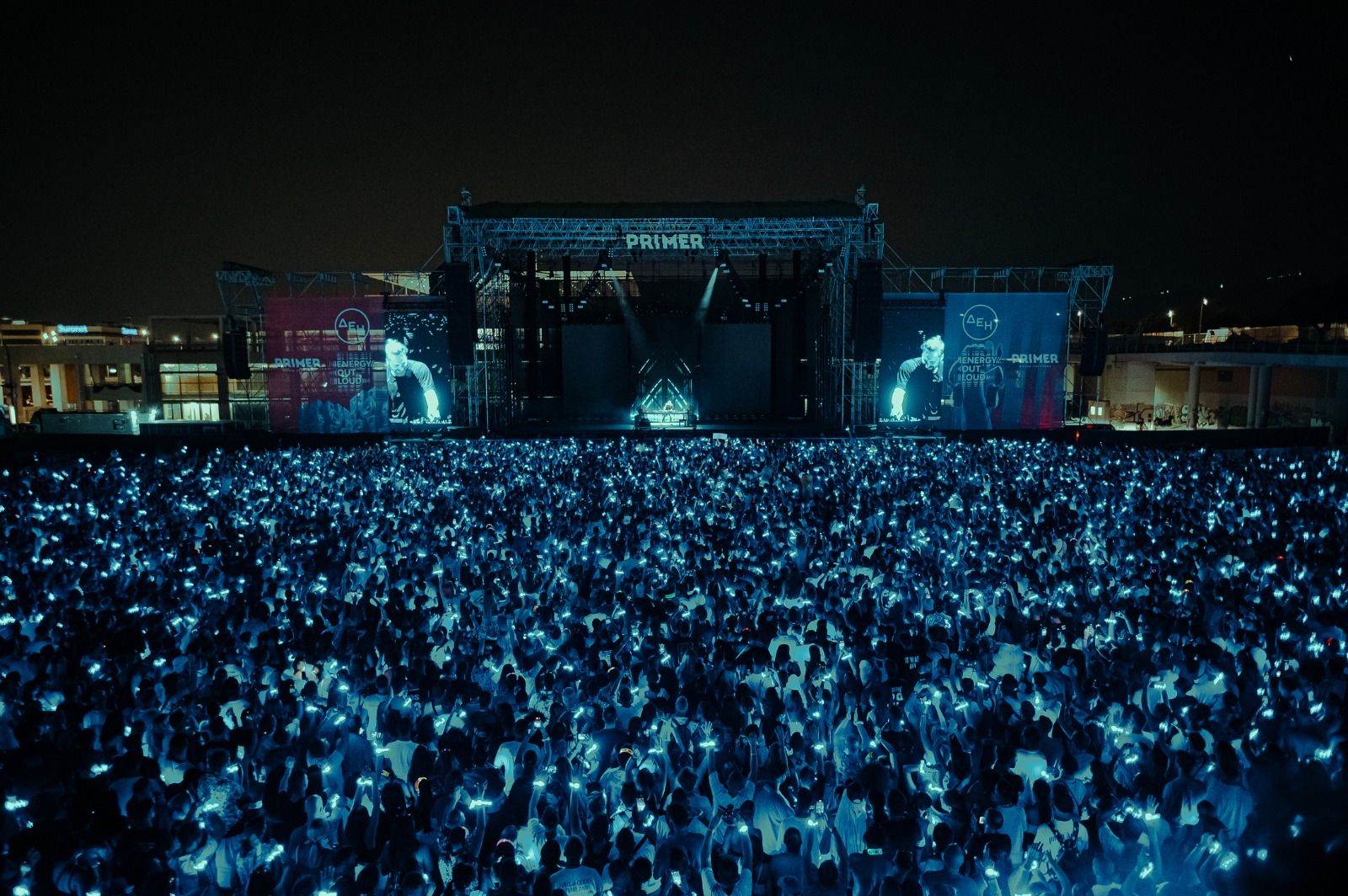
For producers and designers, this means thinking about the crowd as an active collaborator. It requires a new kind of creative framework—one that is flexible, responsive, and built on a deep understanding of both technology and human psychology. As pioneers in LED event technology, we’ve seen the incredible impact of this approach at events from Glastonbury to Greece's PRIMER Music Festival. By placing the tools of immersion directly in the hands of the audience, we are unlocking a new era of live experiences—one where every fan is not just watching the show, but is a vital part of its brilliance. The crowd is the medium, the canvas, and the masterpiece, all at once.