The Fourth Wall is Made of Light: A History of Audience Participation
From Collective Chant to Digital Chorus
The desire to participate is as old as performance itself. In the amphitheaters of ancient Greece, the chorus was a bridge between the actors and the audience, a collective voice that shaped the narrative. In the call-and-response spirituals of the American South, participation was an act of communal strength. For centuries, the audience was never truly passive; their role was baked into the very fabric of the performance.
But the advent of proscenium stages and, later, amplified sound created a new kind of distance. The "fourth wall" became more than a theatrical concept; it became a physical and psychological barrier. For much of the 20th century, audience participation was often an act of rebellion or reverence — shouting a musician's name, singing along to a chorus, or, in a moment of transcendent stillness, holding a lighter aloft.
The Analog Wave: Lighters, Glow Sticks, and the First Glimmers of Unity
The flickering flame of a Zippo lighter, held high during a ballad, became the first iconic symbol of modern audience participation. It was a spontaneous, analog signal — a thousand individual points of light creating a single, breathtaking moment of shared emotion. It was imperfect, uncontrolled, and deeply human. This simple act laid the groundwork for everything that would follow, proving that audiences craved a way to be seen, to be part of the spectacle.
The rave and festival culture of the late 80s and 90s brought the next evolution: the glow stick. This was participation democratized and amplified. It added color, movement, and a new layer of kinetic energy to the crowd, but it remained fundamentally individualistic. The technology was a one-way street; it allowed the audience to express themselves *to* the stage, but the stage couldn't yet interact back.
The Digital Dawn: Inventing a New Language of Light
The true paradigm shift arrived with a question: What if the light could be controlled? What if the audience could become a canvas?
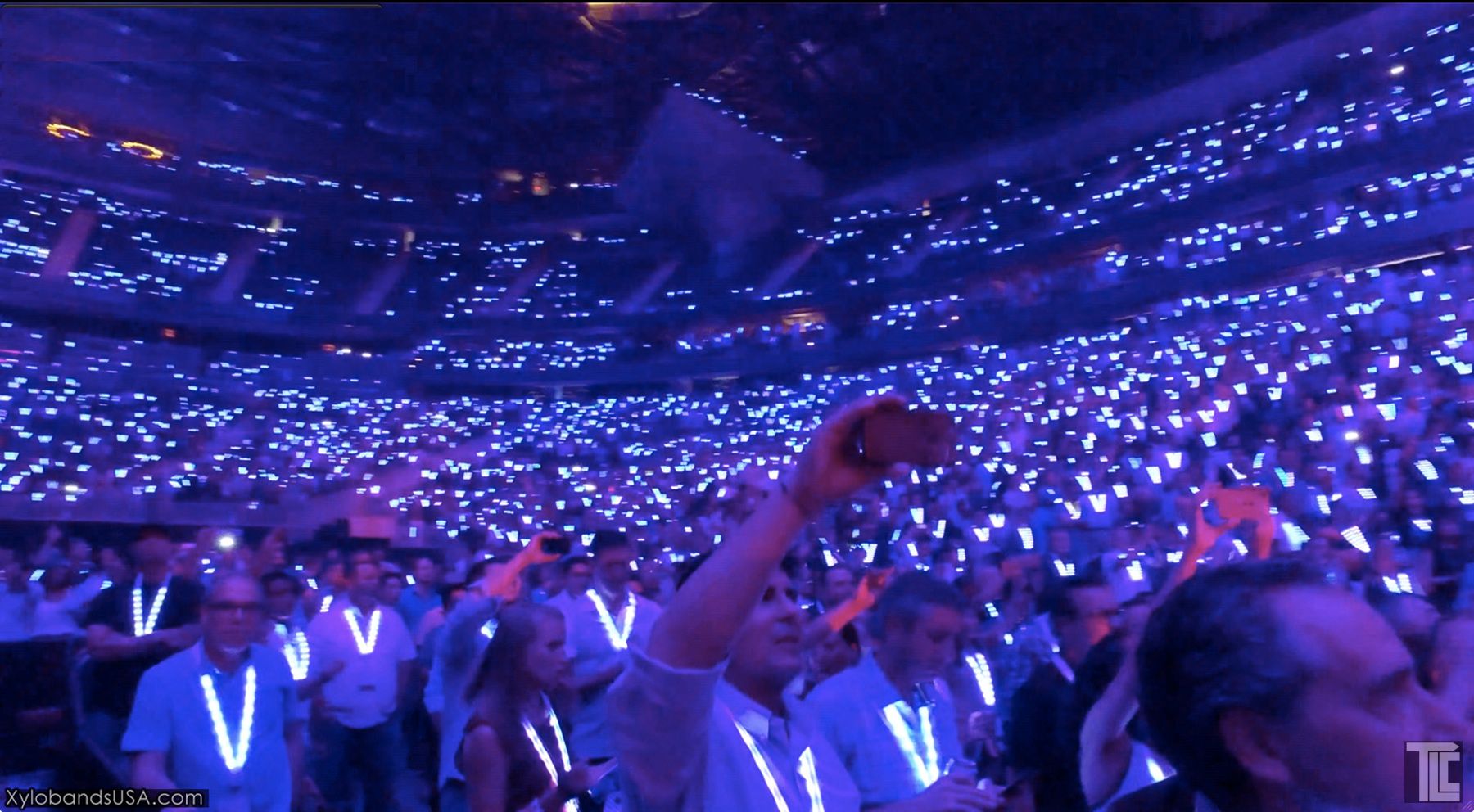
This was the question that led to the invention of Xylobands. Inspired by the sight of the crowd during Coldplay's performance of "Fix You" at Glastonbury, our founder Jason Regler envisioned a way to turn those individual points of light into a single, cohesive, and controllable entity. The concept was to create radio controlled LED wristbands that would allow show designers, for the first time, to paint with the crowd itself. When Coldplay debuted this technology on their 2012 Mylo Xyloto tour, the fourth wall didn't just break; it dissolved into a million points of synchronized light. The Coldplay Xylobands phenomenon demonstrated that the audience could become a living, breathing part of the show’s design.
This innovation marked the birth of a new category: immersive event technology. It was no longer about the audience simply reacting to the show; it was about the show reacting to, and integrating, the audience.
The Immersive Era: From Wristbands to Wearable Ecosystems
The success of the initial LED bands opened the floodgates for innovation. The technology quickly evolved beyond a single-color flash. Today, wearable LED technology encompasses a vast ecosystem of devices, each serving a specific creative or functional purpose.
- Custom LED Wristbands: The foundational tool, now capable of full-spectrum RGB color, complex chase effects, and zone-based control, turning specific sections of an arena into distinct visual elements.
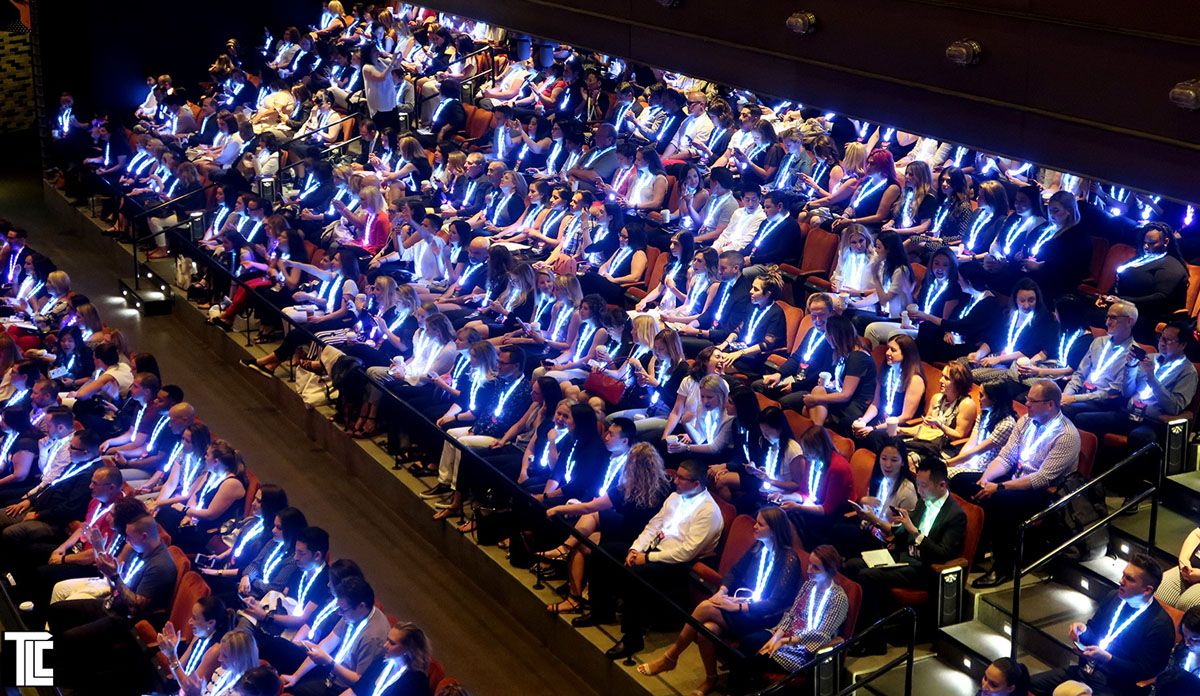
- LED Lanyards: A staple for corporate event activations and conferences, these wearables transform identification into an interactive experience, pulsing with light during keynote moments or changing color to guide attendees between sessions. We saw this executed with stunning effect at the Formula One 75th anniversary event, where custom pendants for each team created a dynamic, branded spectacle.
- LED Orbs: Larger, handheld spheres of light that allow for a different scale of interaction, turning the audience into a sea of floating, glowing orbs that can be used for dramatic, large-scale visual moments.
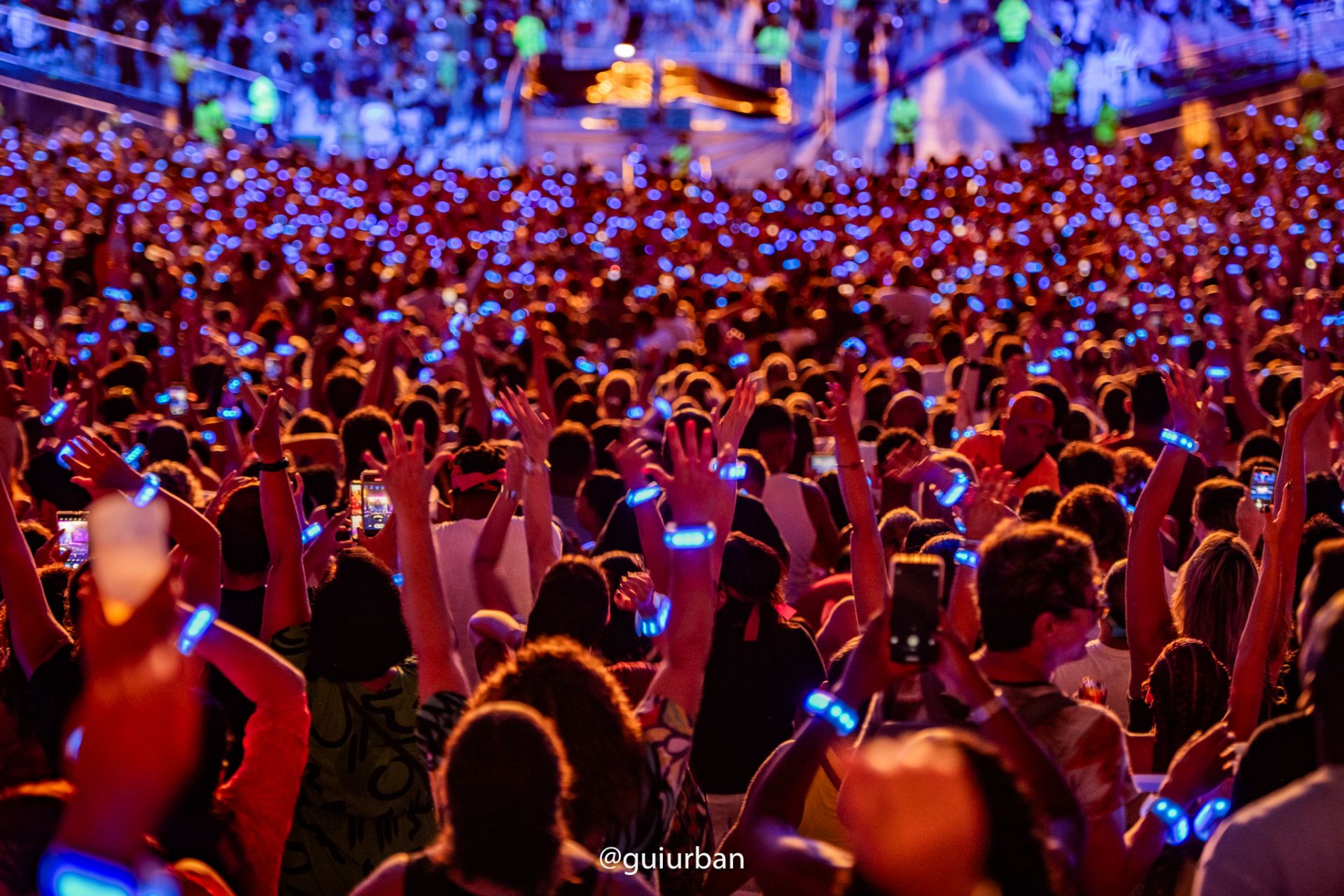
This suite of tools has transformed the creative potential for live experiences. At music festivals like Greece's PRIMER, festival wristbands create waves of color that sync with pounding electronic beats, unifying tens of thousands of people. In the high-stakes environment of a televised event like *Beat The Chasers*, they can be used to signal audience responses or build tension. For global superstars like Maluma or Wizkid, playing to sold-out arenas, they amplify the energy of the performance, making 50,000 people feel like a single, connected entity.
Beyond the Spectacle: The Future of Participation is Smart and Sustainable
We are now entering the next phase in the evolution of LED crowd experiences. The future is not just about light; it’s about data, personalization, and sustainability. Modern systems can do more than just receive signals. They can be integrated with ticketing data, social media, and mobile apps to create personalized experiences. Imagine a wristband that glows your team’s colors at a sporting event like the Davis Cup, or one that grants you access to exclusive content at a brand launch.
Furthermore, as the scale of these productions grows, so does the responsibility. The industry is moving towards a mandate for reusability. Systems are now designed for efficient collection, refurbishment, and redeployment, minimizing the environmental footprint of these massive technological undertakings. It’s a crucial step in ensuring the long-term viability of immersive events.
From a solitary flame in a dark stadium to a fully sentient, responsive arena of light, the history of audience participation is a story of our enduring need to connect. Technology has not replaced that need; it has amplified it. It has given artists, designers, and brands a powerful new language to speak directly with their audience — a language written in light, color, and shared, unforgettable moments.