The Grand Canvas: Core Principles of Modern Tour Lighting for Arenas and Stadiums
The Weight of the Dark
There is a unique and electric moment just before a stadium show begins. The house lights fade, and a collective breath is held in the sudden dark. In that darkness, a space designed for 50,000 people feels both immense and deeply personal. To fill that space with light is a monumental task—not just to illuminate a stage, but to build a world, tell a story, and connect every single soul to the performance. This is the grand canvas for the modern lighting designer. The work is not simply about brightness; it’s about a finely-tuned architecture of atmosphere.
Designing for today’s largest tours requires a multi-layered approach that considers the psychology of a crowd, the narrative of the show, and the unblinking eye of a broadcast camera. It’s an art form that balances epic scale with profound intimacy. Here, we explore the foundational principles that turn an empty arena into an unforgettable spectacle.
Principle 1: Mastering Scale and Intimacy
A stadium is a city. An arena, a neighbourhood. The primary challenge is to conquer the sheer scale of the environment without losing the capacity for intimate, personal moments. A single performer can easily be swallowed by the void. The lighting designer’s first job is to draw focus, create texture, and make an audience of tens of thousands feel like they are part of a singular, unified experience.
This is achieved through layering. The first layer is the stage itself—the key light on the artist, the intricate video surfaces, the beams that punch through the haze. The second layer is the architectural light—the fixtures that trace the contours of the venue, reminding the audience of the grand scale. But the third, and increasingly most vital, layer is the audience itself.
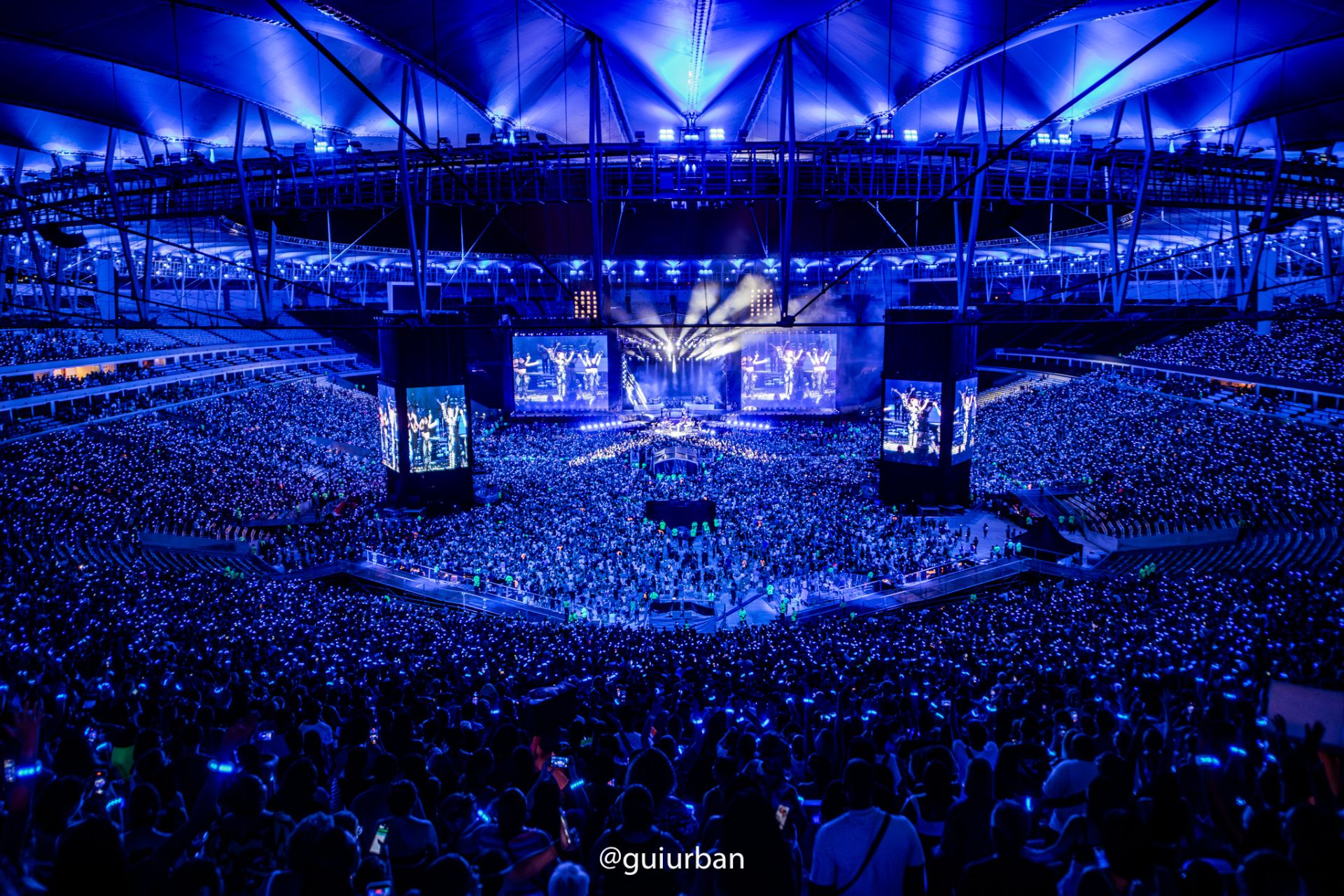
By transforming the crowd into an active part of the light show, the distance between the stage and the last row collapses. This is the philosophy that inspired the invention of Xylobands. Born from an idea at Glastonbury Festival, the concept was to turn the audience into a canvas, extending the visual world of the show to every corner of the venue. This approach creates a powerful sense of unity, making each individual a pixel in a breathtaking panorama of light. It’s this principle that ensures an artist like Maluma, playing to 54,000 people in his hometown of Medellín, can forge a palpable connection that transcends mere observation.
Principle 2: The Unfolding Narrative
A great concert is not just a sequence of songs; it’s a journey with an emotional arc. Lighting is the silent narrator of that journey. A designer uses color, intensity, and rhythm to cue emotional responses, building tension, creating moments of quiet reflection, and unleashing pure, unadulterated energy.
A show might open with a stark, monochromatic look, focusing all attention on the artist. As the set progresses, new colors and textures are introduced, building a richer visual world. The climax might see every piece of Immersive Event Technology firing at once—stage, video, and crowd—in a multi-sensory explosion. This narrative discipline is crucial. Without it, a light show is just a collection of effects. With it, it becomes an essential part of the storytelling.
This is where Immersive Events move beyond passive viewing. Technologies like Radio Controlled LED Wristbands allow for dynamic, responsive storytelling. A soft, warm pulse during a ballad can instantly give way to a strobing, high-energy frenzy for an uptempo track, all perfectly synchronized to the music. The LED Experiences become an extension of the artist’s performance, underscoring the emotional intent of every note.
Principle 3: Designing for the Broadcast Eye
In the modern era, many major tours are also global broadcast events. A stadium show isn't just for the people in the room; it’s for the millions watching on screens around the world. As seen with Maluma’s concert streaming to over 240 countries, or the F1 75th Anniversary celebration broadcast live from The O2 Arena, the lighting must serve two masters: the human eye and the camera lens.
This introduces significant technical considerations. A lighting cue that looks spectacular in person might appear blown-out or poorly colored on camera. Designers must work meticulously with broadcast engineers, paying close attention to color temperatures, managing brightness levels for camera sensors, and ensuring all light sources are flicker-free. The goal is to create a seamless experience, where the energy of the live show is authentically transmitted to the audience at home. This often involves using audience lighting, such as LED Bands and LED Lanyards, to show the scale and energy of the crowd, providing a dynamic, vibrant background for the broadcast director’s shots.
Principle 4: The Audience as the Canvas
The most profound shift in lighting design over the past decade has been the embrace of the audience as a fundamental part of the spectacle. This moves beyond simply lighting the crowd to see them; it involves integrating them directly into the creative vision. It’s a principle of mass participation, turning 50,000 individuals into a single, sentient sea of light.
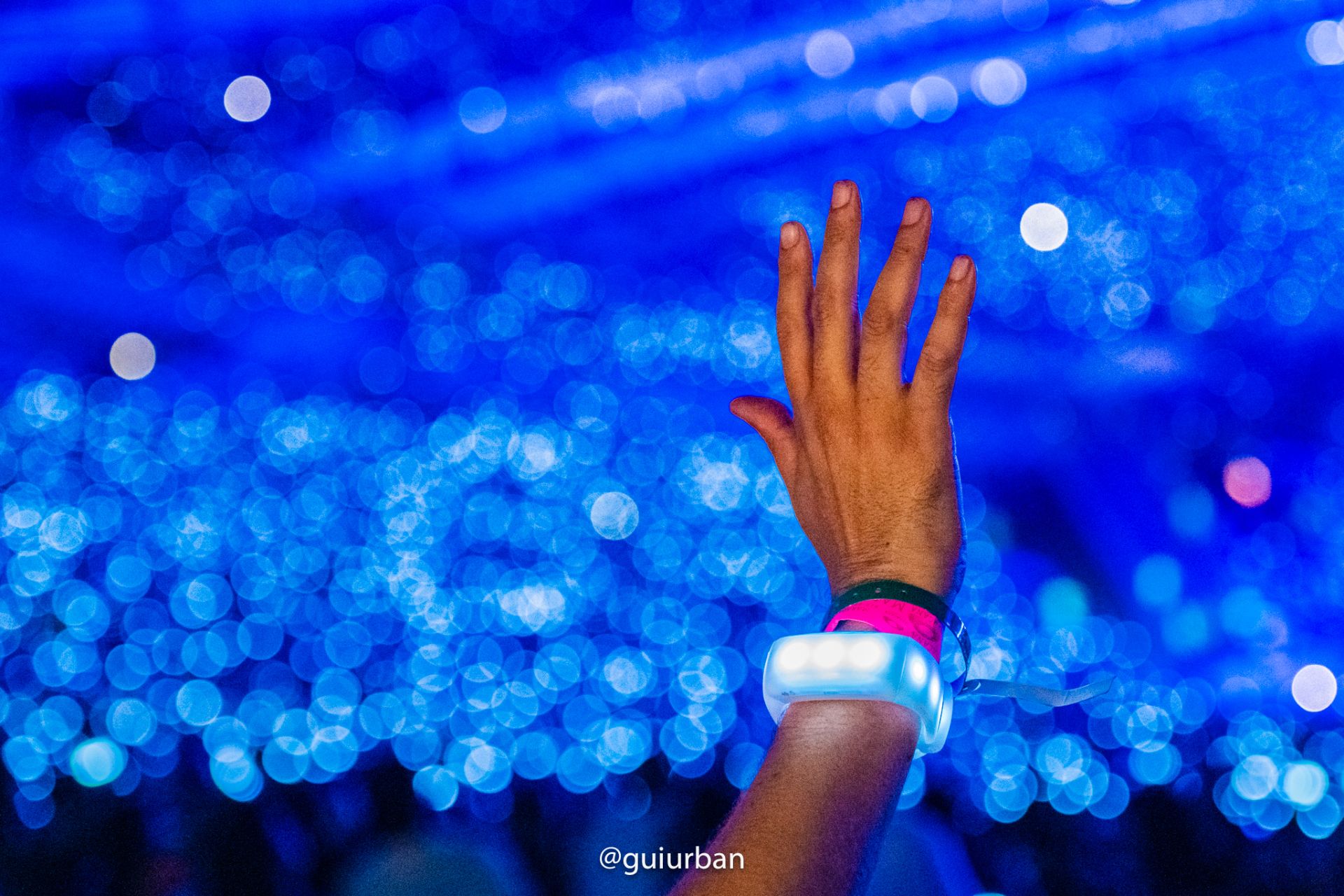
The genesis of the Coldplay Xylo Band phenomenon was a direct response to this idea—to unify the artist and the audience in a shared moment of light. This is the ultimate expression of immersive design. Using Wearable LED Technology, designers can now program intricate, sweeping patterns that flow across the entire stadium. They can segment the audience by seating block, creating stunning visual counter-rhythms. They can instantly change the color and mood of the entire venue to match the performance.
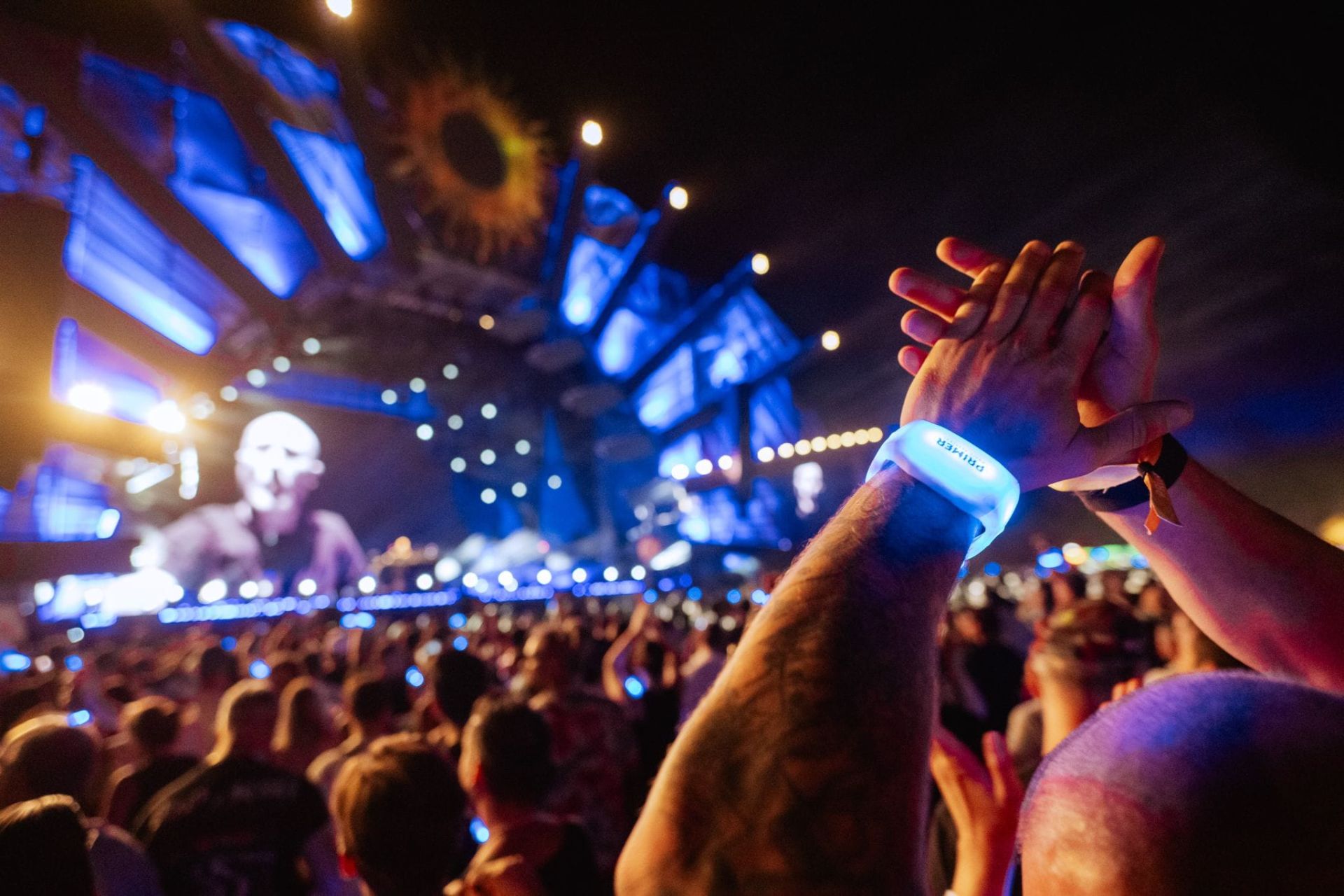
Whether it’s the vibrant energy of Festival Wristbands at Greece's PRIMER Festival or the precise, branded visuals at a corporate event, this technology gives designers an unprecedented palette. These LED Crowd Experiences are not a gimmick; they are a powerful tool for connection, turning a passive audience into an active, illuminated element of the show itself. This is the frontier of LED Event Technology, transforming the very definition of a live show.
Ultimately, lighting a stadium tour is about more than just technology or scale. It’s about the human desire to connect. The tools—from the most powerful moving lights to a simple LED Bracelet on a fan's wrist—are all in service of that one goal: to create a moment of shared wonder, to guide you home with lights, and to make the immense feel beautifully, unforgettably intimate.