The Invisible Network: A Deep Dive into LED Wristband Technology
The Unseen Command
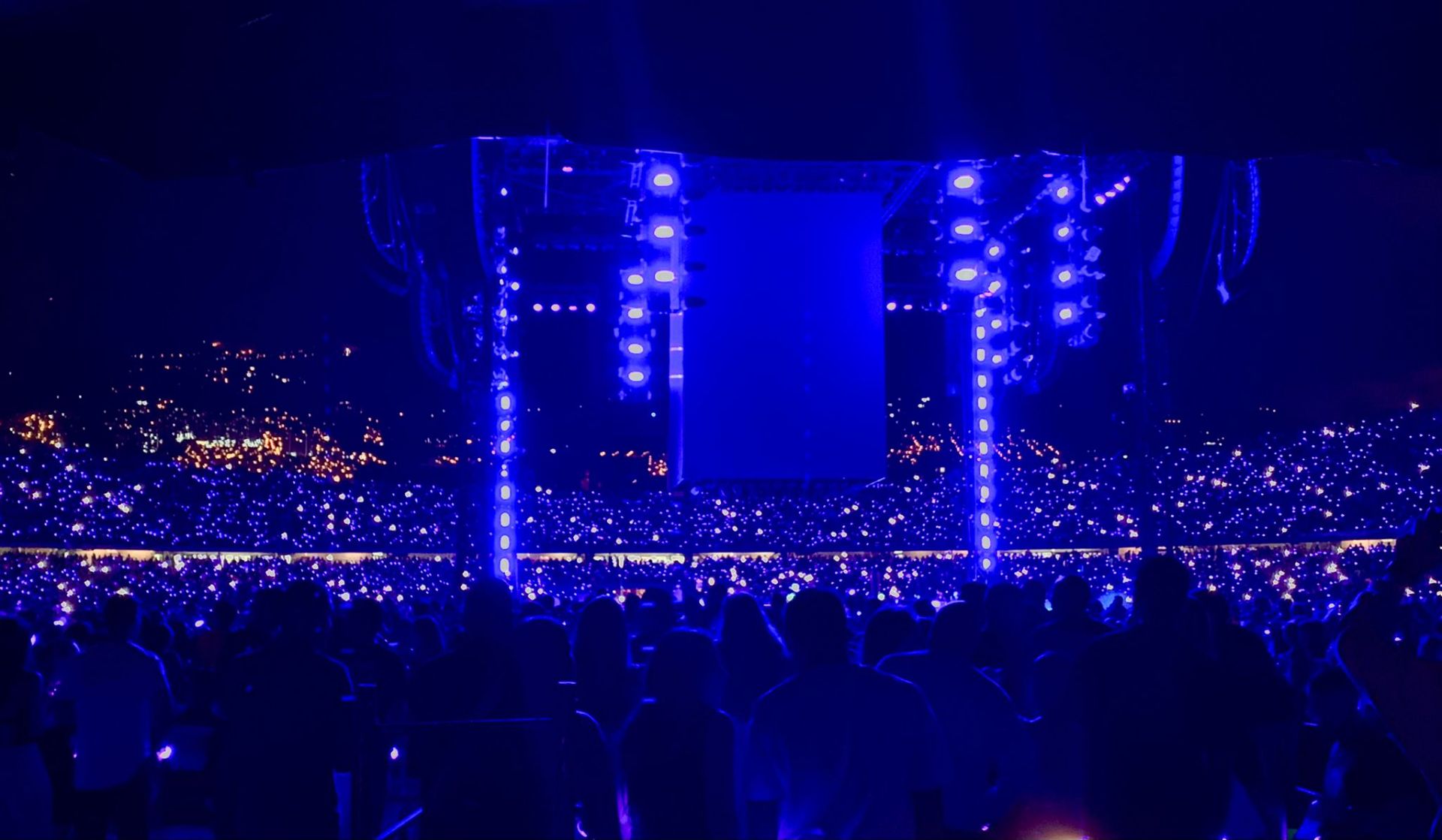
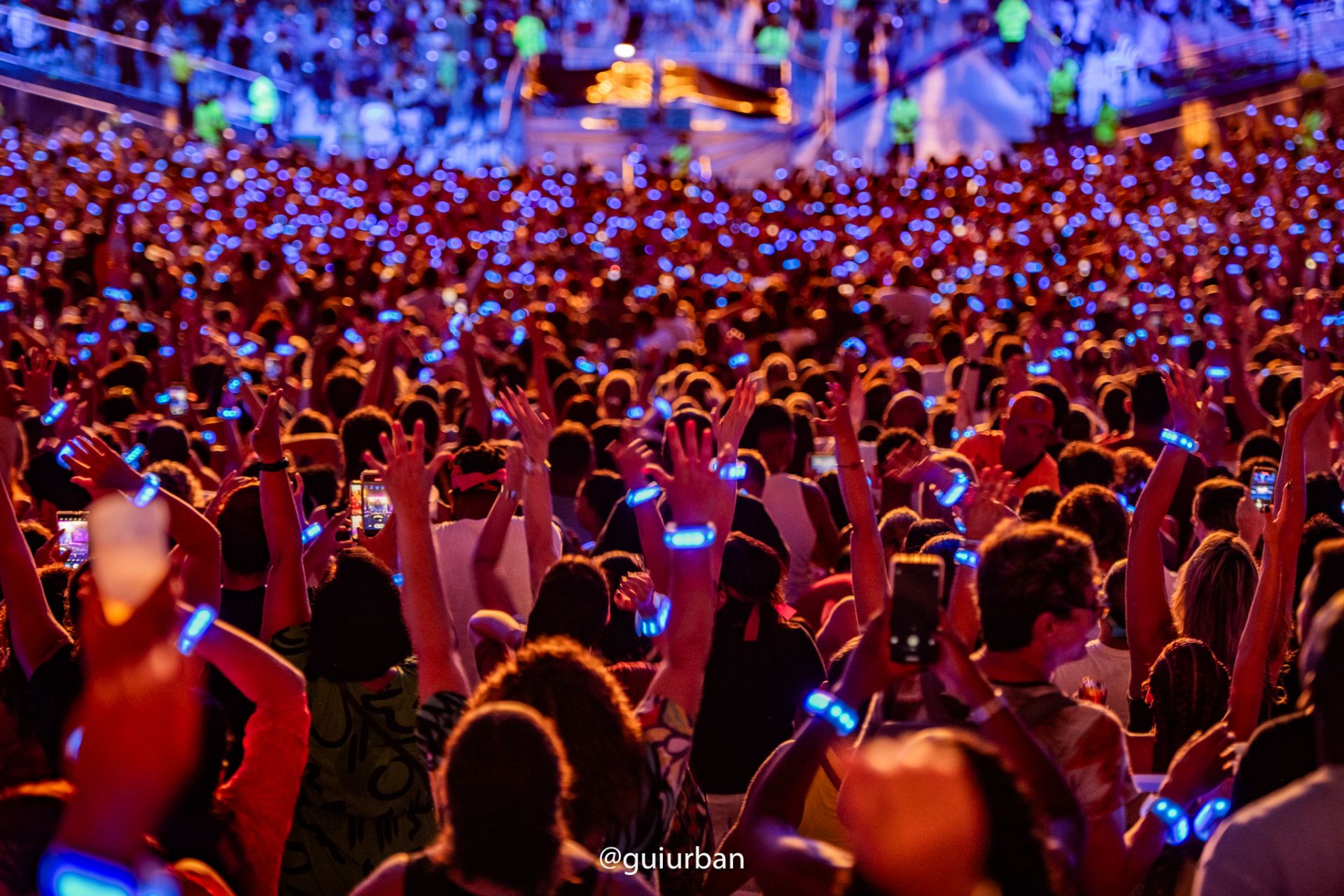
An arena filled with 50,000 people. On stage, an artist hits the crescendo of a ballad. In perfect unison, every single person in the venue is bathed in a soft, synchronized glow from the wristband they're wearing. It’s a moment of pure, unadulterated magic. But it isn't magic — it's technology. It’s an invisible network of signals, meticulously planned and flawlessly executed, that turns a crowd into a living, breathing part of the show. This is the world of wearable LED technology, a domain we’ve pioneered at Xylobands since our very first tour with Coldplay.
Event producers, tour managers, and brand marketers are constantly searching for the next frontier in audience engagement. You’re not just putting on a show; you’re crafting an experience. You need tools that are reliable, scalable, and creatively flexible. Understanding the technical backbone of these systems is crucial to unlocking their full potential. Let’s demystify the technology that powers these immersive event technology experiences: radio frequency (RF), DMX, and infrared.
The Power of Radio Frequency: One Signal, Thousands of Lights
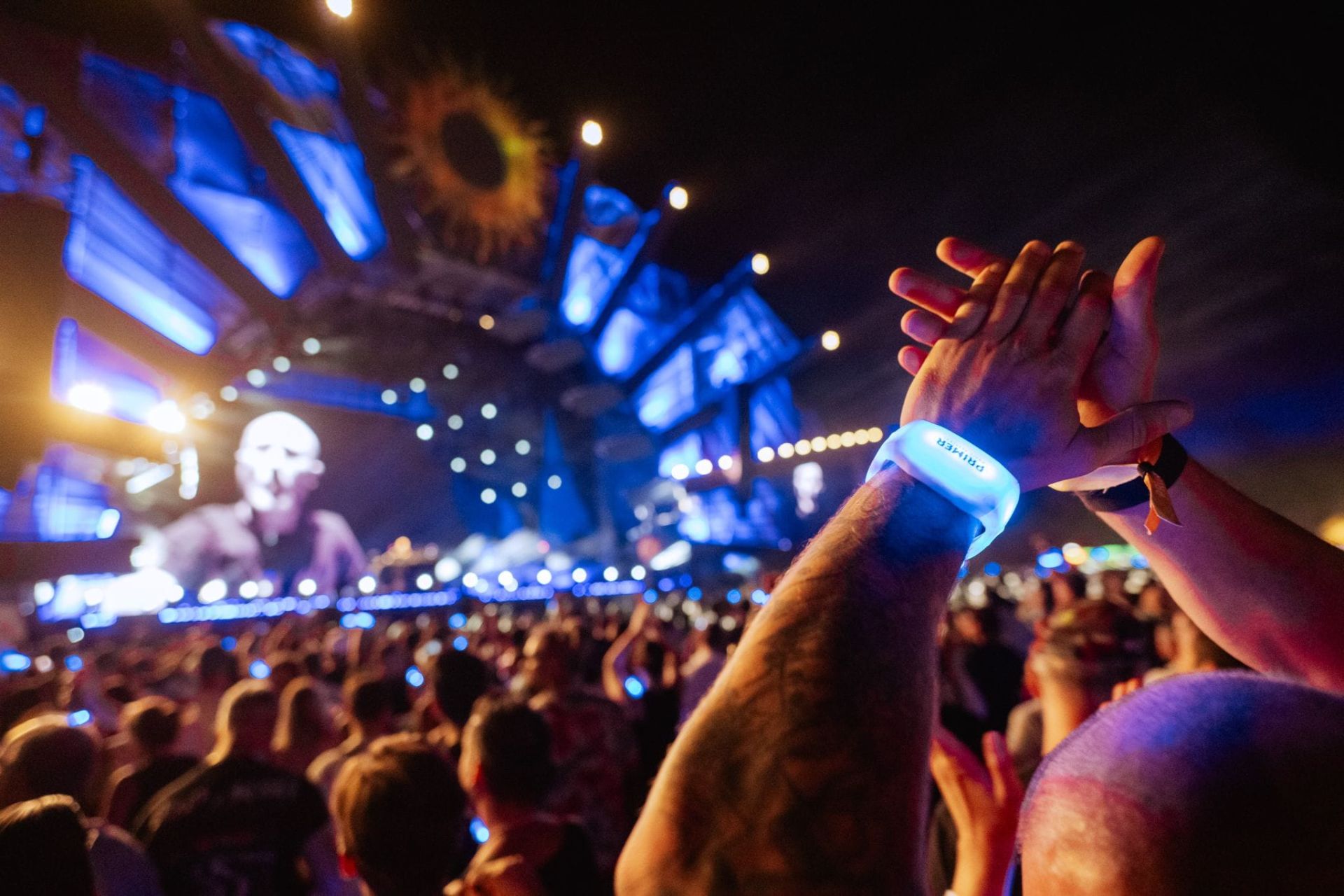
Radio frequency is the workhorse of large-scale LED crowd experiences. It’s the technology that allows a single operator to control tens of thousands of LED wristbands simultaneously, making it ideal for stadiums, arenas, and large festival fields like Glastonbury or the PRIMER Music Festival in Athens.
How It Works
At the heart of an RF system is a central transmitter. This unit sends out radio signals across a specific frequency, much like a radio station broadcasting music. Each Xyloband is equipped with a tiny receiver programmed to listen for signals on that specific frequency. The transmitter sends out commands — "turn on," "turn off," "flash red," "pulse blue" — and every wristband in range responds instantly and in perfect unison.
Our proprietary software allows a lighting designer to program complex sequences, creating waves of color, strobing effects, and intricate patterns that sweep across the audience. The range of these transmitters can be extensive, covering an entire stadium from a single, strategically placed position. For a global artist like Maluma, playing to 54,000 fans in his hometown of Medellín, RF technology was the only way to ensure every single person, from the front row to the back seats, was part of the same visual spectacle.
The beauty of RF is its scalability and simplicity of deployment. It’s a robust system designed for the rigors of global touring and the demands of massive, one-off events. It creates those sweeping, unified moments that define modern live shows.
DMX Integration: Granular Control for Complex Choreography
While RF is perfect for broad, sweeping commands, sometimes a production demands a higher level of detail and integration. This is where DMX comes in. DMX (Digital Multiplex) is the standard protocol for most professional lighting and stage equipment — think moving heads, strobes, and fog machines. By integrating radio controlled LED wristbands into a DMX workflow, you can control the audience with the same precision as the on-stage lighting rig.
Zoning and Pixel-Mapping
The true power of DMX with LED bands lies in zoning. Before an event, our team can pre-program wristbands into specific groups or zones. For example, in an arena, we can create zones for each seating block, for the floor versus the stands, or even for intricate shapes and logos across the crowd. These zones can then be mapped to a DMX lighting console.
This "pixel-mapping" treats the audience as a giant, low-resolution video screen. The lighting designer can now "paint" with the crowd, creating complex animations, text, or brand logos that flow seamlessly across thousands of people. For a high-stakes, broadcast event like the Formula One 75th-anniversary show, where we deployed custom LED Lanyards, this level of control is paramount. Each section of the O2 Arena could be triggered with different colors to represent various F1 teams, creating a visually dynamic experience for both the live audience and the millions watching at home.
This granular control is a game-changer for corporate event activations, where branding and messaging are key. Imagine unveiling a new product by having its logo flash across the audience, or reinforcing brand colors during a keynote speech. DMX integration transforms attendees from passive viewers into active participants in the brand’s story.
Infrared Triggers: Up Close and Personal
While RF and DMX are about a one-to-many broadcast, infrared (IR) technology offers a more intimate, one-to-one interaction. It’s the same technology found in your television remote control, using focused beams of light to transmit data over short distances.
How It Works in an Event Context
In our systems, small, discreet IR transmitters can be placed in specific locations around a venue — at the entrance, near a sponsor’s booth, in a VIP lounge, or even on a performer. When a wristband comes within range of a transmitter, it triggers a pre-programmed effect. This allows for highly contextual and personalized LED experiences.
Consider the possibilities:
- Interactive Zones: As guests enter a specific activation zone at a corporate event, their wristbands could light up with the sponsor’s brand colors.
- Gamification: In a festival setting, attendees could "collect" different colors or patterns by visiting various stages or art installations.
- Artist Interaction: An artist could wear a small IR transmitter on their glove, causing the wristbands of fans in the front rows to light up as they pass by, creating a powerful sense of connection.
IR technology allows for a layer of discovery and personalization within the larger collective experience. It empowers producers to guide attendees, drive traffic to specific locations, and create unique, memorable micro-moments within a large-scale event.
The Synthesis of Technology
The true art of creating unforgettable immersive events lies not in choosing one technology over another, but in blending them to serve the creative vision. A world tour might use RF for the main show’s stadium-wide effects, DMX for detailed, camera-friendly moments perfect for a live broadcast, and IR for special VIP interactions backstage. This multi-layered approach ensures that the technology is always serving the story, enhancing the emotion, and deepening the connection between the artist and the audience.
From the massive stages of a Coldplay world tour to the high-energy crowds of a Wizkid concert, the goal is the same: to dissolve the barrier between the performance and the spectator. By understanding the tools at your disposal — RF for scale, DMX for precision, and IR for proximity — you can move beyond simply lighting a show and begin to choreograph a truly shared experience. You can build your own invisible network, a silent conductor that unifies thousands of individuals into a single, brilliant canvas of light.