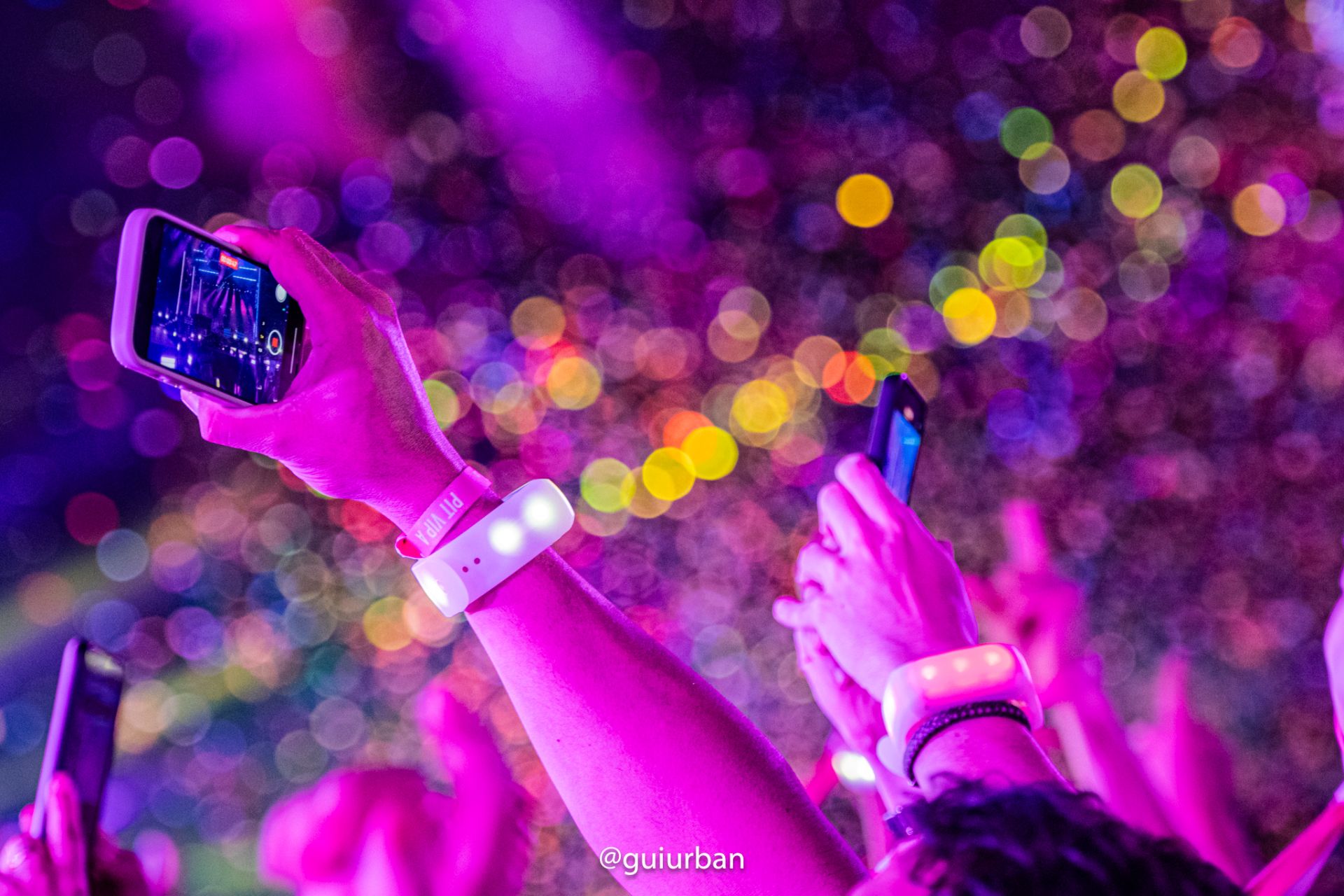
The Laboratory of Light: An Inside Look at Event-Tech R&D
The Spark in a Sea of People
Every massive, shared experience begins as a private thought, a flicker of a question. For our founder, Jason Regler, that moment arrived during a Coldplay performance at Glastonbury Festival. As the lyrics “Lights will guide you home” washed over the crowd, he envisioned those thousands of individuals transformed into a single, cohesive canvas of light. It was a powerful “what if?”—not a question of technology, but of connection. What if the audience themselves could become the light show? This question is the elemental spark of all true innovation, and it remains the foundational principle of our R&D culture. It wasn’t about creating hardware; it was about engineering a feeling.
That initial concept, which famously led to the creation of the first Coldplay Xylo Band, was more than a product launch. It was the public unveiling of a new philosophy for live events. It proved that wearable LED technology could serve a higher purpose than just novelty; it could become an integral part of the artistic narrative, a tool for creating profound moments of collective unity. But for an R&D culture to be effective, the first great idea can never be the last.
The Perpetual Prototype Philosophy
The Xylobands that lit up Coldplay’s Mylo Xyloto tour in 2012 were a revolution, but in our lab, they were already a legacy product. A genuine culture of innovation doesn’t chase perfection; it embraces perpetual evolution. The real work is in the constant refinement, adaptation, and reinvention that happens long after the initial applause fades. It’s a commitment to seeing every product not as a final draft, but as a perpetual prototype.
This philosophy is about asking harder questions. How do we make it brighter? More sustainable? More versatile? How do we expand its creative potential? This drive led to the development of new products like the Xylo Lux, and the debut of the lighter, more efficient Xyloband Lite on Wizkid’s historic, sold-out tour at The O2 Arena. It’s also the engine behind our approach to reusability, where for all three of Wizkid’s nights, wristbands were collected, topped up, and redeployed—a logistical and technical challenge driven by a commitment to sustainability.
Innovation, in this model, is a dialogue. It’s a conversation between the dreams of the artist and the limits of physics, between the energy of the crowd and the realities of radio-frequency transmission. It’s about creating an entire ecosystem of immersive event technology, from wristbands and lanyards to custom shapes and sizes.
From Universal Tool to Bespoke Solution
While the core technology of radio controlled LED wristbands provides a powerful universal tool, our most demanding R&D challenges often come from bespoke creative requests. An R&D lab must be agile enough to pivot from creating millions of identical units to engineering a unique solution for a one-of-a-kind event. There is no better example than the 75th-anniversary celebration of Formula 1 at The O2 in London.
The brief was complex: create an immersive experience for a live broadcast that celebrated 10 different teams, multiple tiers of hospitality, and a stadium of passionate fans. A standard wristband wouldn’t suffice. Our response was to design and manufacture 13,000 custom LED Lanyards known as the Xylo Pendant. Each pendant could be branded for a specific team or guest category. This wasn’t just a branding exercise; it was a core component of the show’s design. Our deployment teams meticulously positioned attendees around the arena based on their specific pendants, allowing the show’s creative team to paint with the crowd, creating dynamic, team-specific lighting effects that looked stunning both in the arena and on camera. This is where R&D transcends hardware and becomes a partner in creative production and corporate event activations.
The Human Element of Innovation
Technology is only half the story. A truly innovative culture is built on people and process. Our R&D is not a siloed department of engineers; it is the collaborative hub where logistics experts, creative directors, software developers, and on-site technicians intersect.
For an R&D engine to succeed in the high-stakes world of live events, it cannot be afraid of failure. It must be a place of rigorous testing, disciplined experimentation, and the intellectual honesty to abandon ideas that don’t serve the final vision.
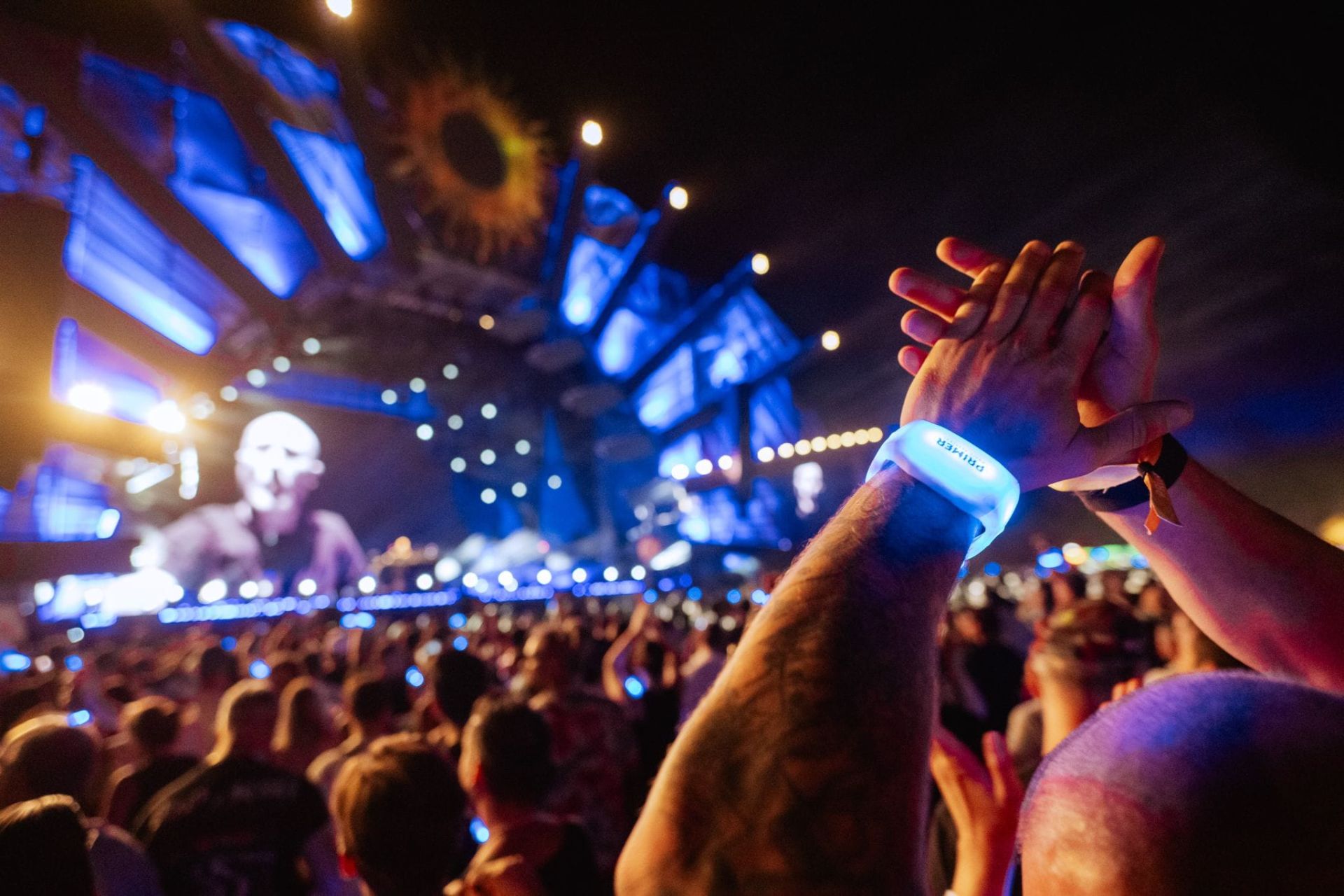
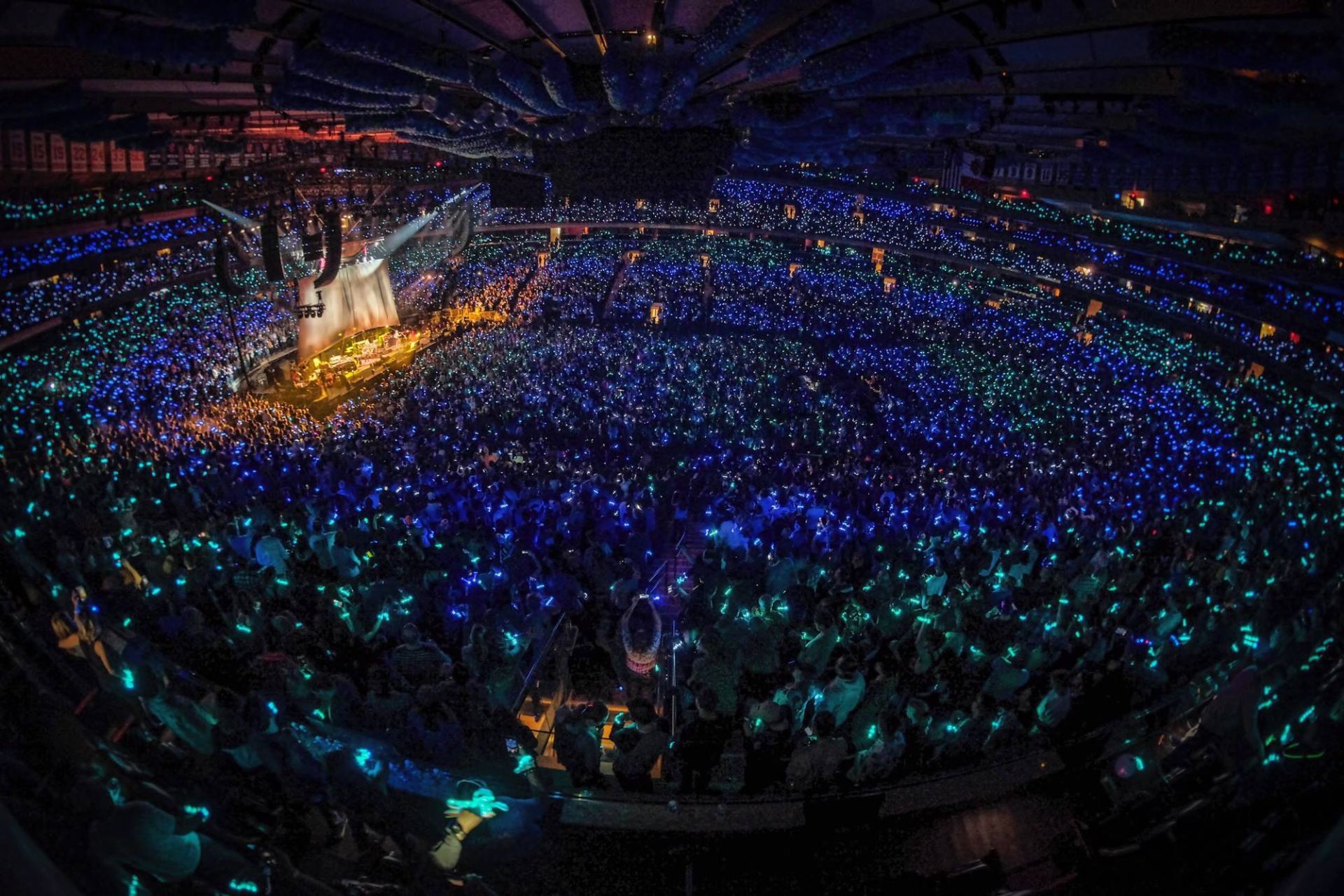
This cross-disciplinary approach is critical when designing for scale. Whether deploying for Maluma’s 54,000-person hometown concert in Medellín—broadcast live to 240 countries—or lighting up Greece’s PRIMER Music Festival, the challenge is immense. The technology must be flawless, the signal impenetrable, and the deployment strategy impeccable. Scaling an idea from a lab bench to a stadium requires a deep understanding of everything from battery chemistry and RF propagation to crowd dynamics and global logistics.
The goal is to make the impossibly complex feel effortless. When the lights go down and the first beat drops, the technology should disappear, leaving only the experience. That is the ultimate metric of success for any piece of LED event technology.
Lighting the Path Forward
The future of LED crowd experiences is not just about more lights or brighter colors. It’s about creating deeper levels of interaction, richer data environments, and more personalized audience journeys. It’s about expanding the vocabulary of light to tell more complex and compelling stories.
Inside our laboratory of light, the work continues. New form factors like LED Orbs, enhanced software capabilities, and next-generation sustainable materials are constantly in development. The foundational question remains the same as it was in that field in Glastonbury: how do we use light to bring people closer together? The answer is found not in a single invention, but in the relentless, ongoing culture of innovation that powers the spectacle.