The Limbic Response: The Primal Psychology of Mass Audience Engagement
The Primal Urge for Connection
Humans are wired for connection. For millennia, we have gathered in groups to share stories, celebrate milestones, and experience moments of collective effervescence. This deep-seated need to belong is a powerful force, one that live events tap into like no other medium. When thousands of people share a single space, focused on a single moment, something profound happens. Individual identities begin to blur, replaced by a sense of belonging to something larger than oneself. This is the limbic response in action—a primal, emotional reaction that transcends conscious thought.
At its core, a large-scale event is a ritual. From the pilgrimage to the venue to the shared anticipation as the lights go down, every element contributes to a sense of sacred, shared experience. It’s a space where the rules of everyday life are temporarily suspended, and the audience is invited to lose themselves in the moment. This psychological state is fertile ground for creating lasting memories and deep emotional connections.
From Passive Spectators to Active Participants
For decades, the audience’s role was largely passive. You watched, you listened, you applauded. The flow of energy was unidirectional: from the stage to the crowd. But the advent of immersive event technology has fundamentally altered this dynamic, transforming the audience from mere spectators into an integral part of the performance itself.
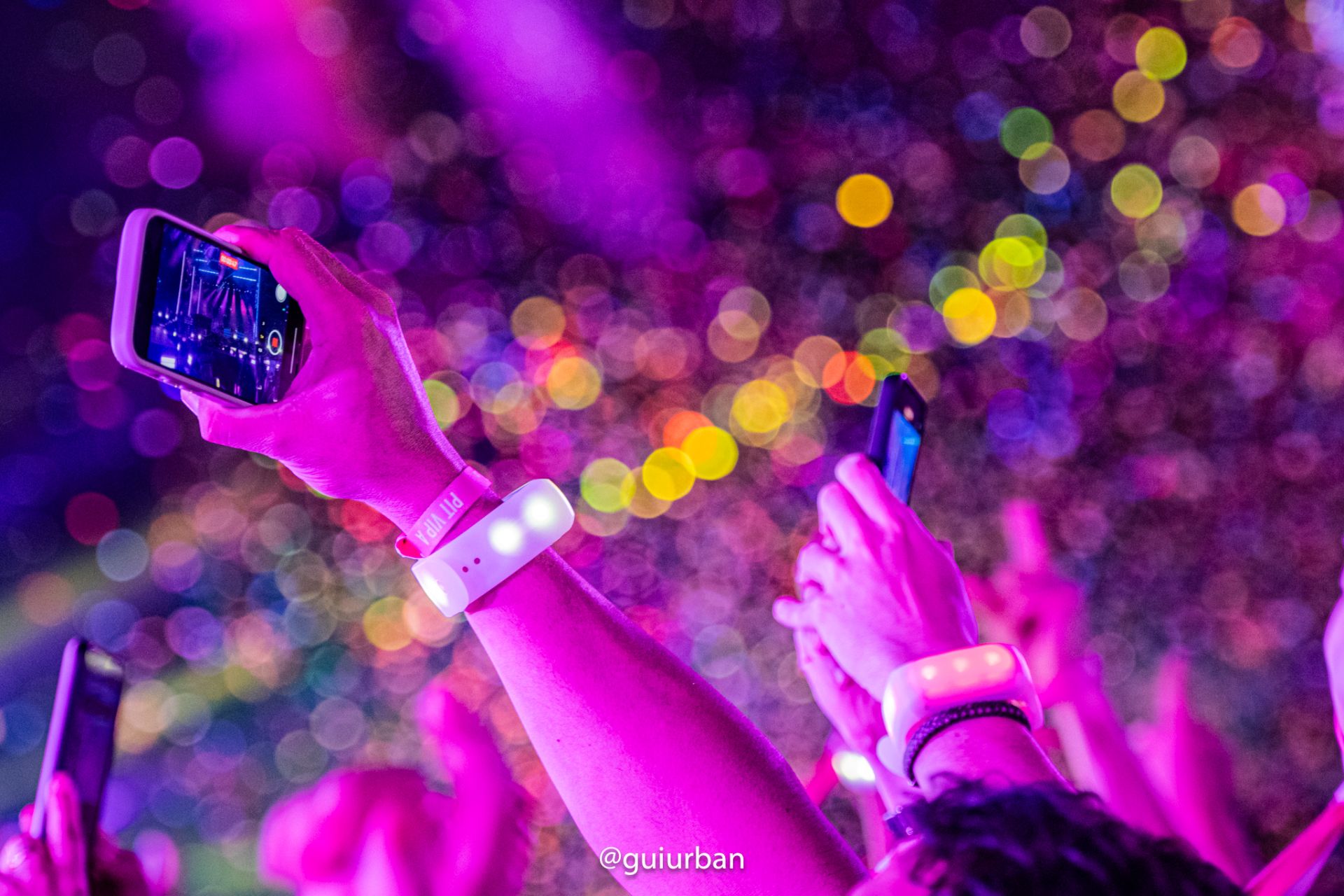
This is a paradigm shift in event psychology. When an individual is given a tool that responds to the show’s cues—a flash of light on their wrist, a color change that sweeps across the stadium—they are no longer just observing the spectacle; they are the spectacle. Their participation becomes part of the artistic expression. This shift from passive to active engagement creates a powerful feedback loop. The artist feels the energy of a visually unified crowd, and the audience feels a sense of ownership and agency within the show. The fourth wall doesn't just break; it dissolves into an ocean of light.
The Science of Synchronicity
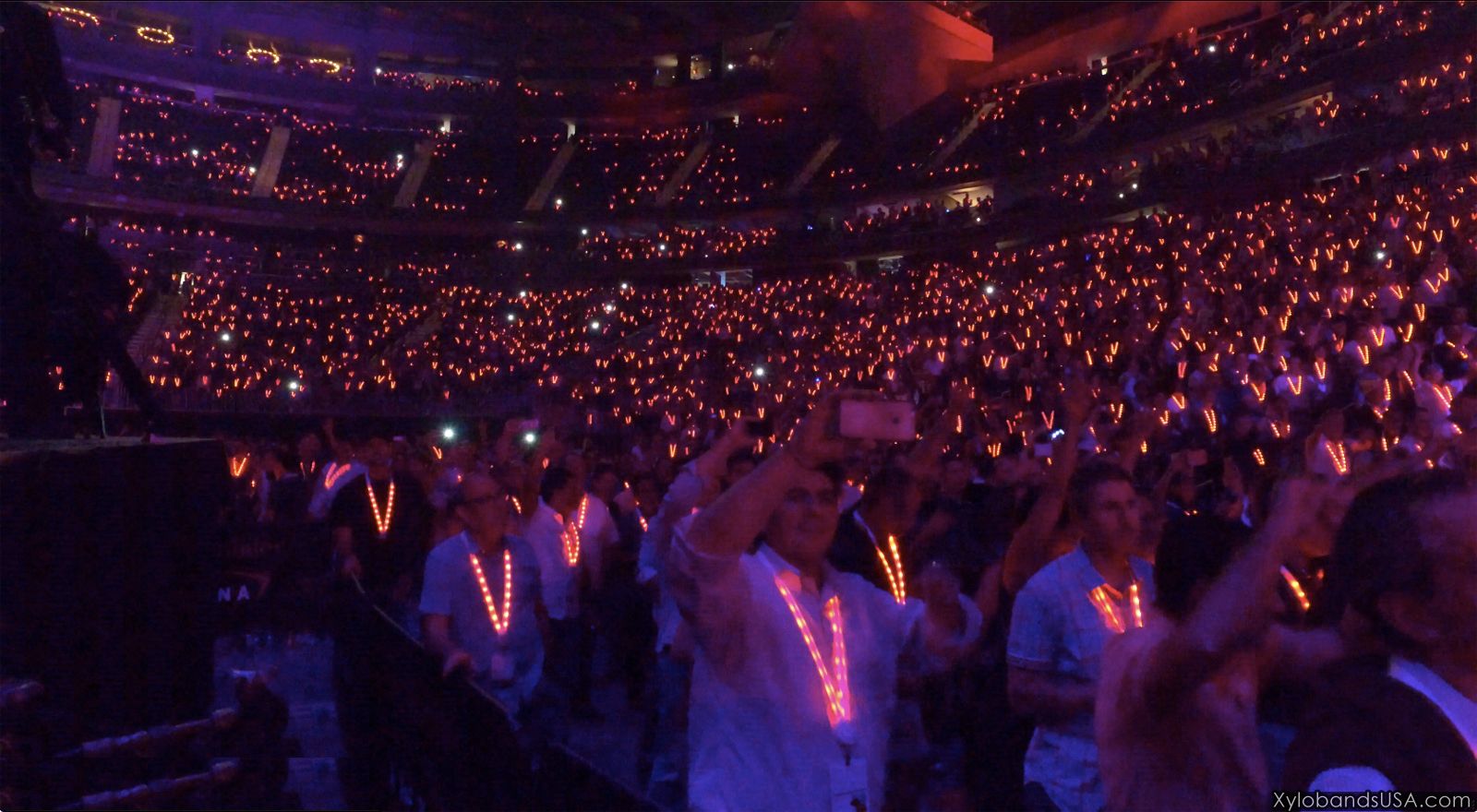
Why is a crowd of people illuminated in synchronized light so powerful? The answer lies in the neuroscience of shared experience. When we witness thousands of LED wristbands or LED Lanyards light up in perfect unison, our brains process it as a sign of unity and cohesion. This visual synchronicity triggers mirror neurons, the parts of the brain responsible for empathy and our ability to feel what others are feeling. We see unity, and so we *feel* unity.
This is the principle that made Coldplay Xylobands a global phenomenon and a core part of the Xylobands story. The sight of an entire stadium pulsing with light to the rhythm of a song like "Fix You" isn't just visually stunning; it's emotionally resonant on a primal level. It’s a visible representation of a shared heartbeat. This is the psychology that leading artists and brands—from Maluma’s historic homecoming concert in Medellín to Wizkid’s sold-out O2 Arena shows—leverage to create unforgettable LED crowd experiences. The technology serves a single purpose: to amplify the human connection that is already present.
“Instead of thousands of people holding up lighters or mobile phones, the entire audience could become one living light show, perfectly synchronised with the music. It would create moments of unity where artists and fans shared the same experience.”
Choreographing the Collective: The Tools of Engagement
Creating these moments of mass psychological alignment requires a sophisticated understanding of both technology and human behavior. It’s not simply about triggering lights; it’s about telling a story. The best LED experiences use light, color, and rhythm to underscore the emotional arc of a performance.
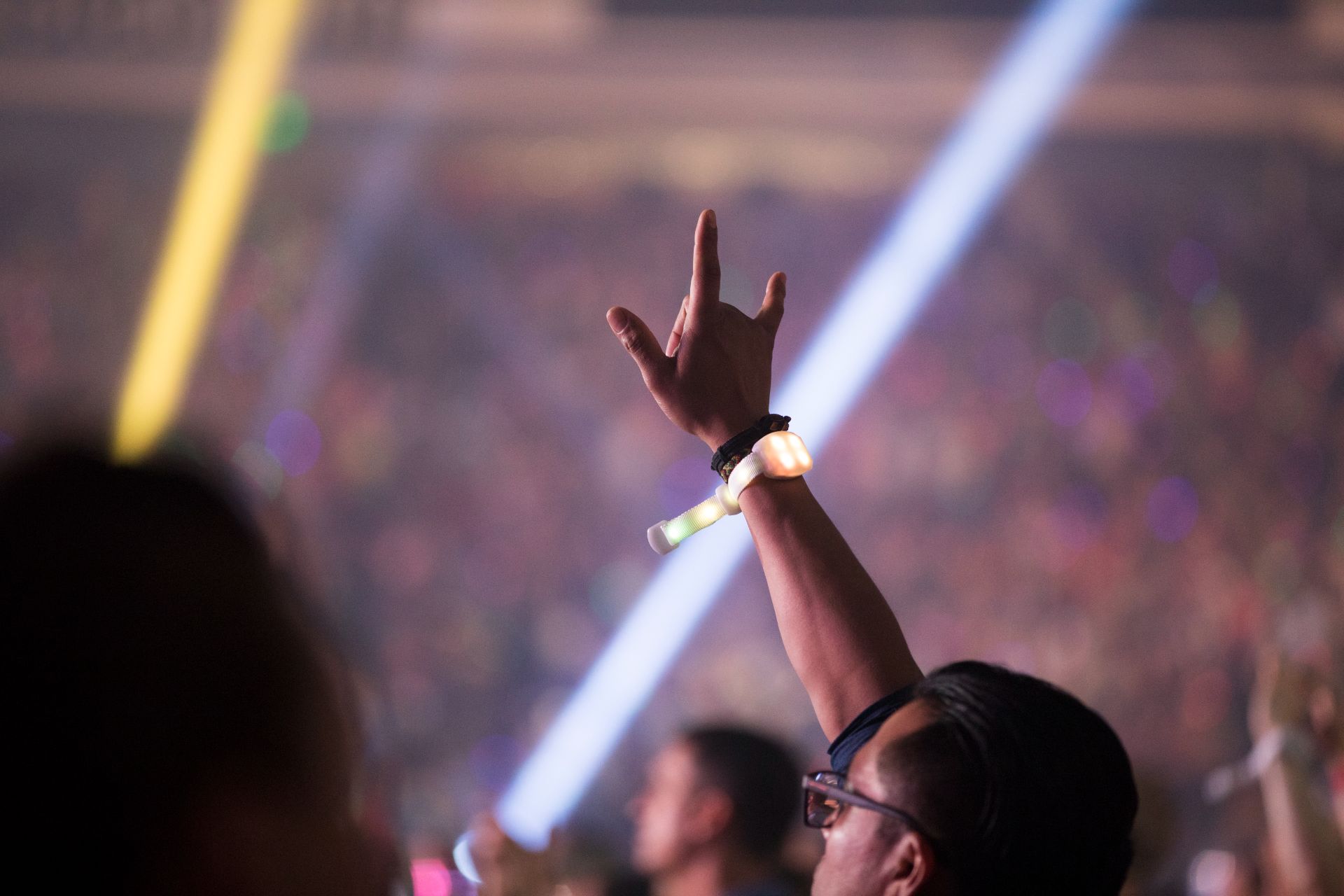
Consider the difference between a slow, gentle pulse of warm light during a ballad and a rapid-fire strobe of primary colors during a high-energy anthem. These are not just technical cues; they are emotional directives. They guide the audience’s collective mood, building tension, creating moments of release, and focusing attention. Through the use of radio controlled LED wristbands, a lighting designer can effectively play the audience as an instrument, turning tens of thousands of individuals into a single, dynamic canvas.
This level of control allows for unparalleled creative expression. At major sporting events like the Davis Cup or for global brands like Formula One, this technology can segment an arena by team colors, create national flag displays, or pulse in time with a winning point. It transforms a corporate event into a unified tribe. These corporate event activations move beyond simple branding to forge genuine emotional investment from every person in the room.
The Lasting Impression: Memory and Identity
The final, and perhaps most crucial, element of audience psychology is memory. The goal of any great live event is not just to entertain for a few hours, but to create a memory that endures. The moments of collective, immersive experience are the ones that anchor themselves most deeply in our minds.
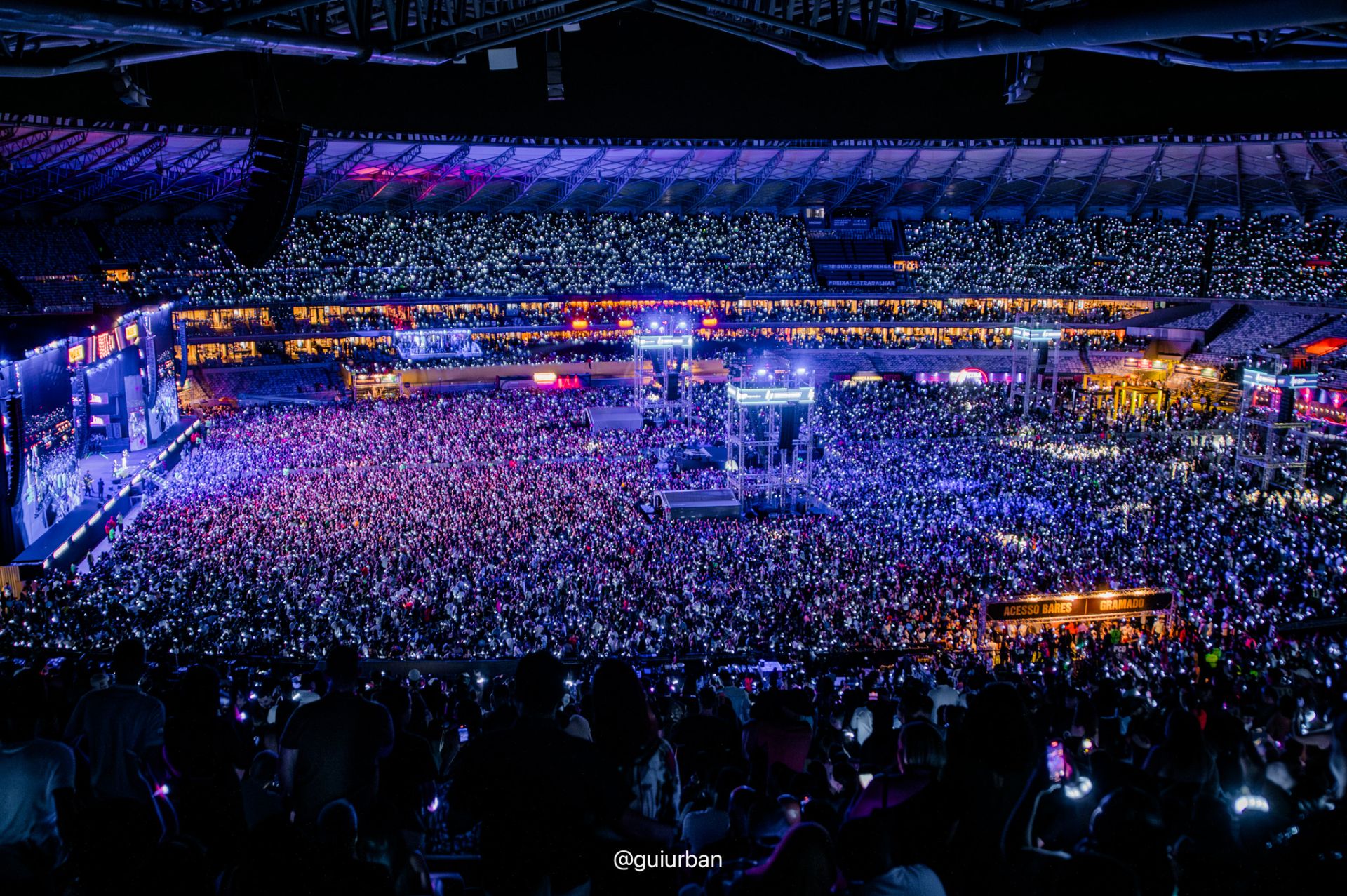
You may not remember every song from a concert, but you will remember the moment you were bathed in blue light, part of a sea of 50,000 people all sharing the exact same sensory experience. This is the power of turning an audience into a community. These shared, peak emotional moments become part of a fan's identity.
By transforming the live event from a passive viewing into an active, participatory ritual, immersive events tap into the most fundamental aspects of our human psychology. They fulfill our need for belonging, for shared experience, and for moments that lift us out of the ordinary. In the modern live-experience economy, engaging the audience is no longer a goal; it is the entire point. It is the art and science of forging a single, collective heartbeat in a crowd of thousands.