The Science of Belonging: Deconstructing Audience Psychology in the Age of Immersion
The Unseen Connection: Why We Gather
From ancient amphitheatres to modern stadiums, the human need to gather is a powerful, primal force. We attend concerts, sporting events, and festivals not just to witness a spectacle, but to feel a part of something larger than ourselves. This desire for collective experience is deeply rooted in our social psychology. When thousands of people sing the same chorus, cheer for the same goal, or gasp at the same dramatic moment, they are no longer just individuals. They become a single, living organism, united by a shared emotional journey.
At its core, a large-scale event is a complex interplay of focus, emotion, and energy. An event producer’s primary challenge is to harness and direct that energy, transforming a passive crowd into an active, engaged participant. In a world saturated with digital distractions, achieving this state of unified focus — this deep, collective immersion — is more challenging and more valuable than ever. The goal is to create a temporary autonomous zone where the outside world fades away, and the shared present moment is all that exists.
The Psychology of Immersion: From Spectator to Participant
True immersion is a psychological state. It’s the suspension of disbelief, the feeling of being completely enveloped in the here and now. Several psychological principles are at play in creating this state at a live event:
- Synchrony: Human beings are hardwired to find pleasure in synchronized action. When we move, clap, or sing in time with others, our brains release endorphins, fostering feelings of pleasure and social bonding. This is the same principle that makes dancing in a club or chanting at a football match so compelling.
- Collective Effervescence: A term coined by sociologist Émile Durkheim, this describes the shared feeling of energy and excitement that arises from group participation in rituals and ceremonies. It’s the tangible buzz in the air at a festival, the electric tension before a headliner takes the stage.
- Loss of Self: In a deeply immersive experience, the boundaries of the individual self can begin to blur. This concept, known as “deindividuation,” allows people to shed their inhibitions and feel a profound sense of connection to the group, leading to uninhibited celebration and emotional release.
The most successful immersive events don't just present a show to an audience; they co-create the experience with them. They provide mechanisms that allow the crowd to become part of the spectacle itself, turning passive spectators into active stakeholders in the artistic narrative.
Technology as a Catalyst for Connection
For decades, lighters and, later, mobile phones were the primary tools for audience participation. While organic and heartfelt, they were individualistic and uncoordinated. Modern immersive event technology provides a far more powerful and unified canvas. This is where tools like Xylobands come into play, serving as a technological catalyst for psychological connection.
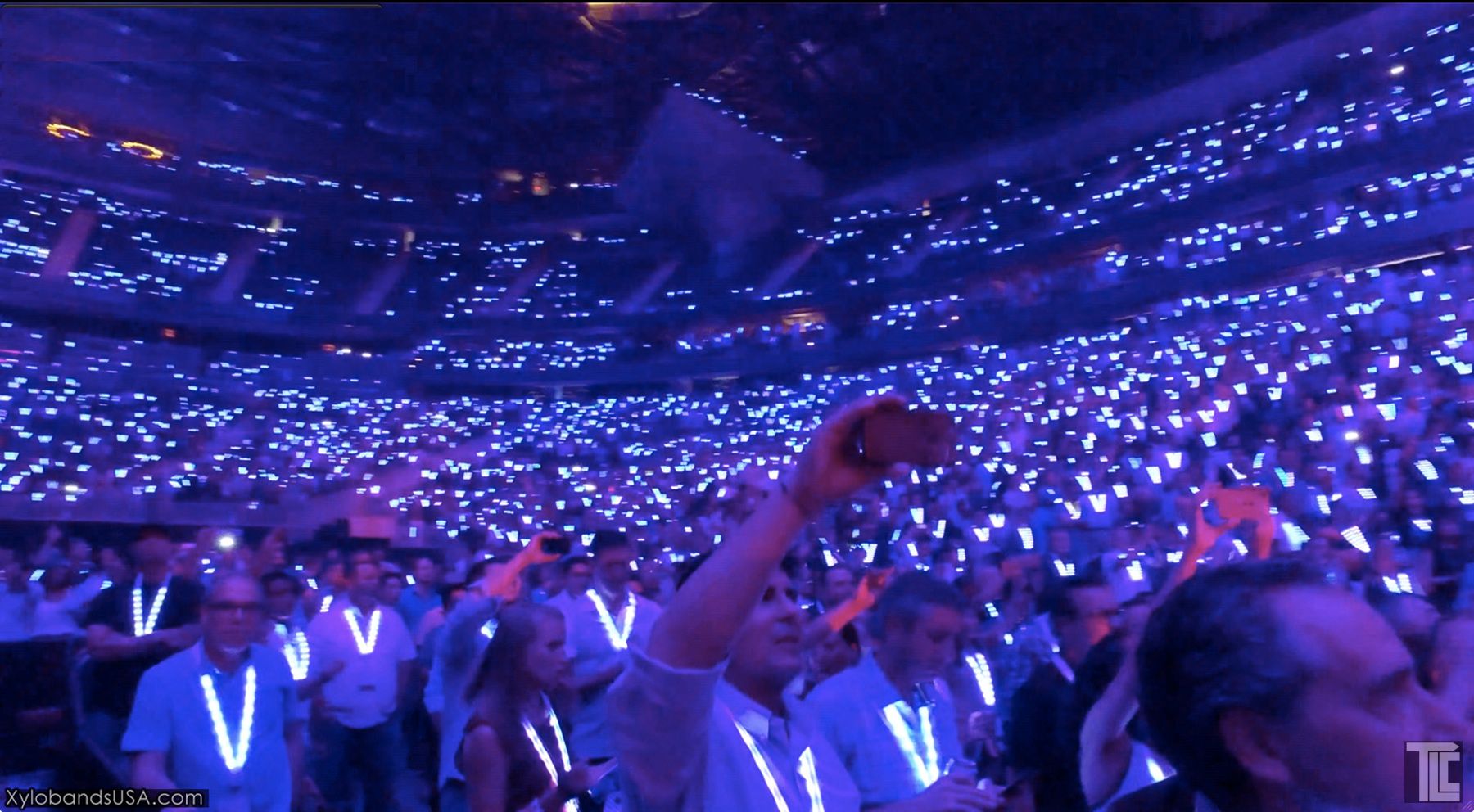
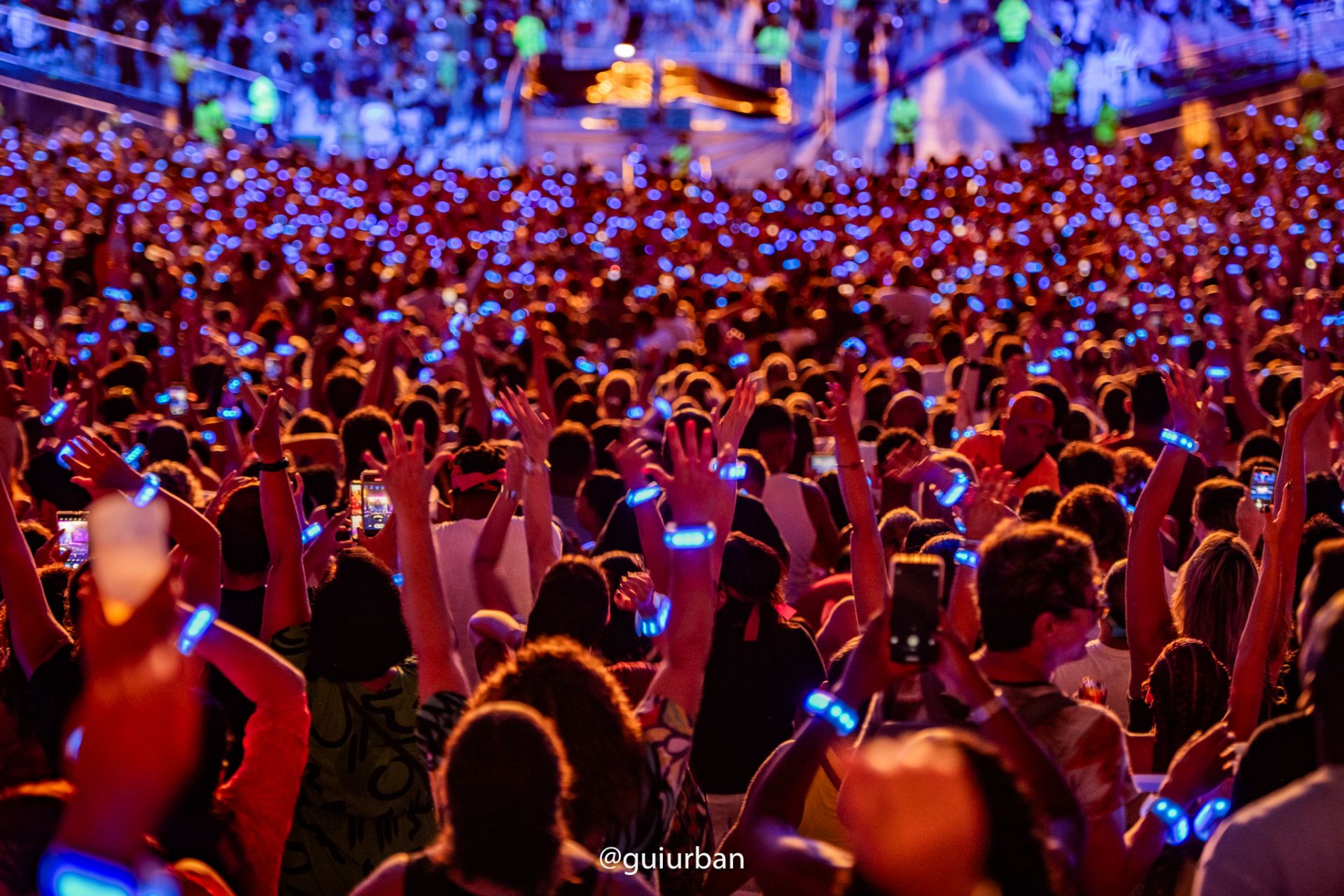
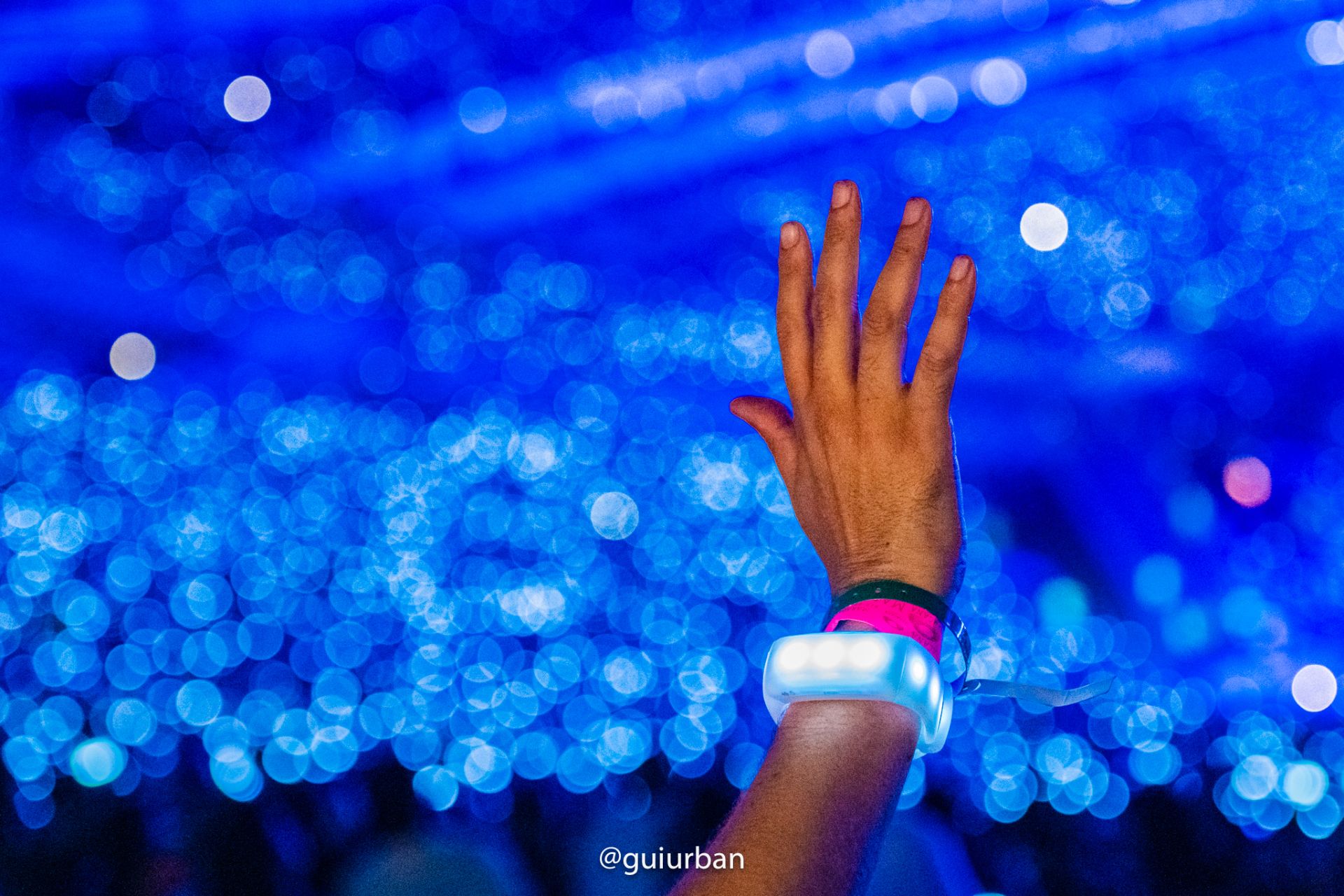
When tens of thousands of LED wristbands flash in perfect synchrony, the effect is transformative. It takes the principle of synchrony and scales it to breathtaking proportions. Suddenly, the entire stadium becomes a single, coherent visual entity. An individual’s action — wearing a wristband — is multiplied by 50,000, creating a spectacle that is impossible for any single person to generate. This is not just a light show; it’s a physical manifestation of a collective identity.
This technology allows event designers to "play" the audience as an instrument. They can segment the crowd by colour, create pulsing waves of light that ripple across a venue, or plunge an entire stadium into synchronized darkness to amplify a dramatic moment. As seen at events like the PRIMER Music Festival in Greece or during Maluma’s historic Medellín concert, these LED experiences turn the audience into the living, breathing backdrop for the performance, directly connecting them to the artist's vision.
Beyond the Wristband: A Multi-Sensory Approach
The psychology of engagement extends beyond a single device. A truly immersive strategy considers all sensory inputs. While wearable LED technology provides a powerful visual anchor, it is most effective when integrated into a broader ecosystem of light, sound, and space. For example, complementing concert wristbands with tools like LED Orbs or custom LED Lanyards—as seen at the Formula One 75th anniversary event—adds layers and texture to the visual field, creating a more comprehensive and engaging environment.
This multi-sensory approach deepens the immersive state. By choreographing light not just on the wrists of the audience but throughout the entire venue, designers can guide attention, punctuate key moments, and create a truly encompassing world for the audience to inhabit. It’s a holistic strategy that recognizes the crowd not as a target for entertainment, but as the central component of the experience itself.
The ROI of Belonging
In the world of corporate event activations and ticketed spectacles, the goal is always to create a lasting impression. What is the return on investment for creating a profound sense of belonging? It’s memory. It’s loyalty. It’s the story that attendees tell for years to come.
When an audience feels that they were part of the show, not just observers of it, the emotional impact is significantly deeper and more enduring. They don’t just remember seeing a great performance; they remember the feeling of being one voice, one light, one shared heartbeat among thousands. This is the magic that transforms a simple live event into a legendary experience, and it is the core principle that drives the most innovative LED crowd experiences today. By understanding and applying the psychology of collective engagement, we can create moments that don’t just entertain, but resonate on a deeply human level.