The Show Within The Show: The New High-Stakes World of Halftime Production
The Unblinking Eye of the Clock
The final seconds of the second quarter tick away. On the field, athletes sprint for position, but on the sidelines, a different kind of team is holding its breath. For them, this isn’t a pause; it’s a starting gun. The halftime show, once a charming diversion of marching bands and local performers, has morphed into a high-stakes, technologically saturated production — a global broadcast event that is, in every sense, a show within the show.
The modern sports entertainment spectacle, particularly the championship halftime show, is a beast of immense complexity. It demands flawless execution under incredible time pressure, serving two vastly different audiences simultaneously: the tens of thousands of fans in the stadium and the hundreds of millions watching on screens around the world. It’s a challenge that has pushed the boundaries of creative design and technical logistics, transforming the entire arena into a single, unified canvas.
The Two-Audience Imperative
Designing a successful halftime show means resolving the fundamental conflict between the live and broadcast experience. The fan in the nosebleed seats needs a spectacle of overwhelming scale — grand gestures, massive set pieces, and arena-filling sound. The viewer at home, however, experiences the show through the intimacy of the camera lens, craving close-ups, dynamic angles, and a polished, broadcast-ready aesthetic. pleasing one often means compromising the other.
This is the central challenge for producers and broadcasters like ITV or the BBC, who are tasked with translating the raw energy of a live event into a compelling televised narrative. For global sporting bodies like the FIFA World Cup or the Davis Cup, the pressure is magnified. How do you create a moment that feels personal to the athlete on the court, the fan in the stand, and the family on their couch?
The answer lies in a new generation of Immersive Event Technology designed to bridge this gap, creating a visual language that speaks to both worlds at once.
Choreographing the Crowd as the Set
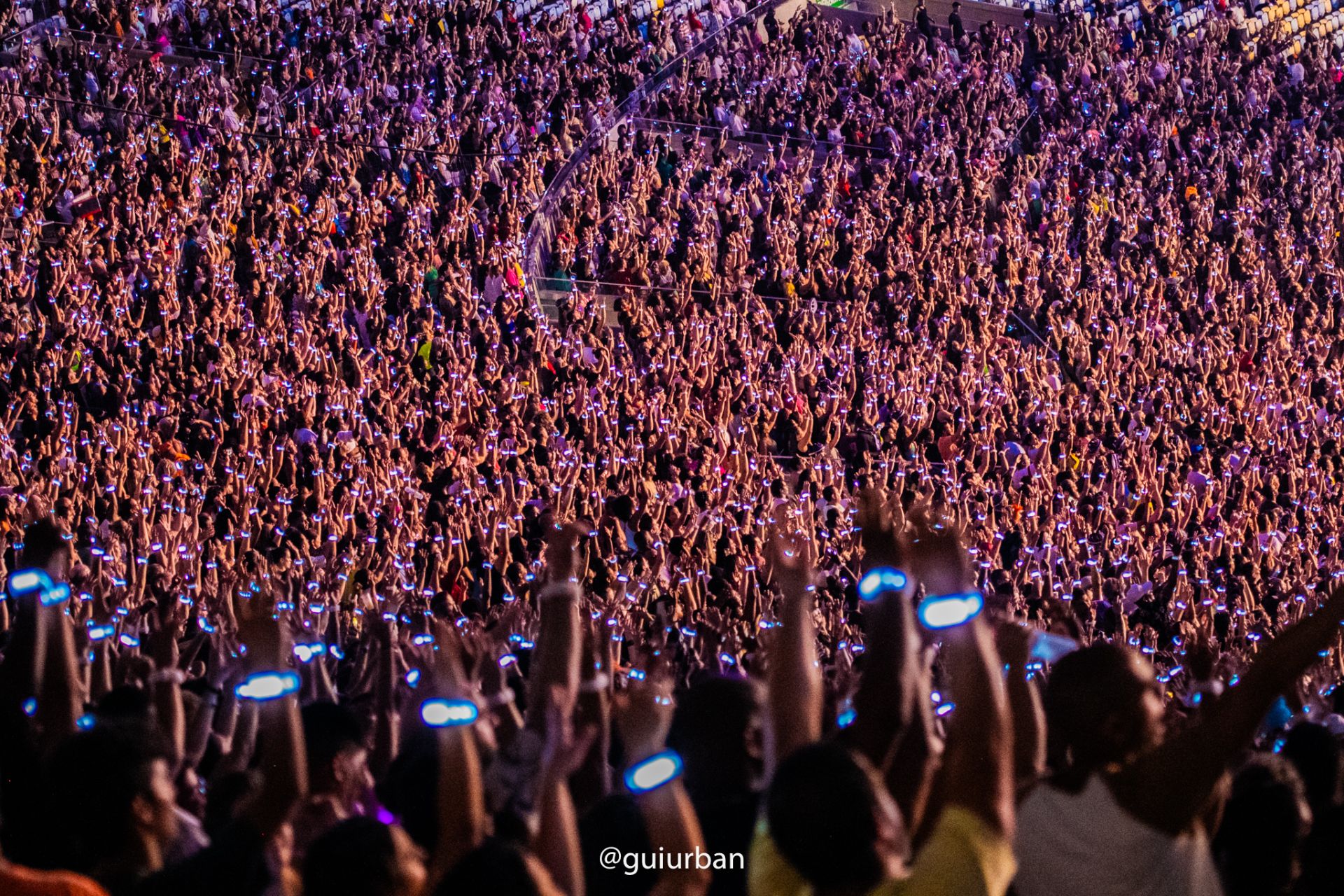
The most profound shift in modern sports entertainment is the transformation of the crowd from a passive observer into an active, essential part of the production. The audience is no longer just the backdrop; they are the set. Through the strategic deployment of Wearable LED Technology, every seat in the stadium becomes a pixel, and the entire crowd becomes a living, breathing screen.
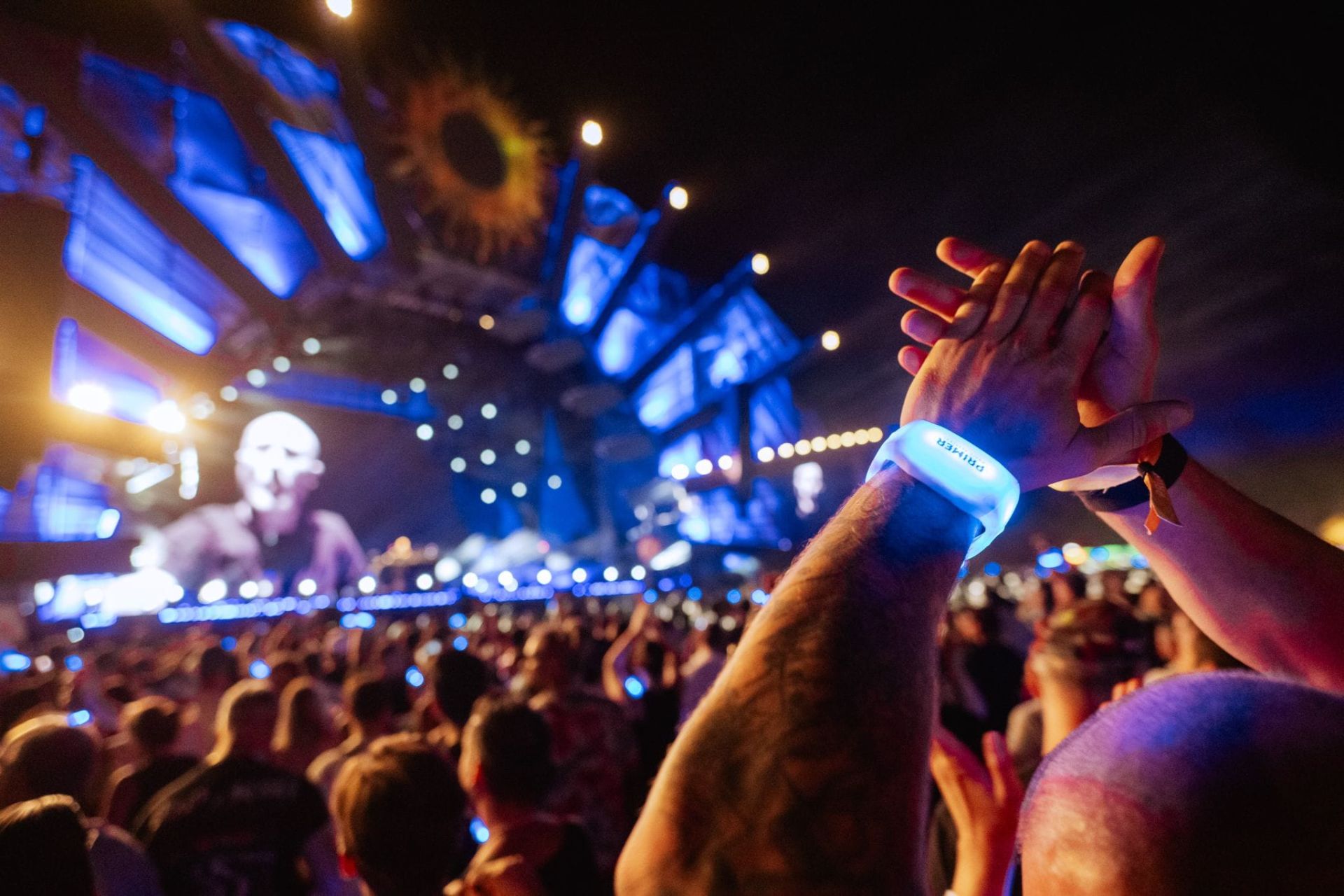
This is where the power of systems like Xylobands comes into play. These Radio Controlled LED Wristbands allow lighting designers to extend their vision beyond the stage and into the stands, painting with light on a monumental scale. For the broadcast, sweeping aerial shots reveal intricate patterns and synchronized color washes that flow across the audience, creating a breathtaking panorama of light. These are the powerful LED Crowd Experiences that define modern event television.
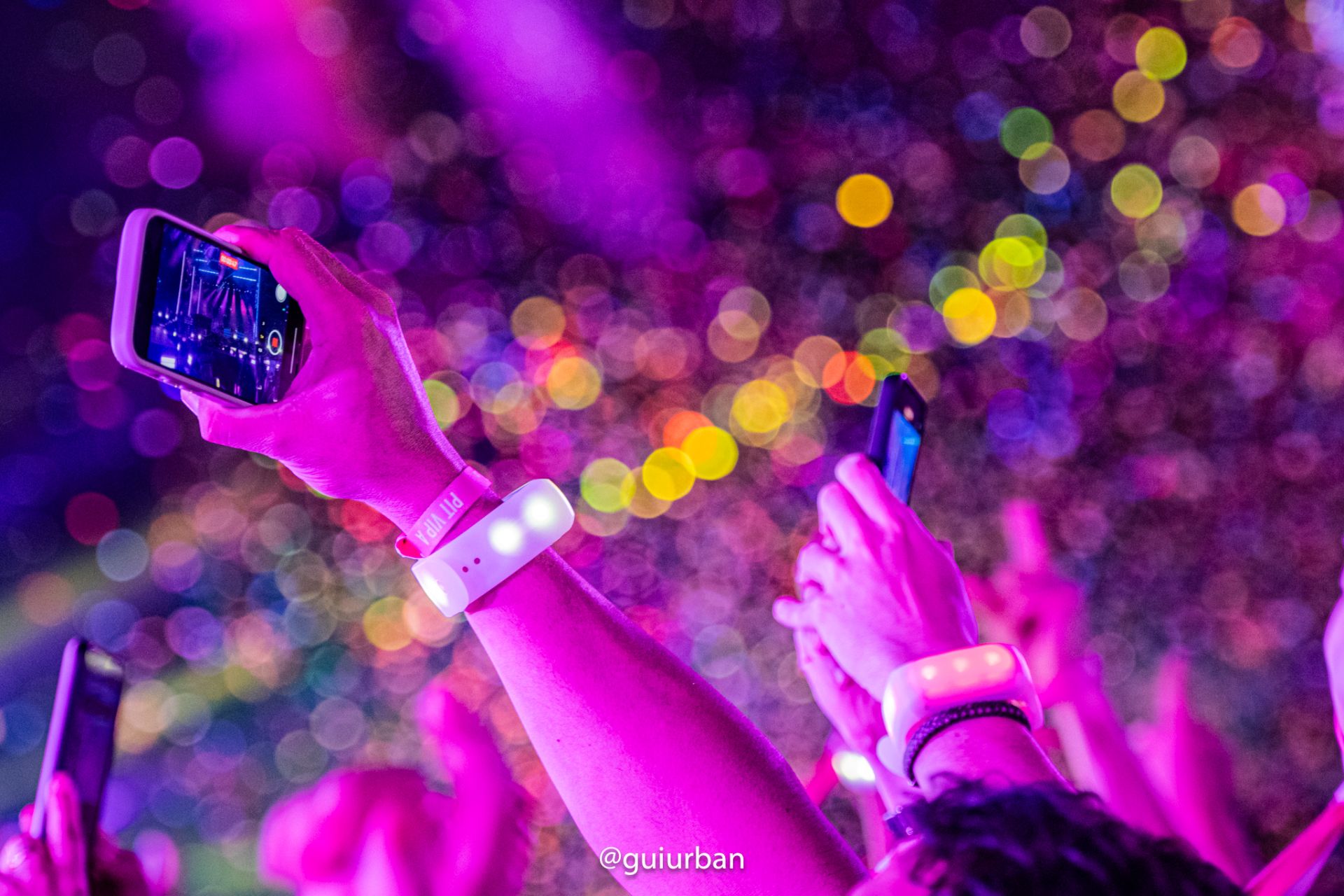
For the fan in the stadium, the effect is even more profound. An LED Bracelet on your wrist that pulses in time with the music doesn’t just make you a spectator; it makes you a participant. It’s a direct, physical connection to the performance, a shared experience that unifies 50,000 strangers into a single, sentient entity. We’ve seen this power to unite massive audiences at events from Maluma’s historic 54,000-person concert in Medellín to electrifying sold-out shows for artists like Wizkid at The O2 Arena.
The Symphony of Signals
Executing this on a grand scale is a feat of immense technical choreography. In the compressed window of a halftime break, there is no room for error. The system must be flawless, triggering tens of thousands of individual devices with microsecond precision. This orchestration is typically managed via powerful RF (Radio Frequency) or DMX signals, controlled from a single command station by a dedicated show operator.
The logistics are just as daunting. It involves the careful distribution of thousands of Custom LED Wristbands or, as seen at the Formula One 75th Anniversary event, LED Lanyards branded for different teams and hospitality tiers. Each device is a node in a vast, invisible network, waiting for its signal to contribute to the collective spectacle. This meticulous planning and deployment is the unseen backbone of LED Event Technology, ensuring that when the moment arrives, the effect is seamless and absolute.
Beyond Halftime: A New Era of Fan Engagement
The principles of crowd choreography are now being applied across the entire sporting event. From the electric-blue player introductions for the Chicago Blackhawks to pre-match ceremonies for clubs like Arsenal FC, light is being used to build atmosphere, heighten drama, and forge a deeper connection with fans. It’s a powerful tool for amplifying key moments — a scoring celebration, the national anthem, a championship victory — turning the entire venue into an extension of the team’s brand and the fans’ passion.
This evolution in Immersive Events reflects a fundamental truth about modern fandom. People don’t just come to watch a game anymore. They come to be part of something bigger than themselves. The desire for collective experience is what inspired the invention of the first Coldplay Xylo Band at Glastonbury, and it’s the same desire that now fills stadiums around the world.
The halftime show has become the ultimate laboratory for this new reality. It’s a high-stakes, fourteen-minute sprint that combines the artistry of a rock concert, the technical precision of a broadcast, and the raw passion of sport. It proves that with the right vision and technology, the crowd no longer has to just watch the show. They can *be* the show.