The Unseen Loop: A Philosophy for R&D in Live Event Technology
The Spark and the Stadium
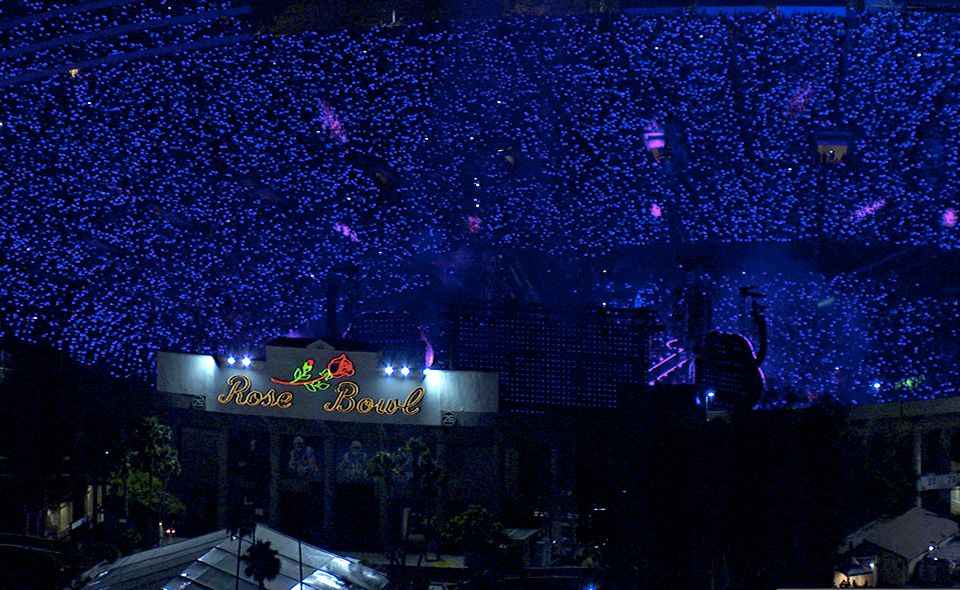
Every piece of groundbreaking technology begins with a question. For us, it was watching a sea of lighters and phone screens at a festival and asking: What if the light came from everyone? What if the audience itself became the canvas? That question led to the first Xylobands, born from an idea during a Coldplay performance at Glastonbury and debuted on their Mylo Xyloto tour. But that spark wasn’t the end of the story. It was the beginning of a continuous loop — a philosophy of research and development that drives everything we do.
In the high-stakes world of live events, innovation isn’t a lightning strike. It’s a disciplined, cyclical process of listening, inventing, testing, and refining. It’s a loop that connects the artist’s vision, the audience’s experience, and the unforgiving realities of global production. The pressure is immense, the margin for error is zero, and the only way to succeed is to build a culture where R&D is not a department, but a mindset.
The Three Pillars of Our R&D Philosophy
Our approach to creating the future of LED crowd experiences rests on three core pillars: artist-centric invention, tour-grade reliability, and audience-first design. This framework allows us to move from a conceptual spark to a product that can withstand the rigors of a global tour and captivate millions.
1. Artist-Centric Invention: The Vision is the Blueprint
True innovation doesn’t happen in a vacuum. It begins with the artist. Their creative ambition is the starting point for our most ambitious projects. Whether it’s a global superstar like Maluma looking to create a homecoming spectacle in Medellín or a major broadcaster like ITV aiming to build atmosphere on a live television set, the technical solution must serve the creative vision.
This means our R&D process is inherently collaborative. It involves deep conversations with creative directors, lighting designers, and production managers. We’re not just selling a product; we’re co-creating an experience. This was the case with Formula One, where we developed custom LED Lanyards (The Xylo Pendant) for their 75th-anniversary event. The brief wasn't just "light up the crowd," but to create distinct visual identities for different teams and hospitality tiers, all integrated into a complex live broadcast. The result was an immersive event technology that became part of the show’s narrative.
2. Tour-Grade Reliability: The Zero-Failure Mandate
An idea is only as good as its execution. In our world, execution means flawless performance, night after night, in 70+ countries. This is where the lab meets the road. Our R&D extends far beyond the circuit board and the software; it’s about battle-testing every component for the brutal realities of global logistics and live production.
This isn’t just about making something that works. It’s about making something that can’t fail. When you have 50,000 concert wristbands deployed in a stadium, or you’re broadcasting live to millions, there are no second chances.
This is why our product evolution is constant. From the original Coldplay Xylobands to the latest iterations used by artists like Wizkid, we are relentlessly refining our hardware. The Xyloband Lite, for example, was developed to be lighter and more efficient, making its debut on a tour that sold out three nights at London's O2 arena. Our radio-controlled LED wristbands undergo rigorous testing for signal integrity, battery life, and physical durability. We simulate everything from the humidity of a festival in Athens like PRIMER to the complex RF environment of a multi-act arena show. This commitment to reliability is the unseen foundation of every spectacular moment we help create.
3. Audience-First Design: The Human Element
Ultimately, our technology lives and breathes with the audience. If it isn’t comfortable, intuitive, and engaging, it has failed. This human-centric focus is a critical part of our R&D loop. We consider the entire lifecycle of our LED wearables from the fan’s perspective.
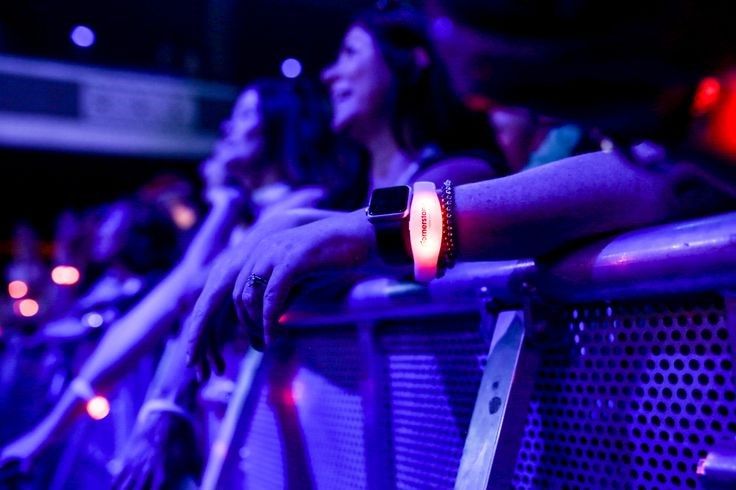
- Wearability: Is it comfortable for the duration of a three-hour concert or a full-day festival? Our designs for festival wristbands are lightweight and ergonomic for this reason.
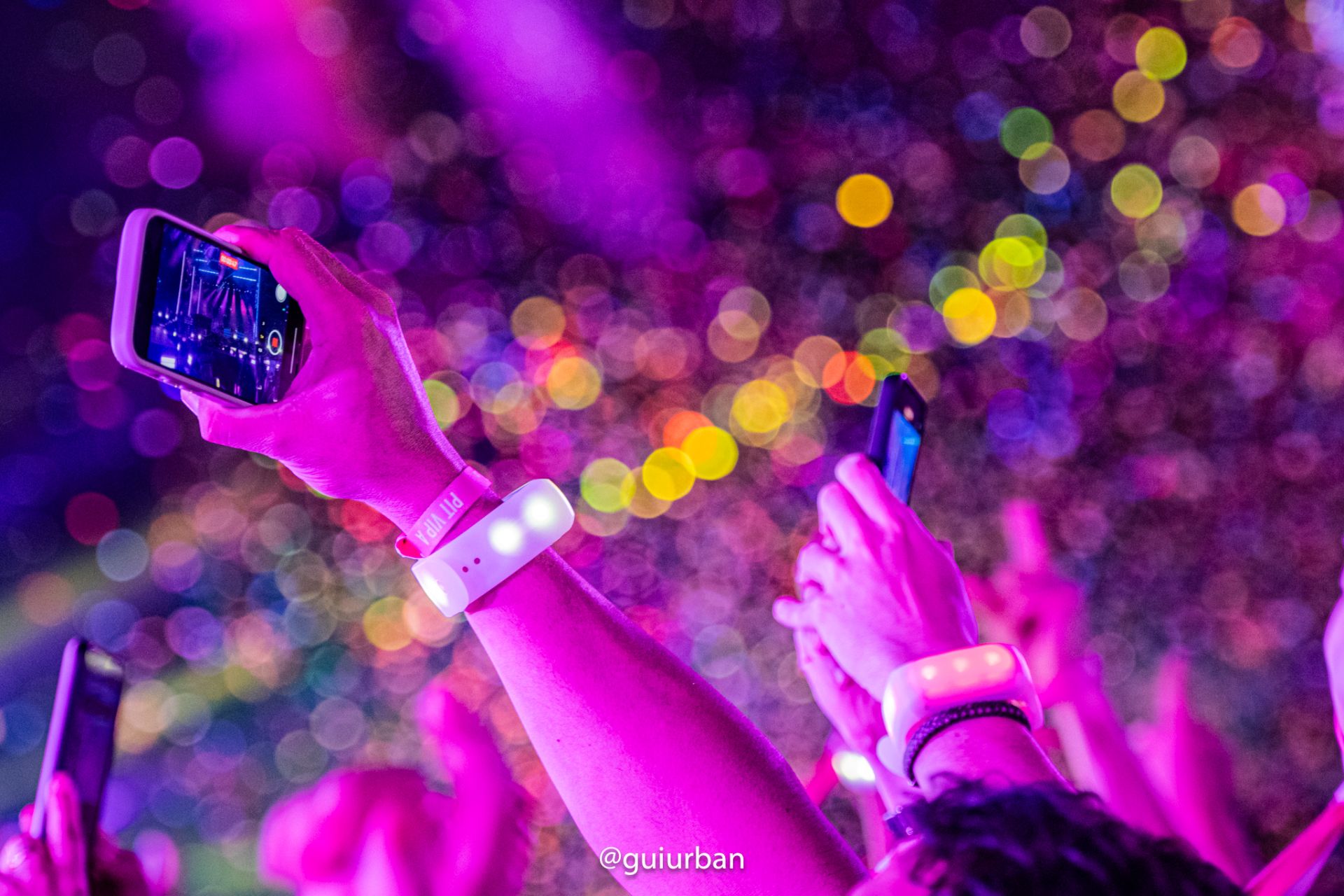
- The Reveal: The moment the wristbands first light up is pure magic. We design our systems to maximize that initial collective gasp of surprise and delight.
- Sustainability: What happens after the show? We’ve pioneered reuse and recycling programs, ensuring the experience doesn’t come at an environmental cost. For Wizkid’s O2 shows, wristbands were collected, topped up, and reused across all three nights.
This focus ensures that the technology doesn’t distract from the performance but enhances the feeling of connection. The goal is to make the technology disappear, leaving only the shared experience. From custom LED wristbands for corporate event activations to the sea of lights at a stadium show, the human response is the ultimate metric of success.
The Loop Continues
The world of live events never stands still. New technologies, new creative ideas, and new audience expectations constantly reshape the landscape. An R&D culture built on a continuous loop of feedback and improvement is the only way to lead from the front.
The journey from a single idea at Glastonbury to a global standard in immersive events has been fueled by this philosophy. It’s a cycle of listening to our partners, building robust and reliable LED event technology, and never losing sight of the human being wearing the wristband. The next great idea for LED bands could come from a conversation with a tour manager, feedback from our on-the-ground crew, or an impossible request from a visionary artist. We’ll be ready to listen, invent, and start the loop all over again.