Zero Margin for Error: The High-Stakes World of Global Event Logistics

The Unseen Engine of the Unforgettable
For the audience, the show begins when the house lights dim. For the artist, it starts with the first downbeat. But for the production team, the show begins months, sometimes years, earlier, with a single line on a spreadsheet. A stadium tour or global brand activation is more than a series of performances; it’s a mobile metropolis, a feat of logistics so complex it borders on the miraculous. Every speaker, every screen, every cable, and every one of our LED wristbands has its own journey. The art is in making sure those journeys all end at the same place, at the same time, without fail.
This is the world of global touring logistics—a high-stakes ballet of freight, customs, and military-grade coordination where there is zero margin for error. One missed connection, one incorrect customs form, or one delayed shipment can trigger a catastrophic domino effect, jeopardizing millions in revenue and disappointing tens of thousands of fans.
The Global Chessboard: More Than Just Shipping
At its core, tour logistics is about moving equipment from Point A to Point B. But when Point B is in another hemisphere and you have 48 hours to get there, it becomes a strategic challenge of immense proportions. Global tours for artists like Maluma or major brand events for clients like Formula One don’t just move; they migrate. This migration involves a multi-layered transportation strategy, blending air, sea, and ground freight to optimize for speed, cost, and reliability.
The choice is never simple. Air freight is fast but expensive, ideal for critical, lightweight, or high-value technology like servers and control equipment. Sea freight offers massive cost savings for bulky, non-urgent items—scaffolding, barriers, and stage structures—but requires months of advance planning. The real mastery lies in orchestrating the interplay between them. A tour manager might send 80% of the production via sea container weeks ahead of the first show, while the core technical gear and backline travel with the crew via air cargo.
The Carnet: Your Passport for Goods
One of the most critical instruments in this global orchestra is the ATA Carnet. Often called a "passport for goods," this international customs document allows for the temporary importation of merchandise and equipment without paying duties or taxes. Without it, every border crossing would become a prohibitively expensive and time-consuming administrative nightmare. The carnet lists every single piece of equipment, from a priceless vintage guitar to a crate of custom LED wristbands, complete with serial numbers, weight, and value.
Accuracy here is non-negotiable. A single discrepancy—a typo in a serial number or an extra case not on the list—can lead to entire shipments being impounded by customs officials for days or even weeks. For a production on a tight schedule, that’s a show-killer. This is why experienced production managers and freight forwarders are meticulous, treating the carnet with the same reverence as a pilot treats a pre-flight checklist.
The Human Element: Boots on the Ground
While software and systems manage the data, logistics still relies on a global network of human experts. Every major port and airport has freight forwarders and customs brokers who specialize in the unique demands of live entertainment. These are the unsung heroes who navigate the labyrinth of local regulations, language barriers, and bureaucratic quirks. They’re the ones who know which official to call at 3 a.m. to get a grounded cargo plane released, or how to negotiate the temporary import of sophisticated radio controlled LED wristbands in a country with strict radio frequency regulations.
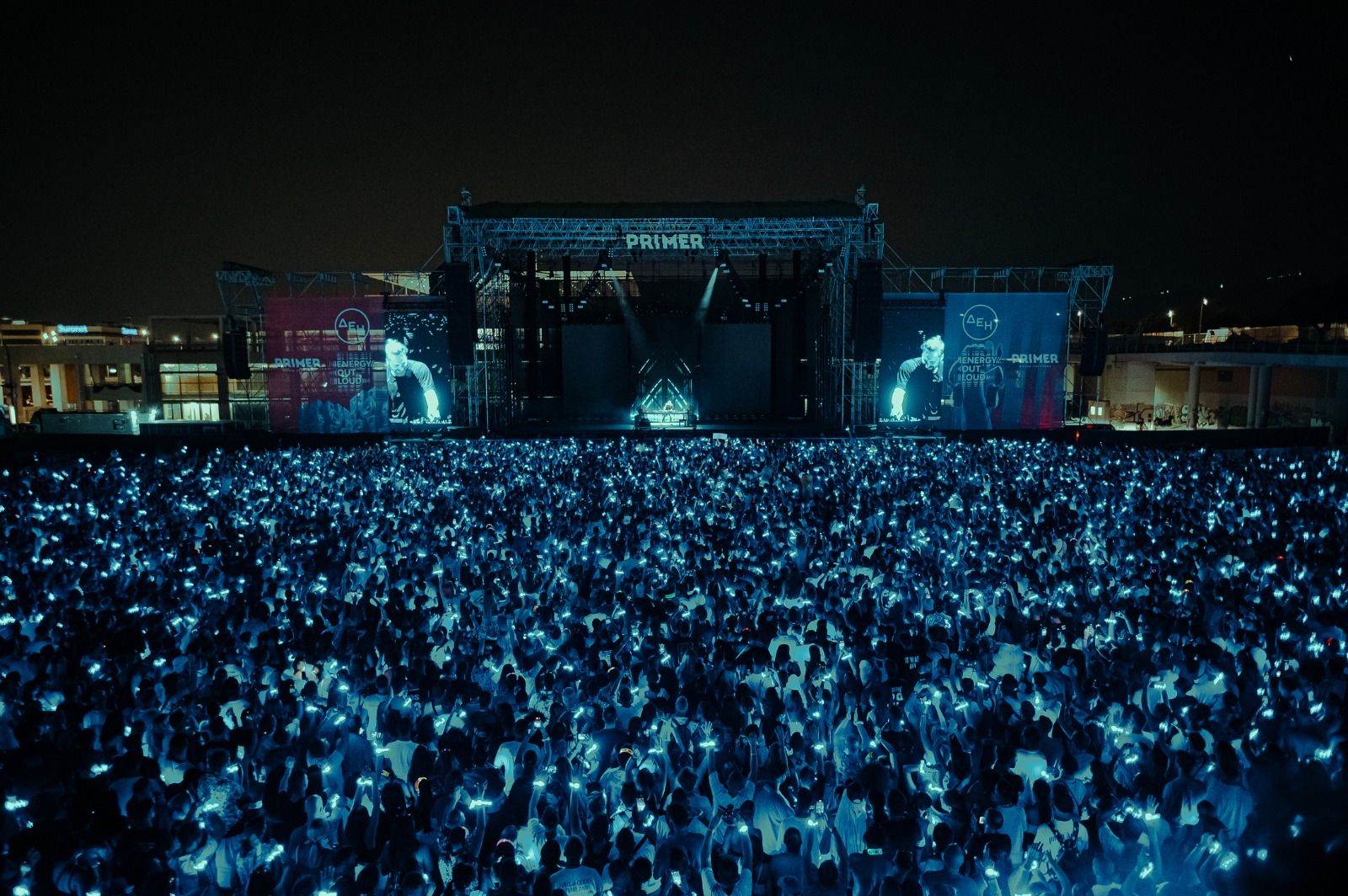
This "boots-on-the-ground" expertise is irreplaceable. At Xylobands, our own technical teams become part of this logistical chain. When we deploy for an event like the PRIMER Music Festival in Greece or a multi-night arena run with Wizkid in London, our work begins long before the first wristband lights up. It involves coordinating with the tour’s production team to ensure our control systems, charging racks, and tens of thousands of Xylo Bands arrive, are integrated into the local setup, and are ready for the show. For us, every event is a logistical operation.
Designing for the Road: The Unseen R&D
The most forward-thinking production managers and technology suppliers don’t just solve logistical problems—they design them out of existence. The physical design of the equipment itself is a critical part of the strategy. How does it pack? How much does it weigh? Can it be modular? How quickly can it be deployed and dismantled?
This is a core principle behind the development of wearable LED technology. Our flight cases are engineered to standard truck-pack dimensions. Our systems are designed for plug-and-play simplicity, minimizing setup time on site. When we created custom Xylo Pendants for Formula One’s 75th-anniversary show, the logistics of distributing 13,000 units in a venue as complex as The O2 Arena was as much a part of the design brief as the visual effect itself. The goal is always to reduce friction—to make the entire process lighter, faster, and more reliable.
Certainty in an Uncertain World
Ultimately, the goal of any global logistics operation is to create certainty. It’s the confidence that allows a tour manager to book a stadium in Bogotá, a corporate client to plan a launch in Tokyo, and an artist to walk on stage in London, all with the unwavering knowledge that everything they need to create an unforgettable experience will be there. From navigating customs to orchestrating multi-modal freight shipments, mastering logistics is the unseen foundation upon which all great immersive events are built. It’s the invisible, high-stakes art of making the impossible happen, night after night, city after city.