From Applause to Algorithms: The Technological Evolution of the Live Show
The Primal Connection: Applause, Lighters, and the Dawn of Audience Feedback
In the beginning, there was applause. A simple, powerful, and deeply human response. For centuries, this was the primary technology of audience participation—a real-time data stream of claps, cheers, or silence, telling performers what was working. It was a binary system: approval or disapproval. But it was a conversation, a feedback loop that established a fundamental connection between the stage and the seats.
The 20th century introduced a new element: fire. The iconic image of thousands of lighters held aloft during a ballad became a staple of the rock concert. It was a visual vote of emotional resonance, a spontaneous, analogue signal of a shared moment. While beautiful, it was still a one-way gesture. The audience could signal the artist, but the artist couldn’t signal back in the same medium. Then, as lighters gave way to mobile phones, the gesture evolved but the dynamic remained largely the same—a constellation of individual lights, beautiful but uncoordinated.
The Digital Dawn: Introducing Control and Choreography
The pivotal shift came with the ability to orchestrate these moments of light. The question evolved from, “What if the audience could light up?” to “What if the show could light up the audience?” This is where the modern era of immersive event technology begins. The answer lay in radio-frequency control, a technology that could turn every audience member into a pixel in a vast, living canvas.
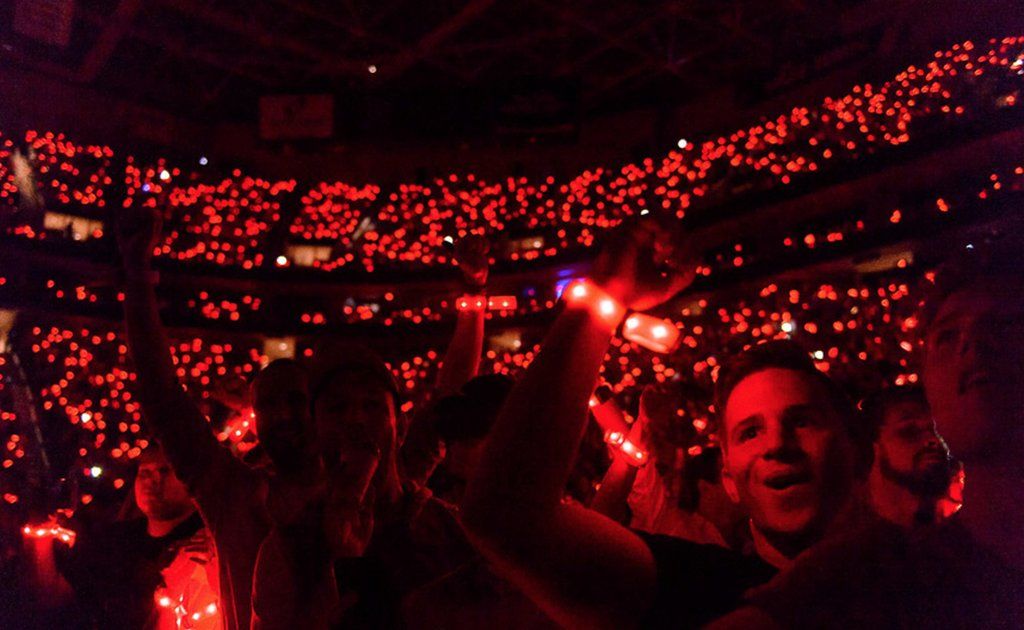
The invention of radio controlled LED wristbands marked a quantum leap. When Xylobands first illuminated the crowd on Coldplay’s Mylo Xyloto tour, the concept was proven at a global scale. Suddenly, the light wasn’t just a signal from the crowd; it was a dialogue. The lighting designer’s palette extended beyond the stage, sweeping across the entire stadium. Complex, split-second cues could turn the entire audience into an extension of the stage design, creating waves of color, synchronized pulses, and moments of breathtaking unity. The Coldplay Xylobands phenomenon demonstrated that the audience didn’t just have to watch the show—they could be the show.
The Modern Toolkit: Beyond Light to True Interactivity
Today, the technology has diversified into a sophisticated suite of tools for crafting LED crowd experiences. The core RF technology now powers not just LED wristbands but a whole ecosystem of LED wearables.
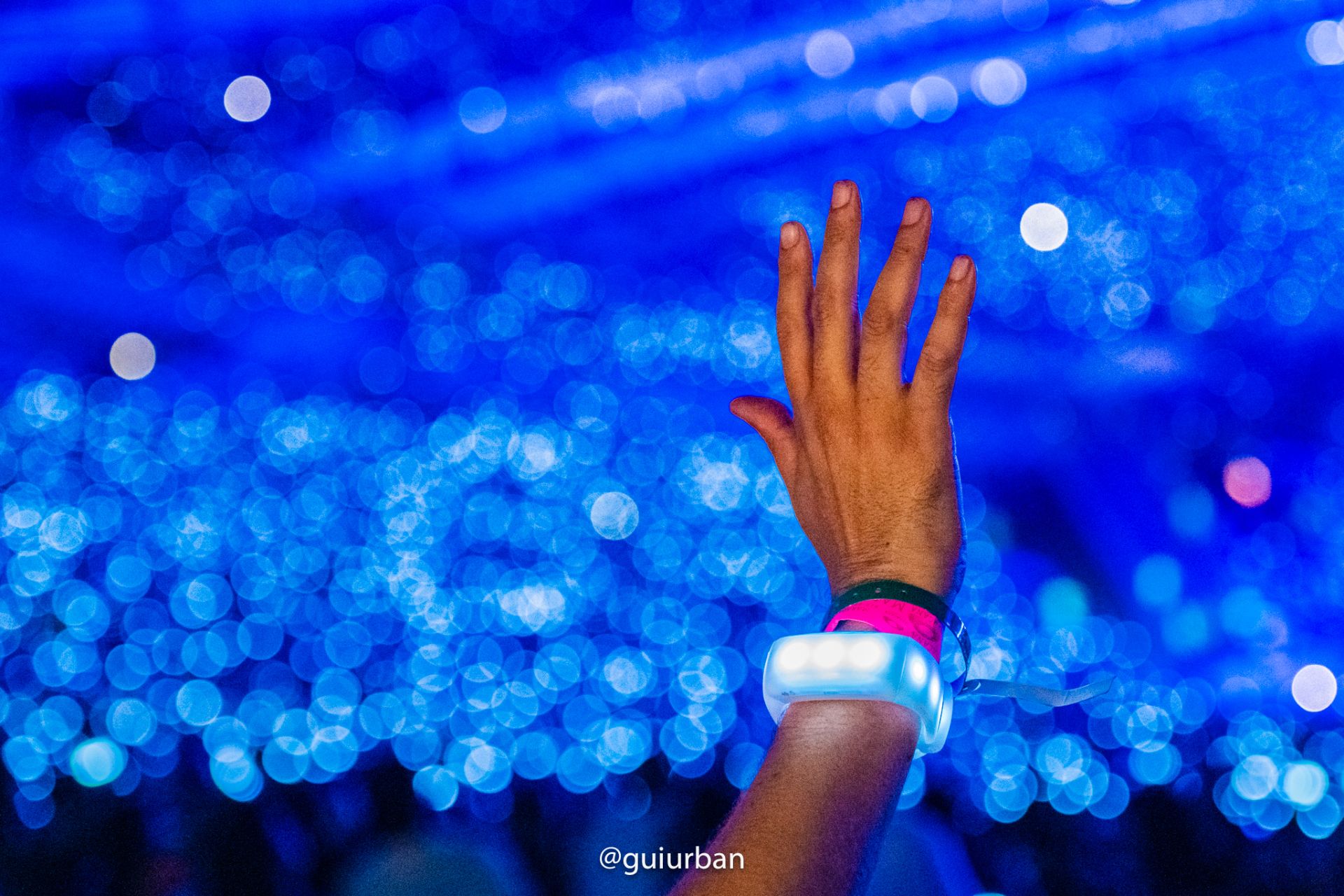
- Custom LED Wristbands: The foundational tool, evolving with brighter lights, longer battery life, and more sophisticated programming capabilities. They are the workhorse of the modern stadium tour and festival, seen at events like Greece’s PRIMER Music Festival, where they amplify the energy of electronic music.
- LED Lanyards: An evolution of the form factor, perfectly suited for corporate event activations and conferences. They serve a dual purpose: credentialing and immersion, transforming a standard-issue ID badge into a piece of the sensory experience.
- LED Orbs and Pendants: The technology has broken free of the wrist. As seen at the Formula One 75th anniversary event, custom pendants can be designed for specific zones or tiers of guests, allowing for highly targeted and complex visual choreography. These objects create a different kind of visual texture, turning the crowd into a sea of floating, kinetic lights.
This expansion of wearable LED technology allows for a far more granular and creative approach. Productions can now segment the audience by seating section, by hospitality tier, or even by team affiliation, as demonstrated at the Davis Cup. This turns the crowd into a dynamic bar chart, a visual representation of team spirit, or a key component in a narrative sequence. The technology is no longer just about making things light up; it’s about telling a story.
The Sentient Crowd: Data, Safety, and the Future of Participation
The next frontier is the integration of data and two-way communication. As immersive events become more complex, the technology is evolving to provide more than just visual effects. The same RF network that triggers a light cue can also be used to manage crowd flow, create heat maps of audience density, and enhance safety protocols.
Imagine a scenario where wristbands not only light up but also guide attendees to the nearest exit in an emergency, pulse with increasing intensity as they approach a specific brand activation, or even allow for interactive voting, as seen in TV formats like Beat The Chasers UK. The audience is no longer just a canvas; it’s a network. Each attendee becomes a node in an intelligent system, a participant in a co-created experience.
From the primal roar of the coliseum to the synchronised glow of 60,000 concert wristbands at a Maluma show, the arc of audience participation has been a story of deepening connection. Technology has been the driving force, breaking down the fourth wall and transforming the live event from a passive viewing into a shared, interactive spectacle. The applause will always be there, but now, it’s accompanied by a symphony of light, a conversation written in color and rhythm, binding the artist and audience together in a single, unforgettable moment.