The Architecture of Light: Rethinking Scale in Stadium and Arena Tours
The Challenge of Scale
An arena tour is a masterclass in logistics, creative vision, and technical execution. A stadium tour is an order of magnitude more complex. The sheer scale of the environment — vast fields, towering tiers of seating, and open skies — presents a unique set of challenges that can overwhelm even the most seasoned production teams. How do you create a cohesive, intimate experience for 60,000 people, ensuring the person in the last row feels as connected as the one in the front?
Traditional lighting design, focused solely on the stage, falls short. A powerful stage wash or a stunning video wall, while essential, can only project outwards. It treats the audience as passive observers. In these massive spaces, this one-way conversation can leave the majority of the crowd feeling distant, their energy unharnessed. The light may reach them, but it doesn’t truly connect with them.
The Audience as the Venue
The solution lies in a fundamental shift in philosophy: treating the entire stadium as the canvas. This means decentralizing the light show, moving it off the stage and directly into the hands of the audience. It’s a transition from a broadcast model to a network model. When every audience member holds a point of light, the architecture of the venue is no longer defined by concrete and steel, but by the living, breathing energy of the crowd itself.
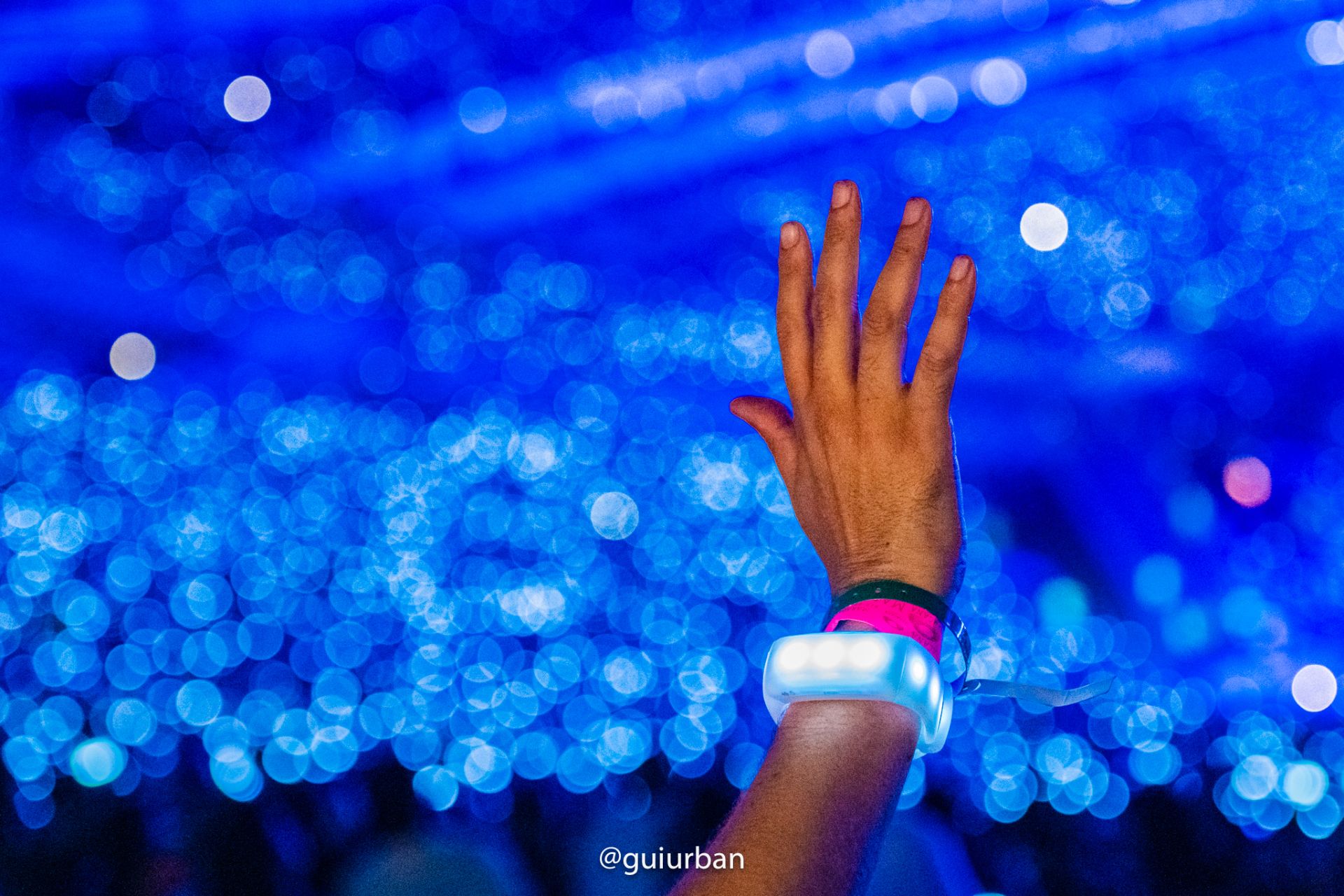
This is where wearable LED technology becomes transformative. Technologies like radio-controlled LED wristbands, or Xylobands, turn every individual into a pixel in a venue-wide display. The lighting designer is no longer just painting the stage; they are choreographing a responsive, immersive event technology that flows through tens of thousands of people. The scale of the show suddenly contracts, creating moments of collective intimacy that feel personal to everyone.
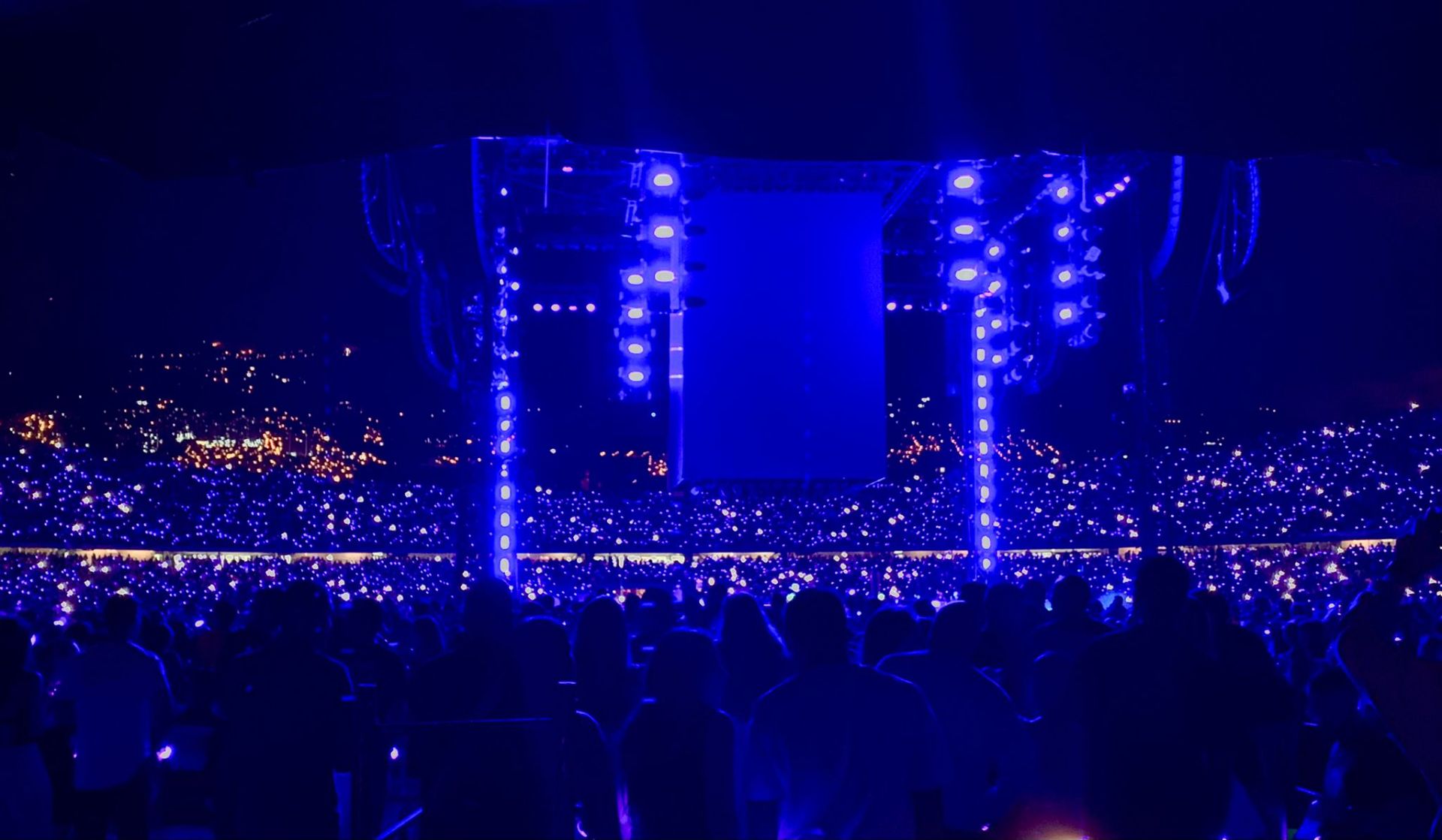
We saw this firsthand with Maluma’s historic 2022 concert in his hometown of Medellín. For a crowd of over 54,000, creating a sense of shared experience was paramount. The strategic use of LED bands helped dissolve the distance, uniting the stadium in pulses of colour and light that were visible not just to the live audience, but to the millions streaming it at home.
Dynamic Control: The Three-Dimensional Light Show
Illuminating the crowd is one thing; controlling that illumination with precision is another. The true power of this approach comes from the ability to segment, map, and control the audience in real time. Through sophisticated RF control systems, a designer can:
- Create Zones: Imagine splitting the stadium bowl into concentric rings, painting each one a different colour to create a stunning bullseye effect.
- Animate Shapes: Send waves of light cascading from the back of the arena to the stage, or have patterns chase each other across different seating tiers.
- Isolate Individuals: Highlight a single person for a moment of interaction, making a 60,000-seat venue feel as intimate as a small club.
- Synchronize with Sound: Trigger light cues in perfect time with musical hits, pyro, and video content, creating a multi-sensory spectacle.
This level of dynamic control turns the audience into a three-dimensional, living video wall. It’s a powerful tool for storytelling, allowing an artist to guide the emotional arc of a show with unparalleled precision. The light isn’t just decorative; it’s narrative. This is the core of creating powerful LED crowd experiences.
The Macro and the Micro
Effective stadium lighting design operates on two parallel tracks: the macro and the micro.
The Macro: The Spectacle
This is the view from the helicopter, the wide shot that captures the entire stadium in a single, breathtaking frame. It’s the massive, unified moments of light that create an overwhelming sense of scale and collective awe. When every single wristband lights up in unison for the first time, the effect is electric. It’s a statement of unity, a visual representation of a shared experience that looks spectacular on camera and feels even more powerful in person.
The Micro: The Personal Connection
At the same time, the experience must feel personal. That single point of light on your wrist is your contribution to the spectacle. It grounds you in the moment and connects you directly to the performance. It’s a tangible link between you, the artist on stage, and every other person in the venue. We’ve seen this time and again, from the legendary Coldplay Xylobands moments on their Mylo Xyloto tour to Wizkid’s sold-out O2 Arena shows, where the technology enhances an already-electric atmosphere.
A New Architecture for Live Events
As artists continue to push the boundaries of the live experience, the tools they use must evolve. In the modern stadium, the audience is no longer a passive recipient of the show; they are the show. By extending the lighting design into the crowd, we create a more democratic, participatory, and emotionally resonant experience.
This approach transforms the cavernous spaces of arenas and stadiums into intimate, connected environments. It’s a new architecture of light, built not from steel and glass, but from human energy and shared moments of awe. It’s the future of tour lighting, and it places the audience right at the heart of the spectacle.