The Unseen Blueprint: A Manifesto for Modern Tour Lighting
The Architecture of an Echo
An arena tour is a paradox. It’s an intensely personal experience, shared simultaneously by fifty thousand people. For the artist on stage, the crowd is a singular, roaring entity. For the fan in row 42, it’s a private universe defined by the music. The job of a lighting designer is to bridge this paradox. It’s to build a common emotional architecture that unites every seat in the house, transforming a vast concrete bowl into a space of shared intimacy.
Modern tour lighting is not about overwhelming the audience with brightness. It’s about creating a dynamic environment—a living, breathing thing that ebbs and flows with the performance. It requires a deep understanding of scale, psychology, and narrative. It’s less about brute force and more about surgical precision, using light to tell a story that unfolds across the entire venue.
Principle 1: Painting the Negative Space
In a stadium, the most significant element isn’t the stage—it’s the audience. This vast expanse of people is the true canvas. Traditional stage lighting focuses solely on the performer, creating a unidirectional experience. The artist is here, the audience is there. The revolution in live production, however, treats the crowd as a dynamic, reflective surface. It’s about painting the negative space.
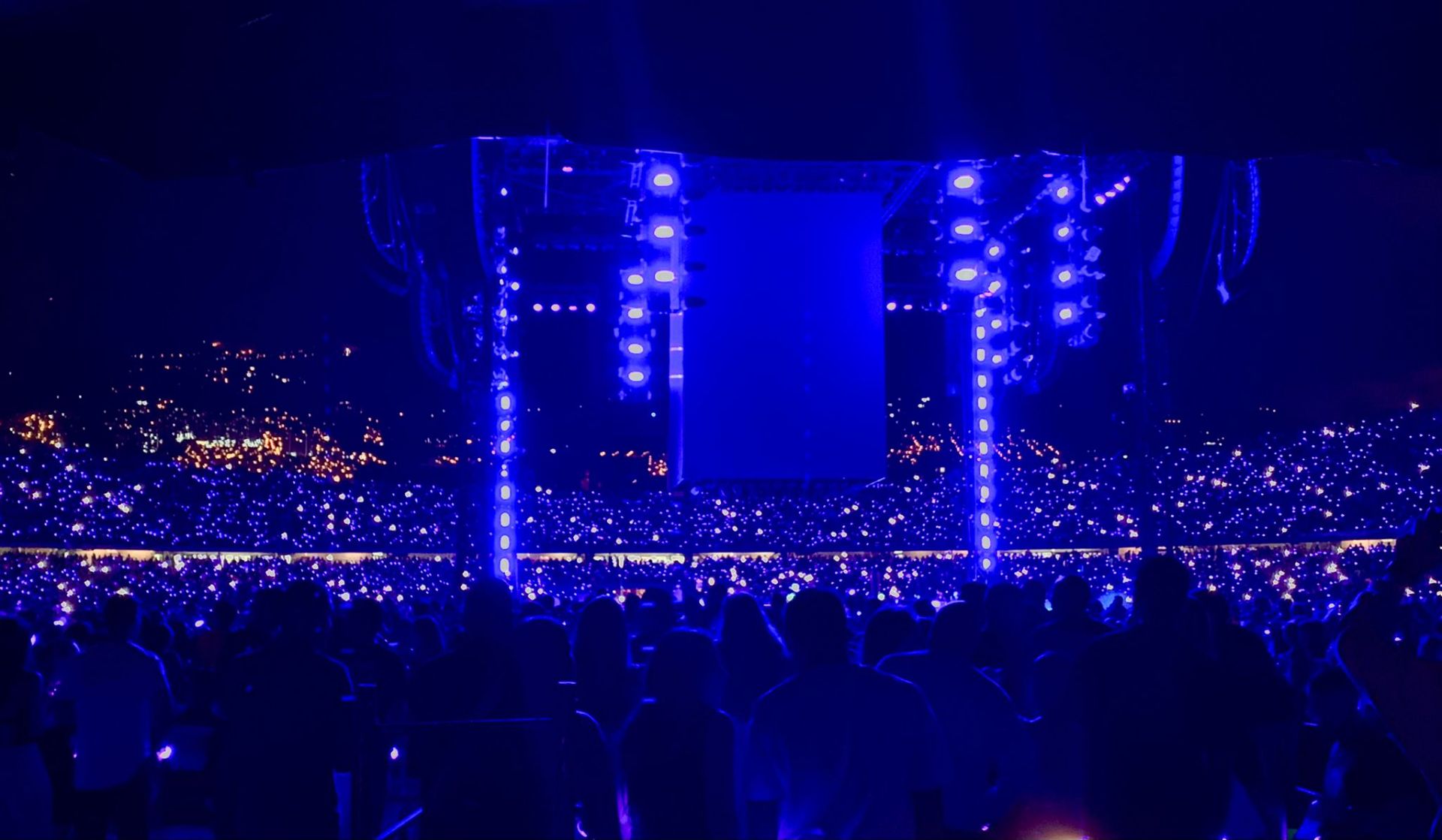
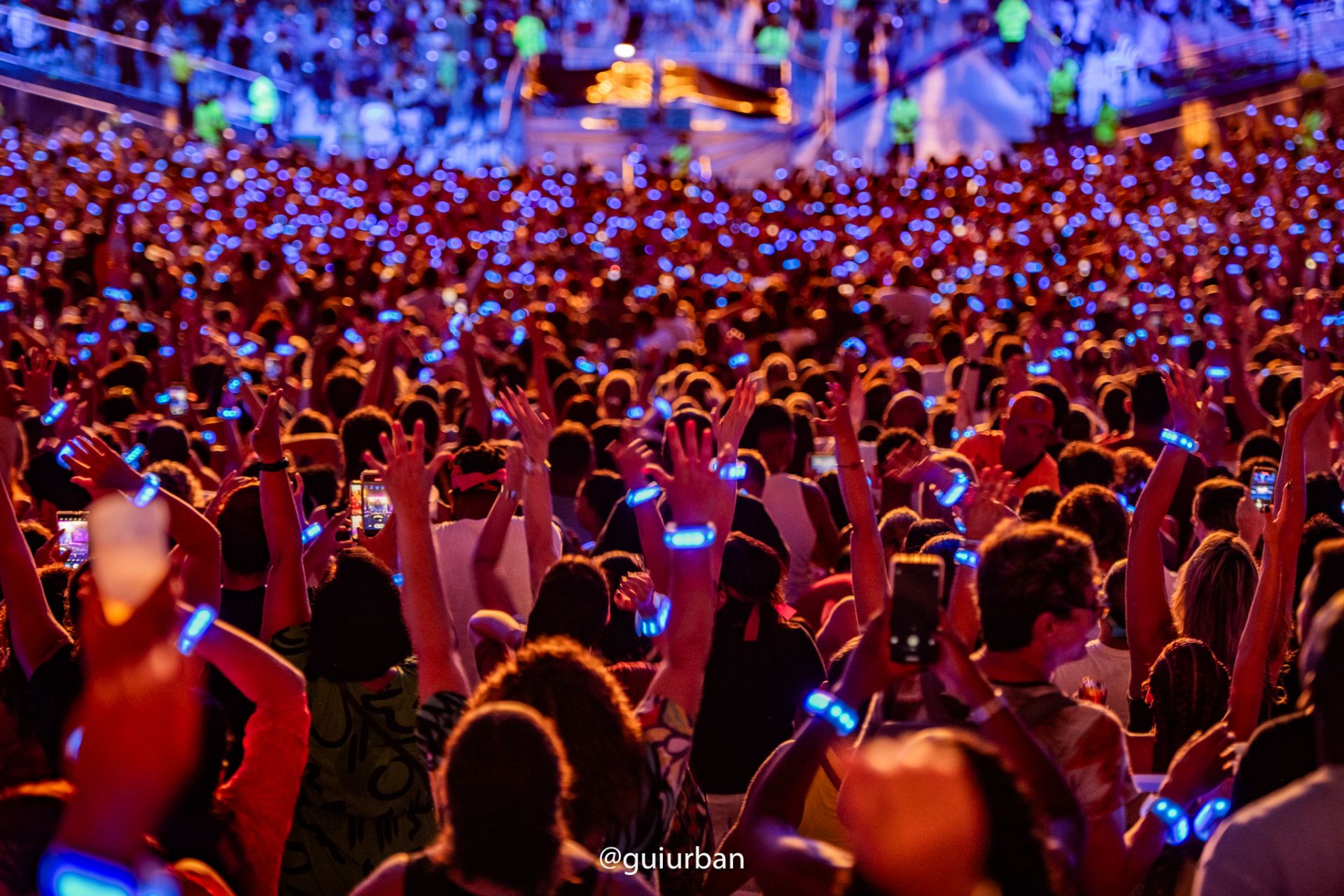
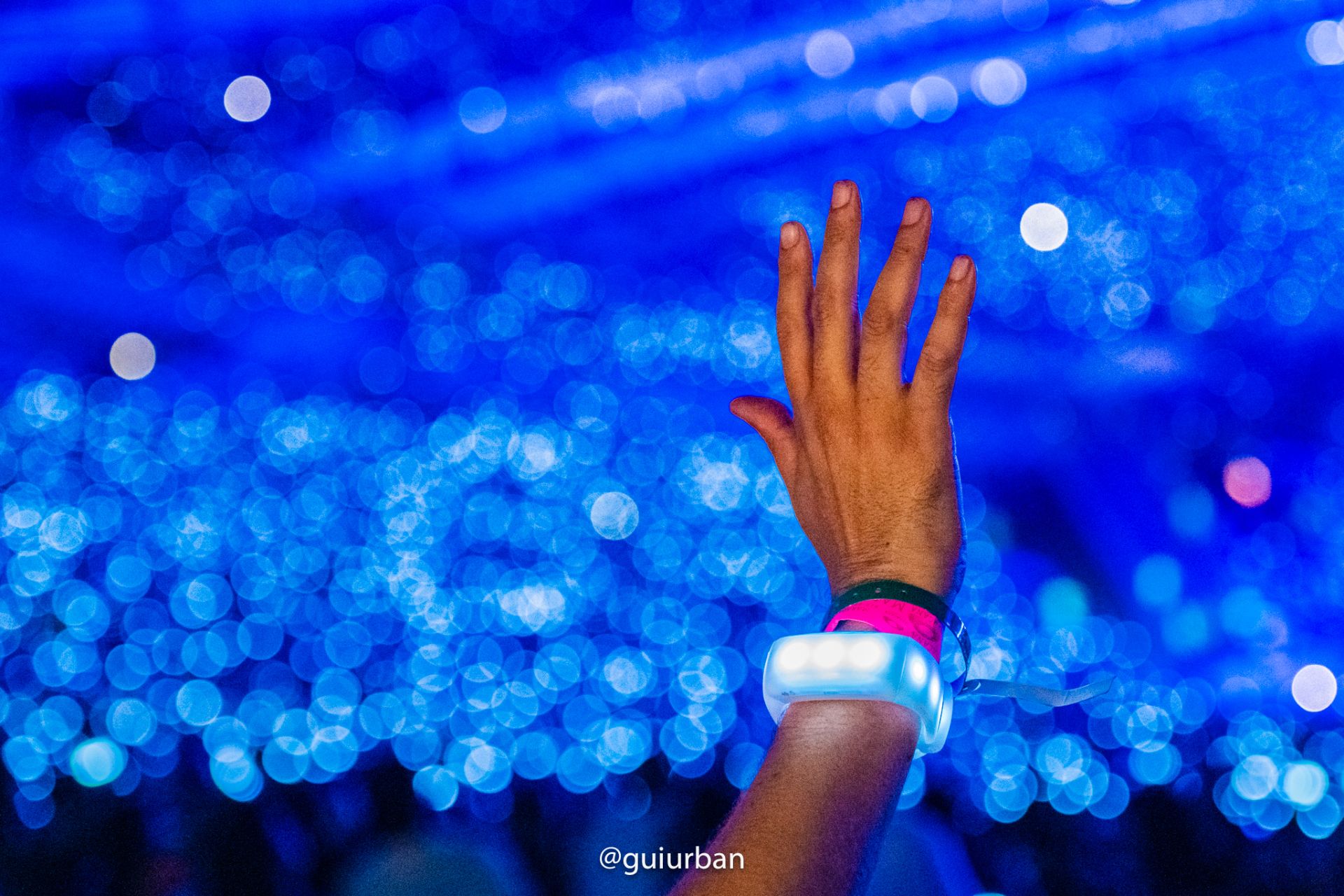
This is where wearable LED technology becomes a foundational tool. By deploying thousands of synchronized light sources among the audience, designers can flip the traditional model. The crowd is no longer a passive recipient of the light show; they are the light show. This creates powerful moments of unity, where a pulse of light can ripple from the front row to the back, making 50,000 people feel like a single organism. As seen on global tours for artists like Coldplay and Maluma, this approach turns the audience into a living, breathing extension of the stage production.
For a lighting designer, the crowd is the largest, most dynamic, and most interesting surface in the entire building. Ignoring it is like a painter ignoring their canvas.
Principle 2: Designing for the Camera’s Eye
Today, every major tour is a broadcast. Whether for a live stream, a documentary, or the thousands of smartphone screens capturing the moment, the show must be engineered for the lens. Lighting that looks spectacular in person can appear flat, blown-out, or chaotic on camera. The modern lighting designer must therefore serve two masters: the live audience and the global broadcast audience.
This duality requires a meticulous approach:
- Color Temperature and CRI: Consistency in color temperature and a high Color Rendering Index (CRI) across all lighting elements are non-negotiable. This ensures that skin tones look natural and colors are rendered accurately on screen, from the lead singer’s face to the last row of LED bands.
- Dynamic Range Management: Cameras have a more limited dynamic range than the human eye. Designs must avoid extreme contrasts between bright hotspots and deep shadows. The key is balanced intensity, ensuring that the stage, artist, and the illuminated audience are all visible within the same frame.
- Textural Lighting: Layering light with different textures—gobos, atmospheric haze, and audience lighting—adds depth and dimension on screen. A wash of color is one thing; a textured, three-dimensional light field is another. It transforms a flat image into an immersive world.
This camera-first mindset is essential for creating iconic, shareable moments that resonate far beyond the walls of the venue, as demonstrated in major broadcast events from the Formula One 75th Anniversary to the Eurovision Song Contest.
Principle 3: The Narrative Arc of Light
A great concert is a story. It has an introduction, rising action, a climax, and a denouement. The lighting must follow this same narrative arc. A show that starts at full intensity has nowhere to go. The art is in the modulation—the strategic use of darkness, shadow, and silence to build tension and create impact.
Consider the structure of a typical setlist:
- The Opener: The initial lighting state should establish the show’s visual identity without revealing the entire toolkit. It’s a promise of what’s to come.
- The Build: As the set progresses, new layers of lighting are introduced. A solo might be punctuated by tight beams; a ballad might be softened with low, warm washes. The introduction of radio controlled LED wristbands partway through a show can create a sudden, dramatic shift in atmosphere, re-engaging the audience with a fresh visual stimulus.
- The Climax: This is the moment for sensory saturation—the full deployment of every lighting element, from stage fixtures to the entire audience glowing in unison. This is the peak of the story, the unforgettable image that defines the show.
- The Encore: The encore is an epilogue. It’s a chance for a final, intimate statement. Often, stripping the lighting back to a single spotlight or a gentle, unified glow from thousands of concert wristbands can create a more powerful and emotionally resonant final moment than another full-throttle assault.
The Sentient Crowd: The Future of Tour Lighting
The future of large-scale lighting design lies in creating ever more responsive and interactive environments. The next frontier is not just about pre-programmed sequences but about creating systems that can react in real-time to the energy of the crowd, the tempo of the music, and even the movements of the artist. The goal is to create a truly sentient space, where the boundary between stage and audience dissolves completely.
At Xylobands, we see this every day. The technology we developed, born from a moment of inspiration at a festival, has become a core component of this new design philosophy. By providing a reliable and sophisticated platform for immersive event technology, we empower designers to move beyond the stage and architect experiences that encompass every single person in the room.
Ultimately, the principles of modern tour lighting are about connection. It’s about using technology not as a spectacle in itself, but as a tool to forge a deeper bond between the artist and their audience. It’s about making 50,000 strangers feel like they are part of the same, unforgettable story, guided home by the light.