The Arena as Instrument: A New Philosophy for Tour Lighting
The Arena as Instrument: A New Philosophy for Tour Lighting
The house lights fall. A roar of anticipation from 50,000 people fills the void. For the next two hours, this cavernous space—a concrete and steel shell built for sport—will become a sanctuary, a shared universe, a testament to the power of collective experience. This transformation is the work of the tour lighting designer, an artist whose canvas is the very architecture of the arena and whose medium is light.
For decades, the philosophy was simple: illuminate the artist. The follow spot was king, and the audience remained in the dark, passive observers. Today, that model has been completely inverted. The art of modern tour lighting is not just to light the stage, but to play the entire room. The goal is to dissolve the boundary between performer and audience, transforming thousands of individuals into a single, cohesive body of light and energy.
From Illumination to Immersion
The shift from merely lighting the stage to engulfing the entire venue in a coordinated visual symphony is the single most important evolution in modern live production. It’s a philosophy built on a simple but profound understanding: the energy of a show is a two-way street. When the audience feels seen, when they become part of the spectacle, their energy is reflected back to the stage, creating a powerful feedback loop of collective joy.
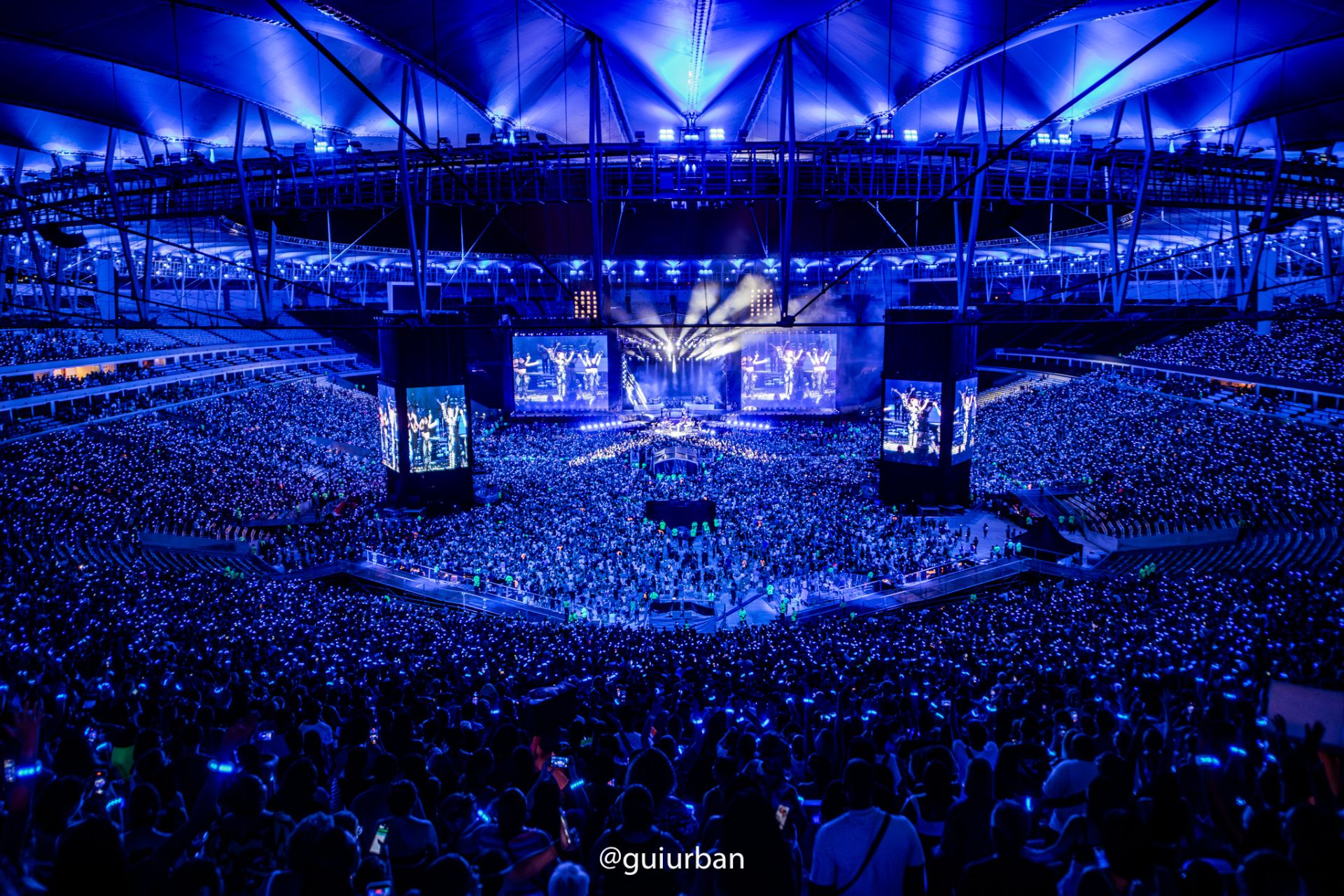
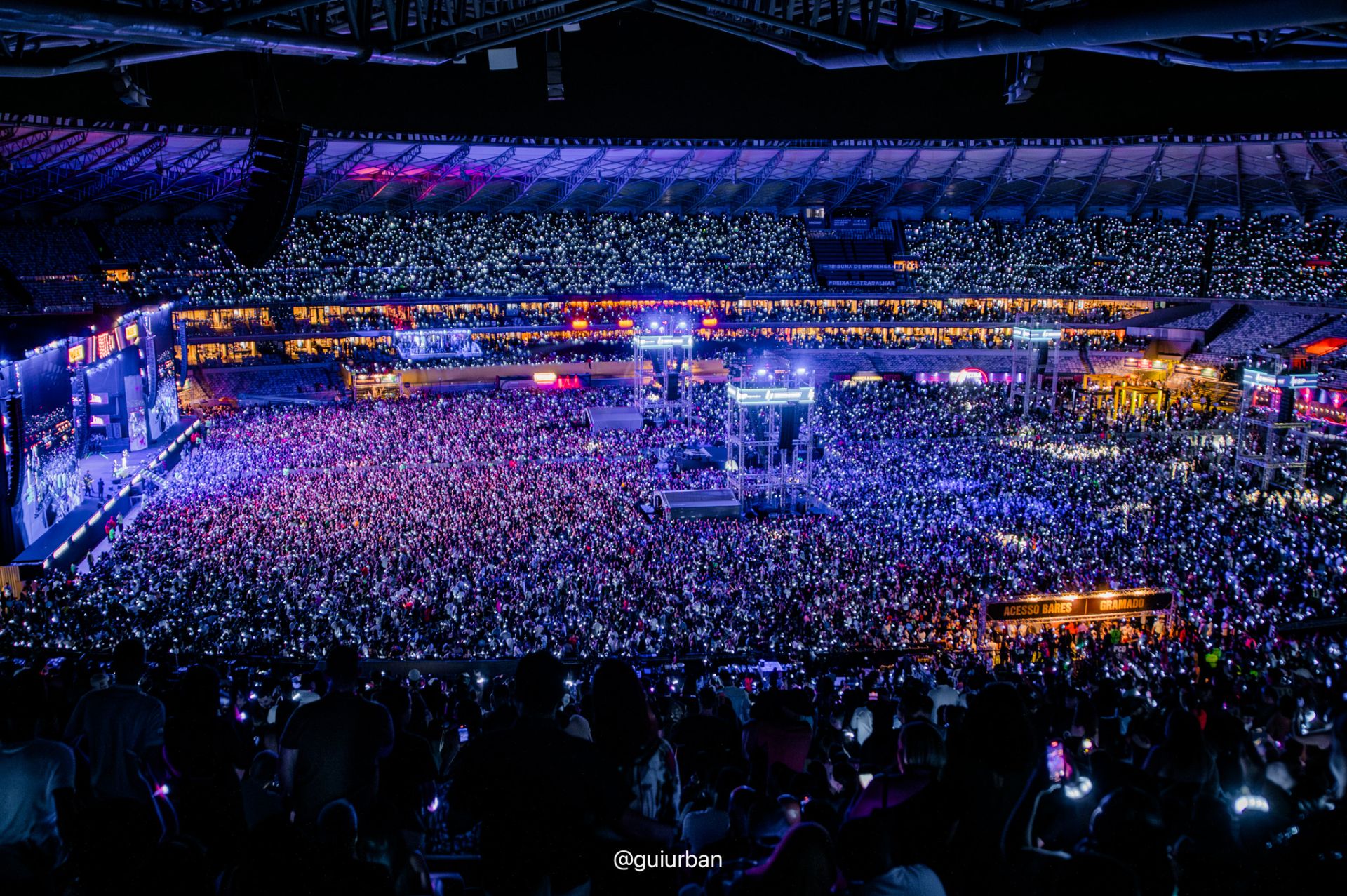
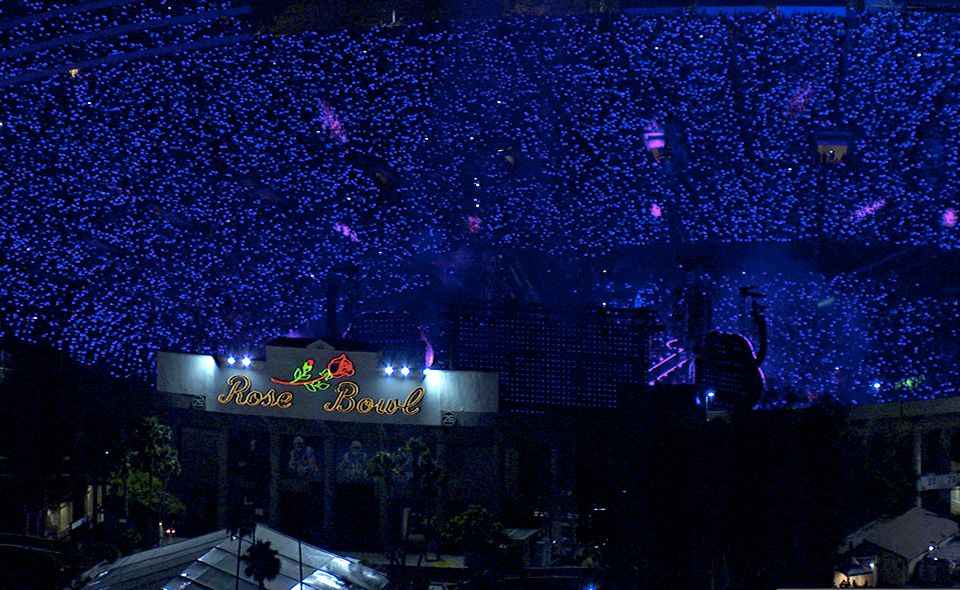
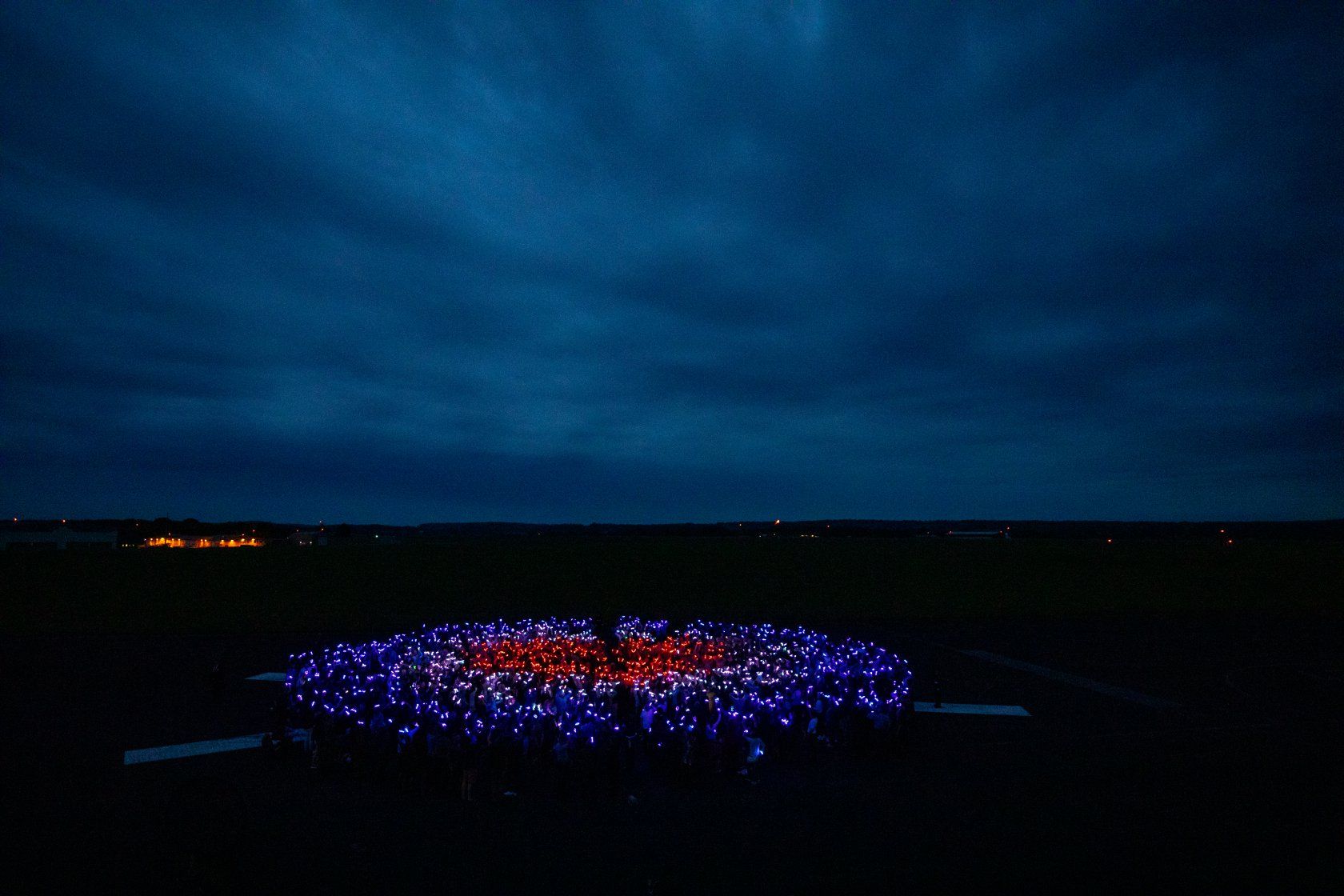
This is where technologies like wearable LED technology come into play. When each person in the crowd is given an LED wristband—a practice popularized by Coldplay’s Mylo Xyloto tour with Xylobands—they are no longer just a spectator. They are a pixel in a 360-degree visual experience. The lighting designer is no longer just painting with light on stage; they are conducting an orchestra of light that flows through the entire stadium, from the front row to the highest seats.
This approach turns the crowd into a living, breathing entity. Imagine the pulsating heartbeat of 20,000 lights during a drum solo, as seen at Wizkid’s historic sell-out shows at The O2 Arena, or the entire stadium erupting in a single colour for a chorus. This isn’t just a visual effect; it's a deeply psychological one. It creates a profound sense of unity and shared experience, the very essence of what makes live events so powerful.
The Two-Show Imperative: Designing for a Hybrid Audience
Modern tours, especially for global artists like Maluma, whose Medellín concert was streamed to over 240 countries, face a unique challenge: they are designing for two distinct audiences simultaneously. There is the live audience in the room, and the broadcast audience watching at home.
These two audiences have different needs. The live crowd craves raw energy, scale, and moments of immersive connection. The camera, however, demands precision, nuance, and telegenic compositions. A blast of white light that feels explosive and exhilarating in a stadium can look blown-out and amateurish on screen.
The solution is a layered approach to design. It involves:
- Macro-Lighting: The big, architectural gestures. Using the venue’s structure, the trusses, the screens, and the crowd itself to create monumental looks that convey the scale of the show.
- Micro-Lighting: The fine details. Key-lighting on the artists, the subtle colour shifts in the background, the textures that give depth and cinematic quality to the broadcast feed.
- Audience Lighting: Using tools like LED Wristbands and LED Lanyards to bridge the gap. For the live audience, it’s an immersive, tactile experience. For the broadcast, it turns the dark expanse of the crowd into a dynamic, vibrant backdrop that tells a story of energy and engagement.
"The audience is the one element you can't control, but with the right technology, you can invite them to be part of the show's DNA. You’re not just lighting people; you’re lighting their shared emotion."
Command and Control: The Unseen Technology
Orchestrating a modern stadium show is a feat of immense technical complexity. A single lighting program can involve thousands of cues, controlling everything from massive LED screens to the individual LED Bands on the wrists of fans. This is made possible by a sophisticated combination of control protocols—typically RF (Radio Frequency) and DMX—that allow a single operator to manage a vast and distributed lighting network.
Radio-controlled systems are the key to unlocking the power of LED crowd experiences. They allow for the precise, real-time synchronization of tens of thousands of individual light sources, from Concert Wristbands to LED Orbs. This technology is the invisible nervous system connecting the artist’s vision to the audience’s experience, allowing for a level of dynamic, responsive choreography that would have been unimaginable a generation ago.
This level of control allows designers to be incredibly intentional. They can create waves of light that travel across a stadium, isolate specific sections of the crowd in different colours, or have every light pulse in perfect time with the music. The arena is no longer a static venue; it is a fully playable, interactive instrument.
The Future of Light and Scale
As artists continue to push the boundaries of the live experience, the role of lighting design will only become more integrated and more essential. The focus will continue to shift from pure spectacle to creating deeper moments of connection and participation.
The future lies in creating more personalized and interactive immersive events. Imagine a show where the audience’s own movement and energy influence the lighting in real-time, or where the story of the show unfolds not just on stage, but across a 360-degree canvas of light that includes every person in the room. This isn't a distant fantasy; it's the next logical step in a journey that began with a simple idea: that the best seat in the house is the one where you are part of the show.