The Art of Spectacle: Modern Principles for Arena and Stadium Tour Lighting
The Canvas Gets Bigger
There was a time when a few hundred PAR cans and a follow spot were the backbone of tour lighting. Today, the canvas isn't just the stage; it’s the entire stadium. From the back row to the front of house, every seat, every person, is a potential pixel in a larger-than-life visual masterpiece. Designing for modern arena and stadium tours requires a shift in thinking — a move from merely illuminating performers to engineering a collective, immersive experience.
Artists like Maluma, who drew 54,000 people to his hometown show in Medellín, or Wizkid, who sold out three consecutive nights at London’s O2 Arena, aren't just performing for a crowd; they are commanding a space. The lighting that supports these mega-shows must match that scale and ambition. It’s no longer about just being seen; it's about being felt.
Principle 1: Unify the Room with a Single Visual Language
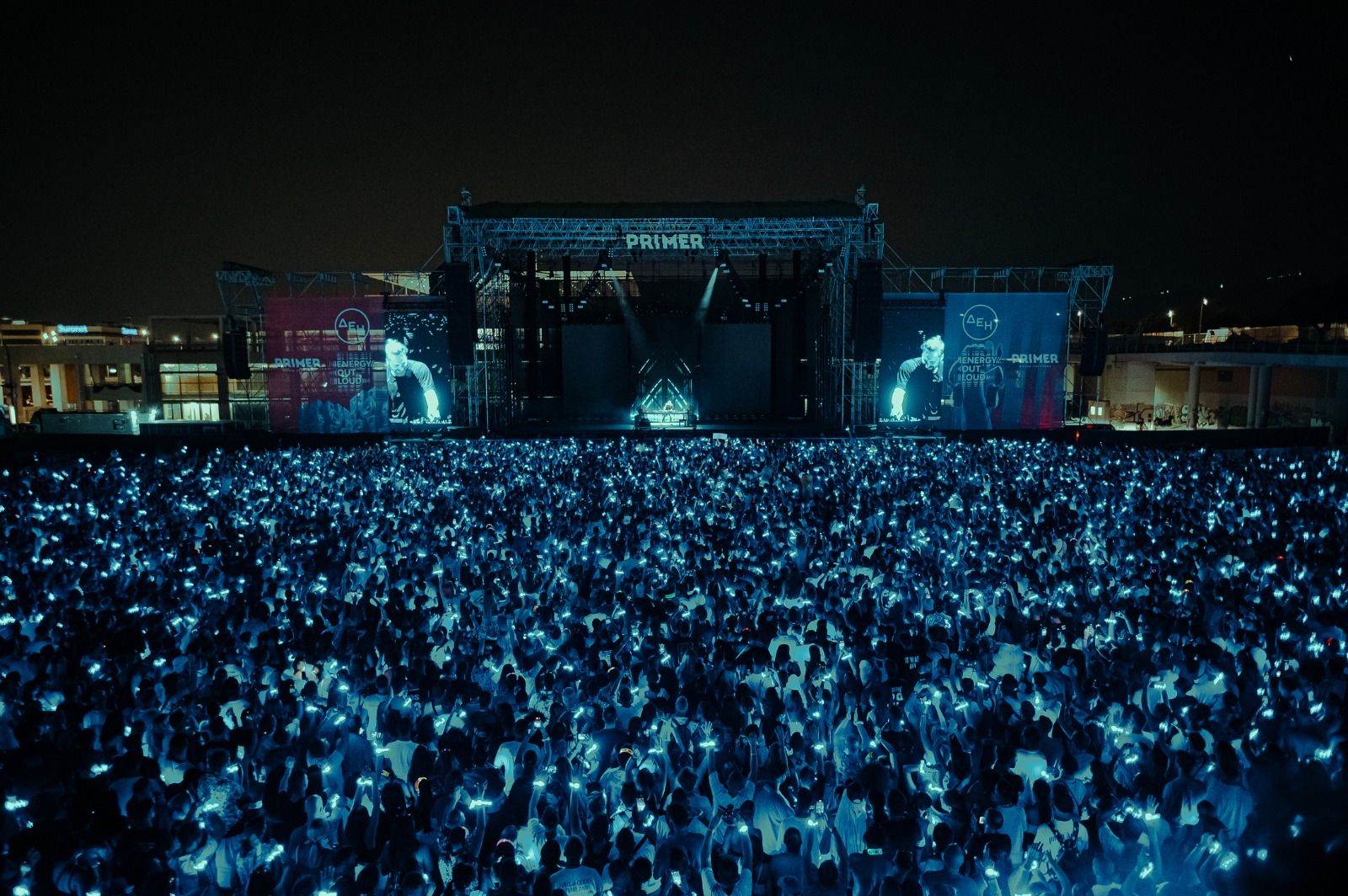
The primary challenge in a stadium is its sheer scale. How do you make a person in row ZZ feel as connected as someone in the front row? The key is to create a single, unified visual language that envelops the entire space. This is where traditional stage lighting finds its limit and technology that decentralizes the light source becomes essential.
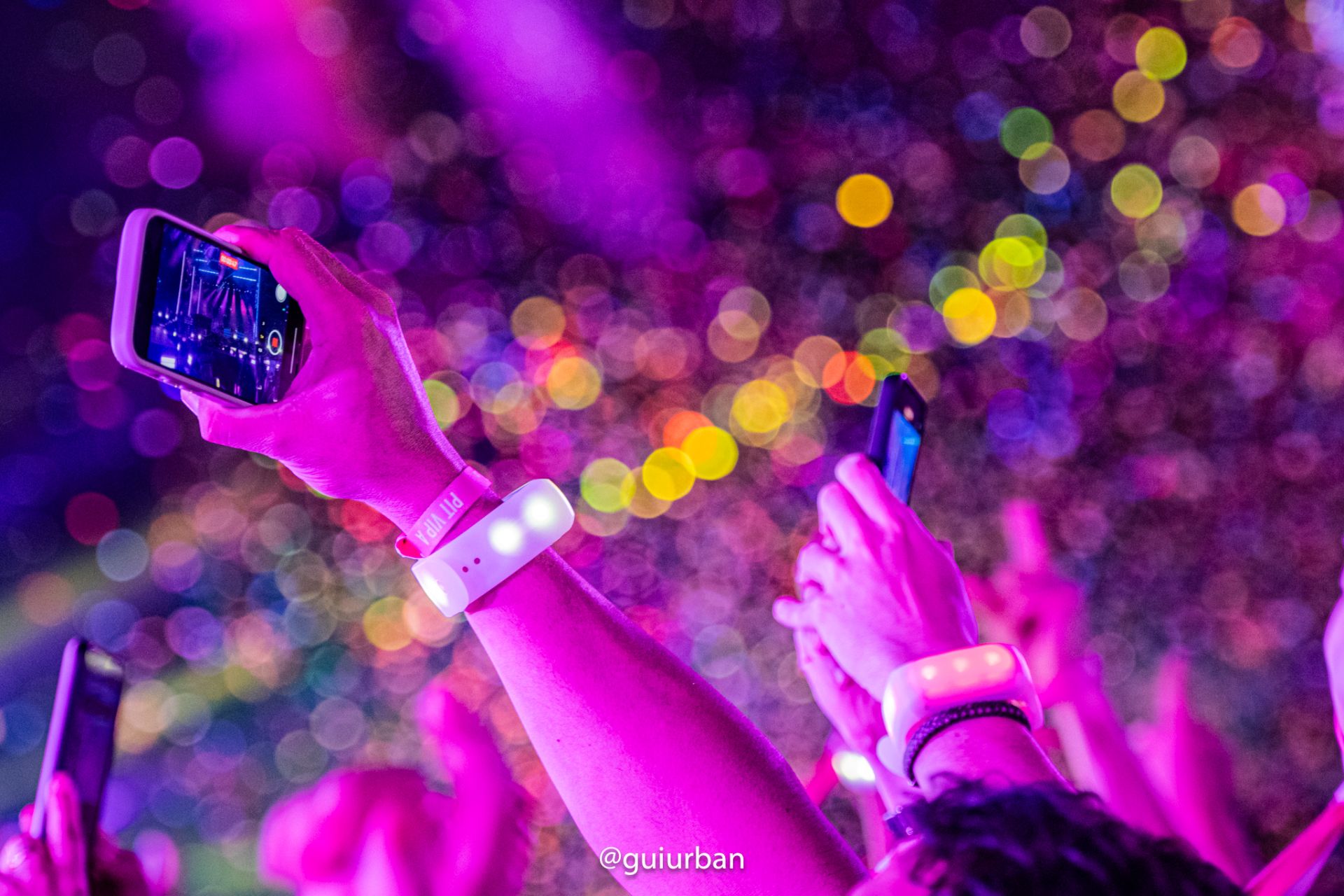
This is the philosophy behind Xylobands. By making each audience member a point of light, the architecture of the show expands. The crowd is no longer a passive observer but an active part of the lighting design. The same RF-controlled technology that syncs tens of thousands of LED wristbands to a beat drop can create sweeping, cohesive patterns that make a 50,000-seat stadium feel like an intimate club. It’s about creating a shared visual rhythm, turning individual attendees into a single, pulsating organism of light.
Principle 2: Design for Macro and Micro Moments
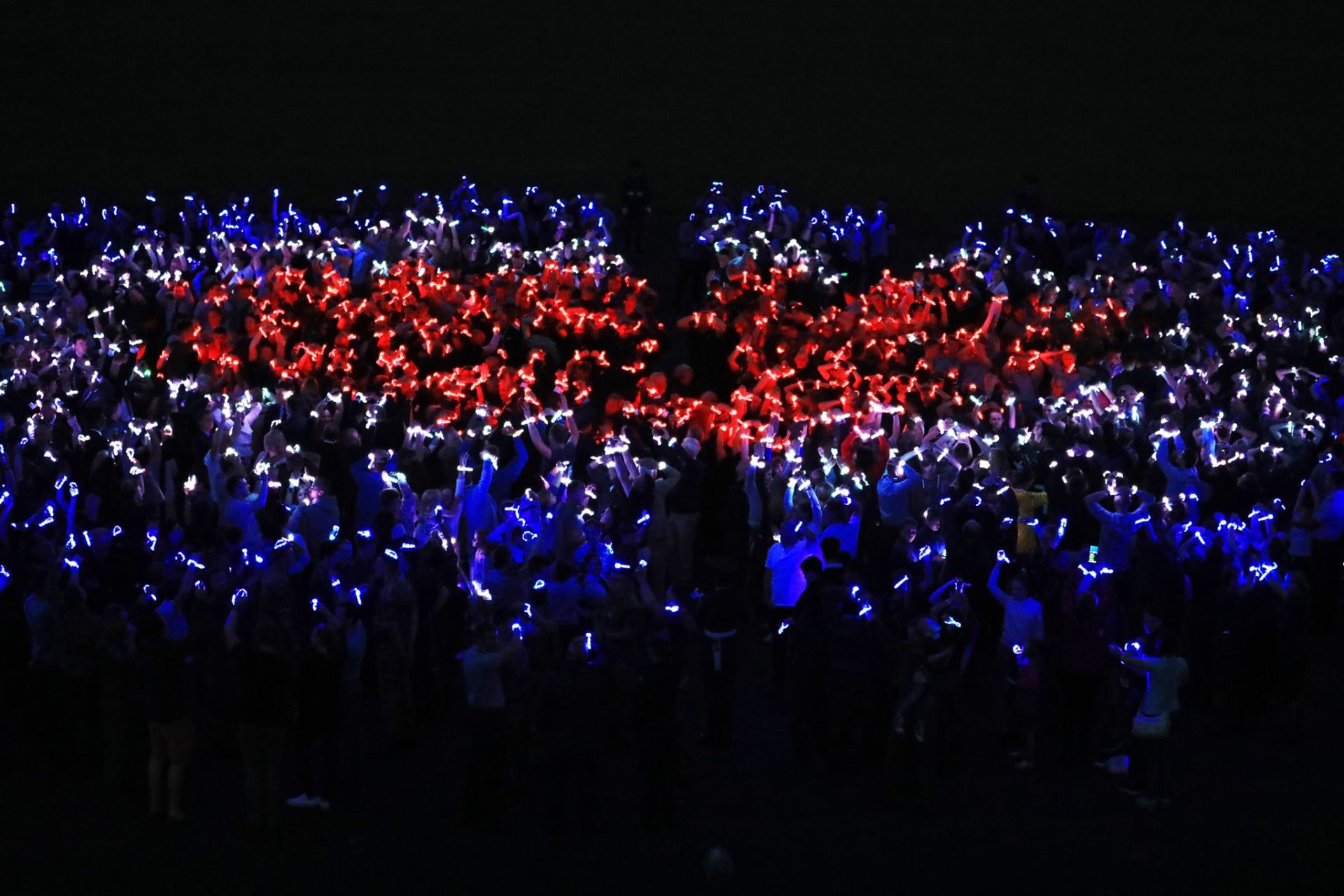
Great stadium lighting operates on two distinct planes: the macro and the micro. The macro is the big picture — the sweeping, venue-wide looks that take your breath away. Think of the entire stadium turning a single colour for a chorus or creating a massive, pulsing flag during a sporting event like the Davis Cup.
The micro moments are the personal, intimate touches. It could be a subtle glow from an LED lanyard during a ballad or the way wearable LED technology reacts to an individual’s movement. For Maluma’s landmark concert in Colombia, streamed to over 240 countries, the lighting had to translate for both the massive live crowd and the viewer at home. The solution lies in layering these macro and micro experiences. While the wide shots for the broadcast capture the epic scale, the light emanating from the crowd itself creates texture, depth, and a tangible sense of human energy that a static lighting rig alone cannot replicate.
Principle 3: The Audience as an Instrument
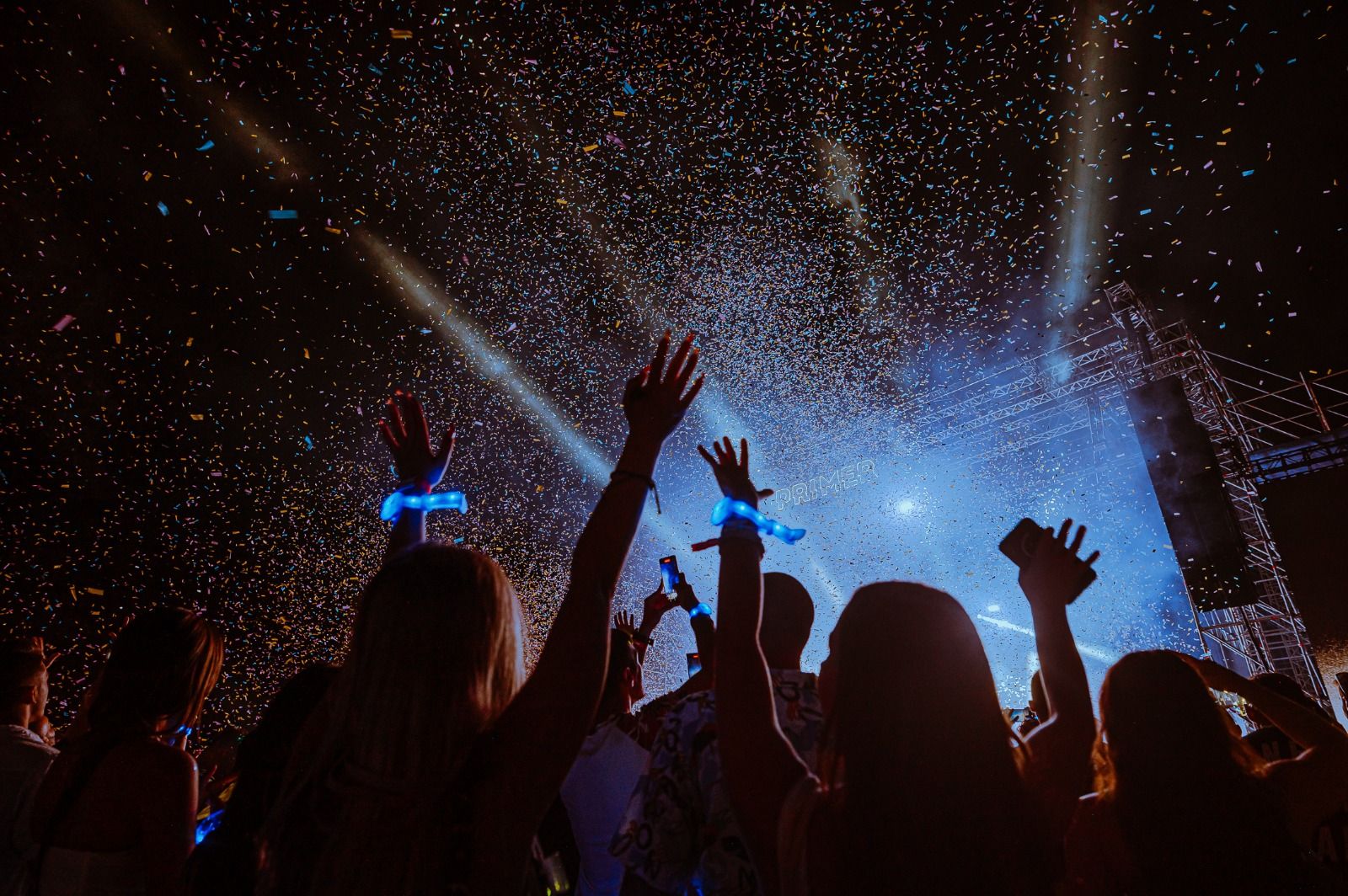
The most forward-thinking lighting designers now view the audience not as a target to be lit, but as an instrument to be played. It’s a concept we’ve seen evolve from the lighters-in-the-air moments of the past to the sophisticated LED crowd experiences of today. When Coldplay first took Xylobands on their Mylo Xyloto tour, they established a new precedent. The band wasn’t just playing music *for* the audience; they were playing music *with* them.
This approach requires a deep integration between lighting, sound, and video. The light on a person’s wrist should feel like a direct extension of the music. It’s a form of immersive event technology that bridges the gap between the artist and the fan. The same principle applies to corporate events and brand activations. At the 75th-anniversary celebration for Formula One at The O2 Arena, custom Xylo Pendants were used to segment the crowd by team and hospitality level, allowing for targeted, dynamic effects that made a large-scale broadcast event feel personal.
Principle 4: Integrate with the Broadcast
Many of today's largest tours are also global broadcast events. The lighting design must serve two audiences simultaneously: the people in the room and the millions watching on screen. What looks spectacular in person can appear blown out or chaotic on camera. This is the “two-show imperative.”
Lighting designers must work closely with broadcast directors to balance the needs of both mediums. Here, controlled audience lighting offers a significant advantage. The intensity, colour, and frequency of light emitted from radio controlled LED wristbands can be precisely managed to be camera-friendly. It provides a vibrant, dynamic background that adds energy and scale to the broadcast without overwhelming the main subject. It transforms the audience from a dark, anonymous mass into a living, breathing part of the set, as seen in countless televised events from the Eurovision Song Contest to ITV specials.
The Future is Decentralized
As stages get more complex and artists push creative boundaries, the future of large-scale lighting design is undeniably decentralized. The focus is shifting from a top-down model of solely stage-based lighting to a distributed network of light points that includes the audience, the architecture, and even interactive elements like LED orbs.
This approach doesn’t just create a spectacle; it builds a community. It fosters a sense of participation and shared experience that is the very essence of live events. By turning the stadium into a single, cohesive instrument, we create more than just a light show. We create a memory. We create connection. We create magic on an epic scale.