The Art of the Return: Deconstructing the Modern Encore
The Silence and the Roar
The stage goes dark. A sea of faces, illuminated only by the faint glow of exit signs, holds its collective breath. The final chord of the main set still hangs in the air, a ghost of electricity. Then comes the roar — a thunderous, primal call for more. This is the sacred space between the show and the encore, a moment pregnant with anticipation. It’s a ritual as old as performance itself, but in the modern era of live spectacle, it has evolved from a simple return to the stage into a masterclass in narrative design and technical choreography.
For producers and designers, the encore is not an afterthought; it is the final, indelible brushstroke on a sprawling canvas. It’s the closing argument, the resolution to the story you’ve spent two hours telling. To get it right is to send an audience home with a feeling of true catharsis. To get it wrong is to let the energy dissipate into a forgettable fade to black. The craft lies in understanding that the encore isn’t just about one more song — it’s about one final, shared moment.
Narrative Closure: The Encore as Final Chapter
A well-designed show has a distinct narrative arc: a beginning, a middle, and an end. The encore serves as the epilogue. Its power often comes from its ability to either heighten or deliberately contrast with the climax of the main set. A high-energy rock show might find its most resonant final moment in a single, acoustic ballad under a solitary spotlight. Conversely, a more intimate performance could explode into an unexpected, high-octane finale.
The key is to understand the emotional journey of the audience. What is the final feeling you want them to carry with them? Is it euphoria, introspection, unity, or raw energy? The song choice is crucial, but the atmosphere that surrounds it is paramount. This is where the thoughtful application of Immersive Event Technology moves from a supporting role to a leading one, providing the sensory cues that define the narrative’s close.
The Reveal: Unifying the Crowd with Light
The traditional encore relied solely on the artist’s return. The modern encore has a more powerful tool in its arsenal: the audience itself. The moment of darkness before the musicians retake the stage is an opportunity to build suspense, but also to stage a grand reveal. We understand this intimately; the founding vision for Xylobands was born from such a moment, watching Coldplay at Glastonbury and imagining the crowd transformed into a single, breathing entity of light.
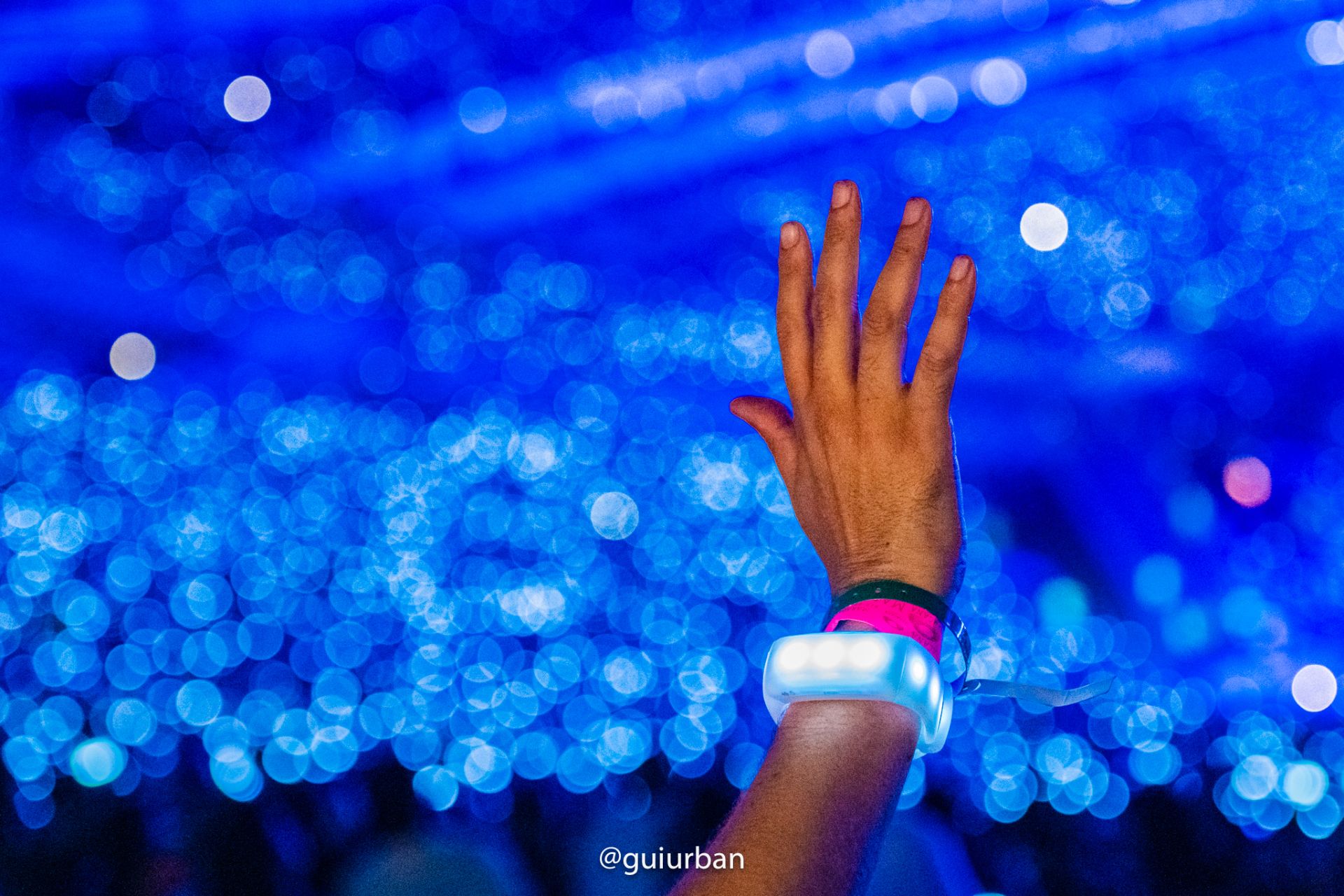
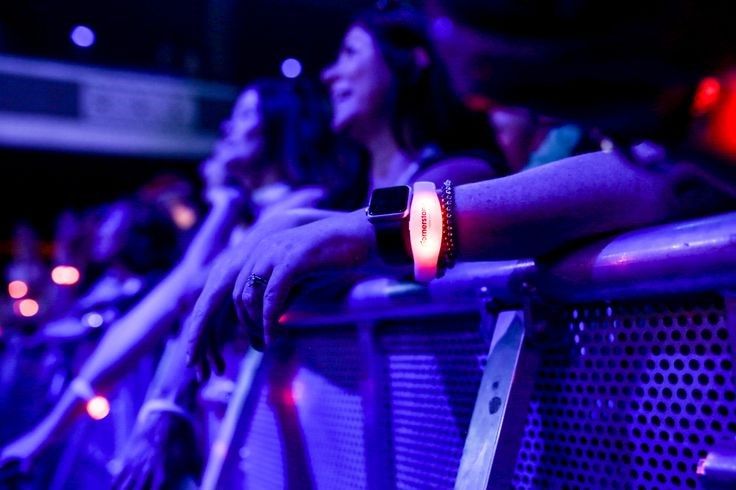
This is the concept that brought Coldplay Xylobands to life. Imagine the sequence: the stage is black, the crowd’s applause begins to soften, and then, in a single, silent pulse, 50,000 wrists illuminate. The audience doesn’t just see the light show; they become it. Suddenly, every single person is part of the same visual tapestry, their shared experience made tangible. This is the power of Radio Controlled LED Wristbands. They transform a crowd of spectators into a unified spectacle, creating one of the most powerful LED Crowd Experiences possible.
The encore is your last chance to make a statement. With tools like synchronized LED Bands, that statement can be written in light across every person in the arena, creating an image that is impossible to forget.
Choreographing the Final Moment: The Audience as Instrument
With today’s technology, the crowd becomes the final instrument in the orchestra. The lighting designer is no longer confined to the stage rig. They are painting with pixels worn by every fan. This opens up a new dimension for creativity, especially in the encore, where impact needs to be immediate and absolute.
During a climactic finale, you can send strobing pulses of color chasing through the arena. For a heartfelt ballad, a slow, gentle pulse in a single color can unify the space with breathtaking elegance. This isn’t just for music. We’ve seen this utilized with stunning effect in Corporate Event Activations, where a brand’s colors can flood the room at a key moment, or at major sporting events like the Davis Cup or Formula One, where custom LED Lanyards and pendants can erupt in team colors to celebrate a victory. This level of technical choreography transforms the encore into a deeply personal, yet massively shared experience.
Key Design Considerations for the Modern Encore:
- Pacing and Dynamics: How will the blackout period be used? Will the return be sudden and explosive, or slow and dramatic? The silence is as important as the sound.
- Technological Integration: Is the technology a surprise, or has it been part of the show from the beginning? Using Wearable LED Technology for the first time in an encore can create a stunning moment of wonder.
- Narrative Cohesion: Does the encore feel like the logical, satisfying conclusion to the journey? The emotional tone, set by both music and lighting, must feel earned.
- The Final Image: What is the very last thing the audience will see? A lone artist in a spotlight? Or a stadium of 80,000 people, their Concert Wristbands pulsing in a final, synchronized heartbeat?
Beyond the Fade to Black
The art of the return is measured by the resonance it leaves behind. Long after the last note has faded and the houselights have come up, it is the feeling of that final moment that an audience carries home. It