The Audience as Canvas: A New Era in Festival Production
From Passive Observers to Active Participants
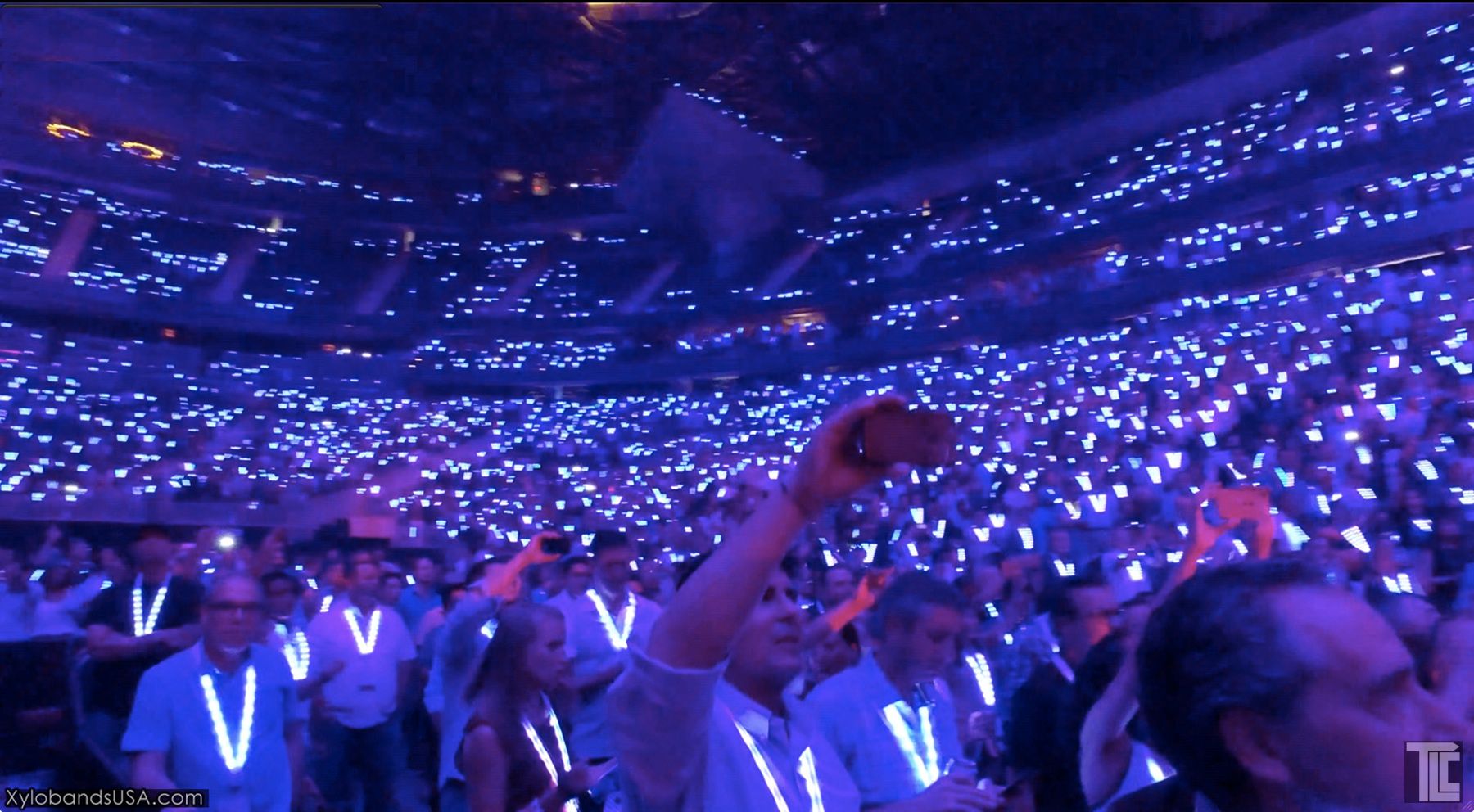
For decades, the festival model was fundamentally a one-way transmission: artists perform on a stage, and a vast crowd absorbs the experience from a distance. The energy was real, the moments were powerful, but the interaction was limited to applause, singalongs, and the occasional sea of lighters. The crowd was a collection of individuals sharing a space. Today, that model is being fundamentally rewritten. The most forward-thinking festival producers no longer see the audience as passive consumers of the show; they see them as a dynamic, interactive canvas integral to the spectacle itself.
This evolution isn’t just a trend; it’s a paradigm shift in live event philosophy, driven by a convergence of audience expectation and technological innovation. Modern festival-goers, raised in a digitally connected world, crave participation and shared, co-created moments. The static, top-down experience feels increasingly dated. They don’t just want to see the show—they want to *be* the show. This demand for deeper engagement has opened the door for a new class of Immersive Event Technology designed to turn tens of thousands of individuals into a single, cohesive, visual instrument.
The Technology of Collective Effervescence
The earliest forms of mass audience participation were analogue and uncoordinated. While a field of lighters during an encore is iconic, it’s a blunt instrument. Mobile phone torches, the modern equivalent, create a brighter but similarly chaotic effect. The revolution began when control and synchronicity became possible.
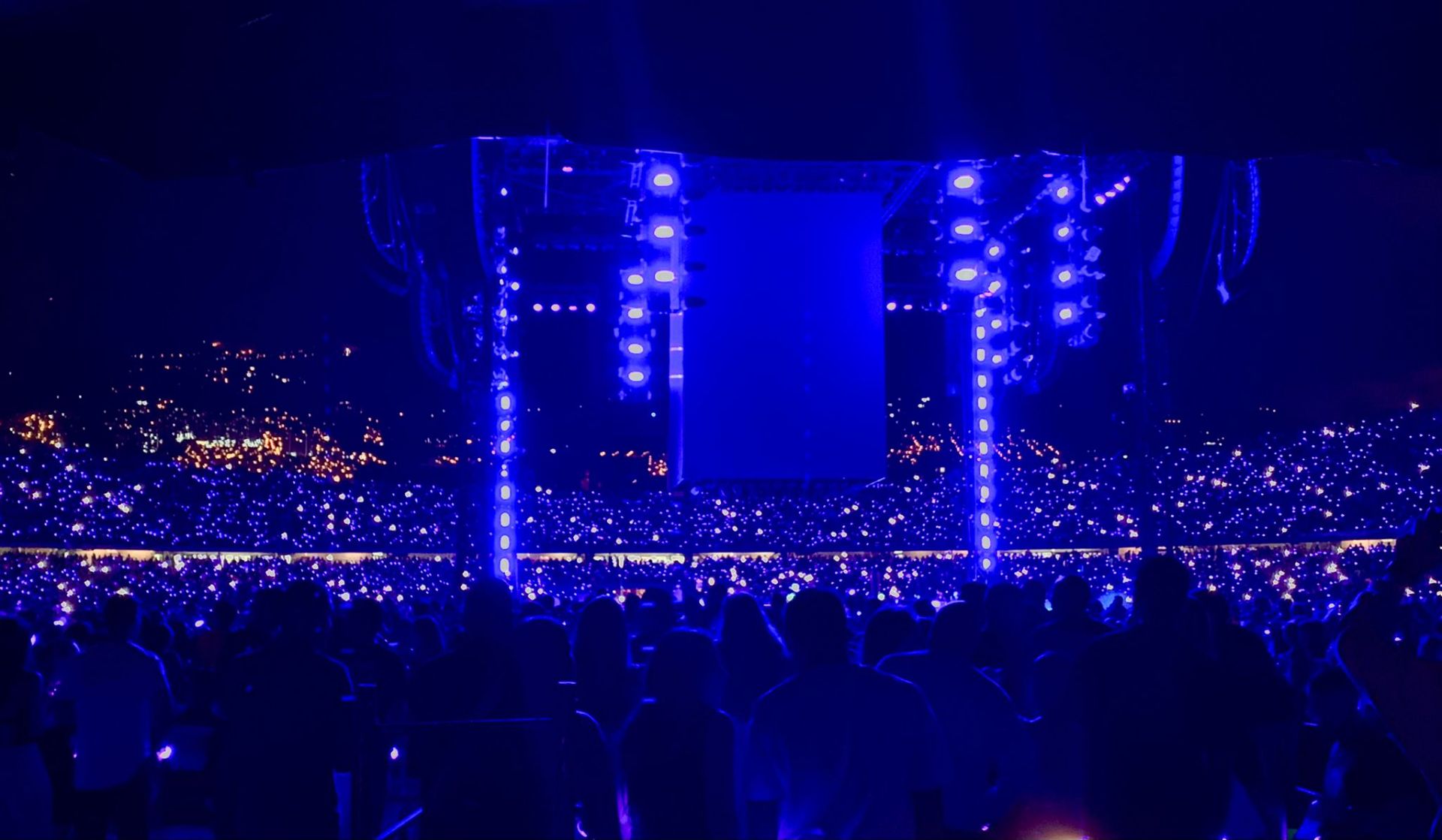
This was the core idea that led to the invention of Xylobands. The sight of thousands of fans at Glastonbury during Coldplay’s set sparked a question: what if every single person could be a pixel in a show-wide light display? This vision, which famously came to life on the Mylo Xyloto tour, established a new grammar for live events. Suddenly, with Radio Controlled LED Wristbands, it was possible to choreograph the crowd with the same precision as the on-stage lighting rig. The audience wasn’t just watching a light show; they became a living, breathing part of it.
Today, this technology has matured into a sophisticated ecosystem. Modern Festival Wristbands are no longer just for access control. They are programmable devices that can be triggered by RF signals to create complex, cascading patterns of light and colour across an entire arena or festival site. At events like Greece's PRIMER Music Festival, LED Bands pulsed in time with blistering electronic sets, unifying the audience and amplifying the collective energy. This is the new frontier of LED Crowd Experiences, where technology serves the profoundly human desire for connection and belonging.
A New Logic for Event Production
This technological shift demands a new logic from event producers and show designers. The "stage" is no longer a raised platform at one end of a field; it is the entire environment, and every person within it is a potential component of the artistic vision. Choreographing the audience requires a different kind of thinking—one that blends technical programming with an understanding of crowd psychology.
Key production considerations now include:
- Audience Segmentation: With programmable LED Wearables, a producer can divide a crowd into countless zones. You can make the left side of the stadium glow red and the right side blue, create pulsing rings of light radiating from the center, or spell out words across an entire seating bowl.
- Real-Time Interactivity: The lighting director can "play" the audience like an instrument, triggering effects in response to a specific drop in the music, a dramatic moment in a performance, or a key play in a sporting event.
- Narrative Integration: The light effects are no longer just decorative. They can be used to extend the narrative of the show, creating emotional arcs that ebb and flow with the performance. The slow, warm glow of thousands of Concert Wristbands during a ballad creates a sense of intimacy on a mass scale that was previously impossible.
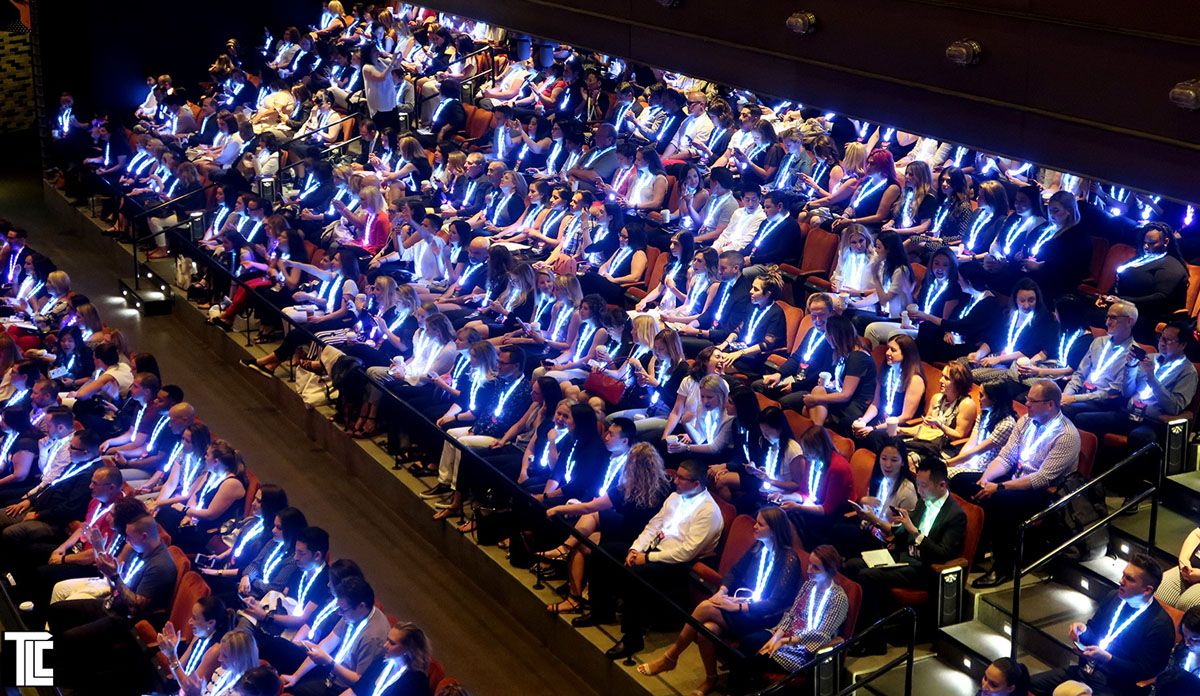
This approach has expanded far beyond traditional music festivals. At the 75th-anniversary celebration for Formula One, custom LED Lanyards were given to attendees, with different branding and programming based on their hospitality level or team affiliation. This allowed designers to create targeted visual effects, immersing every segment of the audience directly into the spectacle.
Designing for Durability and the Future
As these technologies become more central to the live experience, the conversation naturally turns to sustainability. Creating hundreds of thousands of electronic devices for temporary use carries significant environmental responsibility. The future of Immersive Events lies not just in creating stunning visuals, but in doing so responsibly.
This challenge is being met with innovative approaches to logistics and product design. For Wizkid’s historic three-night, sold-out run at London’s O2 Arena, the LED Bracelets were collected, topped up, and reused for each performance. At the end of the run, they entered a dedicated recycling stream. This circular model demonstrates that high-impact LED Experiences and environmental stewardship can go hand-in-hand.
The line between the spectator and the spectacle has irrevocably blurred. Technology has given producers the tools to transform a crowd from a collection of individuals into a sentient sea of light—a unified, responsive, and breathtakingly beautiful entity. From custom shapes like LED Orbs that can be thrown into the crowd to sophisticated lanyards, the palette is expanding. But the principle remains the same. Whether it’s Coldplay Xylobands lighting up a stadium or the subtle glow of a corporate event activation, the goal is to make every single person feel like they are part of something larger than themselves. In this new era of festival production, the audience is no longer just watching the canvas. They are the canvas.