The Audience as the Medium: A Short History of Participation Tech
From Fire to Frequencies: The Unfolding Story of Audience Connection
The story of live performance is, in many ways, the story of the audience. From the call-and-response chants of ancient rituals to the roar of a modern stadium, the desire to connect, to participate, and to share a moment is a fundamental human impulse. But how we participate has evolved dramatically. The journey from passive spectatorship to active immersion is a fascinating tale of human ingenuity, artistic vision, and technological leaps.
The Age of Analogue: Lighters, Voices, and The Wave
For centuries, the tools of audience participation were elegantly simple, relying on the power of the human body and collective will. The voice was the original instrument of interaction—singalongs, chants, and cheers created a shared sonic landscape. Then came the physical gestures: applause, standing ovations, and the iconic "stadium wave," a ripple of coordinated human action that made the crowd a single, moving organism.
The mid-20th century introduced a new element: fire. The sight of thousands of flickering lighters held aloft during a ballad became an iconic symbol of concert culture. It was a visual declaration of unity, a thousand small flames creating one powerful glow. This was perhaps the first instance of mass audience illumination, a precursor to the sophisticated light shows that would follow. While beautiful, it was spontaneous, uncontrolled, and fundamentally analogue.
The Digital Dawn: From Phones to Pixels
The arrival of the mobile phone in the late 1990s and early 2000s marked the next major shift. The lighter flame was replaced by the backlit screen. While this brought a new digital dimension to the audience landscape, it often created a sea of distractions, pulling focus from the stage and onto the small device in one's hand. The light was there, but the shared, synchronized experience was not.
This era highlighted a critical challenge for artists and event producers: how do you harness the audience's desire to participate without sacrificing the immersive, collective experience? How do you turn thousands of individual points of light into a single, cohesive canvas?
The Xylobands Revolution: A New Language of Light
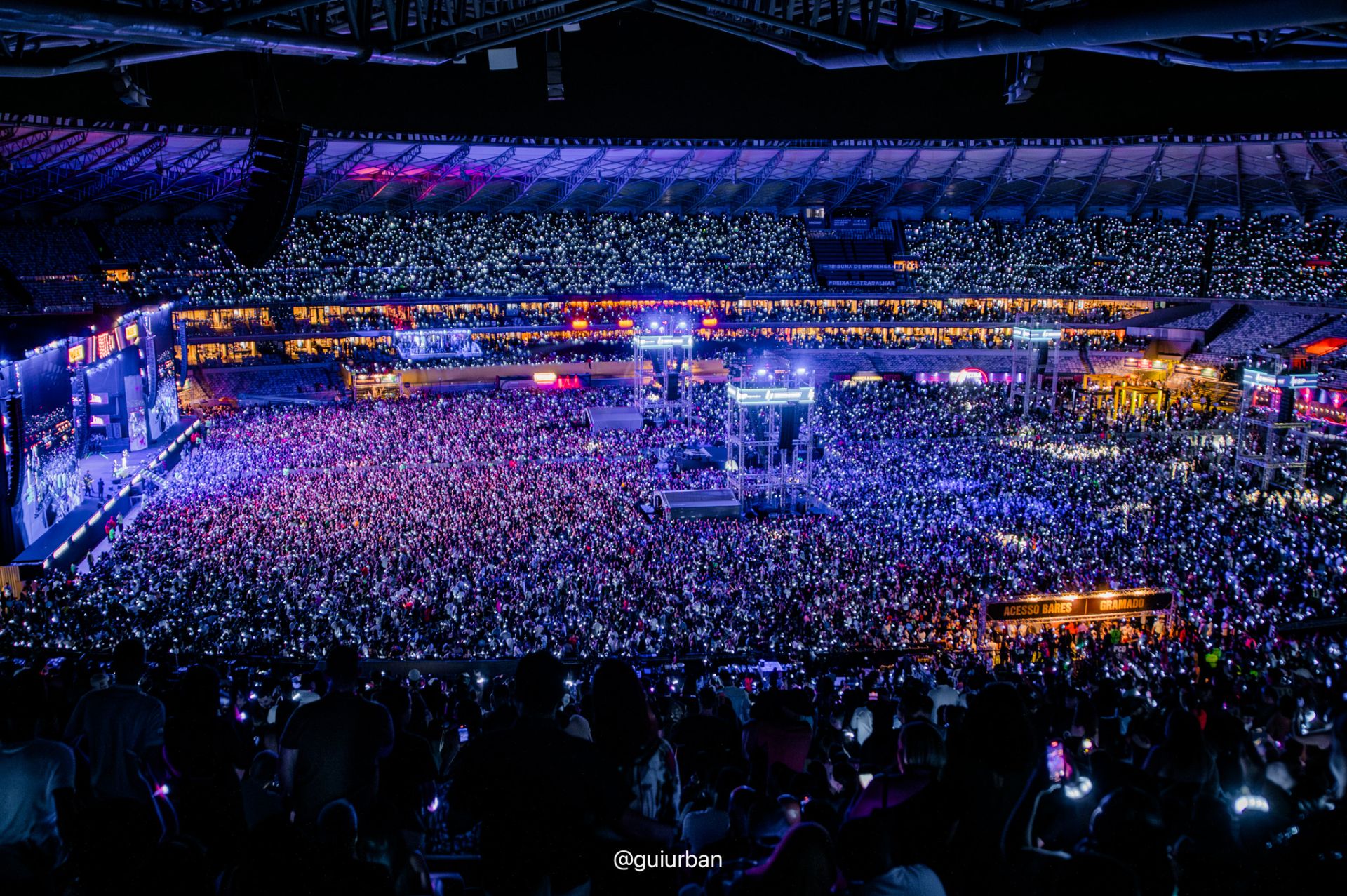
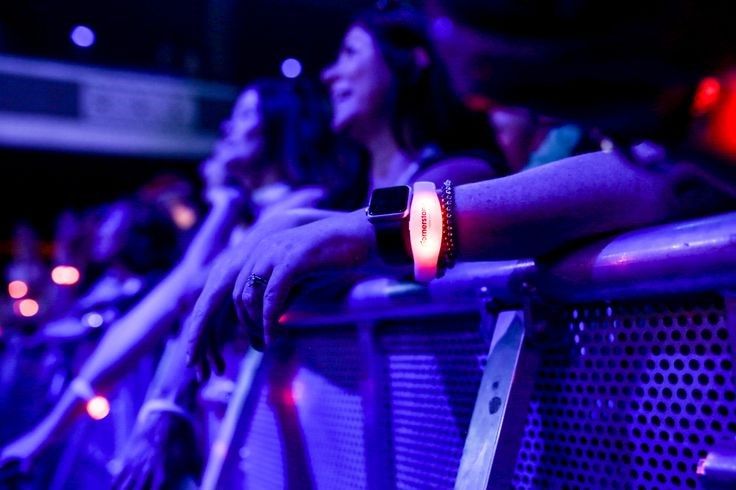
The answer arrived in 2012. The idea, born from watching a Coldplay performance, was to turn every audience member into a pixel in a vast, moving light show. This is where Xylobands entered the story, pioneering wearable LED technology that could be controlled remotely and synchronized to music, video, and stage lighting cues.
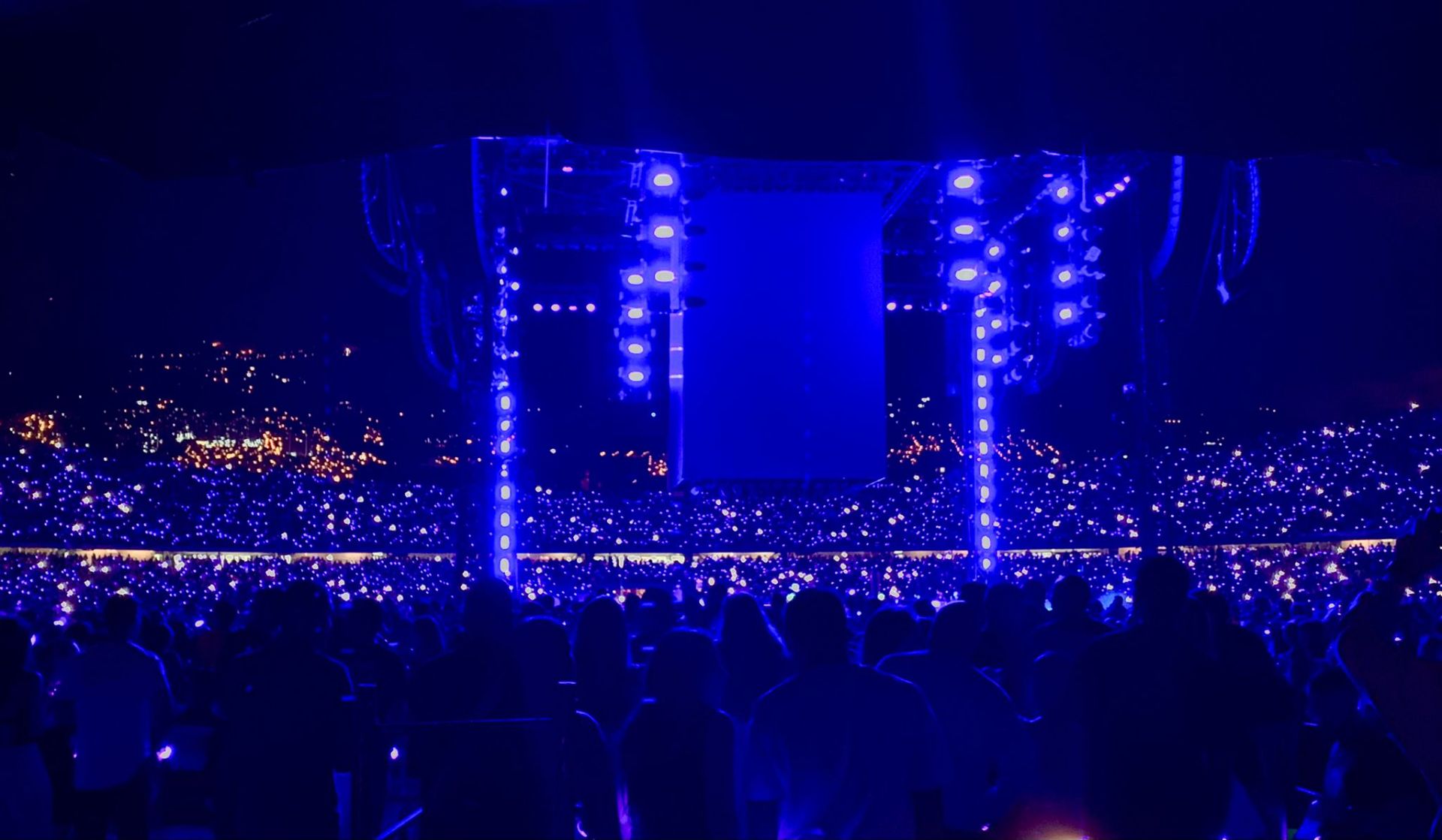
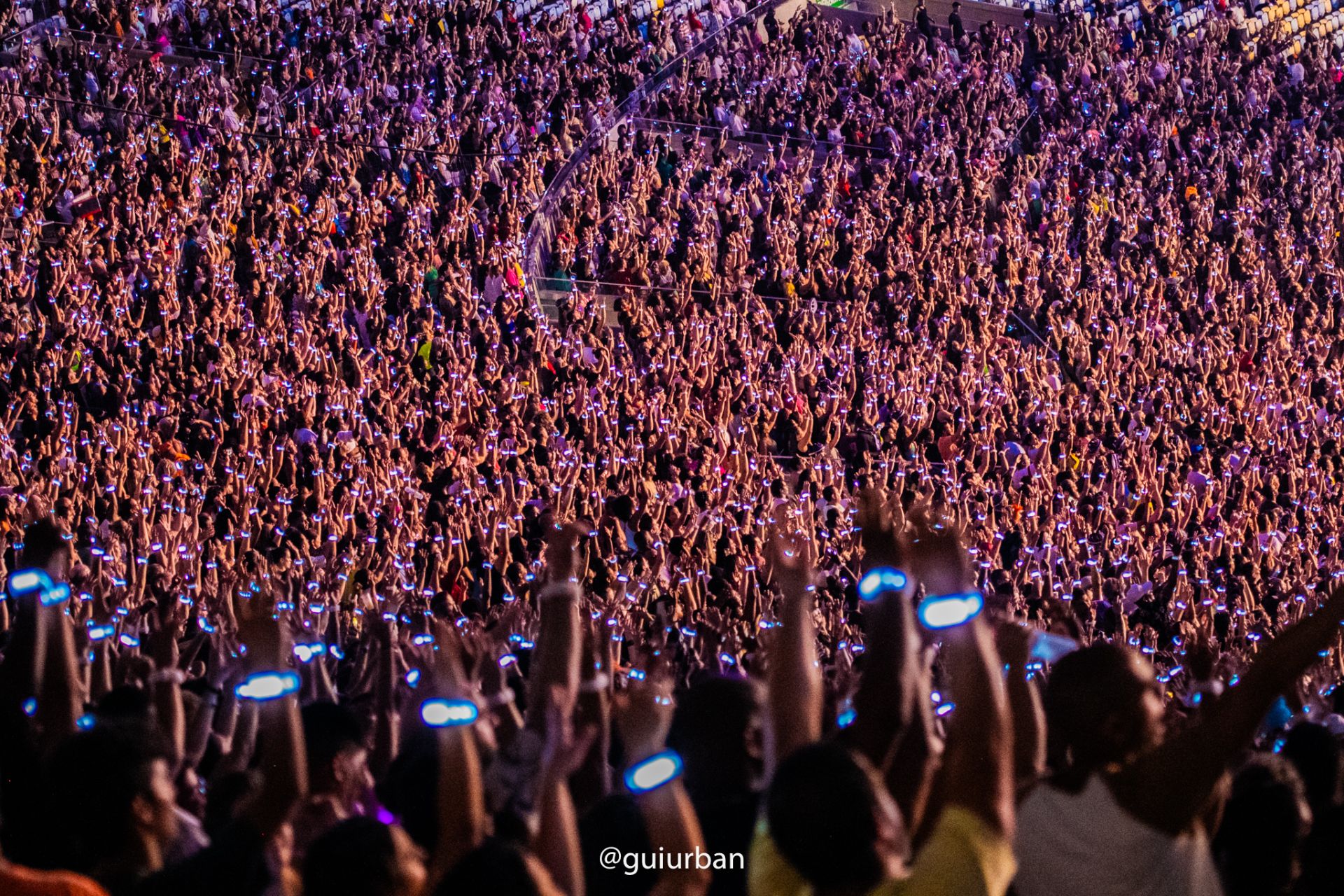
Suddenly, the audience wasn't just watching the show; they were the show. The Coldplay Xylobands phenomenon on the Mylo Xyloto tour demonstrated the profound potential of this new technology. It transformed passive spectators into an active, pulsating part of the performance itself. This wasn't just a technological innovation; it was a philosophical one. It redefined the relationship between artist and fan, blurring the lines between the stage and the seats and creating unprecedented moments of unity.
"Instead of thousands of people holding up lighters or mobile phones, the entire audience could become one living light show, perfectly synchronised with the music."
The Modern Canvas: RF, Infrared, and Immersive Experiences
The years since have seen a rapid evolution in LED event technology. The core concept has expanded beyond concert wristbands to a whole ecosystem of LED wearables and controllable devices, including LED lanyards, pendants, and even LED orbs. The control systems have also grown more sophisticated. Using a combination of RF (Radio Frequency) and Infrared (IR) signals, designers can now "paint" with light across a stadium, creating complex patterns, spelling out words, and isolating specific sections of the crowd for dynamic effects.
This level of control has unlocked new creative possibilities for all types of live events:
- Major Music Festivals: At events like Greece’s PRIMER Music Festival, festival wristbands pulse in time with electronic beats, uniting tens of thousands of fans in a shared rhythmic experience.
- Global Sporting Events: From the Davis Cup to Formula One, synchronized light shows build electrifying pre-game and halftime atmospheres, turning a sports venue into a breathtaking spectacle.
- Corporate Event Activations: Brands now use immersive event technology to transform standard corporate gatherings into unforgettable moments, reinforcing brand messages and creating a powerful sense of community among attendees.
- Live Broadcasts: For televised events like 'Beat The Chasers,' radio controlled LED wristbands make the studio audience an integral, visible part of the broadcast, enhancing the experience for viewers at home.
The Future is Interactive
The evolution of audience participation tech is far from over. As technology advances, we can anticipate even more personalized and interactive LED experiences. Imagine a future where the data generated by LED bands—movement, location, energy levels—can influence the show in real time, creating a feedback loop between the crowd and the performers. The audience becomes a living sensor, a co-creator of the event.
From a simple flame to a synchronized, data-driven light show, the journey of audience participation reflects our enduring quest for connection. The technology has changed, but the goal remains the same: to transform a gathering of strangers into a unified community, bound together by a shared moment of wonder. The audience is no longer just the audience; it is the medium, the canvas, and an integral part of the spectacle itself.