The Architecture of Awe: Modern Lighting Design for Arenas and Stadiums
From Blank Canvas to Breathtaking Spectacle
An empty arena is a study in potential. A silent, cavernous space of concrete and steel, waiting for an identity. For a tour lighting designer, this is the canvas. Their job is not merely to illuminate a stage but to give the entire volume an emotional architecture. It’s a discipline that blends physics, psychology, and pure showmanship, transforming a neutral space into a universe of shared experience for 20,000, 50,000, or even 80,000 people at a time.
Designing for today’s largest venues requires a unique understanding of scale, distance, and human perception. What reads as a powerful, intimate gesture in a theatre can be utterly lost in the upper tiers of a stadium. The modern lighting designer’s playbook must therefore be architectural, considering sightlines not just to the stage, but across the entire audience. It’s about creating a show that feels personal to every single attendee, from the front row to the furthest seat in the house.
The Three Horizons of Arena Lighting
Effective arena and stadium lighting design operates on three distinct but interconnected horizons: the stage, the house, and the space in between.
1. The Stage: The Focal Point
This is the narrative center. All lighting here serves to direct focus, sculpt the performers, and establish the immediate emotional context of a song or segment. Key lighting carves artists out from the background, backlight creates separation and a powerful silhouette, and a meticulously planned array of spots, washes, and strobes provides the core visual energy. The stage is the anchor of the story, the place where the artist’s vision is most concentrated.
2. The House: The Living Set
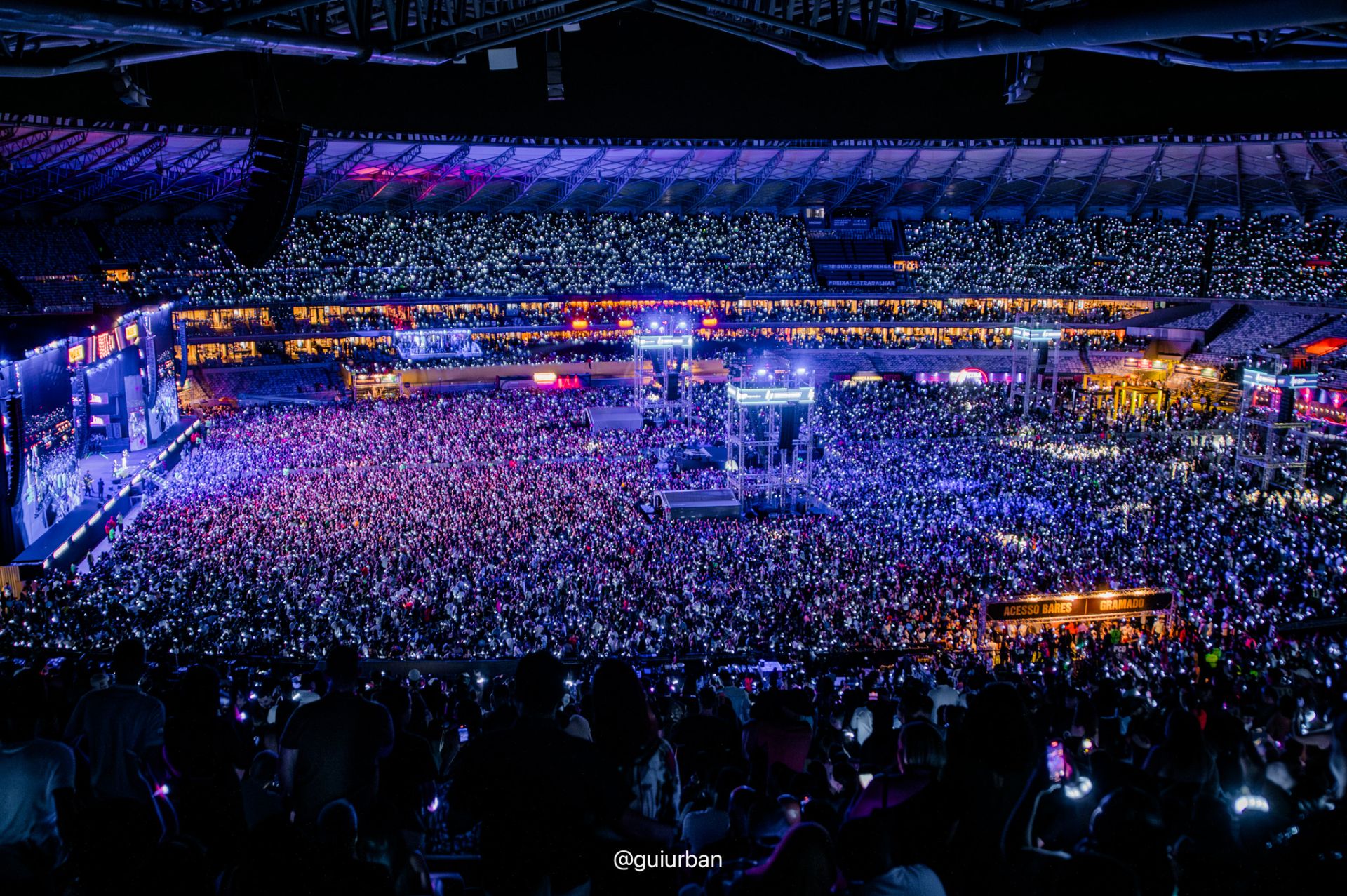
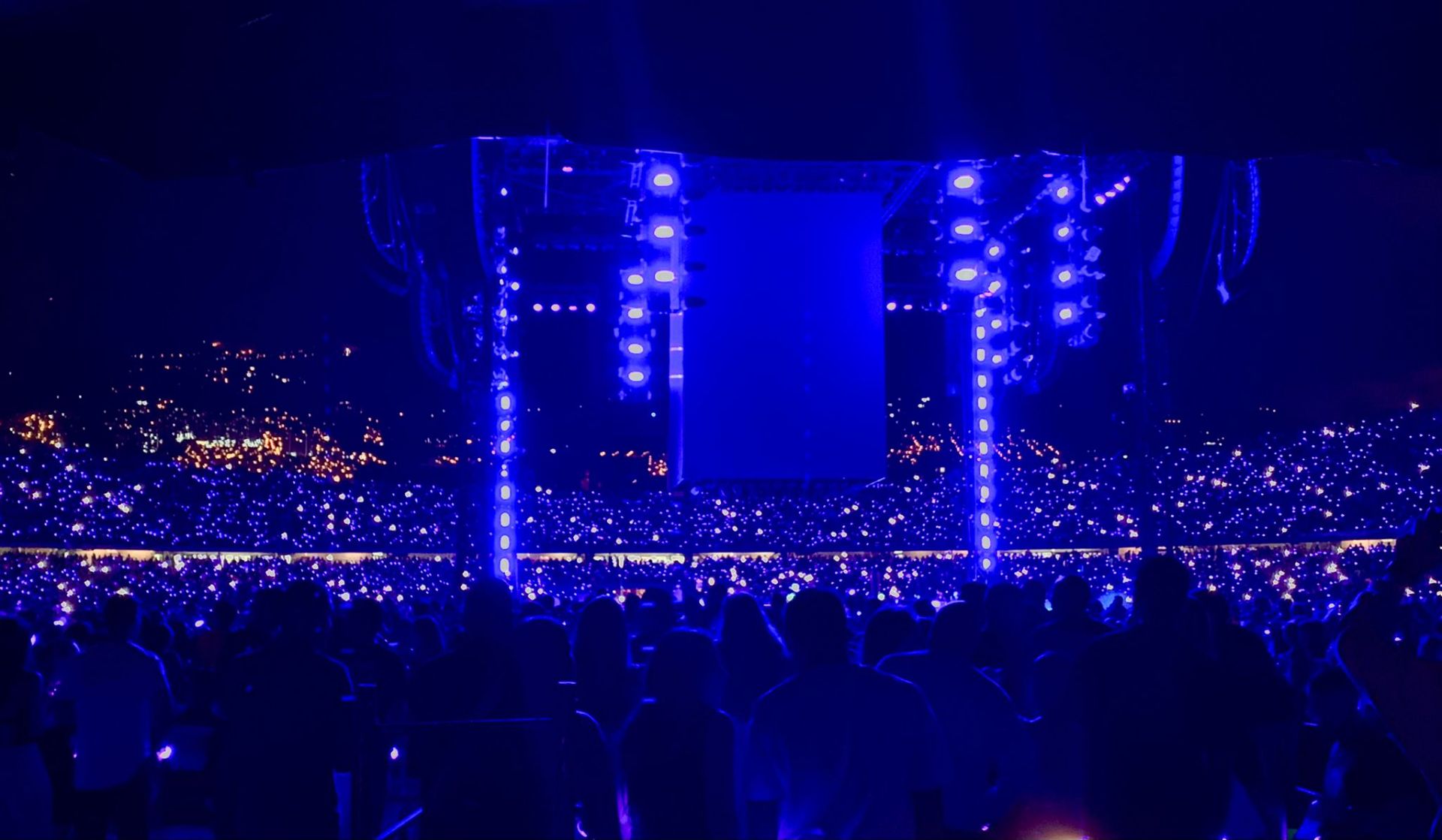
In modern tour production, the audience is no longer a passive observer; they are part of the set. This is where technologies like Xylobands have fundamentally changed the game. By turning every audience member into a pixel in a venue-wide canvas, designers can dissolve the barrier between the performer and the crowd. This isn’t just about flashy effects; it’s a powerful tool for unification. When 50,000 LED wristbands pulse in unison to a beat, as they did for Maluma’s historic Medellín homecoming concert, the sense of collective energy is tangible. It transforms a sea of individuals into a single, sentient entity, sharing one heartbeat. This is the essence of LED crowd experiences.
3. The Air: The Atmospheric Medium
The vast, empty volume of air between the stage and the seats is the third canvas. This is where atmosphere is born. Through the careful use of haze and fog, beams of light become solid, architectural structures. They can form cages, tunnels, and shimmering curtains, making the space itself feel dynamic and alive. This ‘beam show’ is crucial in large venues, as it provides a sense of scale and depth that can be appreciated from every angle, ensuring the fans in the back rows have a visual experience just as compelling as those at the barrier.
Choreographing Light on a Grand Scale
The true artistry of arena lighting lies in the choreography—the seamless integration of these three horizons into a single, cohesive narrative. It’s a dance between revealing and concealing, between overwhelming the senses and creating moments of stark simplicity.
"The best lighting design supports the emotional arc of the show. It’s not about using every light in every song. It’s about knowing when to hold back and when to go all in."
This principle of dynamic range is paramount. A relentless barrage of strobes and lasers quickly leads to sensory fatigue. The most impactful moments often come from contrast. Imagine a high-energy, full-throttle light show suddenly dropping to a single spotlight on the artist, with the entire stadium plunged into darkness. The sudden intimacy is breathtaking. Conversely, following a quiet acoustic moment by igniting the entire audience with synchronized concert wristbands creates a powerful, explosive release of energy.
The Audience as the Final Layer of Light
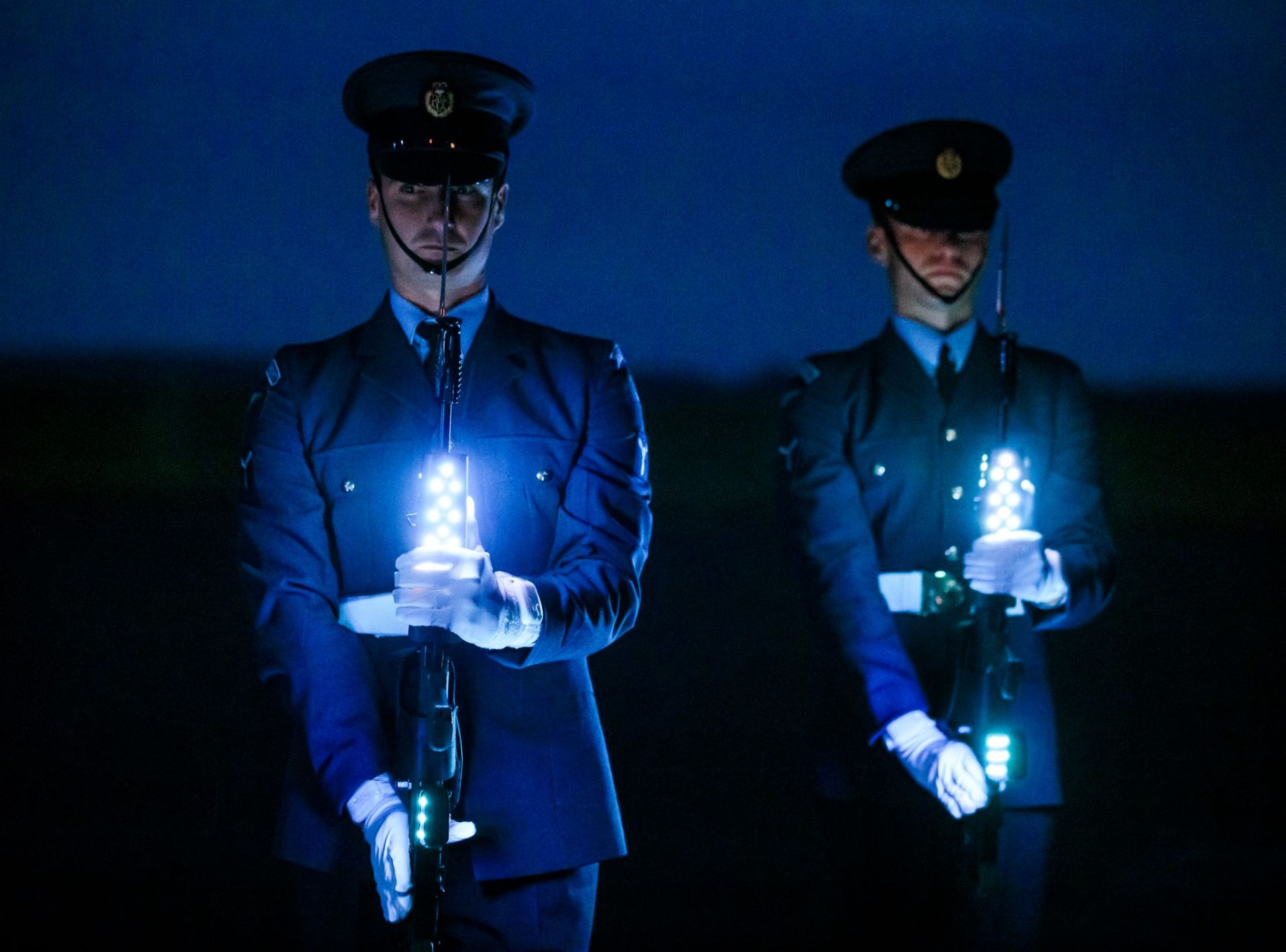
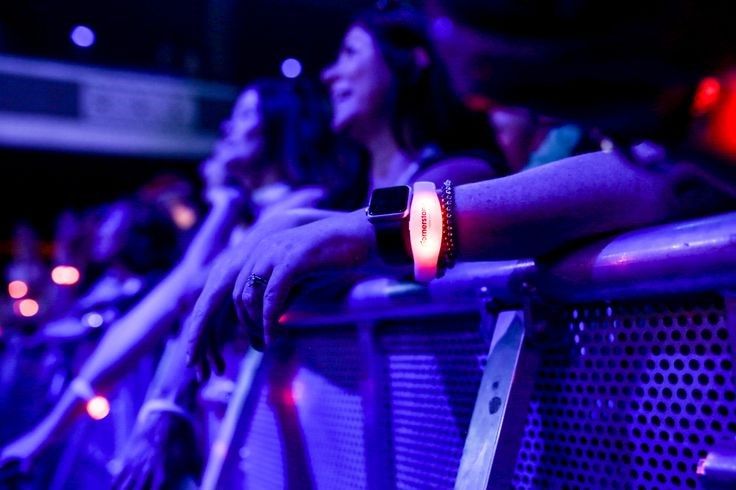
Ultimately, the goal of modern tour lighting is to create a fully immersive event technology stack where the audience is the final, and most important, layer. Technologies that invite participation, like the custom LED Lanyards used at the Formula One 75th Anniversary event or the vibrant festival wristbands at Primer Music Festival, are no longer novelties; they are essential tools for building community and creating lasting memories.
By extending the lighting design off the stage and into the hands of every fan, we transform the concert from a passive viewing into an active, collective experience. The light is no longer just something you see; it’s something you are a part of. This creates a powerful feedback loop: the audience’s energy, visualized by the light they wear, fuels the artist’s performance, which in turn inspires an even greater response from the crowd.
From the initial design sketches to the final encore, lighting for arenas and stadiums is an exercise in creating connection across vast distances. It’s about making 50,000 people feel like they’re sharing an intimate secret, painting with light on a canvas of epic proportions, and architecting moments of pure, unadulterated awe.