Beyond the Beam: A New Philosophy of Arena and Stadium Lighting
From Fixture to Feeling: Redefining the Arena as a Living Canvas
For decades, the philosophy of stadium and arena tour lighting was relatively straightforward: illuminate the artist, craft a compelling stage picture, and ensure the energy reaches the back row. The lighting rig was an instrument pointed at the stage. The audience, by and large, were spectators. But a fundamental shift is underway, driven by artists, designers, and innovators asking a more profound question: what if the venue itself is the instrument? What if every single person in the crowd could become a pixel in a grand, emotive tapestry of light?
This is the new frontier of tour lighting design. It’s a philosophy that moves beyond merely illuminating a performance to architecting a shared experience. It’s about converting the passive energy of a 50,000-strong crowd into an active, visual spectacle, transforming the cavernous spaces of arenas and stadiums into intimate, unified environments. This approach requires a radical rethinking of how light, space, and human emotion interact on a mass scale.
The Principle of Total Immersion
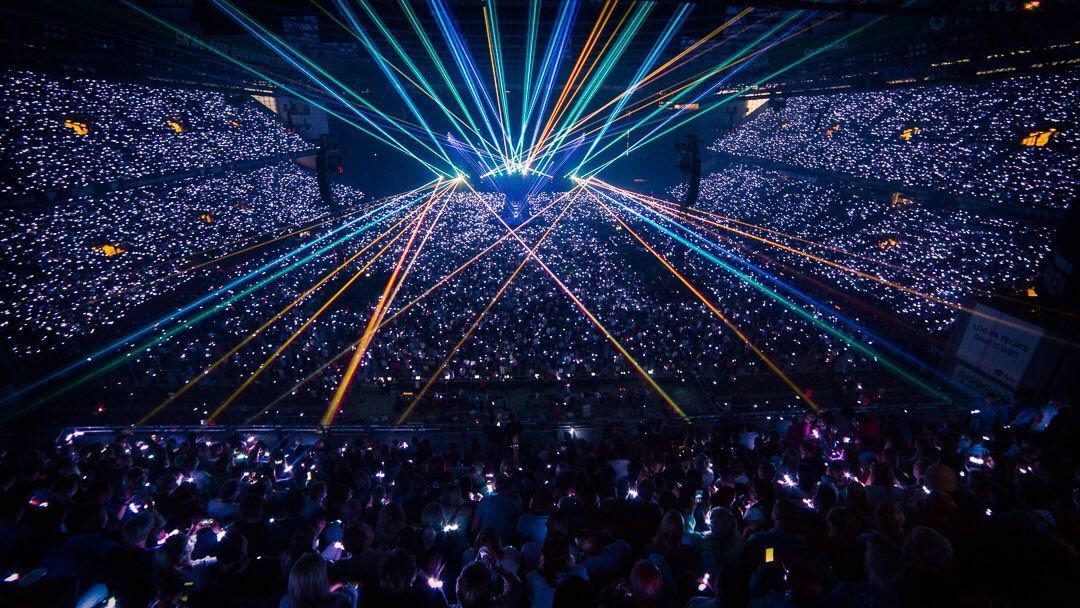
The core principle of modern large-venue lighting is total immersion. In a stadium context, the sheer distance between the stage and the furthest seats can create a sense of detachment. The challenge is to bridge that gap, and light is the most effective medium for doing so. This doesn’t just mean bigger and brighter fixtures. It means creating a cohesive, 360-degree environment where the visual language of the show extends from the stage, across the seating bowl, and into the very hands of the audience.
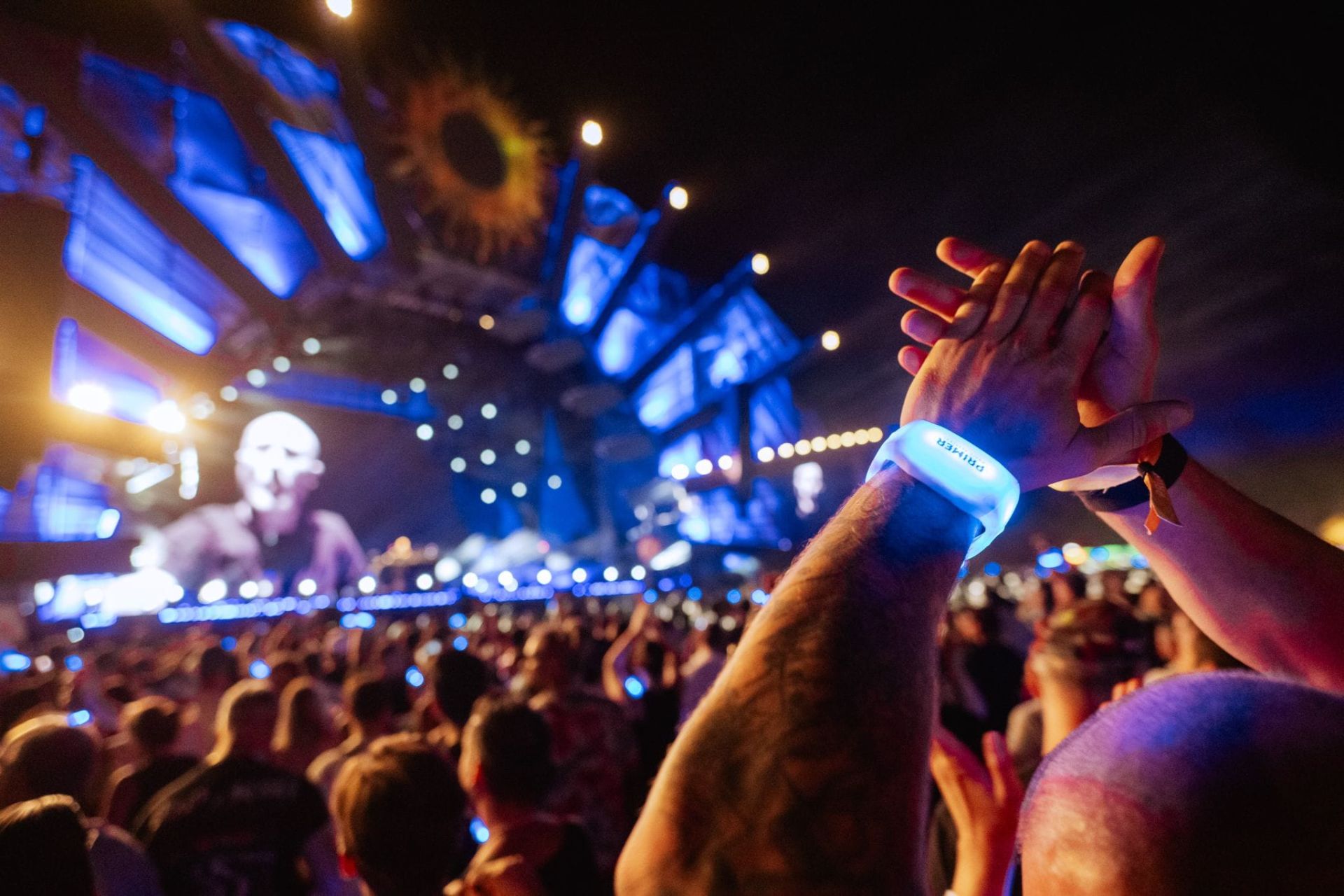
This is where wearable LED technology becomes a game-changer. By equipping each audience member with a radio-controlled device, like a Xyloband, designers can choreograph light across the entire venue. Suddenly, the crowd is no longer a passive observer but a living, breathing part of the show’s design. A single pulse of colour can ripple from front to back, a wave of light can crash across a section, or the entire stadium can plunge into a unified moment of darkness before exploding into a chorus of synchronized light. As seen on global tours for artists like Coldplay and Maluma, this turns tens of thousands of individuals into a single, cohesive canvas.
Layering Light: The Three Tiers of Arena Design
Effective stadium lighting design operates on three distinct but interconnected layers:
- The Stage Layer: This is the traditional focal point—the artist, the band, the scenic elements. Here, lighting serves to sculpt the performers, reveal scenic detail, and drive the immediate, on-stage narrative.
- The Architectural Layer: This involves using the venue’s own structure—the trusses, the roof, the side walls—as a canvas. By strategically placing fixtures to graze these surfaces, designers can change the perceived shape and scale of the room, making it feel vast and epic one moment, and surprisingly intimate the next.
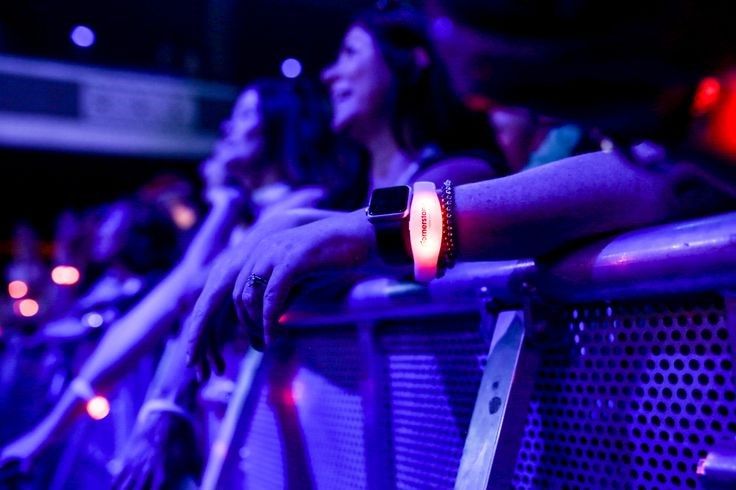
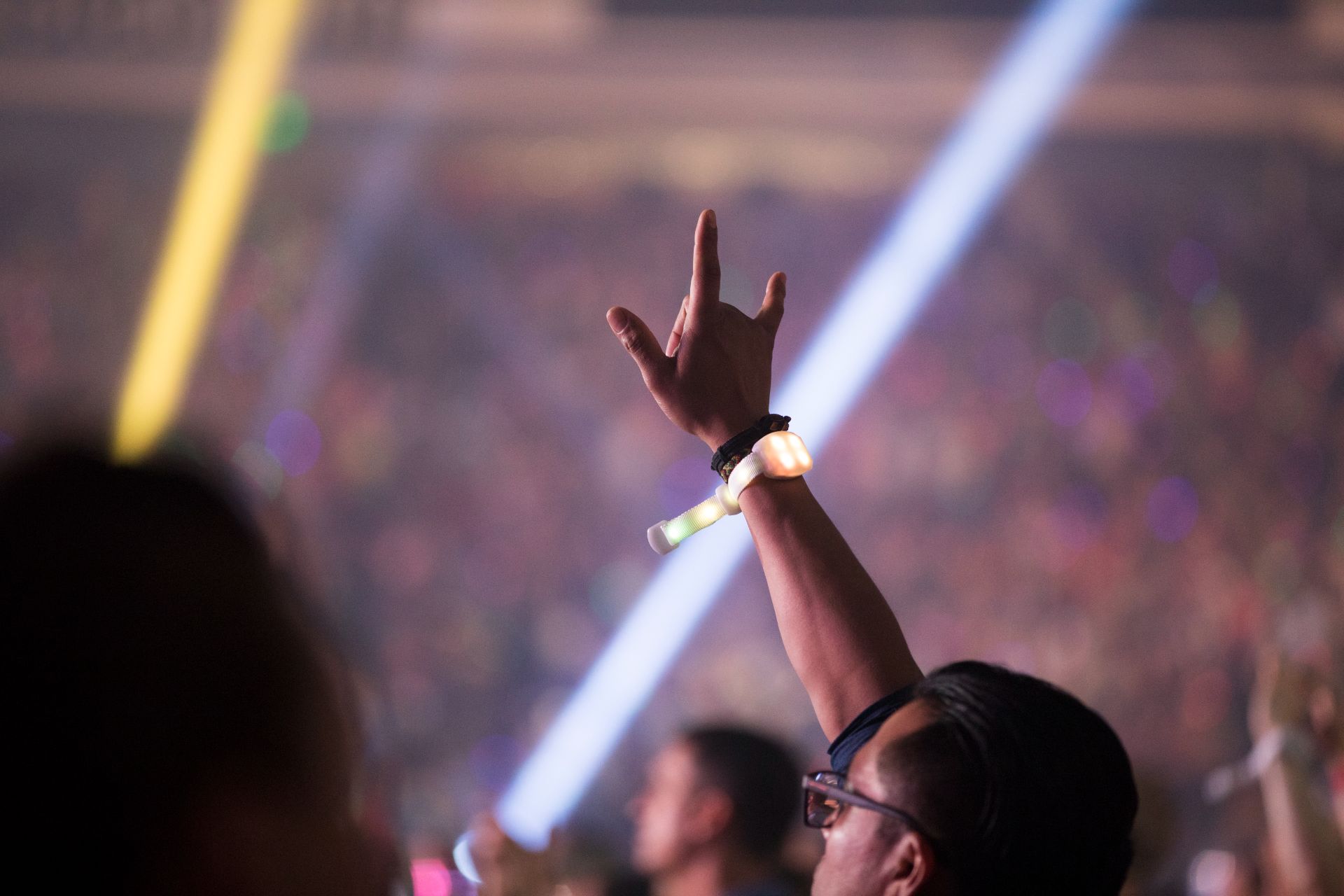
- The Audience Layer: This is the most transformative layer. Using tools like LED wristbands, LED lanyards, or even distributed LED orbs, this layer democratizes the light show. It brings the spectacle directly to the people, creating a powerful sense of inclusion and shared experience.
The true artistry lies in how these three layers are orchestrated. A song’s quiet verse might be confined to the Stage Layer, creating a tight, personal focus on the artist. As the chorus builds, the Architectural Layer might engage, flooding the arena with colour. And at the song’s peak, the Audience Layer ignites, creating a truly overwhelming moment of collective euphoria. This dynamic interplay is what defines modern immersive events.
Choreographing the Crowd: Light as a Narrative Tool
With the audience as a canvas, light becomes a powerful narrative device. A designer can use colour and movement to segment the crowd, creating visual "teams" during a sporting event or drawing attention to different sections during a concert. This was powerfully demonstrated at the Formula 1 75th Anniversary event, where custom Xylo Pendants were used to differentiate between fan zones and hospitality levels, allowing for dynamic, targeted effects that celebrated team loyalties while uniting the entire arena in key moments.
“When you hand someone a device that connects them to the show, you’re breaking the fourth wall. They are no longer just watching the spectacle; they are the spectacle. That’s a profound psychological shift.”
This capability transforms crowd lighting from a simple effect into a core part of the show’s storytelling. It allows for a level of audience interaction that was previously unimaginable, fostering the powerful limbic connections that define truly memorable live experiences. It’s the art of creating LED crowd experiences that resonate on a primal level.
The Unseen Network: Reliability at Scale
Of course, orchestrating 50,000 points of light across a stadium filled with RF interference, concrete, and steel is a monumental technical challenge. The backbone of any audience lighting system is the invisible network of radio-frequency transmitters and receivers that ensures every single wristband or lanyard fires precisely on cue, every single time. A single misfire can break the illusion.
This is why robust R&D and flawless technical deployment are non-negotiable. At Xylobands, our system was born from a desire to create mass-audience connection and has been battle-tested in stadiums and arenas across more than 70 countries. From Wizkid’s historic sell-out run at The O2 Arena to massive festival crowds at Primer Music Festival, the technology must be invisible and utterly reliable, allowing the creative vision to shine through without a flicker of doubt. This is the essence of professional LED event technology.
Ultimately, the new philosophy of stadium and arena lighting is about expanding the canvas. It’s about seeing the audience not as a collection of ticket-holders, but as a vital, vibrant, and luminous extension of the performance itself. By weaving together the stage, the architecture, and the crowd, we can design more than just a light show. We can design a collective memory, a moment of profound unity that stays with an audience long after the house lights come up.