Beyond the Stage: A New Philosophy of Light for Arenas and Stadiums
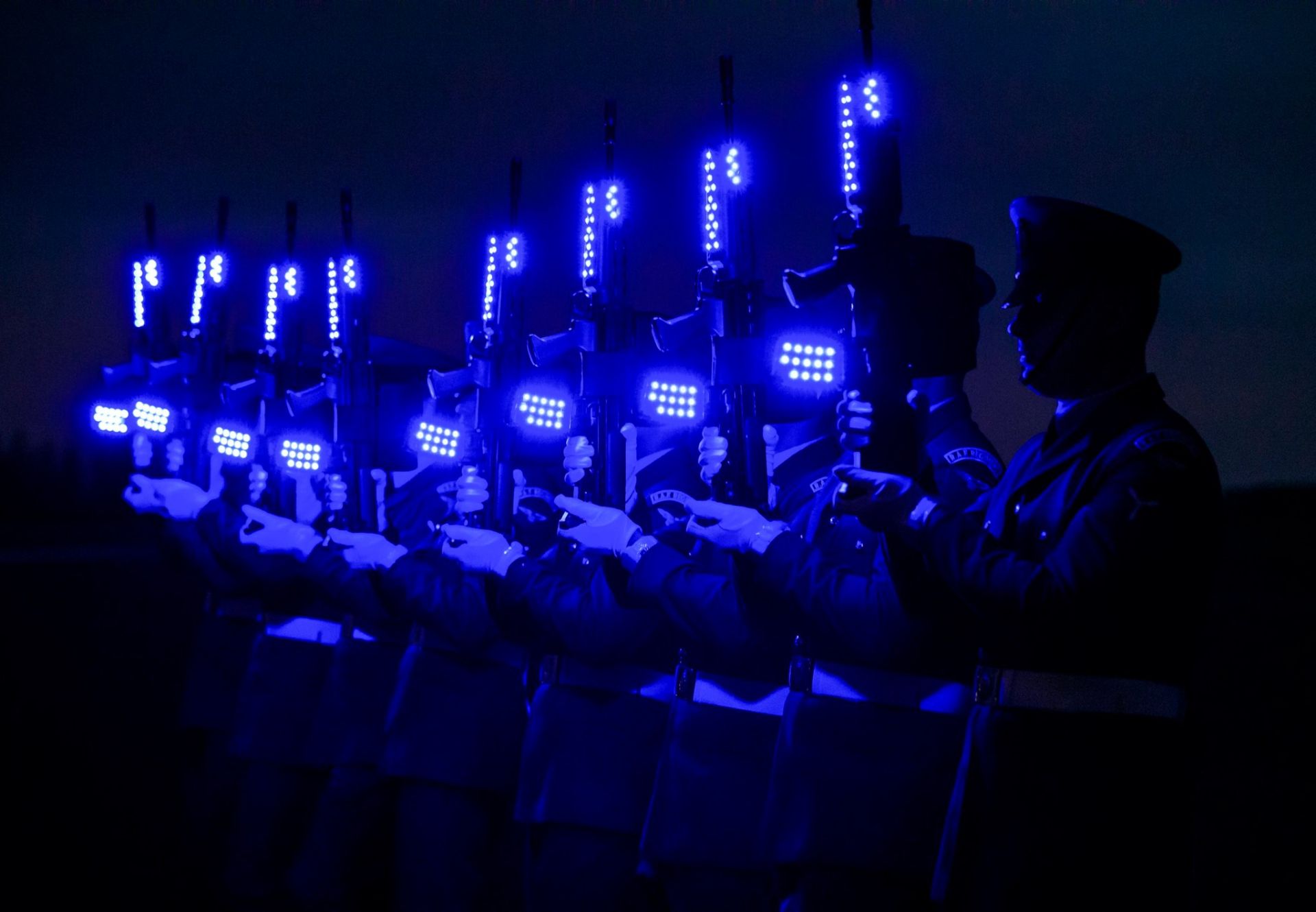
The house lights fall. A collective roar, sharp and sudden, is swallowed by the vast darkness of the arena. For a few heartbeats, 50,000 people share a single, silent anticipation. Then, it happens. Not a single spotlight on a distant stage, but an explosion of light that fills the entire volume of the space. It washes over the architecture, energizes the vertical tiers of the grandstands, and flashes across a sea of faces. This is the modern spectacle, an experience engineered not just to be seen, but to be felt. This is a new philosophy of light.
Designing for today’s largest concert tours, sporting events, and festivals is no longer a matter of simply illuminating performers. It’s an architectural and psychological undertaking. It’s about commanding immense scale, speaking to two different audiences simultaneously, and ultimately, dissolving the barrier between the artist and the crowd. It requires a move beyond the proscenium and an embrace of the entire venue as a single, unified canvas.
The Dual Mandate: Designing for the Eye and the Lens
Every modern, large-scale tour is a broadcast event. Whether for a formal live stream, like Maluma’s historic 2022 concert in Medellín streamed to over 240 countries, or for the millions of tiny lenses in every smartphone, the show must be engineered for the camera. This presents a fundamental challenge: the human eye and the camera sensor perceive light in profoundly different ways.
What appears as a vibrant, atmospheric deep red to the live audience might register as a muddy, noisy wash on camera. The subtle, moody blues that create a powerful emotional moment in the room can translate into a flat, under-lit image for those watching at home. This duality forces lighting designers into a delicate balancing act. It’s a world of color temperatures, CRIs (Color Rendering Index), and managing refresh rates to avoid flicker on screen, all while preserving the visceral, emotional impact for the fans in their seats. Mastering this dual canvas is the first and most crucial principle of modern arena lighting.
The Venue as the Instrument
An arena or stadium is not a black box to be filled with light; it is an instrument to be played. The most forward-thinking lighting designs don’t fight the architecture—they collaborate with it. The sweeping curves of the seating bowl, the steel geometry of the roof trusses, the concrete canyons of the access vomitories—these are all surfaces waiting to be activated. Light can make a 60,000-seat stadium feel impossibly vast one moment, and intimately close the next.
This approach requires designers to think three-dimensionally, considering sight-lines not just to the stage, but from every possible angle. It’s about creating texture, depth, and a sense of place. The negative space—the air between the stage and the last row—is as important as the performers themselves. By painting this volume with light, fog, and atmospheric effects, designers give the energy of the performance a tangible, visible form that can fill even the most cavernous of venues.
The Living Canvas: Turning the Crowd into the Spectacle
For decades, the audience was a passive recipient of the light show. Today, the audience *is* the light show. This fundamental shift from spectator to spectacle is arguably the most significant evolution in live event production, unlocking a new and profound level of communal experience. The idea that sparked Xylobands at the Glastonbury Festival—seeing the crowd and artist united as one during Coldplay’s performance of “Fix You”—has blossomed into a core principle of immersive design.
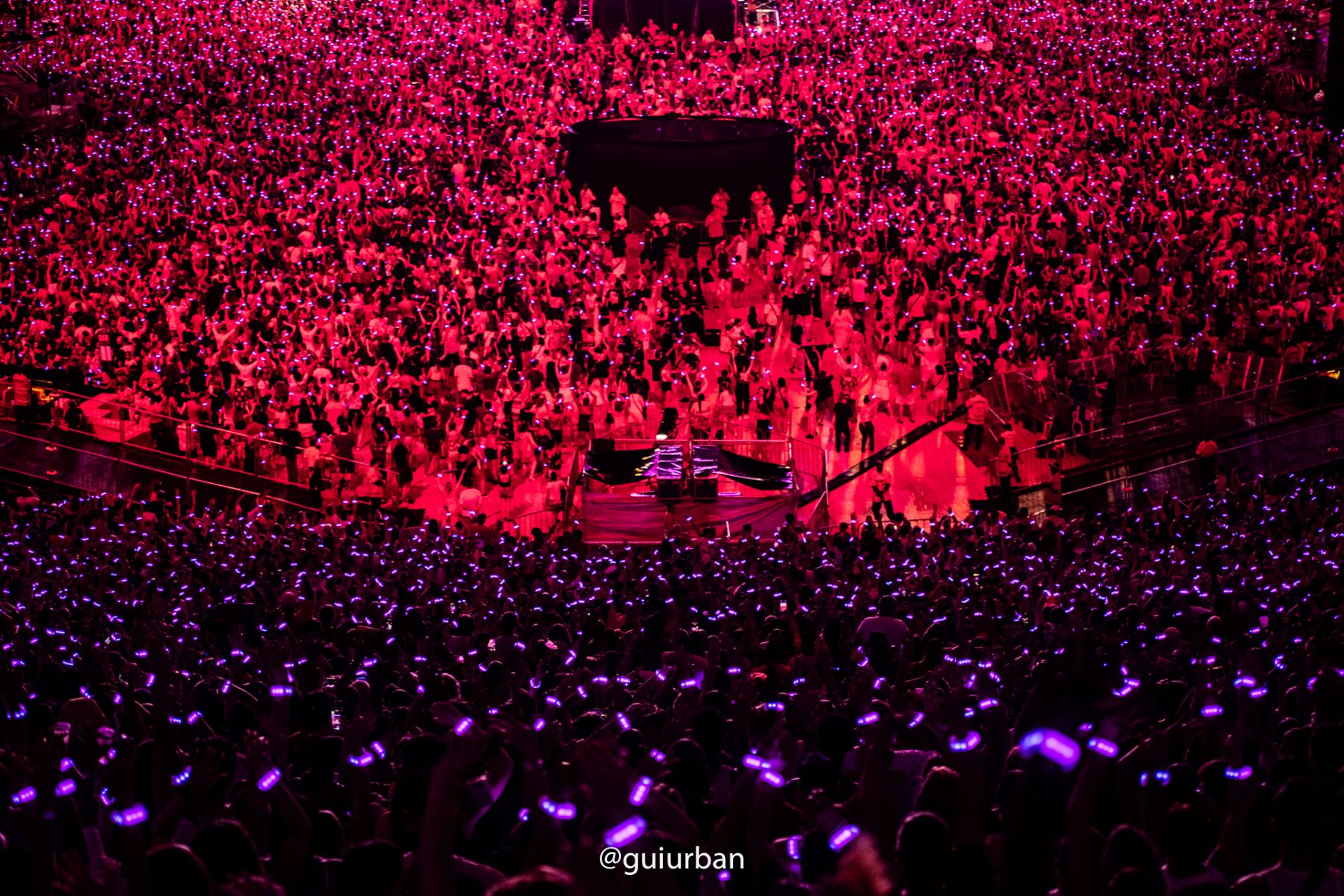
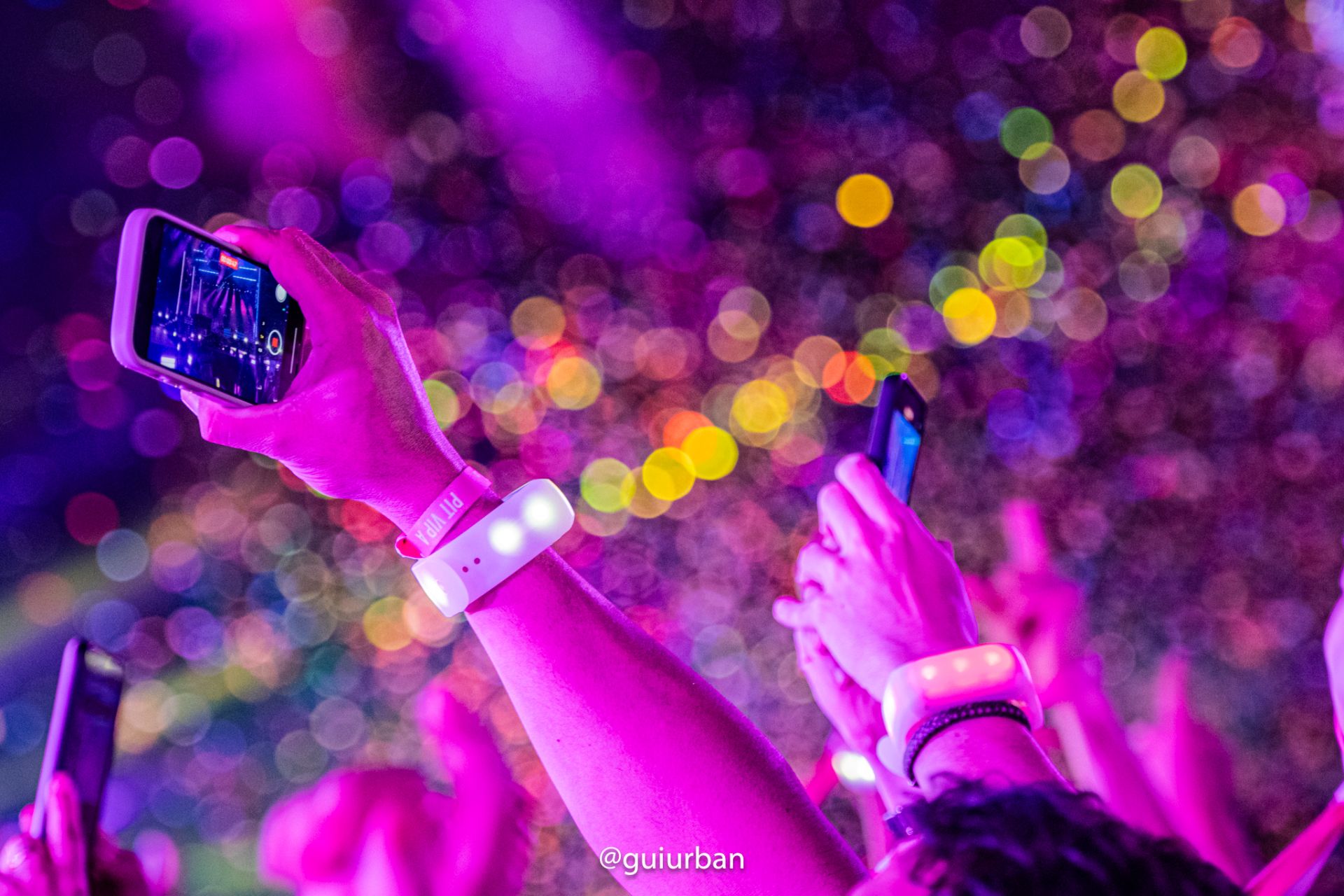
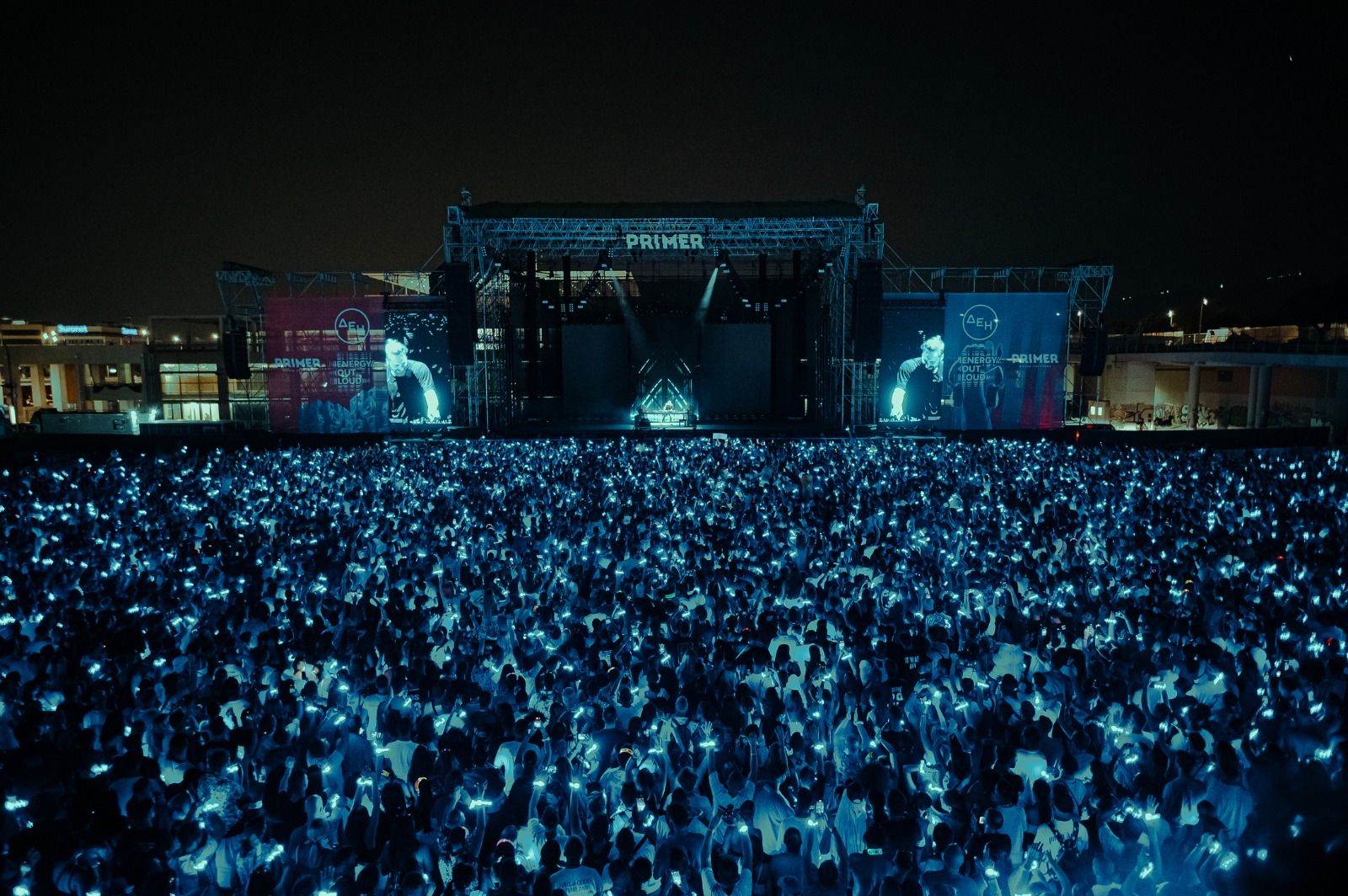
By deploying Wearable LED Technology like our Xylo Bands or custom LED Lanyards, every single audience member becomes a pixel in a monumental display of light. Suddenly, the grandstands are not just seating; they are a 360-degree video screen. This technology, powered by robust RF control, allows designers to send waves of color pulsing through the stadium, create intricate, synchronized patterns, and mirror the action on the stage across tens of thousands of people. It’s a powerful tool for visual storytelling, as seen at everything from Wizkid’s sold-out O2 Arena shows to the 75th-anniversary celebration of Formula One.
This is more than an effect; it’s a psychological alchemy. The technology creates a powerful sense of unity and shared purpose. When 50,000 Concert Wristbands illuminate in perfect sync, the personal experience becomes a collective one. The boundary between ‘me’ and ‘we’ dissolves. For the duration of the show, the audience is no longer just a collection of individuals but a single, living entity, breathing and glowing with the rhythm of the performance. This is the apotheosis of Immersive Event Technology—crafting powerful LED Crowd Experiences that are emotionally resonant and visually stunning.
The Kinetic Score: Choreographing Light with Narrative
A stadium show is not a static image; it’s a two-hour narrative with an emotional arc. The lighting must follow that story. It is a kinetic score, choreographed with the same precision as the music and performance. The velocity of a moving light, the fade rate of a color change, the sharp punctuation of a strobe—every element contributes to the pacing and energy of the show.
This choreography relies on a seamless integration of technologies, from DMX-controlled fixtures on the main rig to the Radio Controlled LED Wristbands on every wrist. The “invisible conductor,” our proprietary control system, allows a single operator to orchestrate this entire ecosystem of light in perfect harmony. The goal is to create a dynamic journey, moving from explosive, full-throttle crescendos to moments of stark, singular intimacy, ensuring the emotional connection between artist and audience is never broken, no matter the scale of the room.
Ultimately, the modern philosophy of arena and stadium lighting is one of connection. It’s about using technology and design not to distract, but to deepen the bond between everyone in the venue. By designing for the camera, playing the architecture, activating the audience, and choreographing every photon, we transform a gathering of thousands into a singular, unforgettable spectacle. We go beyond the stage to create a universe of light, with the human experience at its very center.