The Broadcast-Ready Spectacle: Lighting for the Lens and the Live Audience
The Two-Audience Imperative
In the world of major live events, the audience is no longer confined to the arena. Millions more watch from screens across the globe, creating a fundamental challenge for production designers: how to light for two very different audiences simultaneously. The energy and raw visual spectacle required to captivate a stadium-sized crowd must be balanced with the technical precision demanded by the broadcast camera. This is the new reality of live production—a world where every beam of light, every colour wash, and every synchronised flash serves both the human eye and the unforgiving lens.
This dual-focus approach has become standard for everything from international sporting events like the Formula One 75th Anniversary show and the Davis Cup finals to blockbuster music broadcasts like Maluma’s historic hometown concert in Medellín, which was streamed live in over 240 countries. The at-home viewer is not a secondary consideration; they are an equal part of the experience. Their perception of the event is shaped entirely by what the camera captures. A lighting scheme that feels electric in person can appear chaotic or poorly exposed on screen, while a show designed purely for broadcast may feel sterile to the live audience. The art lies in mastering the middle ground.
The Camera as the Ultimate Arbiter
Broadcast cameras have a different relationship with light than the human eye. They are less forgiving of rapid changes in intensity, struggle with extreme contrast, and can reveal flaws in colour temperature that are imperceptible in person. This is where the technical discipline of broadcast lighting comes into play.
Key Technical Considerations:
- Colour Temperature and CRI: Consistency is paramount. All lighting elements, from key lights on performers to large-scale atmospheric effects, must have a consistent colour temperature to avoid jarring shifts on camera. A high Colour Rendering Index (CRI) is essential to ensure that colours—from artist wardrobes to sponsor branding—are rendered accurately for the broadcast audience.
- Flicker-Free Operation: Many LED fixtures can produce a subtle flicker that is invisible to the naked eye but becomes a distracting strobe effect on camera, particularly during slow-motion replays. Sourcing professional, flicker-free fixtures is a non-negotiable for any broadcast event.
- Controlling Dynamic Range: The human eye can handle a vast range of brightness, but a camera’s dynamic range is limited. Lighting designers must manage the contrast between the brightest and darkest parts of the stage to avoid "crushed" blacks or "blown-out" highlights, ensuring detail is preserved across the entire frame.
Painting with Light, Pixel by Pixel
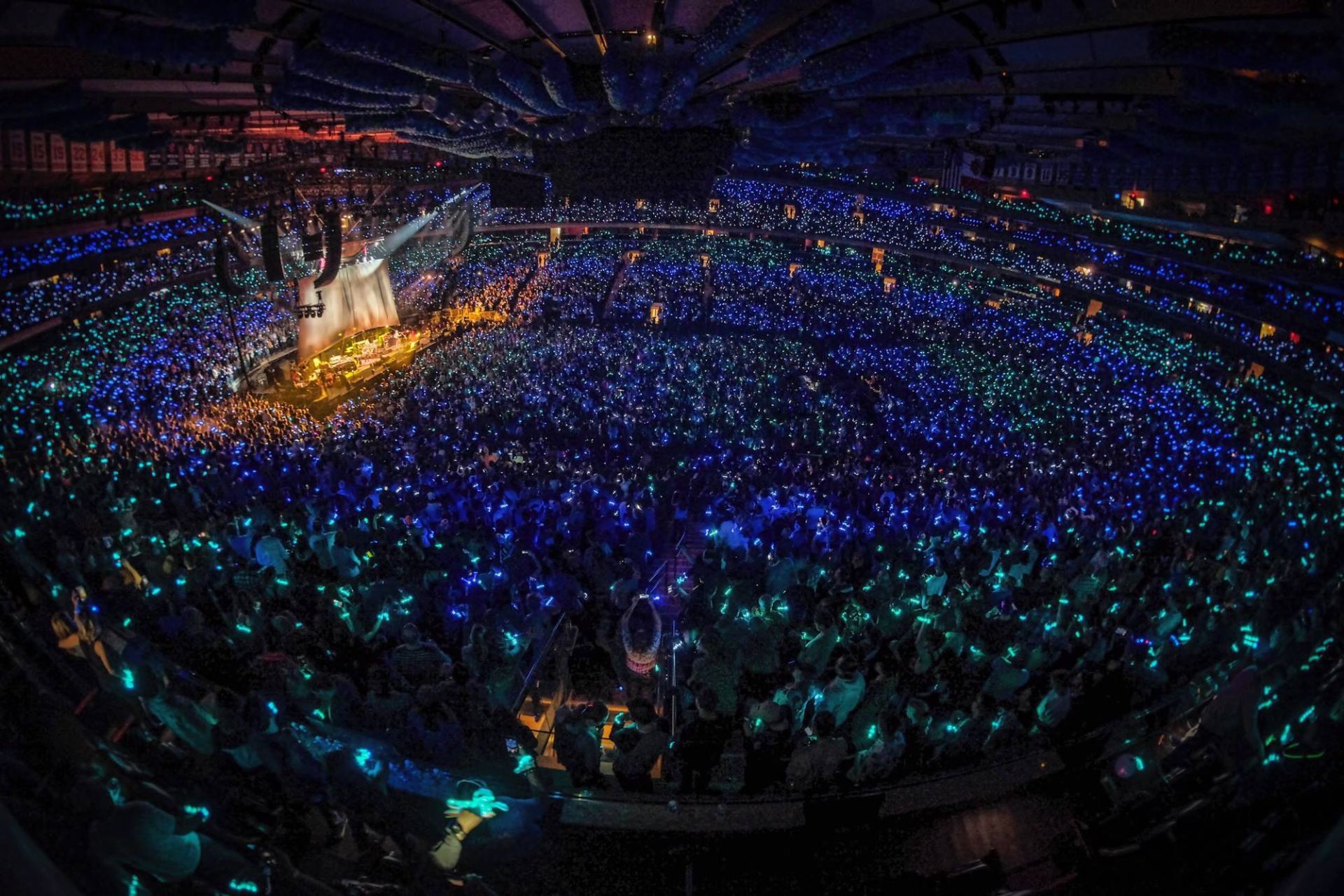
While technical constraints are crucial, the creative mandate is to build a world that feels immersive for everyone. This is where crowd-based LED experiences come to the forefront. By turning the audience itself into a canvas, designers can create large-scale visual moments that translate powerfully to the screen while enveloping the live attendee in light.
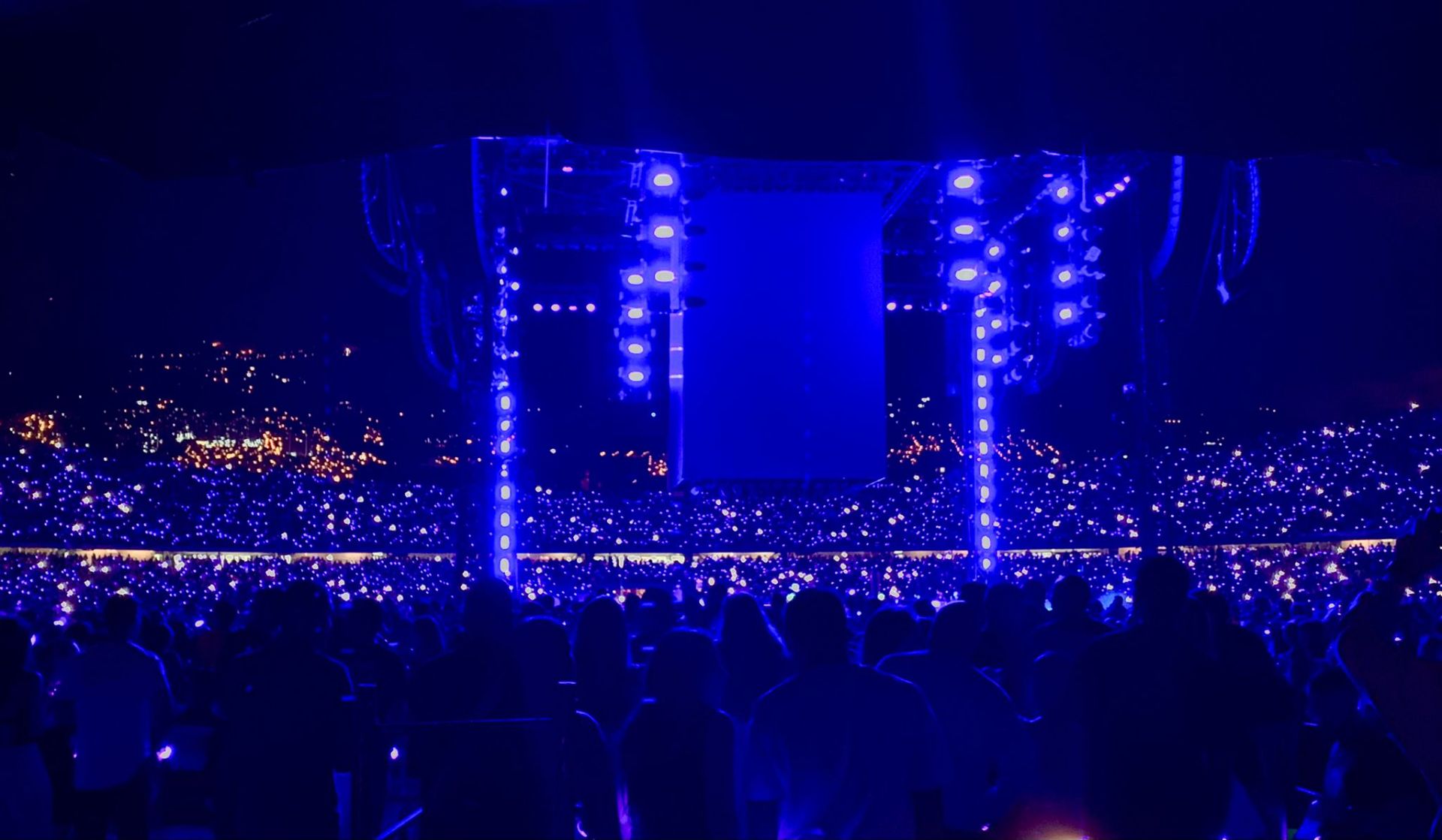
When Xylobands are deployed across a venue, they effectively transform the crowd into a living, breathing video display. This has several distinct advantages for a broadcast event:
- Creating Depth and Scale: For the camera, an illuminated crowd provides a dynamic, textured background that adds immense depth to wide shots. Instead of a dark, anonymous mass of people, the broadcast director can frame shots against a backdrop of pulsing, synchronised light, making the scale of the event feel even more epic. This approach has been used to great effect on television productions like Beat The Chasers UK and Dancing With The Stars.
- Camera-Friendly Effects: Complex patterns, colour chases, and branding moments can be programmed into the radio controlled LED wristbands. These effects are designed to be clean and legible for the camera, providing producers with visually stunning, reliable cues that enhance the broadcast narrative.
- Audience as a Lighting Element: Instead of fighting to light a massive crowd with traditional fixtures, which can spill onto the stage and interfere with key lighting, wearable LED technology allows the audience to become a source of light itself. This creates a vibrant, immersive environment for those in the room without compromising the carefully controlled lighting on the performers.
The Unseen Integration
“The goal is to create a single, cohesive visual story. The lighting on stage, the video content on the screens, and the light on every single wristband in the audience should feel like they are all part of the same design language. When that happens, the barrier between the live and broadcast experience dissolves.”
The successful integration of these elements hinges on a unified control system. Technologies like RF (Radio Frequency) and DMX allow a single lighting operator to control every fixture in the rig—from the moving lights on the gantry to the thousands of LED bands on the wrists of fans. This centralisation of control is what makes a truly cohesive spectacle possible.
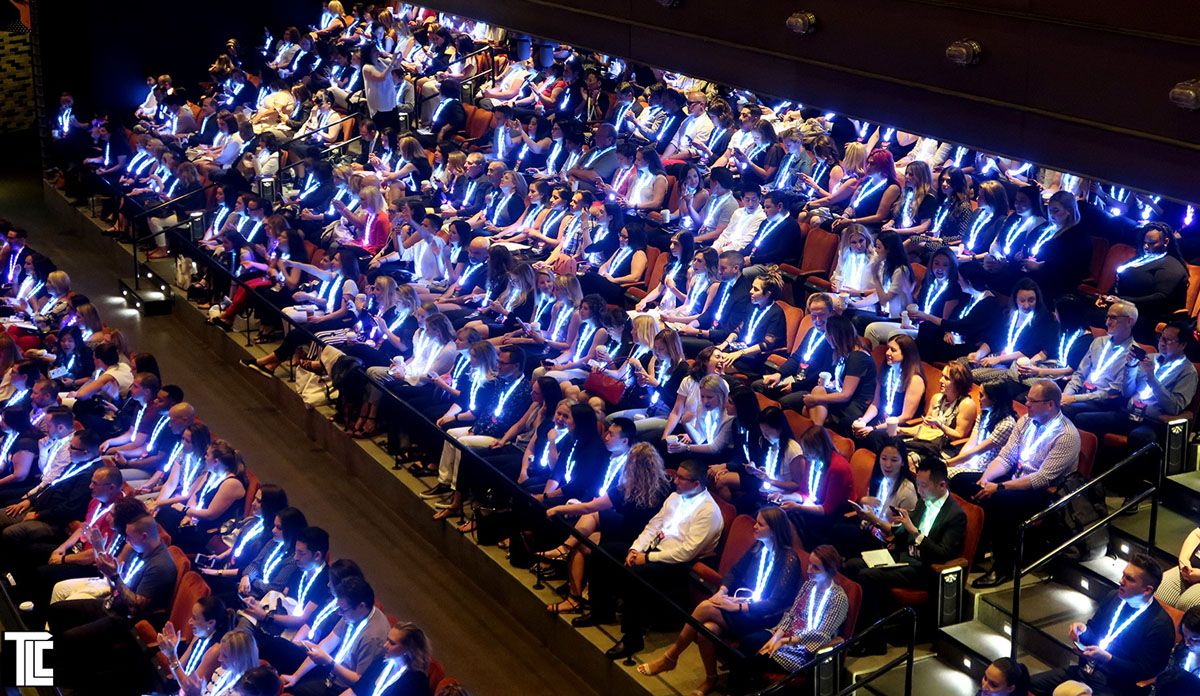
For the live broadcast of the Formula One 75th Anniversary, for example, custom LED Lanyards were distributed to fans, with different groups of attendees receiving pendants programmed for specific team colours. This allowed the show’s creative team to segment the audience and trigger dynamic effects that corresponded directly to the on-air narrative, creating powerful moments of fan identification that were perfect for the broadcast.
Ultimately, designing for the broadcast-ready spectacle is not about compromise. It’s about a more holistic, technically informed approach to creativity. It’s about understanding that the event doesn’t end at the edge of the stage, but extends to every screen, in every home. By mastering the interplay of light for both the lens and the live audience, we can create truly global immersive events that feel personal to everyone watching.