The Camera-Ready Crowd: A Technical Deep-Dive into Broadcast-Ready Event Experiences
The Two-Fold Spectacle: Mastering Light for the Arena and the Global Broadcast
In the world of major televised events, the audience is no longer just in the room. They are in living rooms, on commuter trains, and in sports bars across the globe. For event producers, tour managers, and brand marketers, this presents a formidable challenge: how do you create a stunning, immersive spectacle for the live audience while simultaneously engineering a flawless, broadcast-ready experience for the millions watching at home? This is the art of the two-fold spectacle, a delicate balance of creative vision and technical precision.
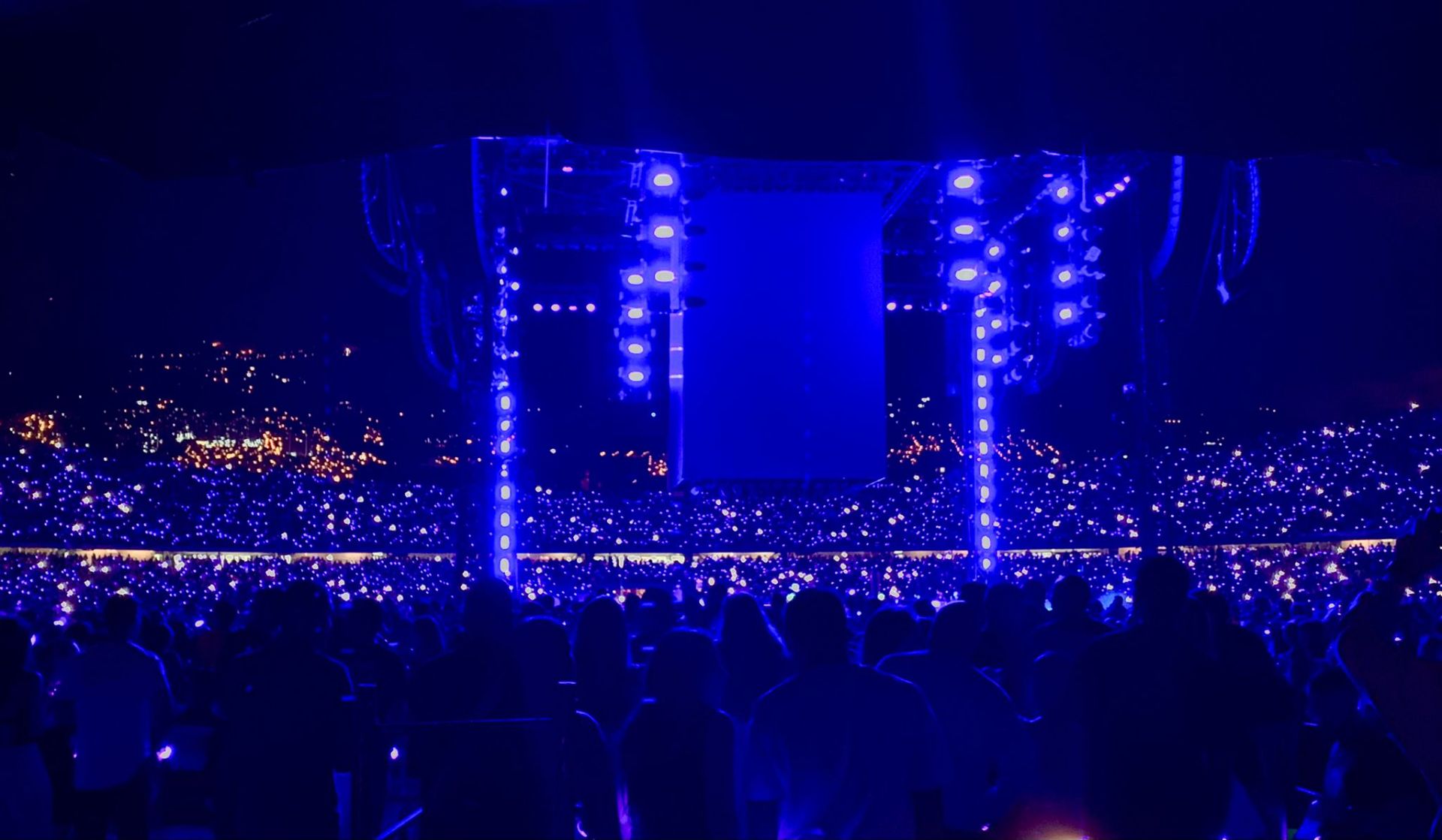
The core of the challenge lies in the different ways a camera lens and the human eye perceive light, colour, and motion. What feels electric and vibrant to a 20,000-strong arena crowd can appear chaotic or blown-out on screen. Conversely, lighting designed purely for broadcast can feel sterile and distant to those in attendance. Mastering this duality requires a new kind of canvas—one that extends beyond the stage and into the audience itself. This is where wearable LED technology becomes an indispensable tool, turning the crowd from a passive observer into an active, dynamic component of the broadcast.
The ITV Collaboration: Engineering the Broadcast-Ready Crowd
Our long-standing relationship with UK broadcasting giant ITV is a testament to the power of integrating audiences into the visual narrative. On high-stakes productions like Beat The Chasers, the lighting is not just for atmosphere; it’s a critical part of the show’s dramatic tension and visual identity. The studio audience isn't just watching the show; they are part of the set, their reactions and the light they wear woven into the very fabric of the broadcast.
For a production like Beat The Chasers, every lighting cue is meticulously planned and synchronised with the on-screen action. When a contestant is on a winning streak, the room can erupt in a unified pulse of colour. When the pressure mounts, the lighting can shift to a tense, focused state. This is achieved using our radio controlled LED wristbands, which allow the show’s lighting director to paint with the crowd in real-time. The result is a seamless experience where the energy of the studio audience is translated directly to the viewer at home, making them feel as though they are right there in the studio.
"By turning the audience into a canvas, we provide lighting designers with a dynamic, controllable surface that enhances the broadcast for viewers at home. It’s a powerful tool for visual storytelling."
Key Technical Considerations for Broadcast Integration:
- Flicker Rate & Camera Compatibility: Our systems are engineered to be camera-friendly, with high refresh rates that prevent the distracting flicker that can plague lesser LED products on screen. This is a non-negotiable for any professional broadcast.
- Colour Fidelity: Ensuring that the precise shade of a brand’s colour is accurately represented on millions of screens is paramount. Our technology is calibrated to deliver consistent, broadcast-quality colour that translates faithfully from the live venue to the final telecast.
- Zoning & Control: For a show like The Masked Singer or a large-scale arena event like the F1 75th Anniversary at The O2, the ability to segment the audience into controllable zones is crucial. This allows for complex visual effects—chases, gradients, and specific patterns—that add a layer of sophistication to the production.
Beyond the Studio: Scaling for Global Live Broadcasts
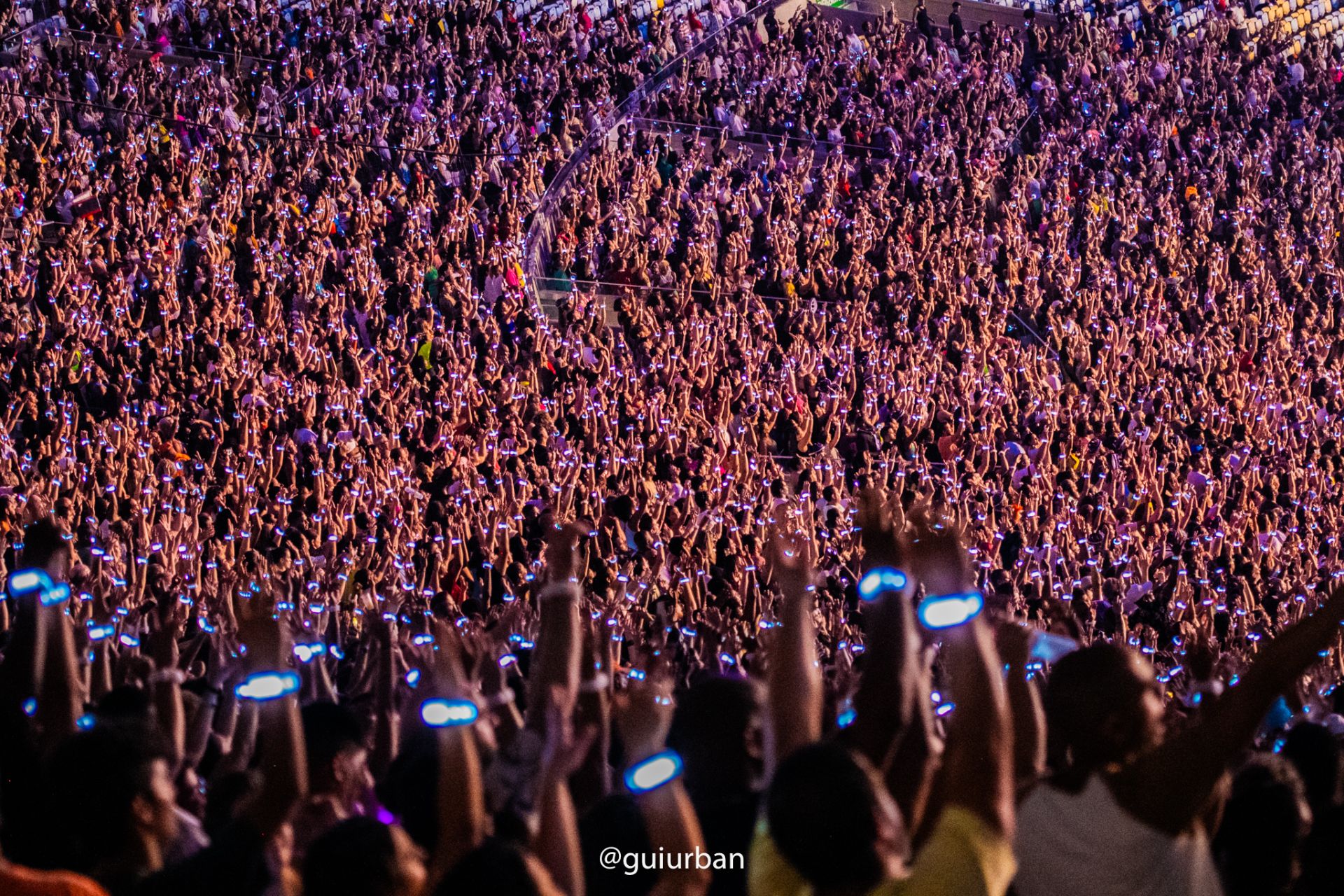
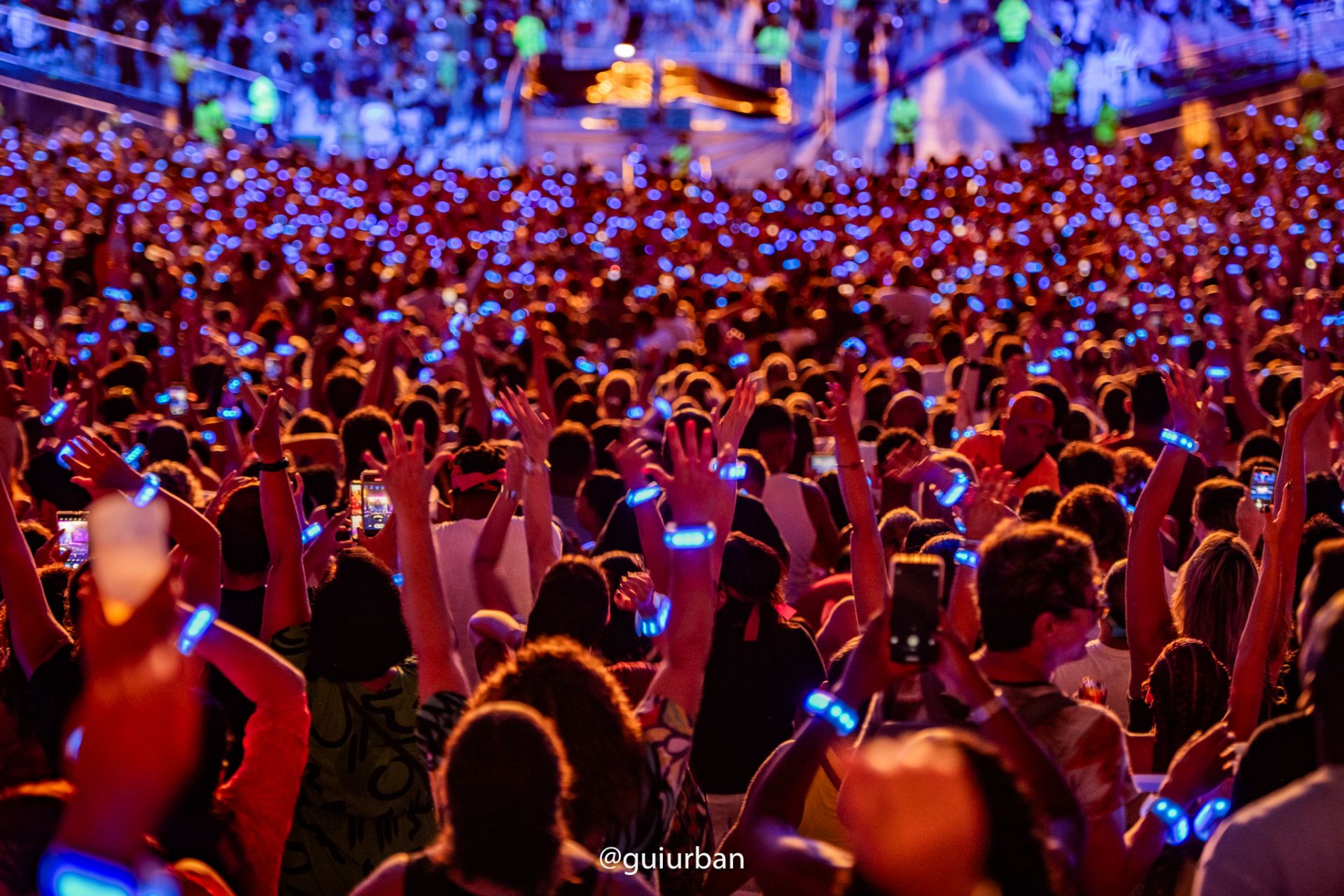
The same principles that govern a TV studio apply to massive, globally-streamed events. When Maluma played to 54,000 fans in his hometown of Medellín, the concert was streamed live to over 240 countries. The sea of Xylobands in the stadium wasn't just for the attendees; it was a critical visual element for the global audience, creating a spectacle of light that conveyed the sheer scale and energy of the moment. It transformed the stadium into a single, living organism of light and energy.
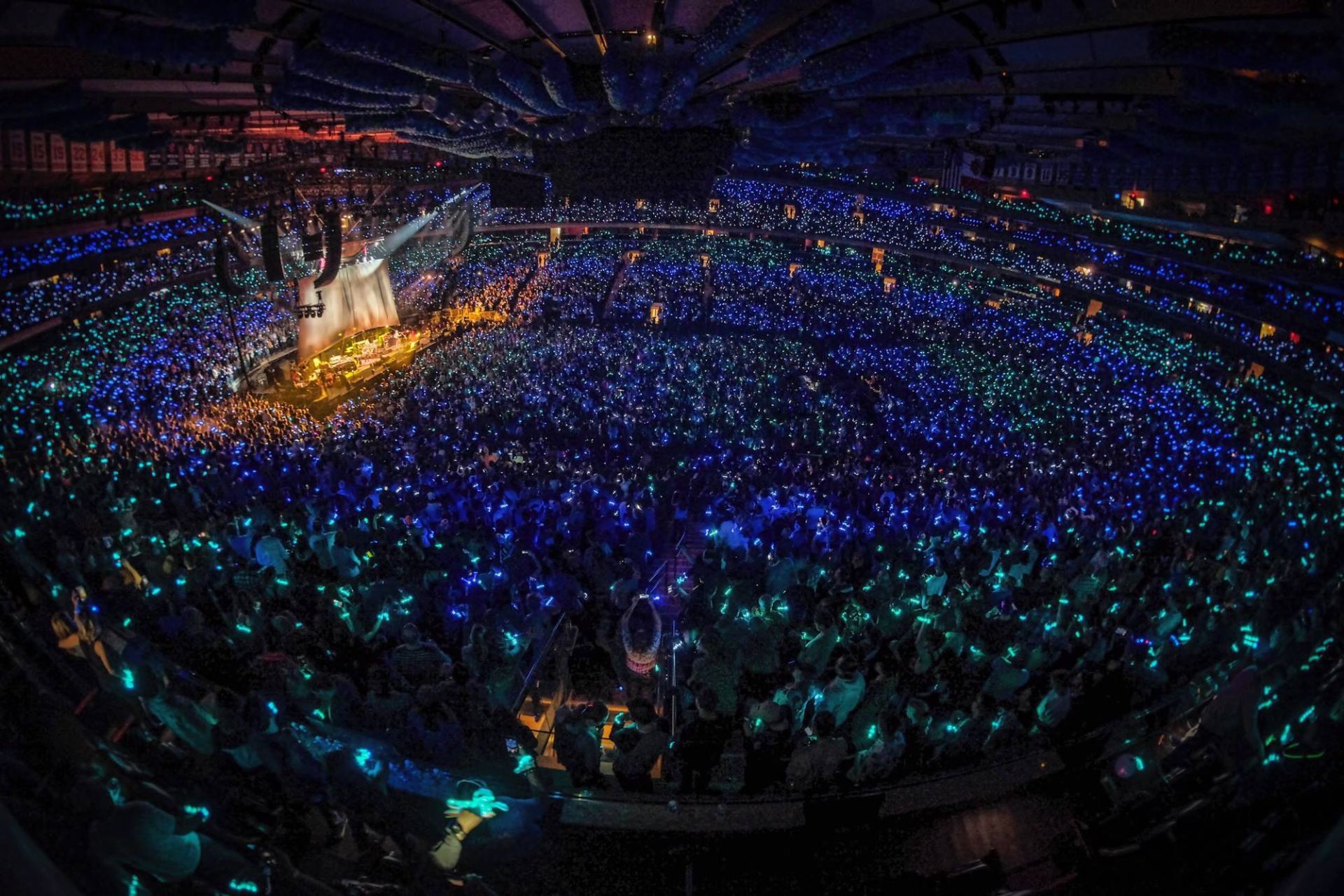
Similarly, at the 75th-anniversary celebration for Formula One, we deployed 13,000 custom LED Lanyards—the Xylo Pendant—that were distributed to create specific visual effects within The O2 Arena. This wasn’t random; it was a carefully choreographed element of the show design, ensuring that the live broadcast captured a rich, textured, and visually stunning crowd experience. These immersive events prove that with the right technology, the audience becomes the most powerful special effect.
The Future of Immersive Event Technology
As the line between live and digital experiences continues to blur, the crowd itself has become the ultimate interactive medium. From corporate events seeking to create unforgettable brand moments to major music festivals like PRIMER in Greece, turning attendees into an illuminated part of the show is the new frontier of audience engagement. It’s about creating shared moments that are powerful enough to resonate whether you are in the front row or watching from thousands of miles away.
The era of passive spectatorship is over. In the modern, broadcast-ready spectacle, the crowd is not just watching the show—they are the show. And with the right immersive event technology, they are a spectacle worthy of a global audience.