The Duality of Scale: A New Framework for Arena and Stadium Lighting
The Unforgiving Void
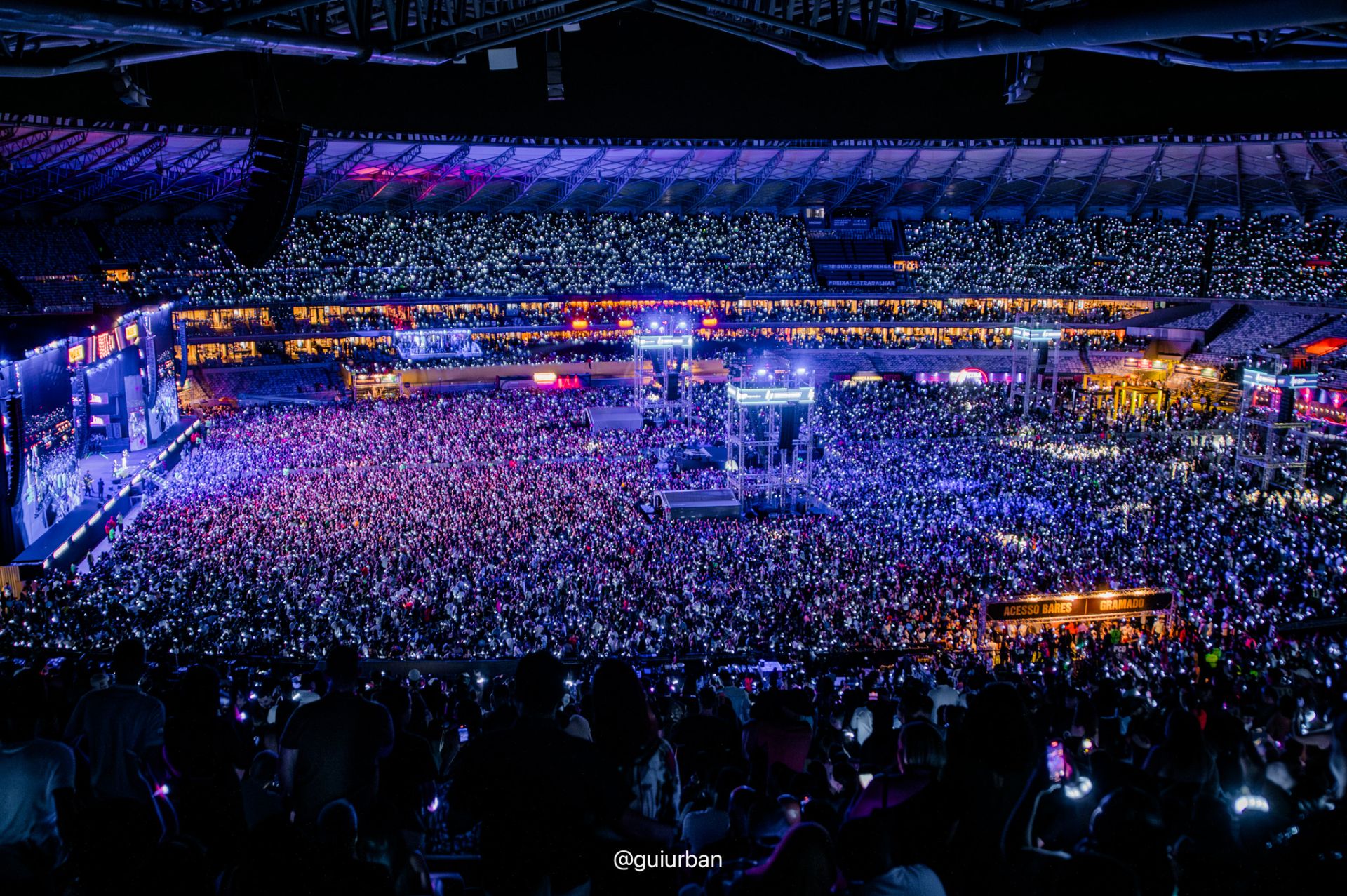
An arena, empty, is an exercise in cavernous acoustics and cold geometry. A stadium is a study in scale, a concrete canyon built for thousands but often feeling profoundly empty. For the tour lighting designer, this void is both the canvas and the challenge. The central task is not merely to illuminate a performer on a distant stage, but to transform the entire volume of that space into a cohesive, immersive environment. It’s about conquering the distance—not just the physical gap between the stage and the last row, but the psychological one.
Traditional lighting design answered this with power and scale: brighter beams, larger video walls, and more complex truss structures. And while these elements remain critical, a new philosophy has emerged, one that embraces a fundamental duality. To truly master the modern stadium spectacle, one must design simultaneously on two vastly different planes: the macro and the micro. It’s a framework that balances the grand, architectural gesture with the intimate, personal connection.
The Macro: Painting the Architecture of the Night
The macro view is the foundation of any large-scale lighting design. This is the art of the broad stroke, using powerful fixtures and massive video surfaces to paint the entire venue in light. It defines the show's visual identity and ensures a dynamic experience for every seat in the house. This is where a designer establishes the core color palettes, textures, and shapes that will define the visual narrative of the concert.
Key considerations at the macro level include:
- Structural Cohesion: The lighting rig and video elements must feel like a deliberate extension of the stage, creating a single, unified visual object. It needs to look powerful from 500 feet away, with clean lines and bold movements that are legible from the back rows.
- Architectural Integration: The most sophisticated designs don’t just fight the venue; they incorporate it. This can mean using fixtures to uplight the roof of a stadium, trace the lines of the seating bowls, or turn the entire structure into a dynamic part of the show.
- The Broadcast Translation: As more major tours and events are live-streamed—like Maluma’s historic Medellín concert—the macro design takes on a new responsibility. It must create the sweeping, cinematic shots that convey the immense scale and energy of the event to millions of viewers at home.
This grand-scale design creates the breathtaking moments—the full-venue color changes, the epic strobes, the vast video landscapes. It delivers the spectacle. But spectacle alone can feel distant. To forge a genuine connection, you must also work on a more human scale.
The Micro: Lighting the Individual Spark
Herein lies the revolution in modern event production. The micro-view acknowledges a simple truth: a crowd is not a monolith. It is a collection of individuals, each having their own personal experience. The ultimate goal is to connect those individual sparks into a collective current. This is achieved by moving the light off the stage and directly into the audience, turning the crowd itself into a canvas.
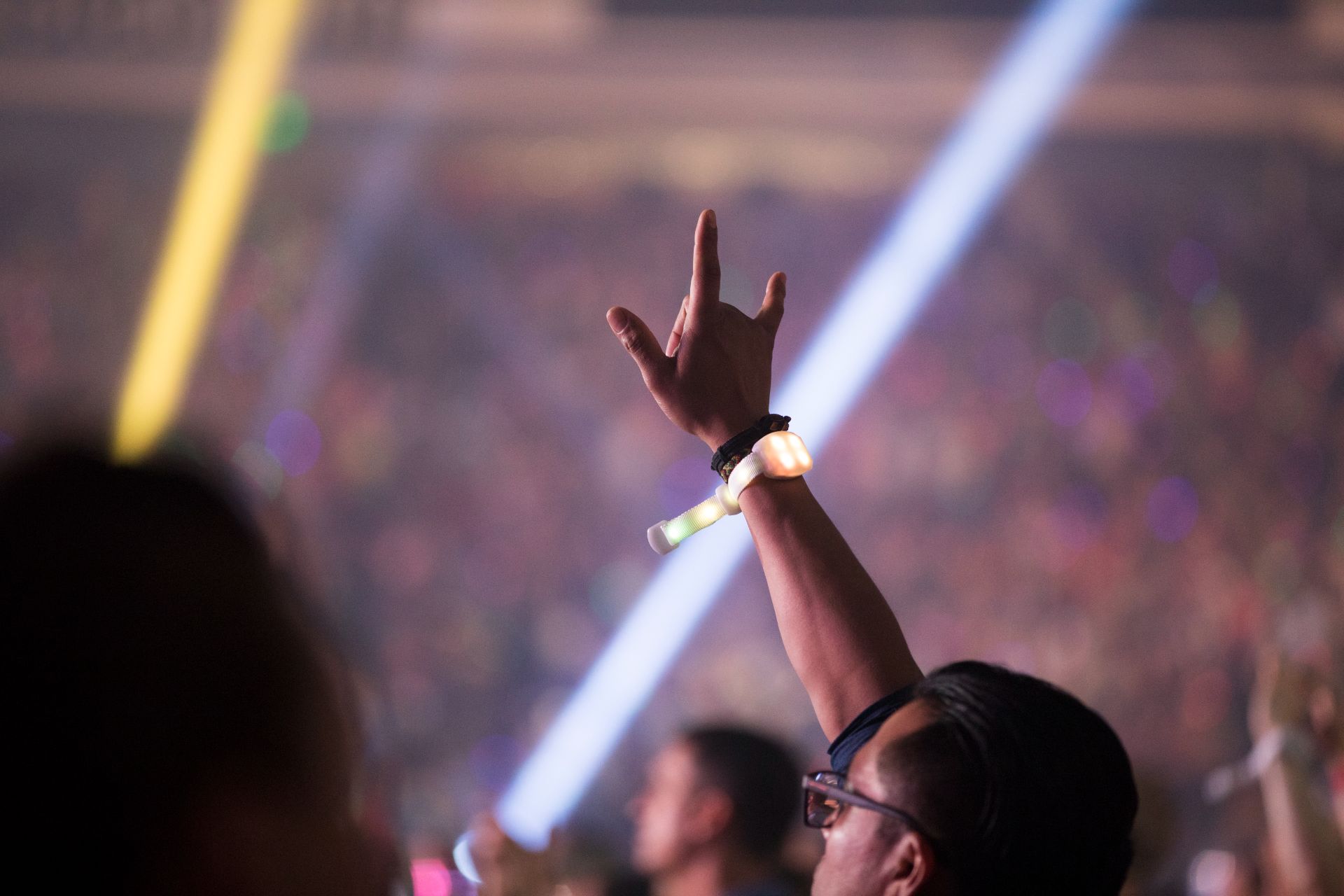
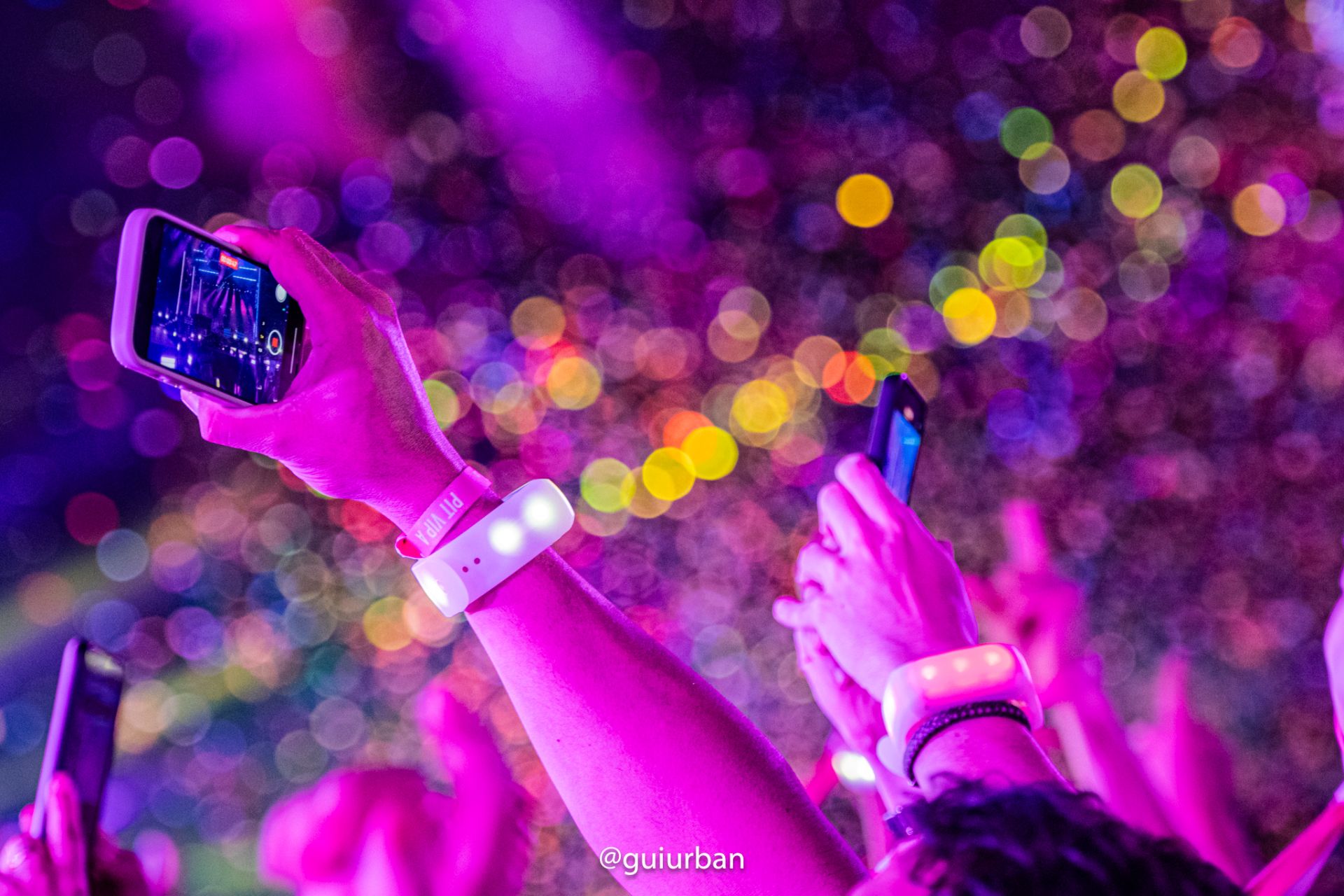
This is the world of wearable LED technology. From the iconic Coldplay Xylobands that first introduced the concept to the world, to modern concert wristbands and LED Lanyards, this technology gives designers a point of light for every single person in the room. The canvas is no longer just the stage and the architecture; it’s a living, breathing entity of 50,000 pixels.
The idea was born from a simple desire: to make every single person feel part of the show, to close the distance between the artist and the audience, and to create a feeling of profound unity.
Placing a radio-controlled LED device on each attendee solves the problem of distance and alienation. Suddenly, the fan in the last row is as much a part of the light show as the person in the front. They are no longer a passive observer but an active participant in the LED crowd experiences. This is the essence of creating truly immersive events.
Unifying the Vision: The Choreography of Duality
The true mastery of this dual framework lies in their integration. The macro and micro designs cannot exist in isolation. They must be choreographed by a single, unified vision, controlled and synchronized to work in harmony.
This is where the technical and the artistic merge. Using powerful control systems, designers can have the LED bands worn by the audience perfectly mirror the colors on the main video wall. They can send ripples of light through the crowd that build to a crescendo on stage. They can create moments of stark contrast, plunging the entire stadium into darkness, save for the pulsing lights on 50,000 wrists. This is more than just lighting; it’s a form of mass choreography.
This integrated approach unlocks a new layer of creative possibility:
- Dynamic Counterpoint: The stage can be drenched in blue while the audience pulses with red, creating a powerful visual tension.
- Audience Segmentation: For sporting events like the Davis Cup or Formula One’s 75th Anniversary, different seating sections can be lit in team or brand colors, creating a vibrant, tribal energy.
- Intimate Moments: An artist can command the entire stadium to go dark, save for a single, gentle pulse of light on every wristband—a shared heartbeat in a space built for spectacle, creating a moment of profound, shared intimacy.
The Complete Canvas
Lighting a stadium is no longer about brute force. It is an art of nuance, psychology, and technology. It demands a perspective that can zoom from the 30,000-foot view of the entire venue down to the single wrist of a fan in the nosebleeds, and see it all as one cohesive canvas.
By embracing the duality of macro and micro design, producers can do more than just light a show. They can create an atmosphere, forge a connection, and transform a gathering of thousands of strangers into a single, unified entity, bound by a shared experience of light and sound. They can conquer the void, not by filling it with noise, but by giving it a soul.