From Applause to Algorithms: The Evolution of Audience Participation
The Primal Roar and the Flickering Flame
Since the first storyteller gathered a tribe around a fire, the live experience has been a two-way street. The energy doesn't just flow from the stage; it rises from the crowd, a tangible force that shapes the performance. For generations, this participation was analog and instinctual: the roar of a stadium, the unified chant of a protest, the sea of hands clapping in unison. In the world of live music, the definitive symbol of this connection was born in the late 1960s—the lighter held aloft. It was a simple, powerful gesture: a single flame in the dark, signifying reverence, solidarity, and a shared moment of emotional climax. It was the audience talking back, not with words, but with fire.
This fundamental human need to connect and participate has always been the invisible engine of live events. Promoters and artists understood it, orchestrating call-and-response moments and singalongs to harness that collective energy. In sports, it manifested as the "wave," a low-tech, self-propagating ripple of human motion that could unify 80,000 strangers. These were the foundational forms of audience engagement—powerful, organic, but ultimately limited in their scope and complexity.
The Dawn of Controlled Experiences
The first wave of technological intervention sought to guide this participation. Jumbotrons in stadiums began prompting lyrics or displaying "MAKE NOISE" cues. Basic, yes, but it was a step toward a more orchestrated form of engagement. However, the communication remained one-way. The technology was instructing the audience, not interacting with them. The crowd could respond, but it couldn't become part of the medium itself. The canvas remained the stage and the screen; the audience was still just the observer.
A fundamental shift in thinking was required. What if the audience wasn't just watching the show, but was the show? What if each individual could become a pixel in a vast, living canvas of light? This was the question that would unlock the next era of Immersive Events.
The Spark of a Revolution: The Birth of Xylobands
The idea, like many breakthroughs, arrived in a moment of pure inspiration. It was at Glastonbury Festival, during a Coldplay performance of "Fix You." As the lyric "Lights will guide you home" echoed across the field, Xylobands founder Jason Regler had a vision. He imagined not just the scattered lights of lighters and phones, but a fully synchronized, wirelessly controlled light show emanating from the audience itself. The goal was to create a visceral sense of unity, to make 50,000 individuals feel like a single, connected entity.
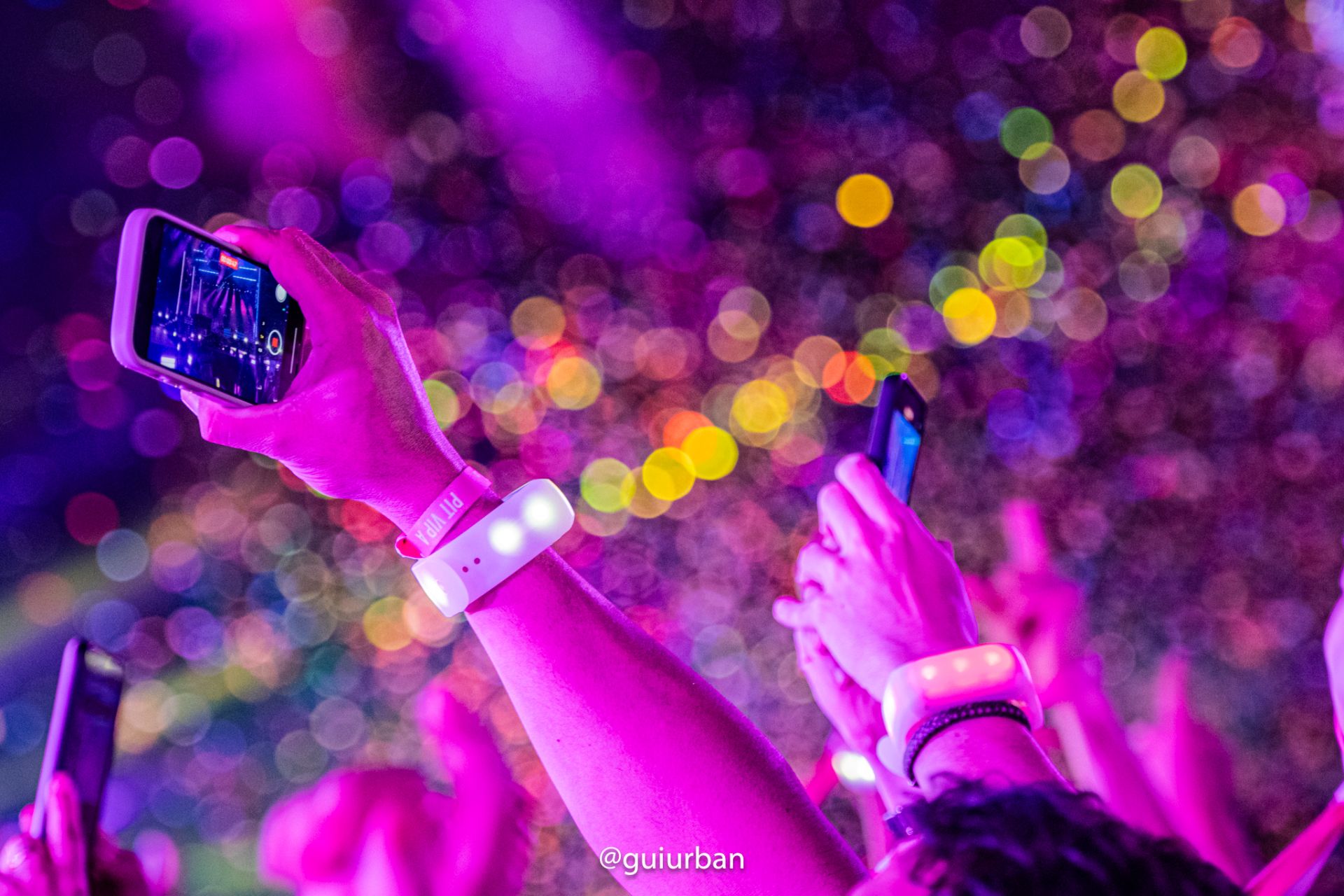
That vision became a reality. After presenting the idea to the band, the technology was developed, and Xylobands were launched globally on Coldplay’s 2012 Mylo Xyloto Tour. The effect was immediate and transformative. The static boundary between performer and fan dissolved. The crowd became a living, breathing instrument, a dynamic extension of the lighting designer’s vision. These Coldplay Xylobands, blinking and pulsing in perfect sync with the music, set a new standard for what LED Crowd Experiences could be. The era of Wearable LED Technology had begun.
From Niche Innovation to Industry Standard
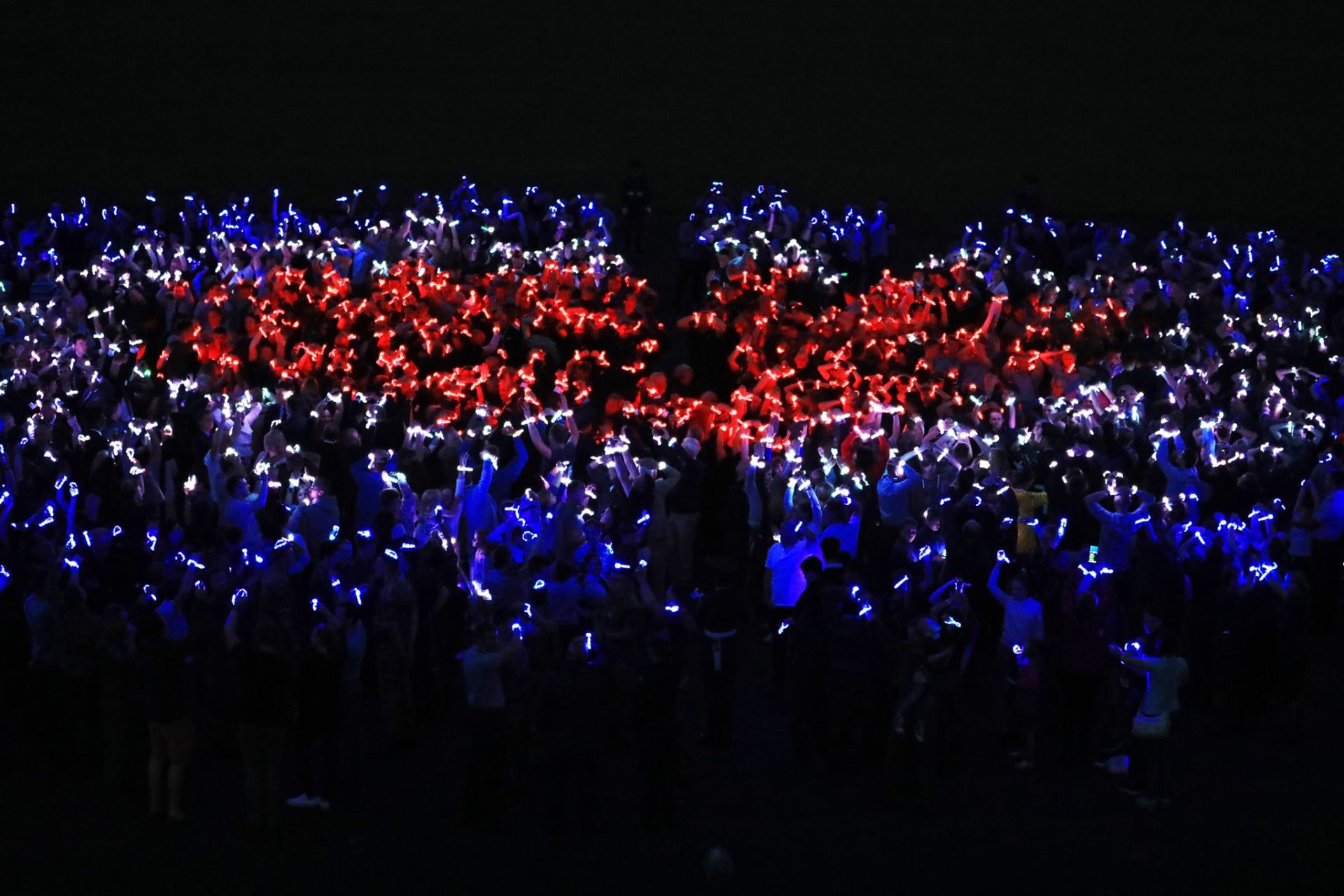
The technology that powered this revolution was a sophisticated network of Radio Controlled LED Wristbands. A central transmitter sends signals across the venue, instructing each individual LED Band to light up in a specific color, at a specific time, and in a specific pattern. This allows for breathtakingly complex visual choreography—waves of color washing over a stadium, blocks of fans illuminating in team colors, or pulses of light synched to a song's every beat.
What started with Concert Wristbands quickly diversified across the entire live event landscape:
- Corporate Event Activations: Brands like Samsung, Google, and Audi quickly recognized the power of this technology to create unforgettable brand moments. Using Custom LED Wristbands and even LED Lanyards, they could immerse attendees in brand colors, unify a sales conference, or light up a product launch in a way that left a lasting impression.
- Sporting Spectacles: The world of sports, from the Davis Cup to Formula One, embraced LED Event Technology to heighten the drama. At F1's 75th-anniversary event, for instance, custom pendants lit up the arena, segmenting the crowd by team and creating a dynamic visual backdrop for the live broadcast. The fan experience was no longer passive; it was part of the game.
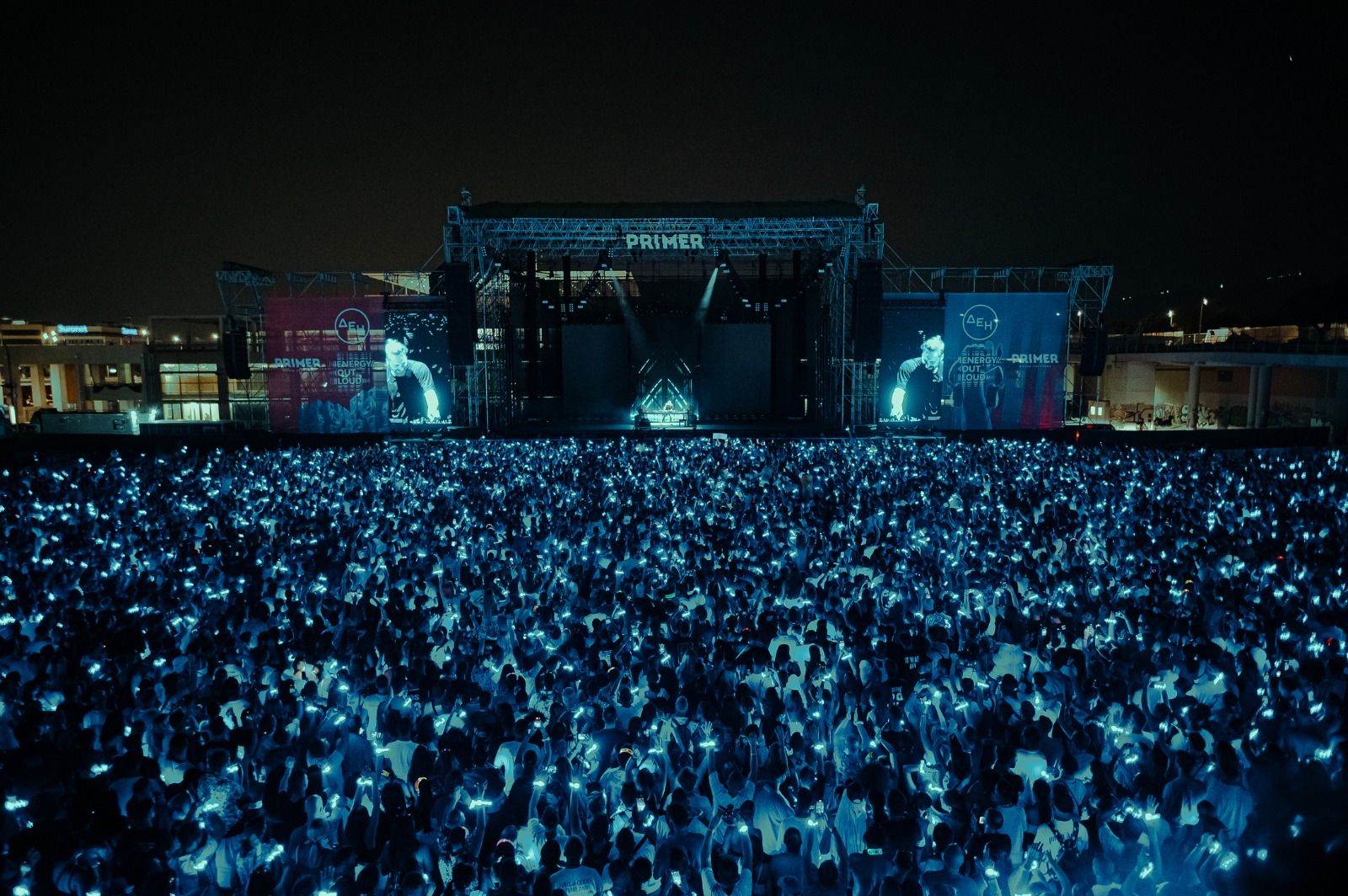
- Festivals and Broadcasts: From the high-energy beats of festivals like Primer in Greece to the high-stakes studio environments of shows like ITV's Beat The Chasers, the technology provides a layer of visual excitement for both the live and broadcast audience. For an artist like Wizkid, selling out three nights at The O2, the wristbands amplified the already electric atmosphere, making history visible.
The Future is Interactive and Intelligent
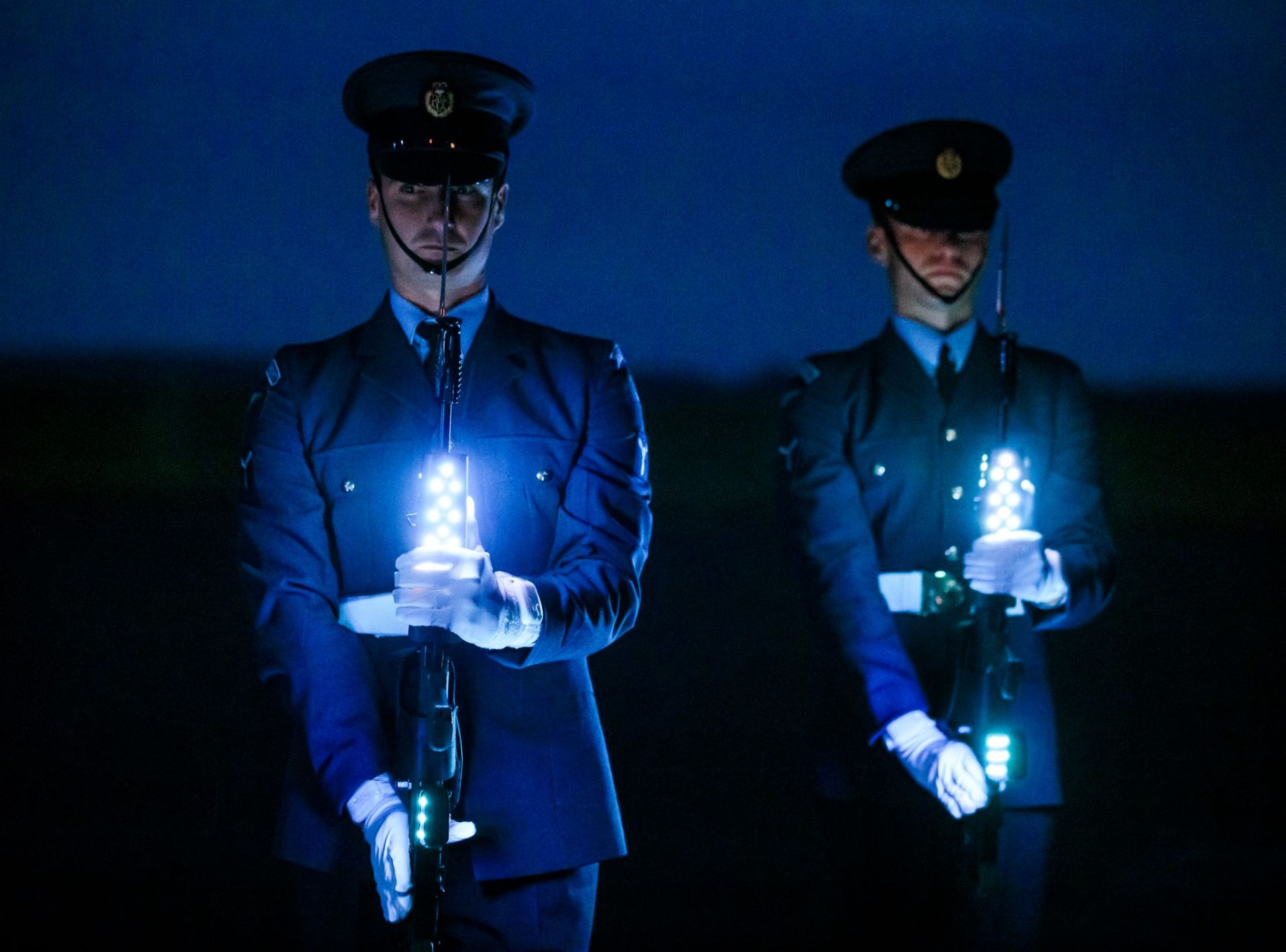
Today, Immersive Event Technology continues to evolve. The simple LED Bracelets of a decade ago are becoming more sophisticated, incorporating different form factors like the LED Orbs used in modern productions. The future isn't just about light; it's about data, interaction, and personalization. The same infrastructure that controls light can also gather anonymous data about crowd density and movement, adding a powerful new layer of safety and operational intelligence for event producers.
We are moving from a model of broadcast (one-to-many) to one of true interaction (many-to-many). Imagine a scenario where sections of the crowd can influence the light show in real-time through movement, or where augmented reality overlays on a fan's phone interact with their glowing wristband.
Ultimately, the long arc of audience participation technology is one of deepening connection. From the analog warmth of a shared song to the digitally synchronized pulse of 100,000 Xylo Bands, the goal remains the same: to dissolve the space between us, to transform a crowd of strangers into a unified, singular body, and to create a moment so powerful it feels like magic. The technology is simply the new language we use to tell that ancient story.