The Pattern Seeker: How Dyslexic Thinking Fuels Creative Innovation
The Ghost in the Machine
In the linear, structured world of business, there’s often an expectation of a certain kind of mind. One that moves sequentially, processes information in a straight line, and thrives on standardized data. But innovation rarely comes from straight lines. It comes from seeing the connections others miss, from spotting the pattern in the noise, from a mind that works a little differently.
Dyslexia is typically defined by its challenges with reading, writing, and spelling. It’s categorized as a learning disability, a label that focuses entirely on the friction it creates within conventional academic and professional systems. But this definition is incomplete. It’s like describing a rainforest only by its rainfall. It misses the vibrant, complex, and powerful ecosystem that flourishes precisely because of those conditions.
At its core, the dyslexic brain is wired for a different kind of processing. It’s often characterized by strong spatial reasoning, a remarkable ability to see the bigger picture, and a more holistic, interconnected approach to problem-solving. Where the neurotypical mind might see a series of isolated data points, the dyslexic mind often sees a dynamic system of relationships. This is not a deficiency; it is a strategic advantage.
The Advantage of the Atypical Mind
In the world of entrepreneurship and creative industries, this cognitive difference becomes a superpower. Many of the world’s most disruptive entrepreneurs and innovators are dyslexic. They succeed not in spite of their dyslexia, but because of it. Their non-linear thinking allows them to leapfrog conventional steps, challenge underlying assumptions, and envision solutions that others simply cannot see.
"My dyslexia has been a gift. It’s taught me to see the world from a different perspective, to find patterns and connections that others don’t. It’s the engine behind the innovation." - Jason Regler, Inventor of Xylobands
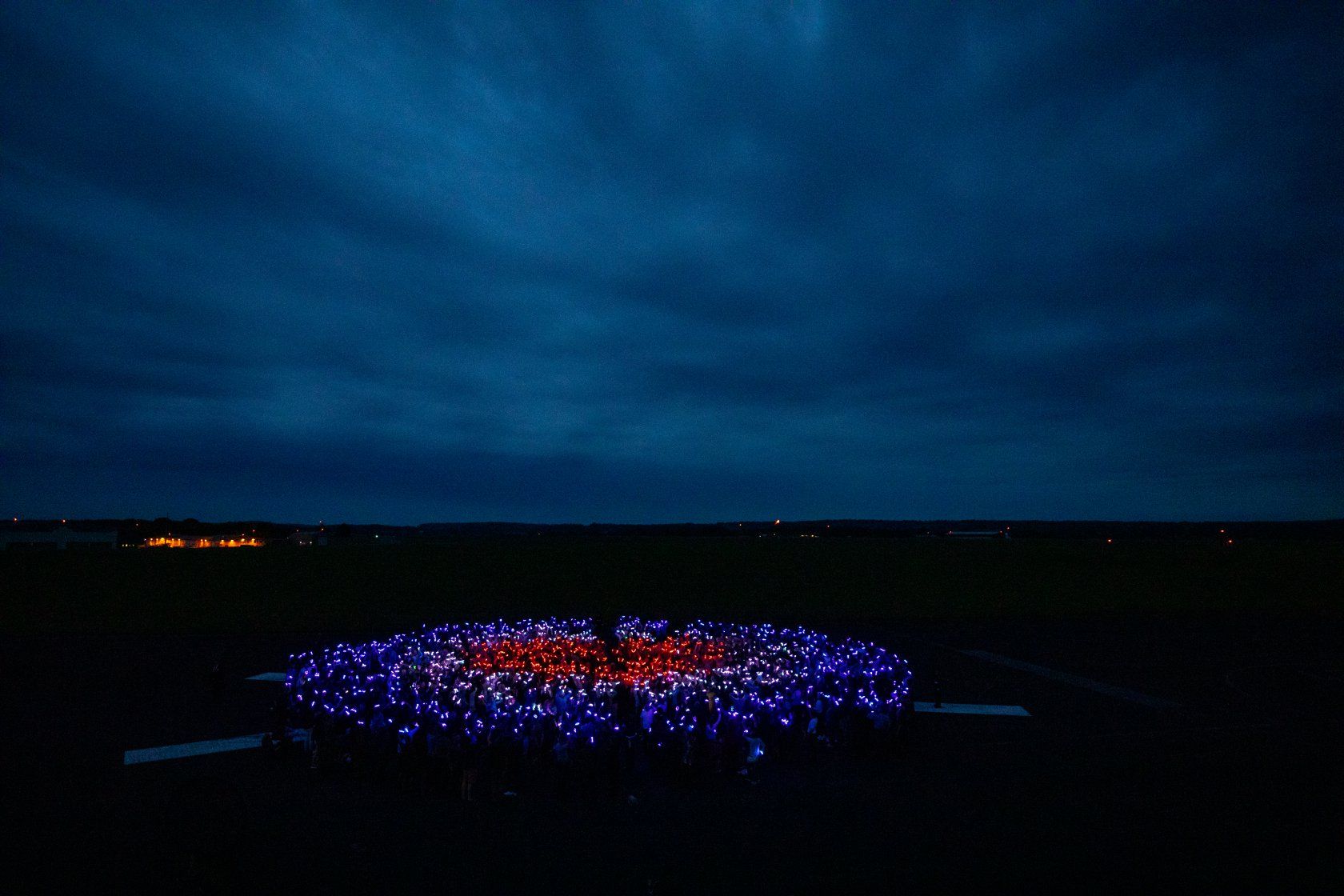
This rings true for our own origin story at Xylobands. The idea for radio controlled LED wristbands wasn’t born from an incremental improvement on existing technology. It was a conceptual leap, inspired by a moment of shared emotion at a Coldplay concert. It was about seeing the audience not as thousands of individuals, but as a single, unified canvas—a human element that could be woven directly into the fabric of the show. It required seeing the music, the emotion, and the technology not as separate components, but as one interconnected system. This is a hallmark of dyslexic thinking: synthesizing disparate elements into a cohesive, novel whole.
From Big-Picture Vision to Global Execution
A common strength among dyslexic thinkers is the ability to maintain a strong, high-level vision while navigating complex details. They excel at strategic thinking and pattern recognition on a grand scale.
Consider the logistical and creative challenge of a global arena tour or a major broadcast event like the Formula One 75th anniversary show. Success depends on more than just flawless technical execution. It requires a clear creative vision that can unite hundreds of crew members, multiple technology systems, and the unpredictable energy of a live audience.
- Systems Thinking: Instead of getting lost in a linear sequence of tasks, the dyslexic mind can often visualize the entire operation as a single, dynamic entity. They can see how a change in lighting design will impact the broadcast feed, how the distribution of wearable LED technology will affect crowd flow, and how the entire experience will translate for audiences both in-venue and at home.
- Creative Problem-Solving: When faced with an unexpected challenge—a logistical snag, a technical glitch, a last-minute creative change—the dyslexic thinker is adept at improvising. Their ability to draw on seemingly unrelated knowledge and see novel connections allows them to formulate ingenious solutions under pressure.
- Communicating the Vision: While they may struggle with written reports, many dyslexic leaders are exceptional storytellers. They can articulate a compelling vision that energizes and aligns their teams, whether they’re designing corporate event activations or choreographing the lighting for a headline artist like Wizkid or Maluma.
Building a Neurodiverse Creative Ecosystem
Harnessing the power of neurodiversity isn’t about making accommodations. It’s about building a more resilient, dynamic, and innovative organization. A team composed entirely of linear thinkers may be efficient, but it risks becoming an echo chamber, blind to the disruptive opportunities that lie just outside its established processes.
In the world of immersive event technology, our work is to create moments of collective wonder. We turn tens of thousands of individuals into a unified canvas of light. We transform a passive crowd into an active participant. This requires a deep understanding of human psychology, a mastery of complex RF and DMX systems, and a creative vision that can tie it all together.
The non-linear, pattern-seeking, big-picture mind is not a bug in the system; it’s a critical feature. It’s the ghost in the machine that finds the new melody, sees the unseen connection, and imagines the next generation of LED crowd experiences. By embracing cognitive diversity and recognizing the unique strengths of different minds, businesses can unlock a powerful and sustainable creative advantage.