The Mind in the Crowd: Engineering Collective Consciousness in Live Events
The Biology of Belonging
It’s a sensation every event producer chases: the palpable current of energy that unifies a stadium of strangers into a single, sentient organism. That moment when thousands of individual voices merge into one roar, and a sea of faces is illuminated by a shared, singular focus. Sociologist Émile Durkheim termed this phenomenon “collective effervescence”—a high-energy state of shared identity where personal ego dissolves into the communal. But is this powerful force a matter of pure chance, or can it be deliberately engineered?
At its core, this transformation is rooted in neuropsychology. In a mass-audience setting, the brain undergoes a profound shift. The prefrontal cortex, responsible for rational thought and self-consciousness, quiets down. Simultaneously, the brain releases a potent cocktail of neurochemicals, including oxytocin and endorphins, triggered by shared rhythms and synchronized movements. These are the same chemicals that foster social bonds and trust. This neurological surrender of the “I” for the “we” is the foundation of any truly memorable large-scale event. The challenge, and the opportunity, lies in designing experiences that intentionally trigger this state.
Light as a Universal Language
To cultivate collective consciousness, you need a medium that transcends individual differences. Music is the most obvious tool, but visual language—specifically, the language of light—operates on an even more primal level. Light is instantaneous, universal, and deeply emotional. It can direct focus, dictate mood, and, when deployed correctly, create a powerful framework for a shared experience.
This was the insight that led to the invention of Xylobands. Watching Coldplay perform at Glastonbury, our founder Jason Regler envisioned transforming the passive crowd into an active, illuminated canvas. The idea was to harness that moment of collective effervescence and amplify it, making the audience an integral part of the spectacle. These are not merely accessories; they are precisely engineered tools for psychological immersion. The Coldplay Xylo Band phenomenon born from that idea demonstrated that when every individual is given a node of light that connects them to the whole, their sense of participation deepens exponentially. It’s a physical manifestation of a networked consciousness.
The Audience as a Living Canvas
The most forward-thinking productions no longer view the audience as a passive receptacle for entertainment. Instead, they see a dynamic, living canvas. With the advent of Immersive Event Technology, the crowd itself becomes a high-fidelity output for creative expression. This represents a fundamental shift in production design, where the barrier between performer and spectator dissolves entirely.
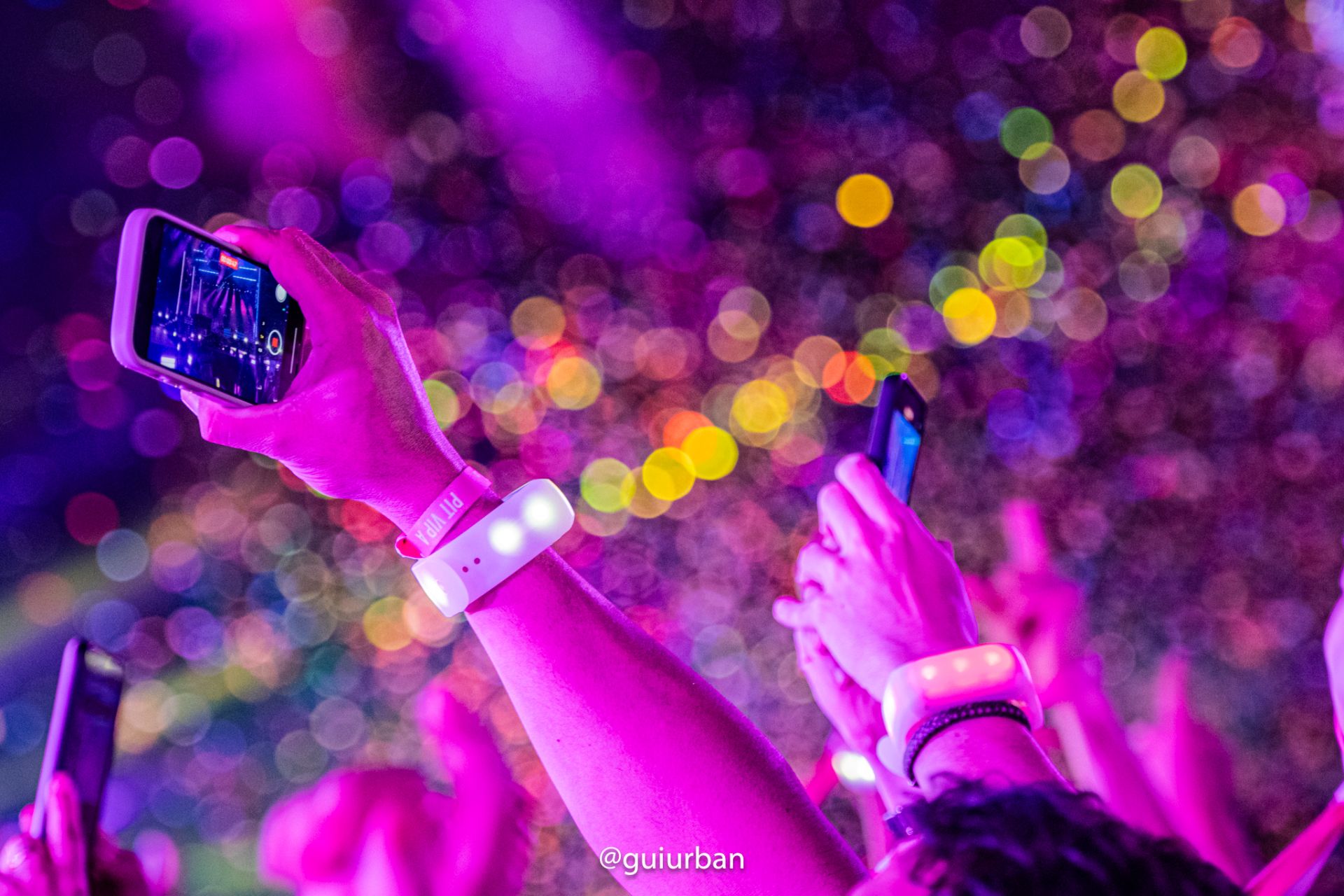
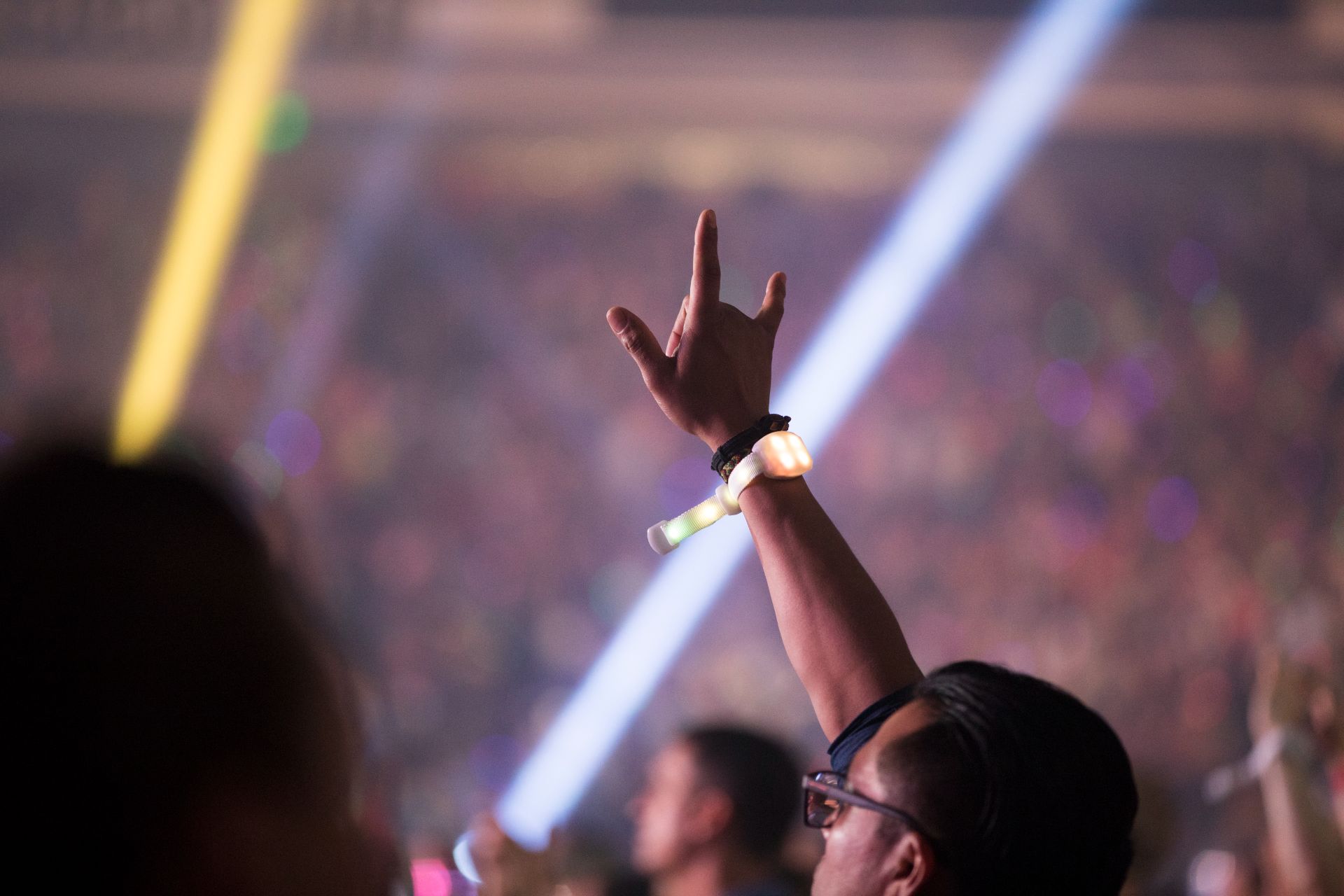
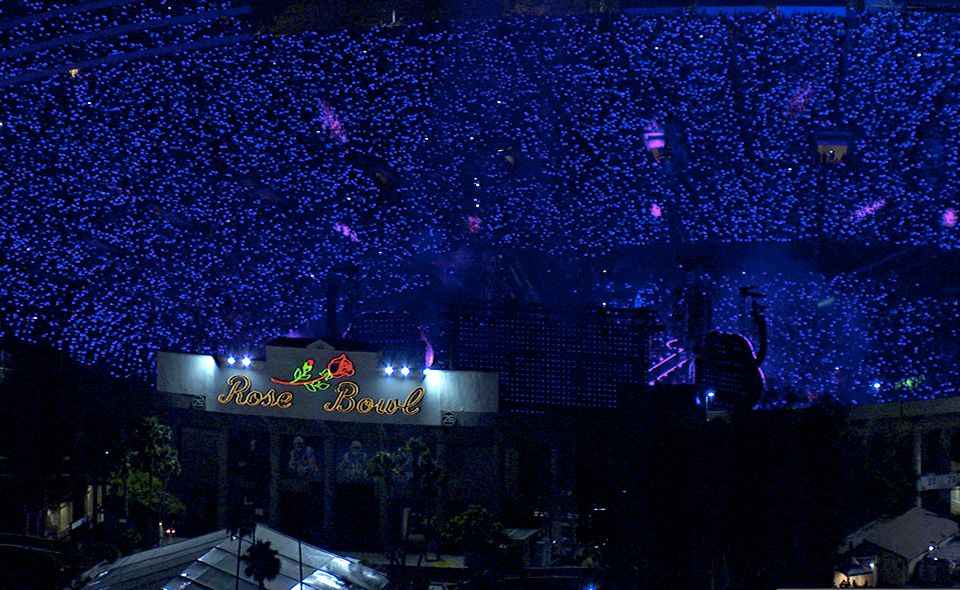
Consider the sheer scale of an artist like Maluma, whose hometown concert in Medellín brought together over 54,000 people. Or Wizkid, selling out London’s O2 Arena for three consecutive nights. On these nights, LED Bracelets transformed the vast darkness of the arena into a breathing, pulsing entity, perfectly synchronised to the performance. Each wristband is a pixel, and every fan a pixel-carrier. For the individual, it’s a feeling of being seen and being a vital part of the show. For the production, it’s a palette of tens of thousands of lights, painting visuals across the architecture of the crowd. This transforms attendance into active participation, creating powerful LED Crowd Experiences that resonate long after the final note.
From Festivals to Fan Zones: The Versatility of Collective Engagement
While the modern concert tour may be the most visible application, the psychology of collective engagement is universal. The same principles that light up a music festival like Primer in Greece can be adapted to galvanise a fan base at a major sporting event or unite employees at a corporate summit. The desire to belong and share in a peak moment is a fundamental human driver.
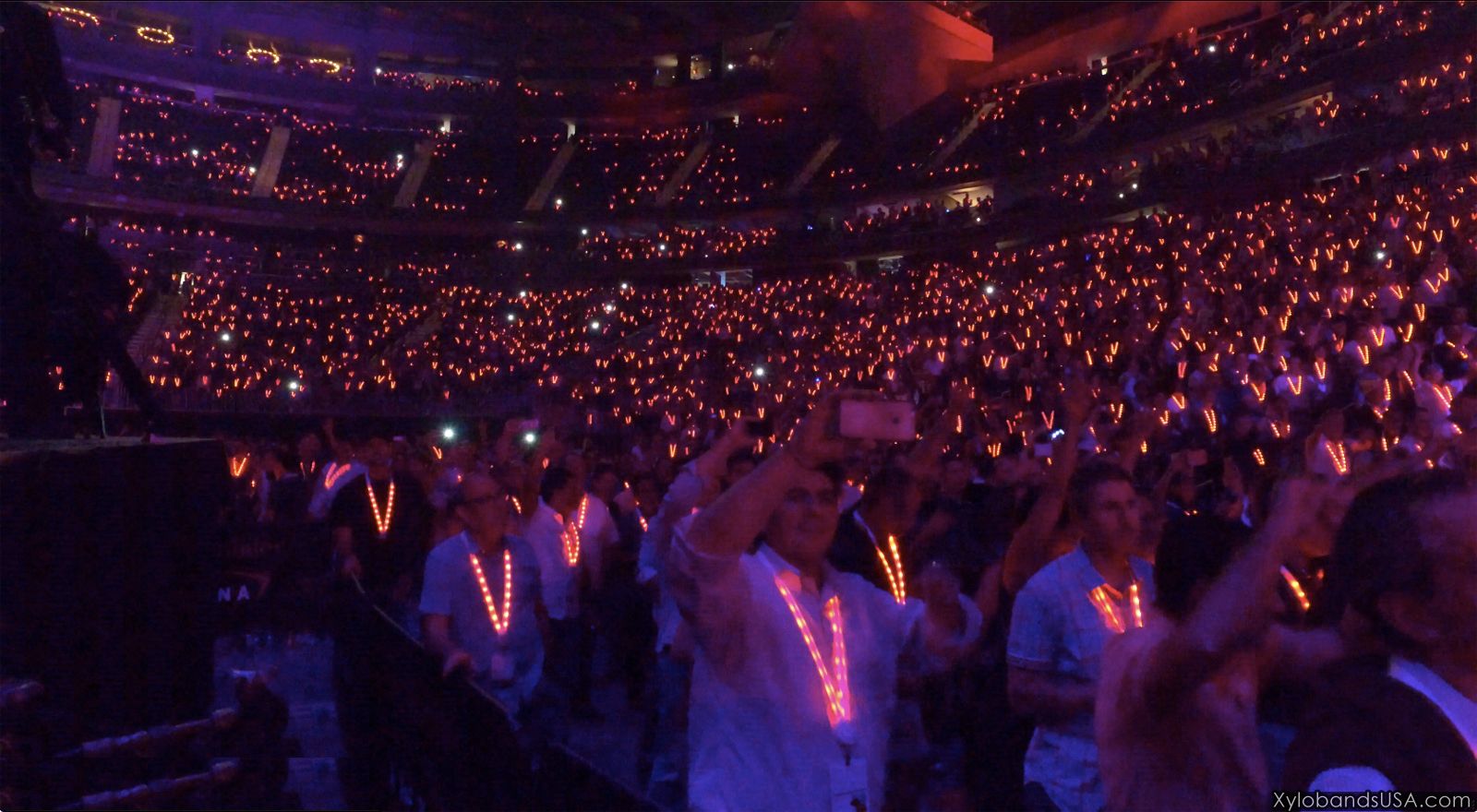
Corporate Event Activations, for example, can leverage this technology to break down hierarchies and foster a genuine sense of shared purpose. For the 75th anniversary of Formula One, a high-stakes broadcast event, custom LED Lanyards were created for all 10 teams and various hospitality levels. This simple act of unified light created a visual language of inclusion, instantly connecting disparate groups—from die-hard fans to executive guests—within a single, spectacular narrative. Whether it's Concert Wristbands, lanyards at the Davis Cup, or immersive lighting at a product launch, the goal remains the same: to use synchronised light to forge a powerful, temporary tribe.
The Future of Shared Moments
The art of mass audience engagement has moved far beyond simple amplification and stage lighting. We have progressed into an era of granular control and profound psychological insight. By understanding the biological drivers that lead to collective effervescence, we can design events that don't just entertain but genuinely connect people. Technologies such as Radio Controlled LED Wristbands are not the point in and of themselves; they are the instruments. They are the tools that allow creative visionaries—the tour managers, brand marketers, and event producers—to play the most complex and rewarding instrument of all: the crowd.
As we continue to refine this Wearable LED Technology, the possibilities will only expand. The future of live events is not just about building bigger stages or louder sound systems. It’s about building deeper connections. It’s about understanding the mind in the crowd and using every tool at our disposal to craft moments of true, unparalleled unity.