The Roar of the Crowd: An Evolution of Audience Participation Technology
The Primal Urge to Participate
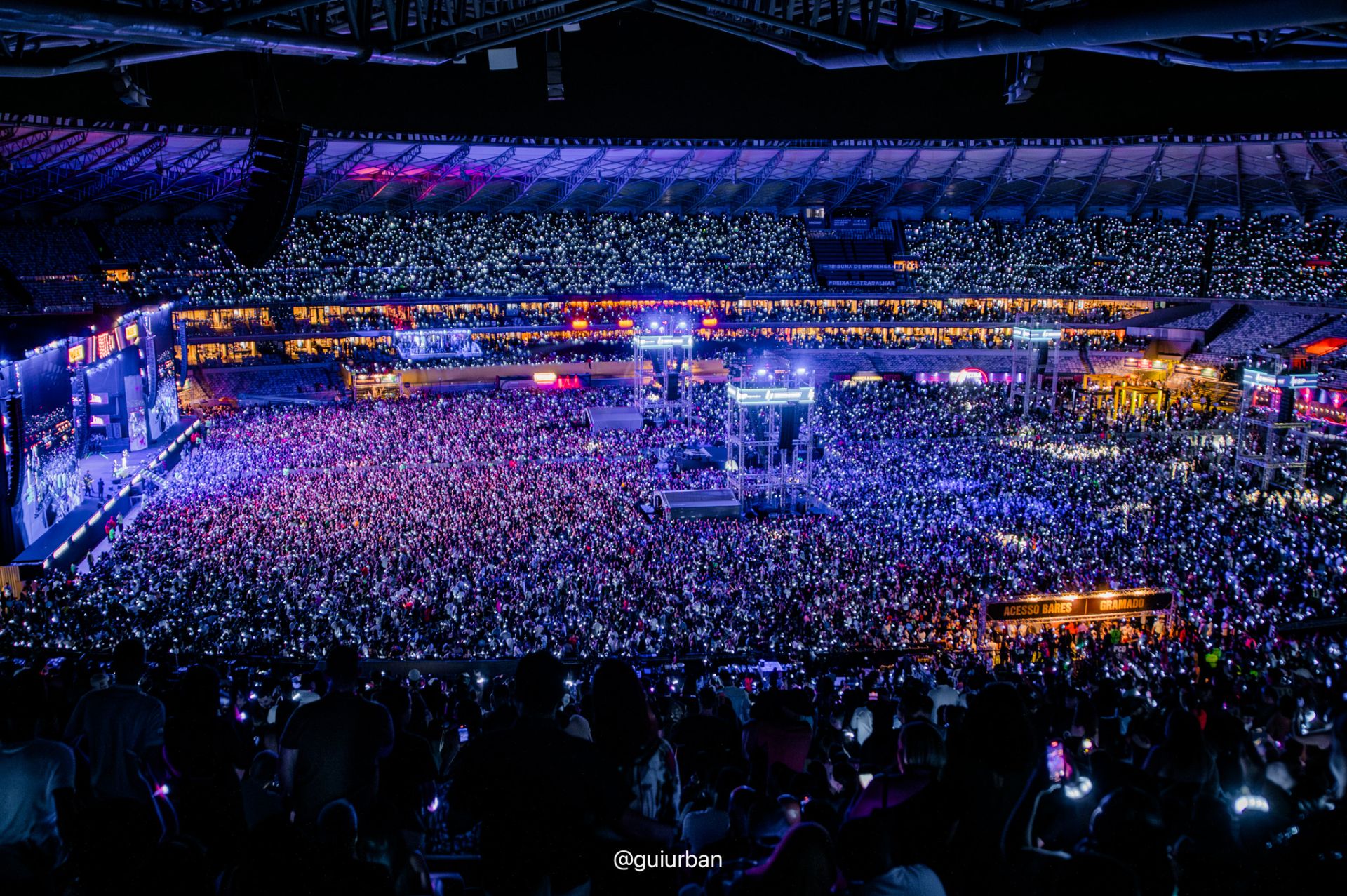
Since the first storyteller gathered a tribe around a fire, the live experience has been a two-way street. An audience is not a passive vessel; it’s a living, breathing counterpart to the performance. The roar of a stadium, the unified chant of a festival crowd, the hushed reverence of a theatre—these are not just reactions. They are contributions. For decades, event producers and artists have sought to channel this fundamental human urge to connect and participate, transforming it from a spontaneous outburst into a deliberate, choreographed element of the show itself.
The journey from those raw, analog expressions of unity to the sophisticated, digitally-driven spectacles of today is a fascinating story of technological evolution and creative vision. It’s a story about turning a crowd of thousands into a single, cohesive entity, and at its heart, it’s about the timeless desire for shared experience.
The Analog Age: Lighters, Cards, and Beach Balls
Long before the advent of microchips and radio frequencies, audiences found ingenious ways to make their mark on a performance. The most iconic of these is undoubtedly the lighter-in-the-air salute. During a ballad or a poignant moment, thousands of tiny flames would flicker to life, creating a sea of stars in the darkness. It was a simple, powerful gesture of solidarity and emotional connection—a visual manifestation of the crowd’s shared feeling.
It’s a moment steeped in rock and roll history, and one that directly inspired the next leap in audience participation. The sight of a crowd holding lights aloft during Coldplay’s performance of “Fix You” at Glastonbury sparked an idea in our director, Jason Regler. The lyric ‘Lights will guide you home’ became a literal design brief: what if you could give every single person a light? What if you could control them, unify them, and make them part of the song itself? This was the question that would eventually lead to the invention of Xylobands.
Beyond the rock concert, sporting events mastered their own forms of analog participation. Think of the intricate mosaics created by thousands of fans holding up colored cards, forming a team’s crest or a national flag across an entire stadium block. It required planning, coordination, and the willing participation of every individual to create a collective image far greater than the sum of its parts. These early methods were the foundation, proving the immense potential of the audience as a visual canvas.
The Digital Dawn and the Wearable Revolution
The first wave of digital interaction—SMS voting, social media walls—brought a new dimension to live events, but it often came at a cost. By directing attention to personal screens, it risked fragmenting the very unity it aimed to create. The true revolution began when the technology became wearable, moving from the hand to the wrist.
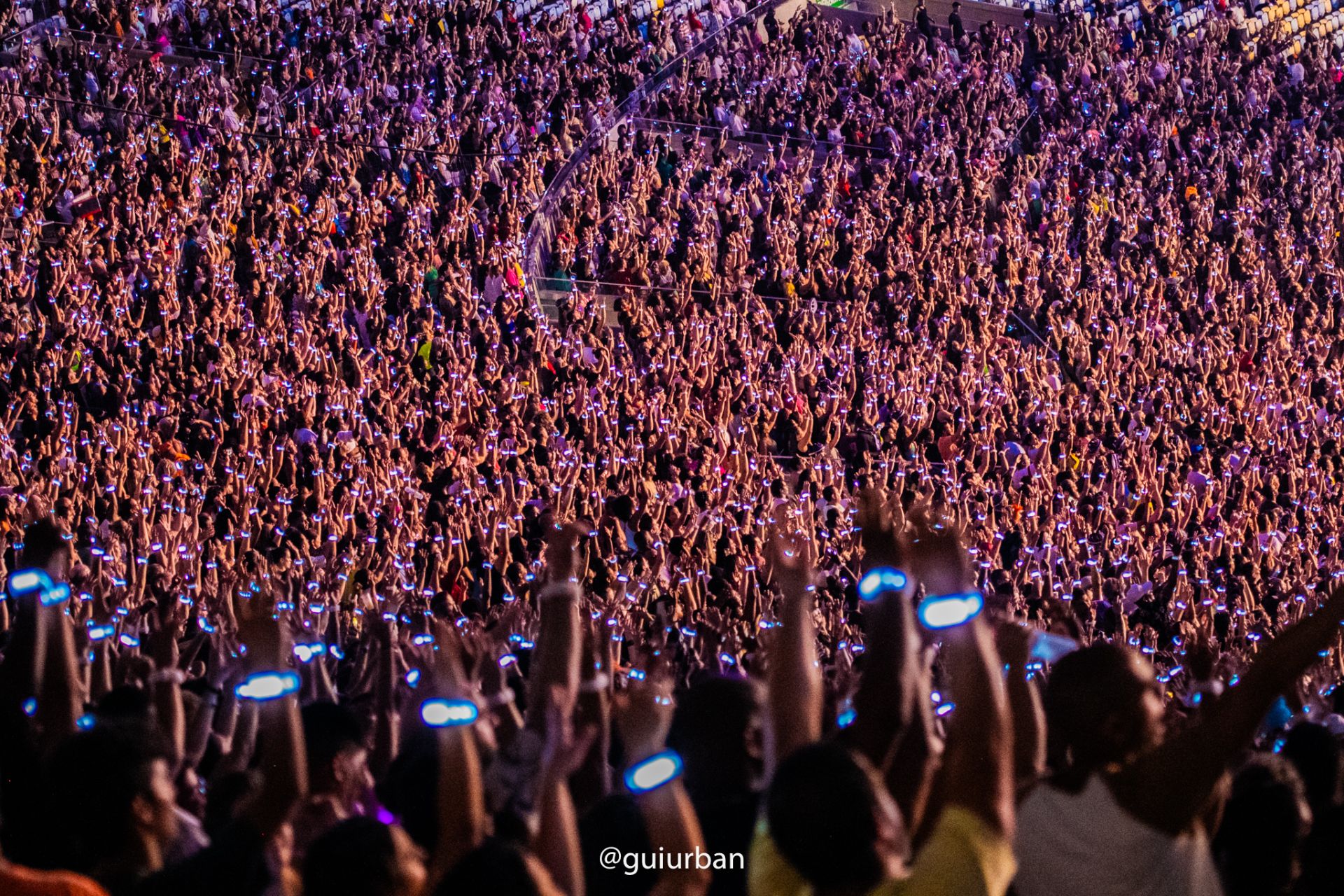
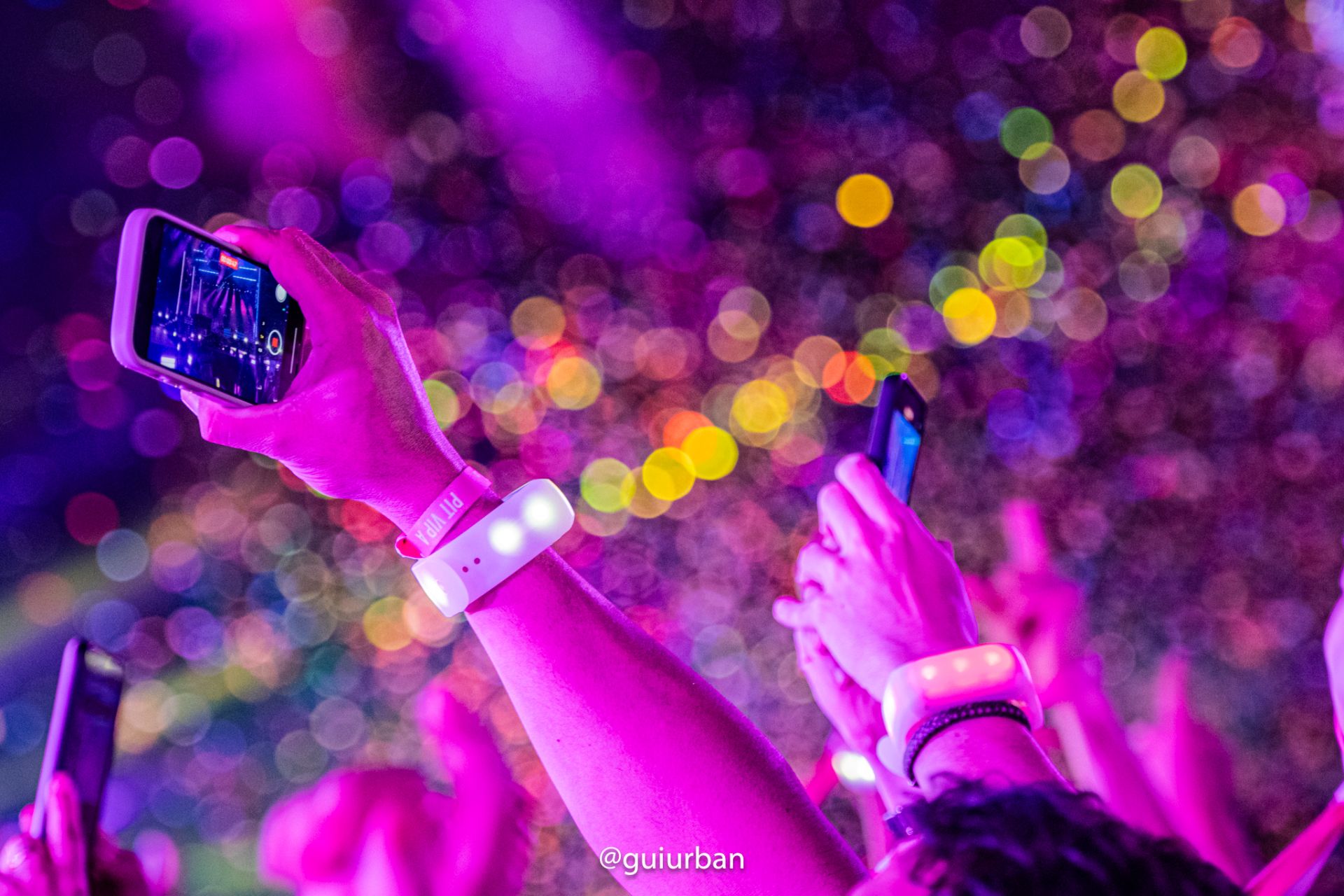
When the first Coldplay Xylobands lit up on the Mylo Xyloto tour in 2012, they represented a paradigm shift. Suddenly, the audience wasn’t just watching the light show; they were the light show. Using radio-frequency technology, every single wristband could be controlled by a single operator, pulsing in time with the music, changing color with the mood, and sweeping patterns across the arena. The Radio Controlled LED Wristbands didn’t distract from the moment; they deepened it, unifying 50,000 individuals into a single, shimmering organism.
This was the birth of modern LED Crowd Experiences. The technology solved the core challenge of audience participation: how to create a massive, collective impact without sacrificing the individual’s sense of immersion. By making the technology an ambient part of the experience, it freed the audience to stay present, connected to the artist and to each other, all while being part of a breathtaking spectacle.
An Ever-Expanding Canvas of Light
What began as a simple wristband has since evolved into a versatile ecosystem of LED Event Technology. The core principle—centrally controlled, audience-worn light—has been adapted into new form factors, opening up creative possibilities for a vast range of events. At the 75th-anniversary celebration for Formula 1, we deployed custom LED Lanyards, allowing for branding and segmentation while still uniting the entire O2 Arena in London in a dynamic light show. This demonstrates a move towards more tailored Custom LED Wristbands and pendants that can serve dual purposes of branding and immersion.
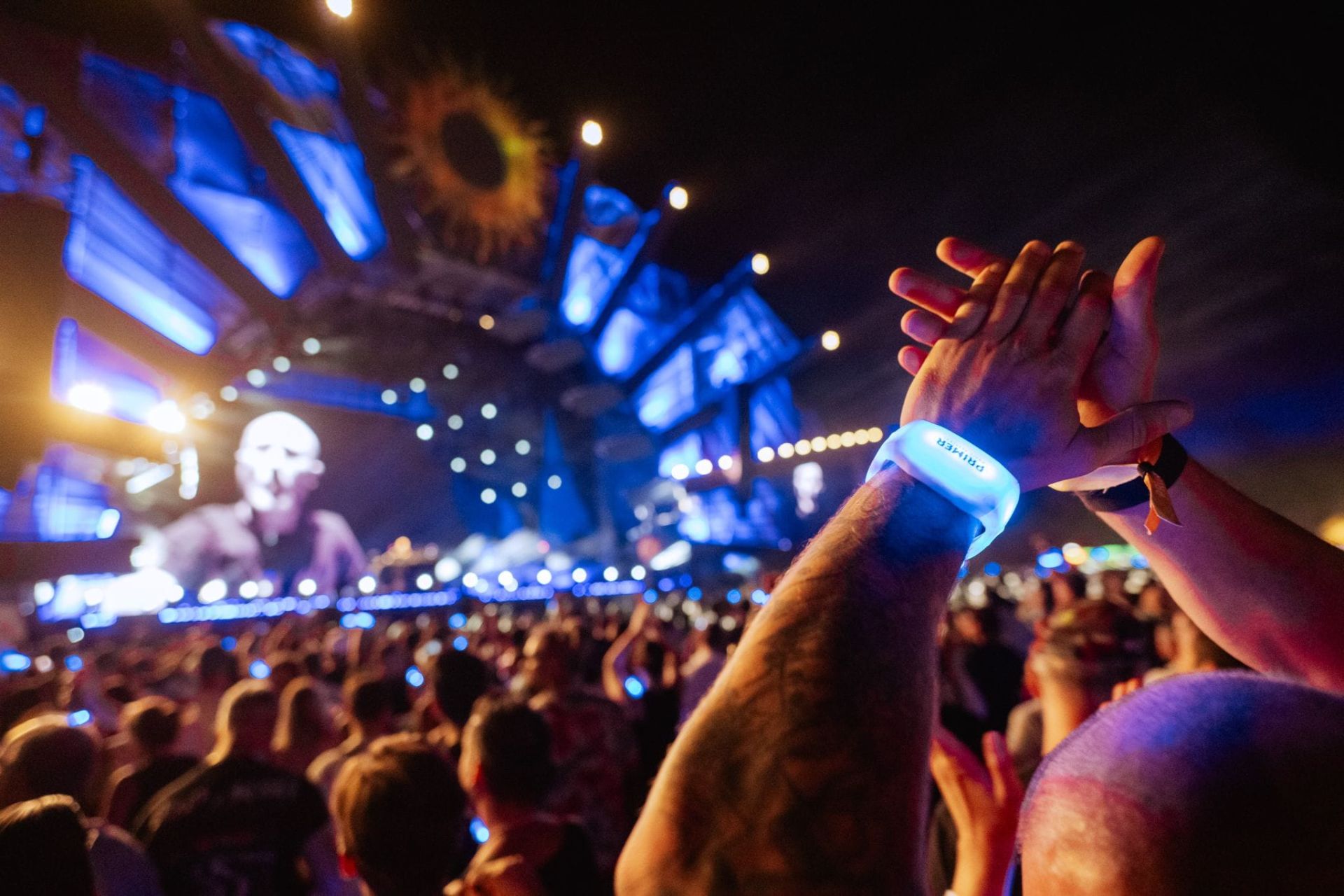
This technology is no longer confined to music arenas. It’s a powerful tool for Corporate Event Activations, where brands like Samsung and Google have used it to transform attendees into a living embodiment of their message. It’s a staple at major sporting events like the Davis Cup and electrified festival audiences at Greece’s PRIMER Music Festival. The application of LED Wearables has proven its power in television studios for shows like ITV’s Beat The Chasers, where the live studio audience becomes an integral, vibrant part of the broadcast backdrop.
From Festival Wristbands that unite dance music fans to sophisticated LED Experiences at product launches, the canvas is constantly expanding. The addition of tools like LED Orbs—glowing spheres that can be thrown and bounced through the crowd—adds another layer of kinetic, interactive energy. It’s all part of the same mission: to provide creators with a palette of light with which to paint the crowd itself.
The Future: An Intelligent, Immersive Audience
The evolution is far from over. The future of audience participation lies in creating even more deeply Immersive Events. The next generation of Wearable LED Technology won’t just receive signals; it will send them. Imagine a world where the energy of the crowd—their movement, their volume, their collective heartbeat—can be read by the system in real-time and translated back into the light show. The audience ceases to be a passive canvas and becomes an active instrument, playing in a real-time duet with the artist and the production.
This move towards intelligent crowds, powered by sophisticated Immersive Event Technology, holds the key to personalizing experiences on a mass scale while unlocking new depths of collective engagement. It’s a future where every single person is a pixel, a note, and a data point, all contributing to a spectacle that is richer, safer, and more connected than ever before.
From the primal flicker of a flame to the synchronized pulse of a million LEDs, the goal has remained the same: to close the distance between us. Technology, when wielded with vision and purpose, becomes more than just hardware; it becomes a conduit for human connection, turning the roar of the crowd into a symphony of light.