Balancing the Spectrum: Camera-Ready Lighting for Live Broadcast Events
The Two-Audience Challenge
The house lights dim. A roar erupts from 20,000 fans as the stage explodes in a symphony of light and sound. But in a control room miles away, a broadcast director is watching a different show. They aren’t just looking at the stage; they’re looking at the pixels, the color balance, the noise in the shadows. They are producing for an audience of millions, and their world is governed by the unforgiving physics of the camera sensor. This is the fundamental challenge of the modern live broadcast: creating a single spectacle that feels electric in the room and looks flawless on the screen.
Lighting a live event for a dual audience—the people in the seats and the people on their sofas—is an art form balanced on a knife-edge of technical precision. The human eye is a magnificent instrument, capable of processing a vast dynamic range and forgiving inconsistencies in color and brightness. The camera is not. It demands a tightly controlled environment, where every photon is accounted for. For event producers and lighting designers, this means reconciling two very different perceptual realities into one cohesive experience.
The Unforgiving Eye of the Lens
Any seasoned lighting director will tell you that “looks good in the room” is no guarantee of a successful broadcast. Several key technical factors differentiate what the eye sees from what the camera captures, and mastering them is non-negotiable.
Flicker: The Broadcast Killer
The most common and jarring issue is flicker. Many LED sources, especially those not designed for broadcast, pulse light at a specific frequency. While imperceptible to the naked eye, if this frequency is out of sync with the camera’s shutter speed, the result is the distracting banding or strobing effect that renders footage unusable. For live television, where there are no second takes, this is catastrophic. Professional-grade LED Event Technology is engineered to be “flicker-free,” operating at frequencies high enough to remain invisible to even high-speed cameras at standard broadcast frame rates. This is a baseline requirement, not a luxury.
The Science of Color: Kelvin and Consistency
The human brain automatically color-corrects the world around us. A white shirt looks white under the warm light of a sunset or the cool light of a fluorescent office lamp. A camera sensor has no such cognitive bias; it simply records the color temperature it sees, measured in Kelvins. Mixing fixtures with different color temperatures without a clear artistic strategy results in a chaotic and unprofessional look on screen. Skin tones can appear sallow or unnaturally ruddy, and what was intended to be a uniform color wash becomes a muddy, inconsistent mess. A cohesive broadcast palette demands meticulous attention to the Kelvin temperature of every light source, from the key lights on a performer to the ambient wash on the audience.
Taming the Dynamic Range
Perhaps the biggest perceptual gap is in dynamic range—the difference between the darkest and brightest parts of an image. The human eye can discern detail in deep shadows and bright highlights simultaneously. A camera’s dynamic range is far more limited. A lighting scheme that feels dramatic and high-contrast in person can translate to crushed, detail-less blacks and blown-out, clipped whites on screen. The lighting designer must act as a compressor, carefully managing the luminance values across the entire scene to fit within the camera’s acceptable range, all without sacrificing the drama and atmosphere for the live audience.
From Black Void to Living Backdrop
For decades, the live audience was a challenge for the broadcast director. In wide shots, the crowd area often became a vast, dark void—a visual dead zone that sucked energy from the frame. Trying to light the audience with conventional fixtures often resulted in simply blasting them with uncomfortable levels of light, creating an unnatural and distracting glare. This is where Immersive Event Technology has fundamentally changed the game.
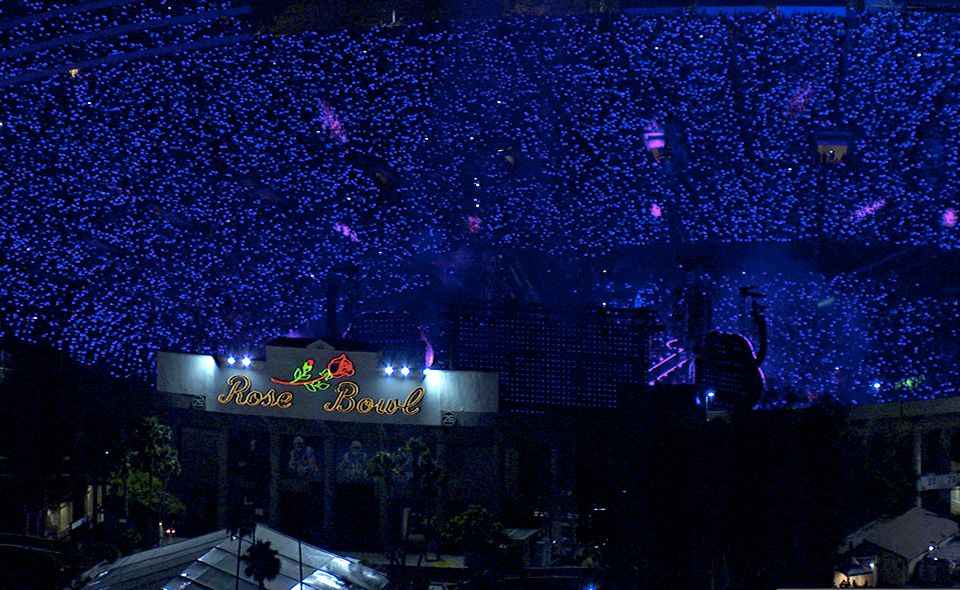
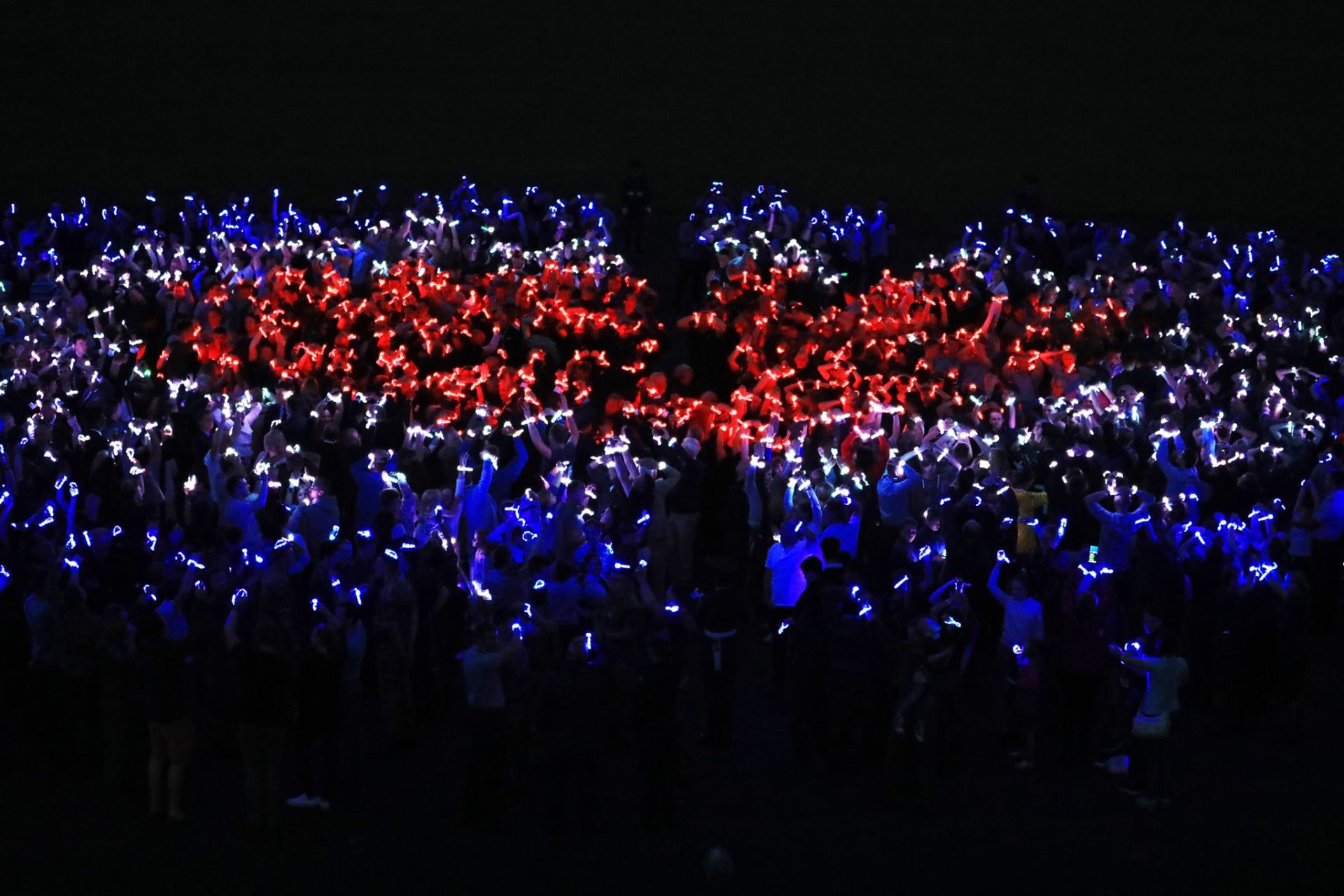
The solution isn’t just to light the crowd, but to make the crowd the light. By turning every audience member into a pixel in a grand, moving canvas, producers can solve the “black void” problem and create staggering visual opportunities. This is the philosophy that powers Xylobands.
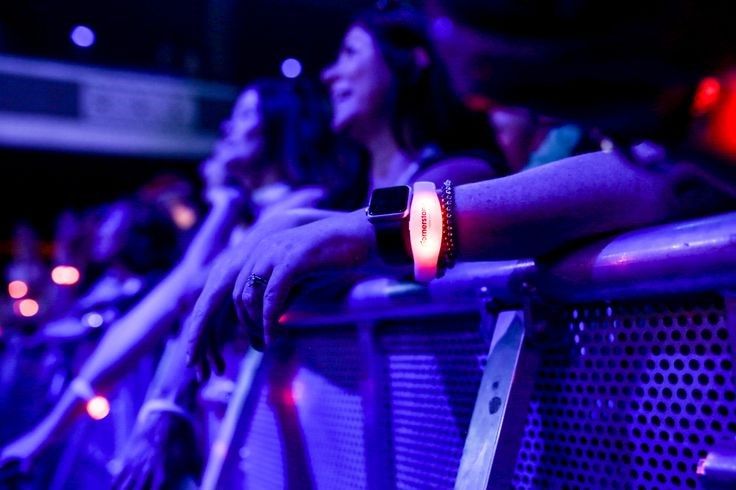
Using Radio Controlled LED Wristbands, LED Lanyards, or other Wearable LED Technology, we transform the audience from passive observers into an active, luminous part of the show’s design. Suddenly, the broadcast director’s wide shot is not a void but a vibrant, dynamic backdrop of synchronized color and movement. This creates depth, scale, and an undeniable sense of energy that translates powerfully through the lens.
Proven on the World Stage
This approach is not theoretical; it’s a proven strategy used in some of the world’s most-watched broadcasts. Our work with ITV on shows like Beat The Chasers integrates the studio audience directly into the program’s visual pacing, their wristbands flaring in response to the on-screen action. For the global broadcast of the Formula One 75th Anniversary event, custom Xylo Pendants turned the 13,000-strong arena crowd into an immersive extension of the show, with specific lighting effects mapped to different sections of the audience.
When Maluma performed in his hometown of Medellín, the show was streamed live to over 240 countries. The 54,000 fans, each a point of light, created a spectacle that was as breathtaking for the global audience on Amazon as it was for the fans in the stadium. These LED Crowd Experiences provide broadcast directors with a powerful tool, ensuring that every frame is filled with life and energy.
A Unified Spectacle
Lighting for the camera and the crowd is not about finding a lazy compromise between two competing needs. It’s about adopting a holistic design philosophy where both audiences are considered from the very first creative conversations. It requires a deep understanding of the technical demands of broadcast—of flicker, color science, and dynamic range. And increasingly, it involves leveraging Immersive Events technology to bridge the gap between the stage and the seats.
By transforming the audience into a living, breathing part of the lighting design, we create a single, unified spectacle. The energy the crowd feels is made visible, the scale of the venue is written in light, and the story of the event is told in every pixel—both for the fans in the room and the millions watching around the world.